MSCI says the proposal still stands
Indonesia's campaign to preserve its emerging market status received a firm answer on 24 November 2026: MSCI said its proposal to move the country to standalone market classification had not changed. The statement ended speculation that discussions with President Prabowo Subianto had produced an understanding to withdraw the proposal. Consultation will continue until 30 April 2027, with a final decision scheduled by 30 June 2027.
Contents
- MSCI says the proposal still stands
- How a June warning became an October market shock
- What standalone status would mean for investment
- Indonesia's reform checklist is unusually specific
- Enforcement moves into public view
- Presidential outreach meets a firm denial
- Other institutions are not delivering one verdict
- Danantara brings a second transparency test
- The rupiah faces domestic and US pressure
- The dates that now matter
- Key Points
The immediate market response was restrained compared with October's turmoil, but selling continued. The Jakarta Composite Index, or IHSG, stood at 5,216.14 after the first session on Wednesday, 25 November, down 25.45 points or 0.49%. Trading reached 148.11 million lots, with turnover of approximately Rp3.396 trillion. Foreign investors bought Rp1.19 trillion of shares and sold Rp1.46 trillion, producing a reported net sale of Rp265 billion, according to Stockbit Sekuritas data.
Foreign buying was concentrated in a handful of companies. Bank Central Asia attracted Rp132.12 billion, followed by Unilever Indonesia at Rp13.70 billion, Bank Mandiri at Rp13.29 billion and Bank Negara Indonesia at Rp12.21 billion. Bumi Resources Minerals and Sumber Alfaria Trijaya each drew more than Rp10 billion, while Bukit Asam, Indofood CBP, Pakuwon Jati and Bank BTPN Syariah completed the ten stock list.
MSCI, whose indexes guide trillions of dollars of investment, directly rejected suggestions that the reclassification threat had been withdrawn.
There has been no change to MSCI's consultation process or the proposal announced on 15 October, which remains in effect.
The provider said it was still communicating with institutional investors, government officials, regulators and the exchange. Those meetings can identify the actions and evidence needed to cancel the proposal, but MSCI said its decision would be made independently under its established methodology and governance.
How a June warning became an October market shock
The confrontation developed throughout 2026. MSCI froze certain changes to Indonesian indexes on 27 January, then used its market classification review on 23 June to warn that opaque ownership and suspected coordinated trading were damaging investability. Investability means whether international institutions can identify available shares, trade them at dependable prices and enter or leave positions without hidden obstacles.
Raman Aylur Subramanian, MSCI's head of market classification and taxonomies, explained the principle behind that review.
The MSCI Market Classification Framework determines whether a market is developed, emerging, or frontier based on the accessibility and investability that international institutional investors actually experience. Index inclusion and market classification are not static judgments.
At that stage, MSCI acknowledged reforms announced by the Financial Services Authority (OJK), Indonesia Stock Exchange (IDX) and securities depository KSEI. It warned that insufficient progress by the November 2026 index review could lead to consultation on a move from emerging to frontier status. The eventual proposal went further. On 15 October, MSCI said feedback indicated that frontier status would not reflect the depth of Indonesia's problems, particularly continuing allegations of coordinated trading and limited evidence of meaningful enforcement.
Investors reacted violently on 16 October. The IHSG opened 8.01% lower at 5,393.92, prompting a trading halt lasting 30 minutes. It closed at 5,185.11, down 679 points or 11.57%, the deepest daily fall since January 1998. Energy shares dropped 13.52%, while BBCA fell 14.81%, BBRI lost 10.97% and BMRI declined 8.04%. Daily transaction value exceeded Rp26 trillion, and approximately Rp1,141 trillion of market capitalisation disappeared in one day.
The rupiah passed Rp18,000 per US dollar and briefly traded near Rp18,070. Foreign investors sold a net Rp3.34 trillion of shares that day. By then, the IHSG had lost roughly 40% from its 2025 closing level of 8,646. The episode shifted the reform debate toward tougher market enforcement, because investors were asking for visible consequences for abuse rather than another collection of policy announcements.
What standalone status would mean for investment
A standalone market sits outside MSCI's main developed, emerging and frontier market groupings. Indonesian shares could therefore disappear from global and regional indexes used by funds that automatically reproduce index portfolios. A frontier classification would still offer a smaller pool of funds following frontier indexes. Standalone status would not provide that alternative constituency. Indonesia has held emerging market status since 1989.
Some restrictions are already operating. MSCI will not increase foreign inclusion factors, which measure the portion of a company's shares available to international investors, or the number of shares used in index calculations. It will not add securities to the MSCI Indonesia Investable Market Index or move stocks into larger size segments. Securities identified under Indonesia's High Shareholding Concentration framework continue to be removed, while disclosures of ownership above 1% are being used to adjust free float estimates.
Free float is the portion of a company's shares genuinely available for public trading. If connected owners are hidden behind numerous accounts, the reported float can look larger than the stock investors can actually buy. That can weaken liquidity and make prices harder for global funds to trust.
Indonesia's presence in the MSCI Emerging Markets Index had already contracted before the October proposal. Its weight fell from 1.16% on 31 December 2025 to 0.43% on 30 September 2026, a decline of about 63%. Capitalisation after adjusting for free float fell from US$119.1 billion to US$53.4 billion over the same period, a drop of approximately 55%.
Estimates of further sales depend on which investors are included. Analyst scenarios after the announcement placed passive outflows between US$3 billion and US$6 billion. UBS estimated roughly US$4 billion from passive funds and as much as US$19 billion if active managers also sold, while Mirae Asset Sekuritas calculated a potential outflow of up to US$11 billion, or about Rp200 trillion. These are scenarios rather than completed withdrawals. Foreign investors had already withdrawn about US$4.9 billion on a net basis by 16 October.
Indonesia's reform checklist is unusually specific
IDX and KSEI began publishing shareholders with ownership above 1% on 3 March 2026. A subsequent exchange directive, Kep-00160/BEI/11-2026 dated 2 November, added information on whether those shareholders were controllers or affiliates of controllers. Monthly publication is intended to reveal connections between names that might otherwise appear to be unrelated owners. Investor classifications were also expanded from nine categories to 39.
Companies received broader reporting duties from 1 April. These include identifying the ultimate beneficial owner behind shareholders holding at least 10%, alongside more detailed reporting of other ownership levels and shares held by directors and commissioners. A beneficial owner is the person who ultimately enjoys the economic benefit or exercises control, even when a legal entity is listed as the shareholder.
The High Shareholding Concentration framework was expanded on 10 November to cover every listed company. The previous minimum capitalisation of Rp5 trillion and the Price Impact Ratio parameter were removed from screening. Under the revised method, a stock enters the framework when cumulative ownership among the ten largest holders without physical certificates, together with certificated holdings, reaches at least 92.5% of issued and fully paid capital. An evaluation using 30 October data added 300 stocks, producing a list of 383 on 11 November. HSC is a concentration classification used for index and free float decisions, separate from a finding of wrongdoing.
Liquidity rules are changing as well. The minimum free float required to remain listed rose from 7.5% to 15% on 31 March. New listings face requirements of 15%, 20% or 25%, depending on capitalisation. Existing companies have staggered deadlines extending to March 2029. As of 31 May, 327 issuers, or 35.8% of listed companies, had not reached 15%. Large companies with floats between 12.5% and 15% must comply by 31 March 2027, giving MSCI a concrete checkpoint one month before its consultation closes.
Stocks designated HSC were excluded from IHSG calculations from 2 November, while remaining constituent weights continue to reflect capitalisation adjusted for free float, with a ceiling of 9% per stock. State banks and Telkom then helped drive a 3% market rebound on 5 November. IDX also removed the minimum permitted share price of Rp50 at the end of September, seeking better liquidity and price formation.
Enforcement moves into public view
OJK announced on 16 October that it had examined 31 of 61 issuers then on the HSC list. Administrative sanctions totalling Rp2.1 trillion were imposed in cases involving three companies: Rp1.5 trillion related to Dian Swastatika Sentosa, Rp500 billion related to Barito Renewables Energy and Rp100 billion related to Petrindo Jaya Kreasi. The DSSA case concerned share price manipulation during 2024 to 2026, while the BREN and CUAN cases involved allocations in initial public offerings to groups connected with controlling shareholders.
A separate OJK statement on 21 October said more than 971 parties had been sanctioned during 2026, with total fines of around Rp2.5 trillion. Hasan Fawzi, OJK's executive head of capital market supervision, said consistent implementation must produce measurable gains in transparency, liquidity, integrity and investment appeal.
IDX President Director Jeffrey Hendrik described a change in how suspected manipulation is handled. Investigations that once occurred without public knowledge are now announced when initial indications emerge, with findings targeted for release within 45 days.
Now, if we detect initial indications of manipulative practices, we will publicly announce that specific transactions are under investigation by the exchange.
On 6 November, the exchange disclosed examinations of trading in Capital Financial Indonesia, Fuji Finance Indonesia and Nusantara Sawit Sejahtera. Initial findings said six investors trading through six exchange members accounted for about 98% of CASA transactions between 26 October and 2 November. For NSSS, 19 investors using 15 exchange members accounted for approximately 52% of transactions between 1 December 2025 and 30 October 2026. The exchange has also held discussions with hundreds of global investors over three weeks and maintained contact with MSCI, FTSE Russell and S&P Dow Jones Indices.
Presidential outreach meets a firm denial
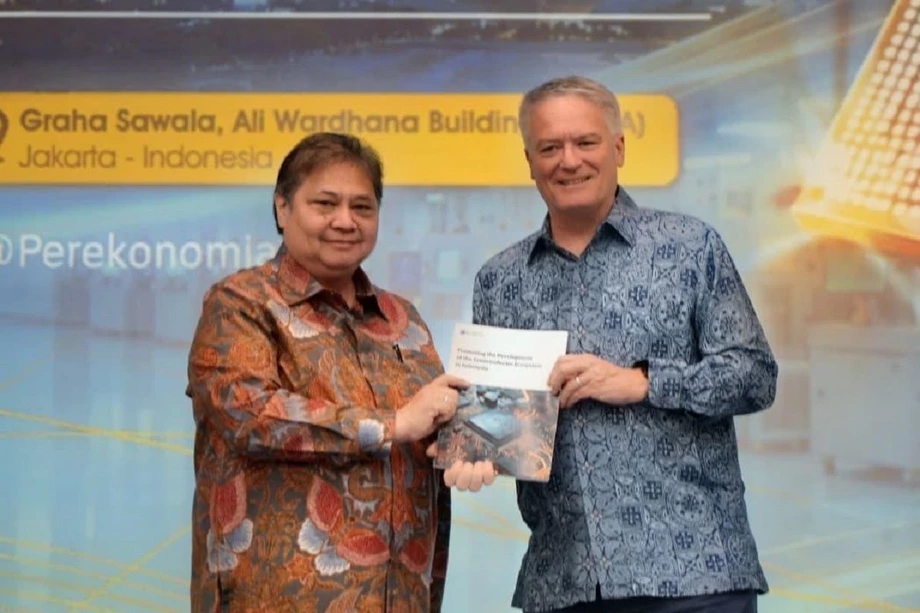
Reported contacts between Prabowo and MSCI became a market story in their own right. A conversation on 10 November was said to involve MSCI chief executive Henry Fernandez, Danantara chief executive Rosan Roeslani and Bridgewater Associates founder Ray Dalio. Accounts of that discussion said Fernandez raised concerns about potential conflicts of interest involving people affiliated with political parties on OJK's Board of Commissioners, alongside demands for clearer HSC rules and LQ45 constituent procedures. Prabowo was reported to have promised stronger enforcement. OJK said on 23 November that it had no official confirmation of the discussion and had not attended it.
A separate reported meeting took place on 20 November on the sidelines of the 49th ASEAN Summit in Manila, arranged by Rosan. Tina Tan, MSCI's executive director of marketing and communications for Asia Pacific, placed such contact within the normal consultation process.
MSCI routinely meets with investors, government officials, regulators, exchanges and other stakeholders to discuss consultation proposals as part of our standard market classification consultation process.
No specific commitment or extra reform emerged publicly from those contacts. MSCI's 24 November statement then denied that it had assured the government there would be no reclassification. Rosan, who is also investment and downstreaming minister, said Prabowo had instructed authorities to accelerate ownership disclosure, compliance and enforcement. He identified OJK as the principal institution carrying out that work.
Other institutions are not delivering one verdict
Coordinating Minister for Economic Affairs Airlangga Hartarto said on 25 November that the MSCI issue was unrelated to Indonesia's attempt to join the Organisation for Economic Cooperation and Development. He argued that the government should not keep wrangling with MSCI and pointed to more favourable assessments elsewhere, including what he described as a triple A rating from China.
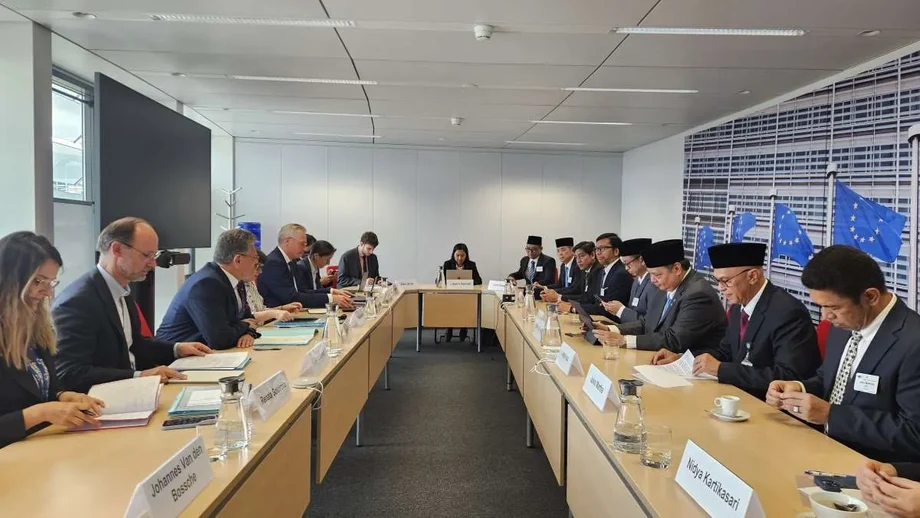
OECD Secretary General Mathias Cormann gave a more qualified description. He confirmed that Indonesian financial market developments form part of the organisation's assessment of economic prospects during the accession process. He said the OECD would not provide running commentary on every market movement, instead communicating findings and recommendations after evaluation, government engagement and dialogue.
FTSE Russell delivered another distinction on 13 November. It retained Indonesia as a Secondary Emerging Market without placing the country on a downgrade watch list, while postponing new stock additions and increases in public share proportions until at least its March 2027 review. MSCI's own June review also showed that classifications can improve: Bulgaria is due to move from standalone to frontier status at the May 2027 review after better liquidity and its transition to the euro, while Greece remains scheduled to move from emerging to developed status at the same review.
Danantara brings a second transparency test
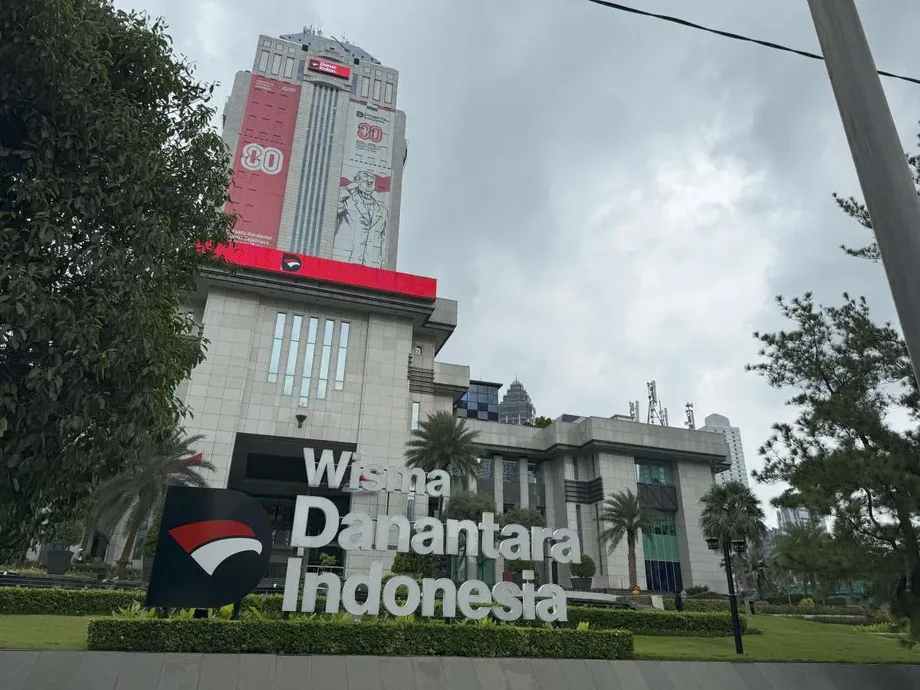
Domestic attention on 25 November also turned to the financial report of BPI Danantara, formally Badan Pengelola Investasi Daya Anagata Nusantara. Economist Maesaroh said investors wanted information on asset management, the size of its assets, investment activity, profits and the results of its transformation programme. Rosan's position as both Danantara chief executive and a senior minister places the fund close to the government's market reform response.
Danantara manages state holdings that include companies listed on the Indonesian exchange. Its disclosures therefore matter to shareholders assessing the performance and governance of those businesses, as well as to readers trying to understand how public assets are managed. Market discussion compared the expected reporting with the transparency associated with Norway's state investment model. The preview did not provide totals for Danantara's assets or annual profit, leaving those figures central to the report's reception.
The rupiah faces domestic and US pressure
Currency movements show why the MSCI debate extends beyond stock indexes. The rupiah traded at Rp18,287 per US dollar at 12:24 p.m. Jakarta time on 25 November, down 0.31%, while a later market update placed it at Rp18,310 and the IHSG near 5,214. A higher rupiah figure per dollar means a weaker Indonesian currency.
Bank Indonesia Governor Destry Damayanti said foreign investors had withdrawn Rp81.6 trillion from equities during 2026 by her presentation on 19 November. Government securities and Bank Indonesia's rupiah securities recorded combined net inflows of Rp143 trillion. That contrast indicates that the heaviest pressure was concentrated in shares rather than across every Indonesian asset.
Bank Indonesia raised the BI Rate by 0.25 percentage points to 6% at its meeting on 17 and 18 November to help safeguard currency stability. It had already conducted currency market intervention on 12 November through spot transactions, domestic and overseas forwards, and purchases of government bonds. Indonesia held US$146.8 billion of foreign exchange reserves at the end of October.
External pressure is coming from expectations of another Federal Reserve rate increase at its meeting on 8 and 9 December. CORE Indonesia economist Yusuf Rendy Manilet said markets were assigning a probability of almost 95% to a December rise, with some participants considering an increase of 50 basis points after US inflation exceeded forecasts. The dollar index was near 103.8 and US Treasury yields around 4.9%. October PCE inflation data and a statement by New York Fed President John Williams were also on the calendar for 25 November.
The dates that now matter
The immediate test comes from index implementation, followed by evidence that Indonesian rules are operating consistently. MSCI has not set an effective date for any standalone reclassification. Its proposal is expected to proceed unless consultation produces clear evidence of substantial improvement in governance and market functioning.
- 30 November 2026: MSCI constituent changes apply after trading closes, with implementation on 1 December.
- 8 and 9 December 2026: The Federal Reserve holds its next interest rate meeting.
- 31 March 2027: The first major free float compliance checkpoint arrives for larger Indonesian issuers.
- March 2027: FTSE Russell is due to reconsider additions and increases in public share proportions.
- 30 April 2027: MSCI stops accepting consultation feedback.
- 30 June 2027: MSCI is scheduled to announce its final classification decision by this date.
The November index review will produce eight Indonesian stock exits from combined Global Standard and Small Cap coverage, while Bumi Resources Minerals transfers from Standard to Small Cap. The changes leave the MSCI Indonesia Index with seven companies, compared with 18 at the start of the year. Passive managers may adjust holdings around the November close, creating additional demand for dollars even before the broader classification decision.
For Indonesian companies, the practical task is to show who owns their shares and make more stock genuinely tradable. For OJK and IDX, it is to publish investigations, apply sanctions consistently and demonstrate that suspicious prices and concentrated ownership are being addressed. For investors, the next seven months will distinguish actual changes in market behaviour from commitments made during a period of intense diplomatic and financial pressure.
Key Points
- MSCI said on 24 November that its proposal to reclassify Indonesia as a standalone market remains unchanged.
- The IHSG fell 0.49% to 5,216.14 in the first session on 25 November, while the rupiah weakened beyond Rp18,280 per US dollar.
- MSCI cites opaque share ownership, suspected coordinated trading and insufficient evidence of sustained enforcement.
- Indonesia has introduced ownership disclosure above 1%, 39 investor categories, HSC screening and a roadmap toward a 15% minimum free float.
- OJK has announced Rp2.1 trillion of sanctions in the DSSA, BREN and CUAN cases, while IDX now publicly discloses selected trading investigations.
- Estimates of potential selling vary widely, from several billion dollars by passive funds to as much as US$19 billion when active sales are included.
- Consultation ends on 30 April 2027, and MSCI must announce its decision by 30 June 2027.