A test of enforcement, not just new rules
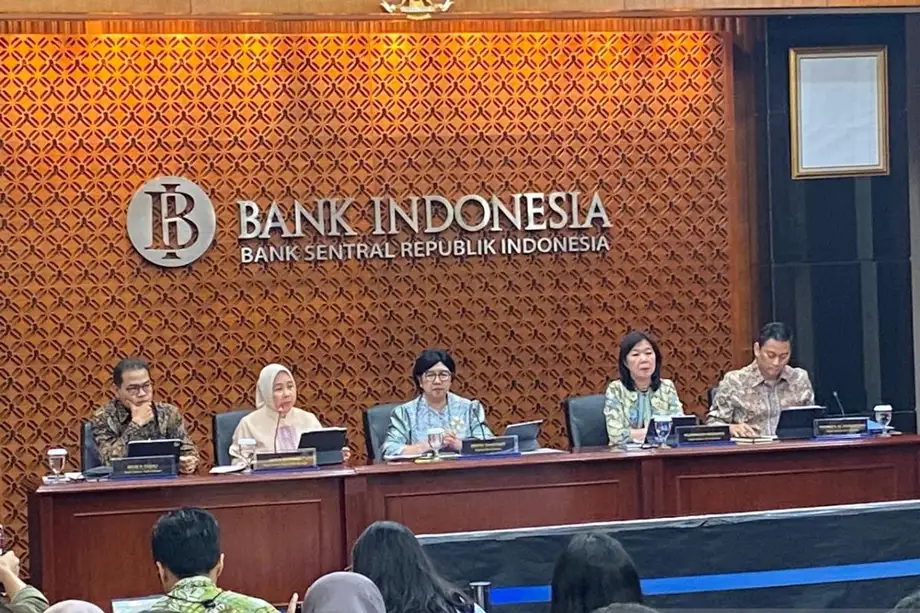
Indonesia's effort to keep its stock market in the Morgan Stanley Capital International (MSCI) emerging market group is turning on whether regulators can show that market abuse brings real consequences. On Nov. 20, Financial Services Authority (OJK) chief Friderica Widyasari Dewi said the regulator was preparing further sanctions. Her announcement came as MSCI consults on a proposal to move Indonesia from emerging market to standalone status, a category outside its developed, emerging and frontier market indexes.
Contents
Indonesian media reports said President Prabowo Subianto met MSCI representatives on the sidelines of the ASEAN summit in the Philippines the previous week, and that MSCI urged the government and market regulators to pursue criminal cases against people who break capital market rules. The reported request has not been confirmed in MSCI's public consultation notice. The central issue is nevertheless clear from that notice: investors want consistent enforcement and evidence that reforms are changing how the market works, not only new rules or promises.
OJK and the Indonesia Stock Exchange (BEI) have already announced administrative penalties totaling Rp2.1 trillion in cases linked to Dian Swastatika Sentosa, Barito Renewables Energy and Petrindo Jaya Kreasi. Administrative penalties are fines or other measures imposed by a regulator. Criminal proceedings are separate: they can lead to prosecution in court and, if guilt is proven, criminal punishment. The distinction matters because investors are now watching whether investigations move beyond fines and disclosures.
What exactly is MSCI considering?
MSCI's Oct. 15 proposal is a consultation, not a final decision. The index provider says Indonesia's emerging market classification may no longer fit because of persistent concerns about opaque share ownership, suspected coordinated trading and a lack of evidence that enforcement is having a sustained effect. Its MSCI consultation notice says the company expects to proceed with the proposal unless feedback brings clear evidence of material improvement in market governance and functioning.
MSCI's June 2026 review had already flagged concerns about whether investors could reliably identify who owns shares and how many shares are genuinely available for public trading. That public portion is called free float. If ownership is concentrated among connected parties, or if those relationships are hard to see, investors may have difficulty judging how much stock can actually be bought and sold. Suspected coordinated trading can also make prices less reliable.
MSCI says reforms announced by Indonesia include disclosure of shareholders with more than 1% ownership, clearer classification of investors, reporting on high shareholding concentration (HSC), and a roadmap toward a minimum free float of 15%. The index provider says market participants have not consistently seen enough progress or meaningful enforcement. It also says a move to frontier market status would not reflect the depth of the problems it has identified.
Indonesia has been an MSCI emerging market since 1989. A move to standalone would remove Indonesian stocks from MSCI's major emerging market benchmarks. Funds that track those indexes would have to adjust their holdings; active funds, which choose investments rather than simply copying an index, could also cut exposure. MSCI has frozen some changes to Indonesian securities in its indexes, including increases in foreign inclusion factors or share counts, additions to the MSCI Indonesia Investable Market Index and upward moves between size groups.
The enforcement moves already taken
The Rp2.1 trillion in penalties relate to alleged misconduct involving trading in DSSA and share allocations in the public offerings of BREN and CUAN. Detailed case accounts say OJK fined PT SMT Rp1.5 trillion in the DSSA matter, while an executive at brokerage PT SS had an underwriting license suspended for one year. Nine brokerages were fined and eight retail sales executives received written warnings. In the BREN offering, offshore entity AH Ltd was fined Rp500 billion; in the CUAN placement, TC Pte Ltd was fined Rp100 billion. Brokerages PT HPS and PT BDS were also fined, and PT HPS's director had a license suspension of three months.
OJK's investigations found alleged coordinated trading in DSSA through multiple brokerages between 2023 and 2026. In the BREN and CUAN offerings, authorities said allocations had been arranged for parties linked to controlling shareholders, whose identities were concealed. Such arrangements can leave fewer shares genuinely available to the wider public and make it harder to judge a company's free float. The three companies were among six removed from the MSCI Indonesia Index in May, though removal from an index is not itself a finding of wrongdoing.
OJK has also begun criminal investigations into other alleged market offenses. Investigators detained three private sector employees, identified by the initials JF, FS and S, on Nov. 16 in a case involving alleged manipulation of Series I warrants and structured warrants. A warrant is a security that gives its holder the right to buy or sell an underlying asset under specified terms. Friderica said the regulator might announce more names in the following days, but did not identify those people or say what charges might follow.
OJK executive head Hasan Fawzi said 31 of 61 stocks on the regulator's HSC list had been examined and showed indications of potential capital market criminal violations. An indication is a reason for further investigation, not a court finding. OJK has also shifted toward targeted investigations of shares showing signs of price manipulation and frozen securities accounts suspected of violations. National Police investigators attended the Oct. 21 handover of some enforcement notices, signalling closer coordination between the regulator and criminal investigators.
A timeline of the review and response
The decisions and regulatory steps have unfolded over several months:
June 2026: MSCI's market classification review raised concerns about ownership transparency, coordinated trading and enforcement.
Oct. 15: MSCI opened its consultation on a possible move to standalone status.
Oct. 16: OJK determined penalties in the cases tied to DSSA, BREN and CUAN. The Jakarta Composite Index fell 11.6% that day, and about US$65 billion was erased from Indonesian stock values.
Oct. 21: OJK formally served enforcement notices to affected parties.
Nov. 2: Shares classed as HSC were excluded from calculations of the Jakarta Composite Index. Ownership disclosures for stakes above 1% were also supplemented with information on whether holders were controllers or affiliates of controllers.
Nov. 13: FTSE Russell kept Indonesia in its secondary emerging market group and did not place it on a watch list.
Nov. 16: OJK detained three suspects in the warrant trading investigation.
April 30, 2027: Deadline for market participants to submit feedback to MSCI.
By June 30, 2027: MSCI is due to announce its final decision and may issue an interim update before then.
More disclosure, and a wider HSC screen
OJK and BEI have made changes aimed at showing investors who holds shares and how much stock is available to trade. The threshold for public disclosure is ownership above 1%, while the HSC screening method has been broadened, adding 300 companies to the HSC list. HSC shares are also set to be removed from major domestic indexes such as LQ45 and IDX80. MSCI says it will continue deleting securities flagged by Indonesian authorities under the HSC framework and use the 1% ownership data to adjust its free float estimates.
Regulators have been in regular contact with MSCI and global investors. OJK chief Friderica said OJK and BEI had held 18 meetings with MSCI since January. Deputy commissioner Eddy Manindo Harahap later described roughly 20 meetings across 2026, with intensive discussions starting in February. OJK says those talks have been used both to explain reforms and to ask what gaps remain between Indonesia's market and MSCI's expectations. Officials have also said they spoke with more than 100 global investors, including Vanguard and UBS.
That engagement has not produced the same response from every index provider. FTSE Russell kept Indonesia in its secondary emerging market category and outside its watch list, while saying it needed more time to assess whether reforms were effective. FTSE has delayed upward changes to Indonesian stocks in its indexes until at least its March 2027 review. HSC shares are scheduled to leave its indexes from Dec. 21, 2026. The different decisions show that index providers assess markets independently, even when they are looking at some of the same transparency and trading concerns.
Potential costs for investors and companies
Estimates of possible foreign fund withdrawals vary because they use different methods and assumptions. Some banks estimate US$3 billion to US$6 billion could leave through passive funds that track emerging market indexes. UBS has estimated that active investors could withdraw a further US$15 billion. Mirae Asset has put the total at US$8 billion to US$11 billion, including about US$3 billion in passive funds. These are estimates of money at risk, not certain outflows, and they should not be added together as if they were a single forecast.
The potential selling matters because funds that follow an index usually adjust when a country is removed from that benchmark. A standalone classification would place Indonesia outside MSCI's developed, emerging and frontier indexes, so those funds would no longer have the same index reason to hold Indonesian stocks. The size of any actual selling would depend on investors' decisions and on how the final classification is implemented.
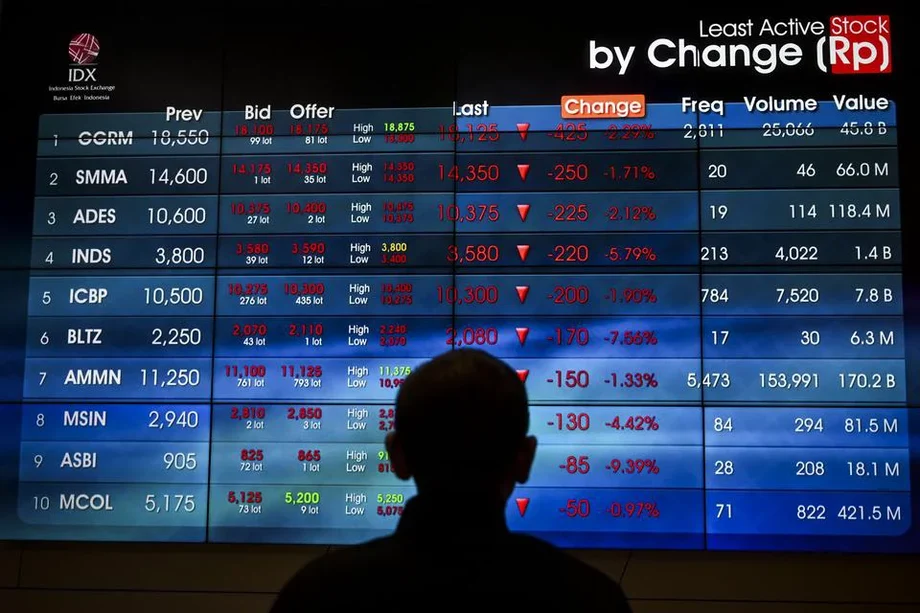
Indonesia's market was already under pressure in 2026. Data for October put the exchange's total market value at about US$488.6 billion, tenth among 11 Asian markets in the comparison. The Jakarta Composite had fallen 40.64% since the start of the year, and foreign investors had recorded net sales of Rp97.9 trillion through October. A proposed downgrade adds uncertainty for companies seeking investment and for local investors whose savings are tied to shares.
Analysts and fund managers have also warned that the credibility of price formation is at stake. If investors cannot confidently see who controls shares or whether trading is fair, they may demand a higher return before investing. That can make it more costly for companies to raise money, even when their own business prospects are sound. An index classification is therefore connected to both portfolio choices and the market's reputation.
What regulators still need to show
The practical test for Indonesia is whether public disclosures can be checked against the people who ultimately own or control shares, and whether trading investigations lead to consistent outcomes. A formal free float rule can improve visibility, but investors also need confidence that shares described as public are not effectively controlled by connected parties. Enforcement must be based on evidence and due process, while showing that the same rules apply across the market.
Investor Rizki Ardhi, senior equity portfolio manager at Manulife Asset Management Indonesia, said the way to persuade MSCI was through "evidence, consistency and transparency," rather than promises. OJK and BEI have also said they will keep talking with global investors and the index provider. A public policy analyst, Hafiz Elfiansya Parawu, has argued that regulatory performance should be judged by the results of supervision, including early detection and action against violations, rather than by the number of rules issued or the rise of the stock index.
FTSE's decision offers Indonesia a more favorable assessment from one major index provider, but it does not settle MSCI's consultation. MSCI's final decision is due by June 30, 2027, and its feedback period closes on April 30. Until then, investors will be looking for public evidence that investigations, ownership disclosures and market safeguards are working in practice.
Key Points
MSCI is consulting on a proposal to reclassify Indonesia from emerging market to standalone status. No final decision has been made.
OJK has announced Rp2.1 trillion in administrative penalties tied to cases involving DSSA, BREN and CUAN, and says it is preparing further enforcement steps.
MSCI's main concerns include opaque share ownership, suspected coordinated trading and the need for consistent evidence of enforcement.
FTSE Russell kept Indonesia in its secondary emerging market group and outside its watch list, while delaying some index changes.
MSCI will accept feedback until April 30, 2027, and is due to decide by June 30, 2027.