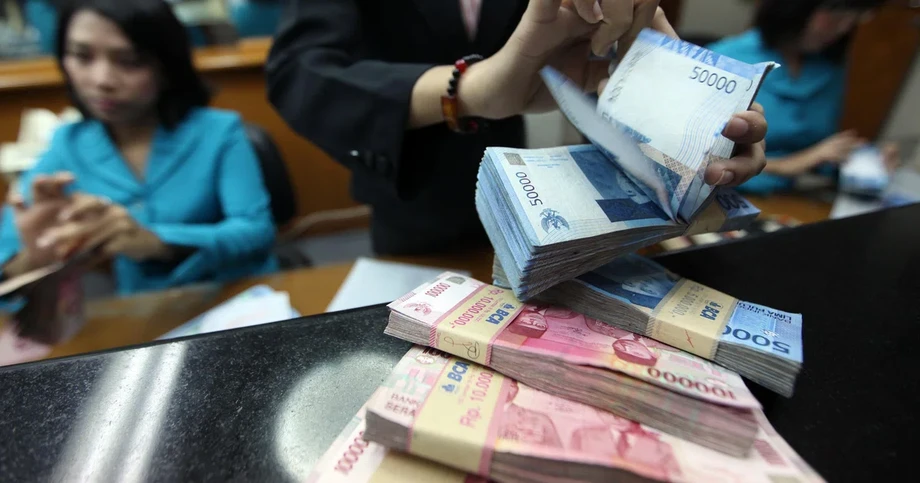
Rupiah slides as Indonesia defends its currency
Bank Indonesia intervened in currency markets on November 12, 2026, as the rupiah reached record lows amid expectations of higher US interest rates, concern over Indonesia's place in global stock indexes and uncertainty surrounding Vice President Gibran Rakabuming Raka.
Contents
- Rupiah slides as Indonesia defends its currency
- How Bank Indonesia is intervening
- Why US inflation is reaching Indonesian markets
- Why MSCI's decisions matter for the rupiah
- Which Indonesian stocks face index changes
- Political uncertainty adds another pressure
- Stocks, bonds and regional currencies send different signals
- What the weaker currency means for payments and savings
- The dates shaping the next market moves
- Key Points
The rupiah traded at 18,231 per US dollar at 9:40 a.m. Western Indonesia Time, down 0.44% from the previous close, according to Refinitiv data. Other trading updates put the dollar as high as 18,272 rupiah during Asian hours. A rising number means a weaker rupiah because more Indonesian currency is needed to buy one dollar.
Erwin Gunawan Hutapea, head of Bank Indonesia's Monetary and Securities Asset Management Department, said the central bank was operating in both domestic and overseas markets. Its measures included currency transactions and purchases of Indonesian government bonds from existing holders.
Indonesia held $146.8 billion in foreign exchange reserves at the end of October, according to Bank Indonesia. Those reserves provide resources for managing currency pressure while the bank faces several demands at once: a stronger dollar, possible withdrawals by foreign investors and rising demand for foreign currency before the end of the year.
The rupiah had lost more than 8% against the dollar since the start of the year, making it Asia's weakest currency over that period. Bank Indonesia put its monthly depreciation at a much smaller 0.11%, describing recent movements as broadly in line with regional currencies.
How Bank Indonesia is intervening
Bank Indonesia said it was using offshore non-deliverable forwards, domestic non-deliverable forwards and transactions in the spot market. Together, these instruments allow it to address pressure in markets where traders exchange currencies immediately and where they arrange protection against future exchange rate movements.
A spot transaction involves buying or selling currency at the current market rate. A non-deliverable forward, or NDF, settles the difference between an agreed exchange rate and a later reference rate, rather than exchanging the full amounts of both currencies. DNDF is the domestic version.
Intervening across these markets lets the central bank respond to different sources of demand for dollars. Businesses may need foreign currency for payments, while investors may use forward contracts to protect the value of their holdings against further rupiah weakness.
Bank Indonesia also said it was buying government securities, known locally as SBN, in the secondary market, where investors trade bonds already issued. Such purchases support bond market conditions alongside the bank's efforts to steady the currency. The bank did not disclose the value of its intervention operations.
Why US inflation is reaching Indonesian markets
US consumer inflation in October exceeded expectations for the third consecutive month, strengthening expectations that the Federal Reserve would raise interest rates in December 2026. Bank Indonesia said expectations of further increases extended into 2027.
Higher US interest rates can make dollar investments more attractive. When investors move money toward those assets, demand for dollars rises, while currencies in emerging economies such as Indonesia can come under pressure. Higher US Treasury yields also increase the return that Indonesian investments must compete against.
Erwin said the dollar index, which measures the US currency against six major currencies, had reached 102.96, its highest level since March 2025. During the Indonesian morning session, the index moved from 102.865 at 9 a.m. to 103.005 at 10 a.m.
Federal Reserve Governor Christopher Waller said he would support an increase of a quarter percentage point, or half a percentage point if inflation worsened. CME FedWatch pricing indicated roughly an 87% probability of a December rate increase, including a smaller possibility of a larger move.
Federal Reserve official Austan Goolsbee also expressed concern about the latest consumer price figures. He described the inflation reading as:
borderline disturbing
Goolsbee said services inflation was:
not coming down
For Indonesian markets, those comments reinforced expectations that US borrowing costs could rise rather than provide relief to currencies already struggling against the dollar.
Why MSCI's decisions matter for the rupiah
MSCI launched a consultation on October 15, 2026, proposing to reclassify its Indonesia Indexes from Emerging Market to Standalone Market status because of persistent concerns about investability. The term refers to whether investors can practically buy, hold and sell assets, including through workable trading rules and access to markets.
In its consultation announcement, MSCI cited persistent opacity in shareholding structures, suspected coordinated trading and a lack of evidence of meaningful enforcement. Indonesian authorities had announced enhanced disclosure of shareholders owning more than 1%, more granular investor classification disclosure, High Shareholding Concentration (HSC) reporting and a roadmap towards a 15% minimum free float requirement. Market participants said those reforms had not yet shown consistent implementation and sustained material impact across the market.
MSCI said feedback suggested that moving Indonesia to Frontier Markets would not properly recognize the depth of the market problems. It expected to proceed with the proposed standalone classification unless the consultation identified clear evidence of material improvements in market governance and functioning.
The MSCI consultation document said the proposed reclassification would be reflected in all relevant global and regional composite indexes. It also showed that Indonesia's total index market capitalization fell 55% between December 31, 2025, and September 30, 2026. Its weight in the MSCI Emerging Markets Index fell from 1.16% to 0.43%, while the number of constituents declined from 18 to nine.
MSCI indexes are lists of securities used by investment funds to decide where to put money. Passive funds follow those lists closely. If a country leaves an emerging market index, funds tracking that index may have to sell its shares even when their managers have no separate objection to individual companies.
Goldman Sachs estimated that reclassifying Indonesia as a standalone market could trigger about $5.6 billion in passive investment outflows. That is the estimated withdrawal under the proposed classification change, rather than a tally of money already withdrawn.
Share sales can also affect the currency. Foreign investors leaving Indonesian assets may exchange the rupiah proceeds for dollars, creating additional demand for the US currency. Bank Indonesia said it was monitoring capital flows following MSCI's announcement.
MSCI said the freeze on certain index-related changes, in place since January 2026, would continue until further notice. It would not implement increases to Foreign Inclusion Factors (FIF) or Number of Shares (NOS), additions to the MSCI Indonesia Investable Market Index (IMI), or upward migrations across size-segment indexes. It would continue deleting securities identified by Indonesian authorities under the HSC framework and using 1% shareholder disclosure data to adjust free-float estimates.
A final decision and implementation date for the proposed country reclassification had not been given. MSCI set April 30, 2027, as the deadline for feedback and said it would announce its decision on or before June 30, 2027. The immediate calendar contains a different event: changes to individual stock memberships taking effect on December 1, 2026.
Which Indonesian stocks face index changes
MSCI's November review removed PT Barito Pacific Tbk, traded as BRPT, and PT Bumi Resources Minerals Tbk, traded as BRMS, from its Global Standard Indexes. No Indonesian stocks were added to that group in the review.
BRMS was moved to the Small Cap category. Seven other Indonesian stocks were removed from MSCI's Small Cap Indexes: AVIA, CTRA, MTEL, EMTK, JSMR, RAJA and WIFI.
The December 1 effective date gives funds a defined point around which to adjust their portfolios. Funds following different MSCI indexes can face different instructions: a move from one category to another can require selling by one group and buying by another.
Investors therefore face both scheduled changes to particular stocks and the broader possibility that Indonesia's market classification will change. The $5.6 billion estimate concerns the latter, which would affect Indonesia's position in global portfolios much more widely.
Political uncertainty adds another pressure
Budi Arie Setiadi, chairman of the Projo political organisation, said on November 11 that Gibran had submitted his resignation to President Prabowo Subianto. The prospect of his departure raised concern about a split within the ruling coalition.
A formal outcome of the resignation process was not specified. Investors were already weighing uncertainty over economic policy and the government's major commitments, including its free school meals programme.
Political cohesion matters to financial markets because spending decisions, policy changes and responses to economic stress depend on an administration's ability to act. A coalition dispute could make those choices more difficult while the currency and government finances are under pressure.
High oil prices are adding to subsidy costs, while concern about a possible sovereign credit rating downgrade is also weighing on Indonesian assets. A sovereign rating assesses a government's ability to meet its debt obligations. A downgrade can make investors demand higher returns before lending it money.
Stocks, bonds and regional currencies send different signals
The Jakarta Composite Index rose 0.8% during the trading session even as the rupiah weakened. Indonesia's government bond yield for debt maturing in 10 years stood around 7.6%.
Earlier in the month, that yield had reached its highest level in six years, while the main share index fell to its lowest level since 2020. The day's stock market rise followed that period of strain.
A bond yield is the return implied by its market price. Existing bond prices fall when yields rise. Elevated yields therefore affect investors holding the securities and can increase the cost of future government borrowing.
Eight of 10 Asian currencies tracked during the morning weakened against the dollar. The Philippine peso fell 0.54%, compared with the rupiah's 0.44% decline. Malaysia's ringgit lost 0.20% and Thailand's baht fell 0.15%, while the South Korean won and Chinese yuan gained.
That regional pattern helps explain Bank Indonesia's assessment that recent rupiah movements were broadly aligned with neighbouring currencies. Indonesia nevertheless faces its own additional pressures from MSCI's review and domestic political uncertainty.
What the weaker currency means for payments and savings
Indonesian businesses paying bills in dollars need more rupiah when the exchange rate weakens. At 18,231 rupiah per dollar, a $1,000 payment costs 18.231 million rupiah. At the previous closing rate of 18,140, the same payment cost 18.14 million rupiah, a difference of 91,000 rupiah.
Importers face that arithmetic when purchasing goods priced in dollars. Companies with dollar debt also need more local currency to make payments unless they have dollar income or contracts protecting them against exchange rate changes.
Exporters receiving dollars may get more rupiah when converting their earnings. Their benefit depends partly on how much they spend on imported materials, fuel or other costs linked to foreign currencies.
Indonesia's oil subsidy burden connects the currency story to public finances. When oil is expensive and the rupiah weakens, paying for dollar priced energy becomes more demanding in local currency terms. That adds pressure while the government is already financing major programmes.
Foreign investors face another calculation: the return on an Indonesian asset and the exchange rate both affect what they receive in dollars. A high bond yield can become less attractive when currency losses reduce the value of interest payments and the investment itself.
The dates shaping the next market moves
Indonesia's currency pressure developed through a sequence of index warnings, inflation news and political developments. Several dates explain why those risks converged in November:
- October 15, 2026: MSCI launched a consultation proposing to reclassify its Indonesia Indexes from Emerging Market to Standalone Market status because of investability concerns.
- End of October 2026: Bank Indonesia recorded foreign exchange reserves of $146.8 billion.
- November 11, 2026: The dollar strengthened sharply, and Budi Arie Setiadi said Gibran had submitted his resignation.
- November 12, 2026: The rupiah reached record lows, MSCI's November stock review added pressure, and Bank Indonesia described its intervention measures.
- December 1, 2026: The announced changes to Indonesian stocks in MSCI indexes take effect.
- December 2026: The Federal Reserve's policy meeting is the next focus for expectations of a US rate increase.
- April 30, 2027: Feedback closes on MSCI's proposed reclassification of Indonesia.
- June 30, 2027: MSCI will announce its reclassification decision on or before this date.
Bank Indonesia's immediate task is to keep currency and bond trading orderly while those developments unfold. The December index changes give investors a firm portfolio adjustment date; US inflation and Federal Reserve decisions will help determine how strong the competing attraction of dollar assets remains.
Key Points
- The rupiah reached 18,231 per dollar in morning trading on November 12, with other Asian trading updates showing further weakness.
- Bank Indonesia used offshore and domestic currency instruments and bought government bonds in the secondary market.
- Foreign exchange reserves stood at $146.8 billion at the end of October.
- Goldman Sachs estimated $5.6 billion in passive outflows if MSCI reclassifies Indonesia as a standalone market.
- MSCI's October 15 consultation cited opaque shareholding structures, suspected coordinated trading and insufficient evidence of reform implementation and enforcement; feedback is due by April 30, 2027, with a decision on or before June 30, 2027.
- Announced MSCI stock membership changes take effect on December 1, 2026.
- Expectations of higher US interest rates and uncertainty over Gibran's resignation added to pressure on Indonesian assets.