Factories and household spending lift growth above expectations
Indonesia's economy grew 5.47% from a year earlier in the third quarter of 2026, with manufacturing supplying 1.20 percentage points of that expansion and household consumption contributing 2.62 points, according to the national statistics bureau, BPS. Growth through the first nine months reached 5.45%, slightly above the 5.4% assumption in the government's annual budget.
Contents
- Factories and household spending lift growth above expectations
- How the latest quarter compares
- Manufacturing supplies the largest sector contribution
- Biodiesel policy reaches several industries
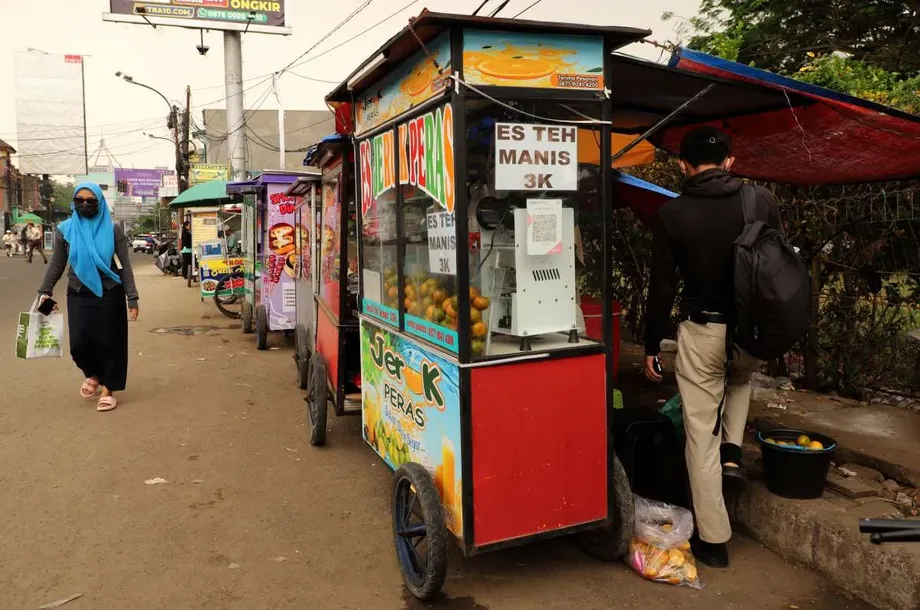
- Households remain the biggest spending engine
- Investment and government programmes add momentum
- Trade and digital services broaden the expansion
- The rupiah strengthens as market risks persist
- Budget targets are close, while the 2029 goal is higher
- Key Points
BPS Deputy for Balance Sheets and Statistical Analysis M. Edy Mahmud announced the figures in Jakarta on Thursday, November 5. Economic output reached Rp6,741 trillion at current prices and Rp3,633.2 trillion at constant prices, the measure used to calculate growth after removing the effect of price changes.
The result beat a median forecast of 5.18% in a poll of seven economists. Other estimates included a consensus of 5.20% from 15 institutions and 5.28% from LPEM FEB UI, the economics research institute at the University of Indonesia. CORE Indonesia analyst Yusuf Rendy Manilet had doubted that growth would exceed 5.1%.
Factories benefited from greater demand for palm oil products used in biodiesel, while trade, construction, hotels and restaurants also expanded. Household consumption and investment together accounted for 82.78% of gross domestic product, or GDP, showing how heavily the economy depends on spending at home and the creation of productive assets.
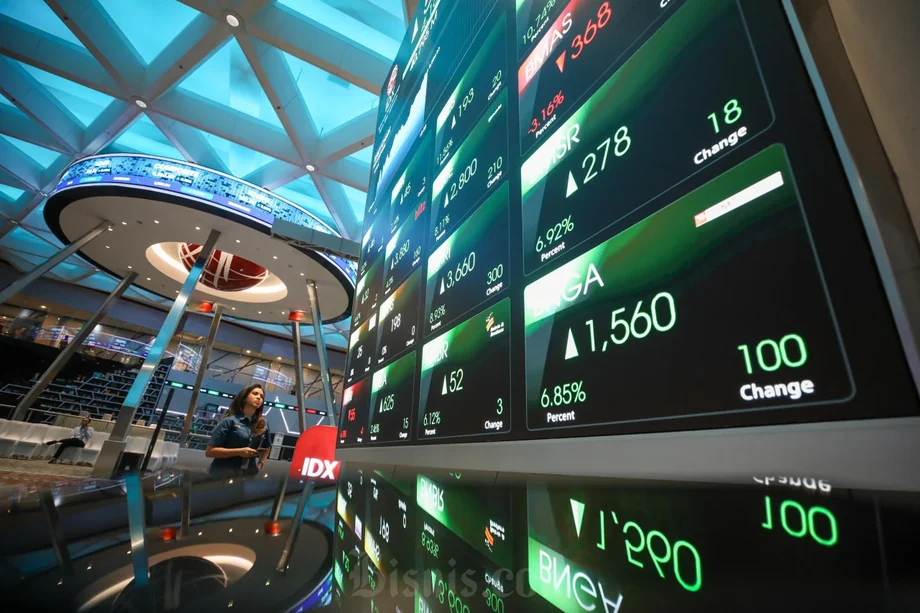
The stronger figures arrived during a more unsettled period for financial markets. Investors have been examining government spending plans and policy direction, while the possibility of a change in Indonesia's stock market classification has added pressure. The GDP release offered a stronger picture of current activity, even as those financial risks continued.
How the latest quarter compares
Annual growth accelerated from 5.29% in the second quarter but remained below the 5.61% recorded in the first. The third quarter therefore marked a recovery in the annual growth rate after the slowdown earlier in the year.
Against previous third quarters, the 5.47% result was stronger than every reading since 2023, although it remained below the 5.73% expansion recorded in 2022. The sequence shows a gradual improvement over the past three years:
- Third quarter of 2022: GDP grew 5.73% from a year earlier.
- Third quarter of 2023: growth slowed to 4.94%.
- Third quarter of 2024: growth edged up to 4.95%.
- Third quarter of 2025: growth reached 5.04%.
- First and second quarters of 2026: growth was 5.61% and 5.29%, respectively.
- Third quarter of 2026: growth rose to 5.47%, announced on November 5.
Compared with the immediately preceding quarter, output increased 1.59%, beating a forecast of 1.3% but slowing from approximately 3.7% in the second quarter. Mahmud said this followed the usual seasonal pattern, with third quarter growth generally lower than second quarter growth.
The two comparisons answer different questions. Annual growth compares July through September with the same months in 2025. Quarterly growth compares those months with April through June 2026. The annual rate can rise while the quarterly rate slows because each uses a different starting point.
Manufacturing supplies the largest sector contribution
Manufacturing grew 5.87% from a year earlier and supplied about 22% of the economy's total growth, calculated by dividing its 1.20 percentage point contribution by the national growth rate of 5.47%. BPS identified it as the largest contributor among business sectors.
A sector's growth rate measures how quickly its own output increases. Its contribution measures how much it adds to national growth. A large industry can supply more of the economy's expansion than a smaller industry growing at a faster rate.
Food and beverage manufacturing expanded 7.09%, supported by exports of crude palm kernel oil and products derived from crude palm oil, as well as domestic use of palm oil for biodiesel. Chemicals, pharmaceuticals and traditional medicines grew 8.10%, helped by fuel production and increased fertilizer output before the planting season.
Basic metals production rose 9.94%. BPS linked that increase to exports of nonferrous metal products, including copper cathodes, nickel matte and aluminium. Demand from both domestic and overseas buyers supported the wider manufacturing expansion.
BPS also cited an Industrial Confidence Index reading of 52.75 and a Bank Indonesia Purchasing Managers' Index reading of 52.28. Both were in expansion territory, consistent with the rise in factory output.
Biodiesel policy reaches several industries
Indonesia's expansion of mandatory biodiesel blending helped connect agricultural products with factory growth. Biodiesel is fuel made from biological materials, including palm oil, that can be blended with conventional diesel.
BPS linked increased production of fatty acid methyl ester, or FAME, to the introduction of the B50 mandate on July 1, 2026. FAME is the processed component used in biodiesel, while B50 refers to a blend containing 50% biodiesel.
The policy supported activity in more than one manufacturing category. Palm oil processing helped food and beverage output, while the production of FAME supported chemicals. That connection helps explain why the same fuel programme appeared among the drivers of several industries.
Fertilizer production and metal exports supplied other sources of growth alongside biodiesel. Manufacturing's contribution therefore reflected several forms of demand rather than a single product.
Households remain the biggest spending engine
Household consumption represented 51.97% of GDP and grew 5.04% from a year earlier. Its contribution of 2.62 percentage points amounted to almost 48% of the economy's total expansion, calculated against the 5.47% headline growth rate.
Spending on restaurants and hotels rose 6.59%, while transport and communications consumption increased 5.83%. BPS linked those gains to purchases of prepared food, greater mobility, and entertainment and sporting events.
Several activity measures also pointed to rising spending. The value of online goods and services transactions increased 22.02%, electronic money transactions rose 29.23%, and imports of consumer goods grew 12.77%. Motorcycle sales volumes increased 8.92%, while passenger car sales volumes rose 25.95%.
Hotels and restaurants stood out on the production side. Accommodation and food services grew 11.22%, the fastest rate among business sectors, supported by greater hotel occupancy and restaurant spending. Financial services expanded 8.47%, and other services rose 8.32%.
Those figures describe the economy from two useful angles: what households bought and what businesses produced. A meal purchased by a family appears as household spending, while the restaurant's activity forms part of the services economy.
Investment and government programmes add momentum
Gross fixed capital formation, the GDP measure covering investment in assets such as buildings, machinery and vehicles, grew 6.06%. It accounted for 30.81% of GDP and contributed 1.91 percentage points to national growth.
Vehicle investment rose 12.96%, drawing on domestic production and imports. Imports of capital goods, such as equipment used by businesses, increased 12.22%. Separately, investment realization tracked by the investment authorities grew 7.59%, with foreign investment rising 27.45%.
Government consumption increased 8.95% and contributed 0.62 percentage points to GDP growth. BPS linked the increase to personnel spending, including civil service salaries and allowances, and purchases of goods and services. The free nutritious meals programme was among the activities supported by spending on goods delivered to the public.
Government capital expenditure rose 20.15%. Construction expanded 6.42%, compared with 4.21% a year earlier, supported by infrastructure projects undertaken by public and private organizations.
BPS named village and neighbourhood cooperatives under the Merah Putih programme, public housing, Sekolah Rakyat, Sekolah Garuda and school revitalization among the projects supporting construction. Public spending was therefore reaching the economy through both current purchases and the building of assets.
Trade and digital services broaden the expansion
Wholesale and retail trade, including vehicle repairs, grew 7.14%, up from 5.46% in the third quarter of 2025 and 4.85% in the same period of 2024. The sector contributed 0.94 percentage points to national growth.
BPS attributed the improvement to stronger vehicle sales, particularly commercial and electric vehicles, and greater supplies of domestic manufactured goods and imports. Rising production and purchasing activity gave distributors and retailers more business.
Information and communications grew 7.13% and contributed 0.49 percentage points. Increased data traffic, use of data centres and electronic commerce transactions supported the sector.
Manufacturing, trade, construction, and information and communications together supplied 3.25 percentage points, or about 59% of total growth. BPS said all business sectors expanded from a year earlier. The five largest sectors by economic size, manufacturing, agriculture, trade, construction and mining, represented 65.31% of GDP.
The rupiah strengthens as market risks persist
The rupiah strengthened after the GDP announcement. At 11:10 a.m. Jakarta time on November 5, Refinitiv data put the currency at Rp18,090 per US dollar, up 0.36% from the previous close of Rp18,155. It had opened at Rp18,120.
The improvement that morning followed broader pressure on the currency and domestic assets. Middle East tensions, a US Federal Reserve stance favouring tighter monetary conditions, and scrutiny of Indonesia's fiscal plans had weighed on sentiment.
Index provider MSCI had warned that Indonesia could be reclassified as a standalone market because of concerns about transparency and how readily investors can access and trade shares. Such a classification change could affect investment decisions by funds that follow international market indexes.
RHB economists Barnabas Gan and Wong Xian Yong assessed a possible economic cost in a stress scenario for 2027. They estimated that a 25% decline in the Jakarta Composite Index during the second half of that year following a downgrade could reduce annual GDP growth by about 0.6 percentage point, from 5.1% to 4.5%.
The economists described a route from weaker market confidence to slower foreign and domestic investment. The timing and outcome of any MSCI reclassification remain undecided.
Budget targets are close, while the 2029 goal is higher
Growth of 5.45% through September placed Indonesia close to the government's 5.4% budget assumption for 2026. Finance Minister Suahasil Nazara has said annual growth could reach 5.5%. The fourth quarter will determine the final result for the year.
Bank Indonesia's growth outlook ranges from 4.9% to 5.7%. At its October meeting, the central bank described the domestic economy as resilient while calling for additional improvement. Its assessment was that the economy needed:
further strengthening
The BI Rate remained at 5.75%. That policy interest rate influences borrowing conditions, which matter for businesses considering new equipment or expansion and households considering financed purchases.
President Prabowo Subianto's goal is to raise growth to 8% by 2029, a rate 2.53 percentage points above the latest quarterly annual reading. Reaching it would require a much faster sustained expansion than the economy has achieved so far in 2026.
The latest figures show the main forces supporting current growth: household purchases, investment, manufacturing and government activity. They also show why investor confidence matters. Businesses making decisions about factories, buildings and equipment help determine whether today's expansion can gather pace.
Key Points
- Indonesia's GDP grew 5.47% from a year earlier in the third quarter of 2026, exceeding forecasts.
- Output increased 1.59% from the preceding quarter, while growth through September reached 5.45%.
- Manufacturing contributed 1.20 percentage points to growth, supported partly by palm oil processing and biodiesel production.
- Household consumption contributed 2.62 percentage points and remained the largest spending component.
- Investment grew 6.06%, while government consumption increased 8.95%.
- The rupiah strengthened after the release, while fiscal concerns and possible MSCI reclassification continued to affect market sentiment.
- The government assumes 5.4% growth for 2026, while President Prabowo targets 8% by 2029.