Customer complaints put a shrinking deposit base in focus
PT Bank MNC Internasional Tbk. said on November 4, 2026, that recovery of its digital transaction services was still under way, following customer complaints about difficulties making transactions and withdrawing money. The disruption drew questions from the Indonesia Stock Exchange and scrutiny from the Financial Services Authority, known as OJK.
Contents
- Customer complaints put a shrinking deposit base in focus
- What the bank said about access to money
- OJK pairs reassurance with closer monitoring
- How the events unfolded
- Time deposits drove the funding decline
- Lending increased while deposits contracted
- Higher interest costs squeezed earnings
- Expenses rose as profit fell
- Loan quality weakened and the capital ratio fell
- Key Points
The bank, which trades under the ticker BABP and is associated with businessman Hary Tanoesoedibjo, had already recorded a substantial fall in customer funding. At September 30, 2026, total customer deposits stood at Rp11.32 trillion, down 17.13% from Rp13.66 trillion a year earlier. Time deposits accounted for the largest decline, falling Rp2.74 trillion to Rp8.50 trillion.
OJK banking supervision chief Dian Ediana Rae said on November 3 that the regulator had found no serious issue, including with solvency, the bank's ability to meet its financial obligations. The regulator nevertheless urged management to resolve any technical or liquidity problems affecting access to money.
The financial figures show why customers and regulators are paying attention: deposits and assets contracted while lending increased, interest costs rose faster than interest income, and several measures of loan quality weakened. The bank remained profitable, reporting Rp46.63 billion in net earnings for the first nine months of 2026.
What the bank said about access to money
MNC Bank's November 4 response to an exchange request for clarification said work to restore digital transactions was continuing. Management said it was taking steps to bring all service channels back to normal as quickly as possible.
Customers were directed to MNC Bank ATMs for cash withdrawals and balance checks, or to branches during their normal opening hours. The bank also advised customers to contact its call center for further information.
Management described the operational impact as longer queues at branches and the call center. It said the disruption had caused no material negative effect on the bank's financial condition. Those assessments came from the bank, while customers' complaints concerned their immediate ability to use their accounts.
MNC Bank also said it had responded to customers visiting branches or calling for assistance and had prepared information graphics for its website and official accounts. It gave no firm completion date for recovery or detailed explanation of the underlying cause.
OJK pairs reassurance with closer monitoring
Dian delivered his assessment to reporters in Makassar on November 3. He said OJK's supervision had found no serious problem, particularly concerning solvency, and asked customers to remain calm and communicate with the bank while problems were addressed.
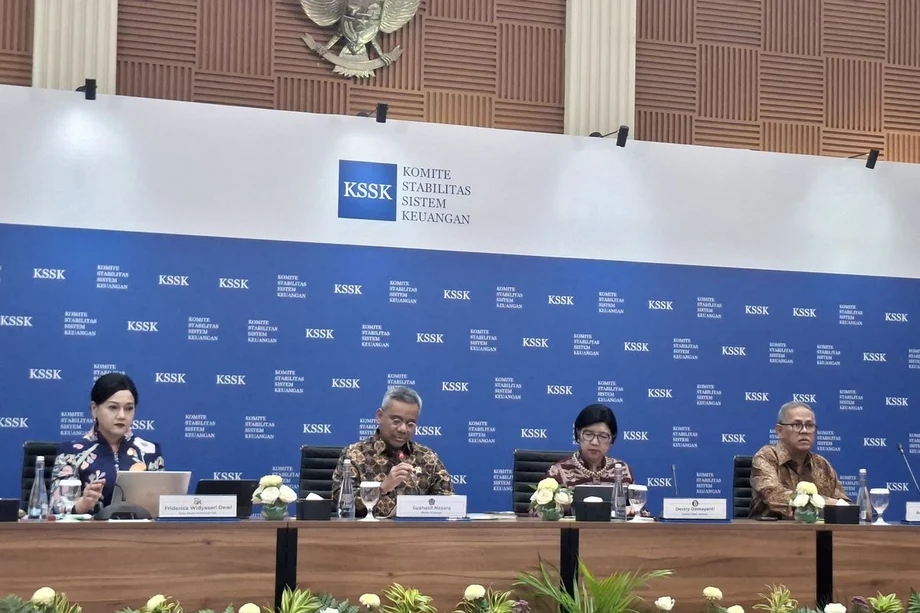
OJK chair Friderica Widyasari Dewi addressed the situation at a Financial System Stability Committee, or KSSK, press conference the same day. She said the regulator was examining the bank's condition and checking that it could handle customer inquiries and meet its obligations under applicable rules.
Friderica said supervisory action would follow OJK's evaluation of the bank's condition, with consumer protection and prudent banking practices guiding its response. She also described continued monitoring of liquidity across the banking industry and coordination with other authorities to protect financial stability.
Solvency and liquidity describe different needs. Solvency concerns a bank's financial capacity to cover its obligations. Liquidity concerns having money available when payments or withdrawals fall due. A digital service disruption concerns the channels customers use to access that money. OJK's response addressed both financial oversight and the practical need to restore service.
How the events unfolded
The financial reporting date came more than a month before the bank's explanation of its digital service recovery. Keeping those dates separate helps readers follow the change in the balance sheet and the subsequent response to customer complaints.
- September 30, 2026: MNC Bank ended the reporting period with Rp11.32 trillion in customer deposits, Rp18.79 trillion in assets and Rp12.02 trillion in loans.
- November 3, 2026: Dian discussed the bank's condition in Makassar, while Friderica addressed OJK's monitoring at the KSSK press conference.
- November 4, 2026: MNC Bank answered the stock exchange's request for clarification and said recovery of digital transaction services remained in progress.
The immediate task for management was restoring reliable access while handling inquiries through branches, ATMs and the call center. OJK's parallel task was checking the bank's condition and its ability to meet customer obligations.
Time deposits drove the funding decline
MNC Bank's total customer deposits fell by about Rp2.34 trillion over the year, from Rp13.66 trillion to Rp11.32 trillion. Time deposits dropped by an even larger amount, Rp2.74 trillion, from Rp11.24 trillion to Rp8.50 trillion, a decline of 24.35%.
Time deposits are funds customers place with a bank for an agreed period, usually in return for interest. They represented roughly 75% of MNC Bank's customer deposits at the end of September, calculated from Rp8.50 trillion out of Rp11.32 trillion. A year earlier, their share was about 82%, using Rp11.24 trillion out of Rp13.66 trillion.
Current accounts moved in the opposite direction, rising 51.01% to Rp1.20 trillion. These accounts are generally used for frequent payments and transactions. Savings balances slipped 0.51% to Rp1.62 trillion.
The growth in current accounts softened the funding decline but could not replace the money lost from time deposits. The figures describe a smaller deposit base with a changed mix: less funding committed for a set period and a larger share in accounts used for everyday transactions.
Lending increased while deposits contracted
MNC Bank expanded lending by 8.38%, from Rp11.09 trillion to Rp12.02 trillion, even as customer deposits declined. Total assets moved in the other direction, falling 8.29% from Rp20.49 trillion to Rp18.79 trillion.
The reported loan to deposit ratio rose from 80.87% to 105.83%, an increase of 24.96 percentage points. This ratio compares lending with customer deposits. Expressed simply, the latest figure means the bank had about Rp106 in loans for every Rp100 in deposits under the ratio's calculation.
Banks can fund their activities through sources other than customer deposits, including capital and borrowing. A ratio above 100% means those other funding sources take on greater importance. Loans also return money over time through repayments, while customers may need access to deposits much sooner.
The combination of growing loans and fewer deposits therefore makes the availability and timing of funding more important for daily operations. Customers experience that issue in concrete terms: whether a withdrawal or payment can be completed when needed.
Higher interest costs squeezed earnings
MNC Bank's interest expense rose 51.05% from a year earlier, far faster than the 6.52% increase in interest income. Interest expense is what the bank pays for funding, including deposits; interest income is what it earns from lending and other assets that pay interest.
Net interest income, the amount left after subtracting interest expense from interest income, was Rp389.76 billion. The stated previous amount was Rp434.29 billion. Those two amounts imply a decline of about 10.25%, although the stated percentage decline was 44.52%.
The bank's net interest margin also narrowed, from 3.20% to 2.76%, a fall of 0.44 percentage points. This measure shows net interest earnings relative to assets that generate interest. A lower margin means the bank earns less from that spread for a given amount of such assets.
Commission income provided some support, reaching Rp100.3 billion. The stated growth rate was 56.59%, while the stated earlier amount of Rp43.71 billion would imply growth of about 129.47%. Both sets of figures point to an increase, but the amounts and percentages require reconciliation. Gains from selling financial assets fell 42% to Rp17.25 billion.
Expenses rose as profit fell
MNC Bank's personnel expenses increased 9.51% to Rp184.45 billion during the first nine months of 2026. Promotion expenses rose 3.83% to Rp17.93 billion, and other expenses increased 7.82% to Rp248.08 billion.
Operating profit fell 18.12% to Rp52.42 billion. Nonoperating income was stated at Rp6.72 billion, and net profit after tax came to Rp46.63 billion.
Compared with Rp60.39 billion a year earlier, net profit declined by Rp13.76 billion, or about 22.78%. A stated decline of 13.8% elsewhere in the financial account conflicts with those amounts; 22.78% matches the calculation.
The earnings picture combines several pressures rather than a single weak item. Funding costs grew quickly, the interest margin narrowed and operating expenses rose. Higher commission income helped, while lower gains from asset sales reduced another source of earnings. The result was a bank still making a profit, but with less income left after costs and tax than a year earlier.
Loan quality weakened and the capital ratio fell
MNC Bank's gross nonperforming loan ratio rose from 4.00% to 4.64%. Nonperforming loans are loans on which borrowers are having serious repayment difficulties. The increase was 0.64 percentage points.
The net nonperforming loan ratio increased from 2.80% to 3.50%. This measure reflects allowances set aside against problem lending. The broader ratio of loans classified as low quality rose more sharply, from 24.41% to 34.84%, an increase of 10.43 percentage points.
Low quality lending covers a broader group than loans already classified as nonperforming. The increase means a larger share of the loan book required closer attention as the bank continued expanding credit. Borrower repayments matter to both earnings and the flow of cash back into the bank.
The capital adequacy ratio fell from 24.50% to 20.68%, a decrease of 3.82 percentage points. This ratio compares qualifying capital with assets weighted for risk. Capital provides a cushion against losses, while the risk weighting gives greater weight to exposures considered more likely to produce losses.
OJK's assessment and the financial figures address different parts of the same situation. The regulator said its supervision had found no serious solvency issue. The September figures showed a smaller funding base, weaker profitability, deteriorating loan quality and a reduced capital ratio. Restoring dependable transactions would address customers' immediate problem, while funding, earnings and loan repayments would remain central to the bank's financial management.
Key Points
- MNC Bank said on November 4, 2026, that recovery of digital transaction services was continuing after complaints about transactions and withdrawals.
- OJK said it had found no serious solvency issue and was monitoring the bank's condition and handling of customer obligations.
- Total customer deposits fell 17.13% to Rp11.32 trillion, led by a Rp2.74 trillion decline in time deposits.
- Loans rose to Rp12.02 trillion while the reported loan to deposit ratio increased to 105.83%.
- Net profit fell to Rp46.63 billion from Rp60.39 billion, a decline of about 22.78%.
- Loan quality measures weakened and the capital adequacy ratio declined to 20.68%.
- The bank directed customers to its ATMs, branches and call center while digital service recovery continued.