A Fresh Revision Five Months After the Latest Rules
Indonesia is preparing another change to its rules for natural resource export earnings, with Finance Minister Suahasil Nazara saying the government wants more incoming US dollars converted into rupiah. The announcement comes just five months after Government Regulation No. 21 of 2026 took effect on June 1.
Contents
- A Fresh Revision Five Months After the Latest Rules
- Keeping Dollars and Converting Them Are Different Goals
- What the June Framework Requires
- State Banks Have the Central Role
- Why Exporters Asked for More Rupiah
- Investment Options and Tax Incentives
- How the Policy Reached This Point
- What the Next Revision Will Change for Businesses
- Key Points
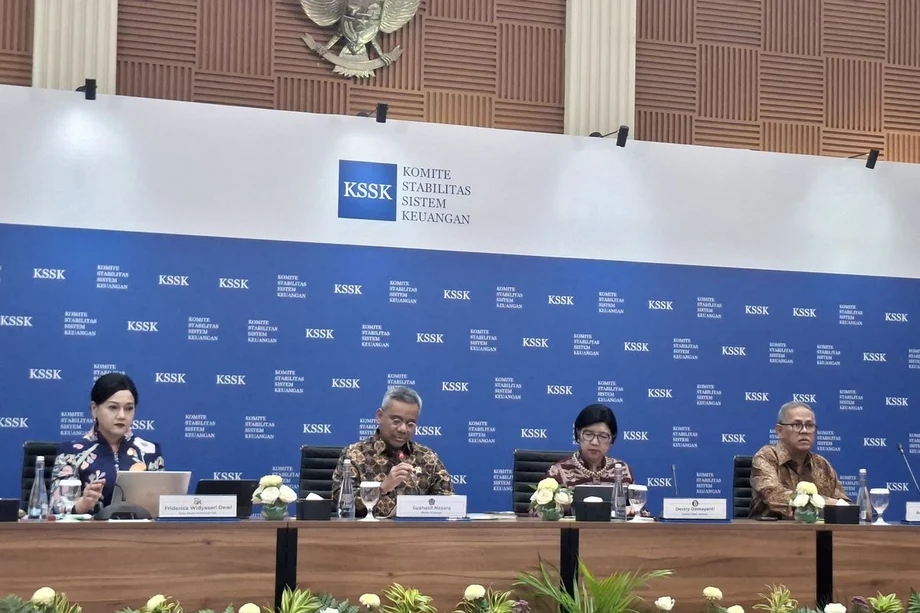
Speaking at Bank Indonesia in Jakarta on November 3, 2026, after a regular meeting of the Financial System Stability Committee, known as KSSK, Suahasil said officials were drafting the revision to strengthen Indonesia's financial sector and financial markets.
The proposal would revisit a policy that has already undergone three revisions since Government Regulation No. 36 of 2023. Those changes came through Government Regulations No. 8 of 2025, No. 2 of 2026 and No. 21 of 2026. Another completed amendment would be the fourth.
The immediate issue is a 50% ceiling on converting foreign currency export earnings into rupiah. Suahasil described that ceiling as the current restriction. However, Coordinating Minister for Economic Affairs Airlangga Hartarto's detailed explanation in May attached the 50% limit specifically to participants covered by bilateral trade agreements or understandings with Indonesia.
Suahasil did not announce a replacement percentage, an implementation date or the categories of exporters that would receive greater conversion freedom. Those details will determine how much the proposal changes companies' access to rupiah and their obligations to hold export earnings in Indonesia.
Keeping Dollars and Converting Them Are Different Goals
The policy covers Devisa Hasil Ekspor Sumber Daya Alam, usually shortened to DHE SDA. In plain English, that means foreign currency earned from natural resource exports. Indonesia's major commodity exports include palm oil, thermal coal, nickel, tin, rubber and coffee.
Two separate decisions sit at the center of the rules: where exporters keep their earnings and which currency they hold. Bringing dollars into an Indonesian bank increases the supply of foreign currency within the country. Converting those dollars into rupiah means selling the foreign currency and receiving Indonesia's currency in exchange.
Earlier measures focused on keeping foreign currency inside Indonesia to support dollar availability and exchange rate stability. Suahasil's November announcement puts greater weight on conversion into rupiah. Both objectives direct export income toward the domestic financial system, but they affect companies' money differently.
An exporter may receive dollars from an overseas customer while paying employees, suppliers and other operating expenses in rupiah. Holding dollars domestically satisfies a placement requirement, while conversion supplies the currency needed for those local payments. The proposed revision addresses that second step.
What the June Framework Requires
Airlangga outlined Government Regulation No. 21 of 2026 at a Jakarta press conference on May 20. He said natural resource exporters must bring 100% of their export proceeds into Indonesia's financial system, with full compliance expected.
The amount that must remain in the system, and for how long, varies by sector. Airlangga said oil and gas exporters must retain at least 30% of proceeds for at least three months. Exporters outside oil and gas must retain 100% for at least 12 months.
Repatriation and retention therefore describe different obligations. Repatriation means bringing the money into Indonesia. Retention means keeping a specified share there for a specified period. Under Airlangga's explanation, both groups must bring in all their proceeds, but oil and gas exporters face a smaller minimum retention share and a shorter holding period.
For illustration, applying those percentages to $100 of export earnings gives a minimum retained amount of $30 for an oil and gas exporter, compared with $100 for an exporter outside that sector. The corresponding minimum periods are three months and 12 months. This difference matters when companies calculate how much money is available for payments and investment.
State Banks Have the Central Role
Airlangga said retained DHE SDA generally must be placed through Himbara, the association of Indonesia's state owned banks. The policy directs these export funds toward a narrower group of institutions than arrangements that allowed exporters to use any Indonesian bank.
The framework prepared before 2026 described eligible institutions as state owned banks authorized to conduct foreign exchange business. It excluded private banks and the Indonesia Eximbank, known as LPEI, from the standard placement route. Companies using those institutions would need to reorganize the banking arrangements used for covered proceeds.
Airlangga's May explanation also set out an exception involving trade partners with bilateral agreements or understandings with Indonesia. Eligible exporters could retain 30% for three months at banks outside Himbara. He discussed the exception in connection with mining businesses, including oil and gas and other minerals.
That explanation also placed the 50% conversion ceiling within the bilateral arrangement provisions, whereas Suahasil's November remarks described the ceiling more broadly. The final wording of the next regulation will be particularly important for companies trying to determine which conversion limit applies to their earnings.
Why Exporters Asked for More Rupiah
Palm oil and mining businesses had raised concerns before the latest framework took effect. Their central objection was practical: export receipts often arrive in foreign currency, while much of the money needed to keep operations running must be paid in rupiah.
Hadi Sugeng, secretary general of the palm oil producers association GAPKI, explained the industry's concern in December 2025:
We need funds for our operation, mostly in rupiah ... We hope they will reconsider,
Hendra Sinadia, executive director of the Indonesian Mining Association, also said at the time that miners hoped the government would retain the existing rules. Both industries were responding to plans that would cap conversion at 50% while requiring foreign currency earnings to remain at state banks.
Febrio Kacaribu, a senior Finance Ministry official, said on December 18, 2025, that exporters needing rupiah beyond the conversion ceiling should obtain bank loans. That approach would give companies local currency while keeping more export dollars in the banking system.
For a business, however, borrowing and converting export income are different ways to fund expenses. A loan creates a repayment obligation and may carry interest costs. Greater permission to convert earnings would allow exporters to meet more rupiah expenses using income they have already received. Suahasil's proposal responds to the same conversion issue the associations raised, although he did not specify how far the government would relax the ceiling.
Investment Options and Tax Incentives
The government has also sought to make domestic placement more attractive. In December 2025, Febrio said Indonesia would introduce investment instruments for natural resource export earnings, including competitive series of foreign currency bonds issued domestically.
The framework described foreign currency government securities, known as SBN Valas, as eligible instruments. A government security is a borrowing instrument: the buyer provides money to the government in return for payments under the instrument's terms. A foreign currency security allows the investment to remain denominated in a currency such as the US dollar.
Exporters using these instruments would still face restrictions on freely withdrawing funds during the retention period. Investment returns and access to cash therefore need to be considered together, particularly for companies with frequent operating payments.
Airlangga also described income tax incentives on returns from DHE SDA placement instruments. Depending on the placement period, the tax rate could fall to 0%, compared with rates reaching 20% for regular instruments. Those figures concern tax on the income generated by the placement, rather than a tax on the entire amount of export proceeds.
The framework prepared before 2026 also broadened permitted uses of retained proceeds to include repaying loans, including working capital facilities. Working capital is the money a business uses for everyday operations. The described change removed a previous condition linked to whether the relevant goods or services were available domestically.
How the Policy Reached This Point
The rules have changed repeatedly as the government has tried to keep export income in Indonesia while managing business demands for access to cash. The sequence is important because the January 2026 plans and the regulation introduced in June belong to different stages of that process.
- 2023: Government Regulation No. 36 established the natural resource export proceeds framework.
- 2025: Government Regulation No. 8 revised that framework.
- December 18, 2025: Febrio described plans for state bank placement, retention for at least one year and a 50% conversion ceiling, with implementation intended from January 1, 2026.
- 2026: Government Regulation No. 2 became another amendment to the framework.
- May 20, 2026: Airlangga explained Government Regulation No. 21, including sector specific retention requirements and exceptions involving bilateral trade arrangements.
- June 1, 2026: Government Regulation No. 21 took effect.
- November 3, 2026: Suahasil announced that another revision was being drafted to encourage greater conversion into rupiah.
The framework prepared for January was described as applying in full to export declarations issued on or after January 1, with transitional arrangements for earlier declarations. Export declarations are customs documents recording goods being sent abroad. Their issue dates can determine which set of requirements covers the resulting earnings.
Airlangga linked the June measures to financing development, investment and the processing of natural resources within Indonesia. He also described support for exports, economic stability and domestic financial markets as policy goals.
What the Next Revision Will Change for Businesses
Suahasil's stated objective would give exporters greater room to turn incoming dollars into rupiah. The practical effect will depend on the permitted percentage, the businesses covered and how the conversion provisions fit with retention requirements.
Companies must manage several parts of the framework together: bringing earnings into Indonesia, selecting an eligible bank, holding the required amount for the required period and obtaining enough usable cash for operations. A change to conversion could ease one part of that process while leaving placement and retention duties in place.
Private banks also have an interest in the outcome because rules directing funds to state banks affect where export deposits are held. Febrio said in December that he expected a limited liquidity effect on banks outside state ownership because they could continue serving exporters beyond the natural resource sectors.
The government's latest announcement shifts attention toward how retained earnings can circulate in rupiah. For exporters, the concrete issue is whether the next regulation will let them use more of their own receipts for domestic expenses instead of arranging additional borrowing.
Key Points
- Finance Minister Suahasil Nazara said on November 3, 2026, that another revision of natural resource export proceeds rules was being drafted.
- The government wants more incoming export dollars converted into rupiah to support domestic financial markets.
- Government Regulation No. 21 of 2026 took effect on June 1, following two earlier amendments to the 2023 framework.
- Airlangga's May explanation required full repatriation, with minimum retention of 30% for three months for oil and gas and 100% for 12 months for other sectors.
- Retained proceeds generally go through state banks, with specified exceptions involving bilateral trade arrangements.
- Palm oil and mining representatives have sought greater flexibility, citing operational funding needs.
- No replacement conversion percentage or start date for the proposed revision was announced.