Stronger growth meets pressure on household budgets
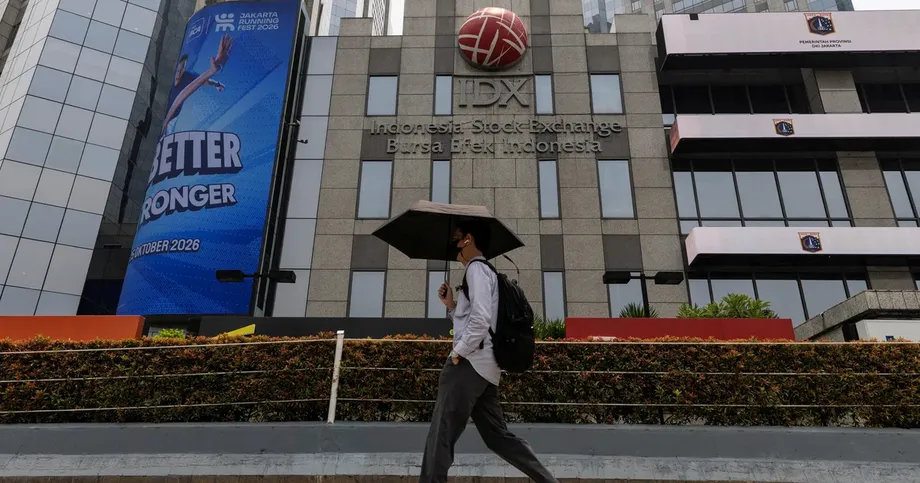
Indonesia's economy expanded 5.47% in the third quarter of 2026 compared with a year earlier, Statistics Indonesia announced on November 5, as manufacturing, household spending and government expenditure supported Southeast Asia's largest economy. Growth exceeded an economist survey forecast of 5.18% and accelerated from 5.29% in the second quarter.
Contents
- Stronger growth meets pressure on household budgets
- What the different growth figures mean
- Manufacturing gains from biodiesel and processing investment
- Consumers remain the main engine
- Government spending rises while investment cools
- Exports improve, but imports still subtract from growth
- More employment, but gains reach people unevenly
- The rupiah complicates interest rate decisions
- Fires and diverging forecasts shape the outlook
- Key Points
Manufacturing contributed 1.20 percentage points to the annual expansion, with palm oil processing for biodiesel among the activities supporting production. Household consumption supplied 2.62 percentage points, making consumers the biggest source of growth when the economy is measured by spending rather than by industry.
The stronger headline arrived alongside a more difficult picture for many families and businesses. Household spending grew more slowly than investment or government consumption, the rupiah had lost 8.3% against the US dollar during 2026, and October inflation stood at 3.23%. Forest fires and drought also weighed on parts of the country.
Output increased 5.45% during January through September compared with the same period in 2025, above the 5.4% growth assumption in the 2026 state budget. The final annual result will depend on the fourth quarter, with bank economists offering forecasts ranging from 5.2% to 5.4% and Finance Minister Suahasil Nazara suggesting about 5.5%.
What the different growth figures mean
Statistics Indonesia, known as BPS, put growth from the second quarter to the third at 1.59%, above the forecast of about 1.3% but below the previous quarter's 3.73%. The annual and quarterly figures describe different comparisons: output was growing faster against the same period last year, while its increase from the immediately preceding quarter was smaller.
The quarterly figures are not adjusted for seasonal patterns. Holiday schedules, harvests and the timing of public spending can therefore affect comparisons between consecutive quarters.
Gross domestic product, or GDP, measures the value of goods and services produced within a country. Indonesia's GDP at current prices reached Rp6,741 trillion in the quarter. Growth calculations use prices held constant to separate changes in production from changes in prices.
The recent timeline shows both the acceleration and the next tests:
- Third quarter of 2025: annual GDP growth was 5.04%.
- Second quarter of 2026: annual growth reached 5.29%.
- Third quarter of 2026: annual growth rose to 5.47%, taking growth for the first nine months to 5.45%, compared with 5.01% a year earlier.
- November 5, 2026: BPS released the third quarter figures in Jakarta.
- December 2026: OCBC expects Bank Indonesia to raise its benchmark interest rate at its policy meeting.
Manufacturing gains from biodiesel and processing investment
Manufacturing remained Indonesia's largest industry, accounting for 19.22% of GDP at current prices. Its output grew 5.87% from a year earlier and 5.44% from the preceding quarter, making it the strongest industry in the quarterly comparison.
Indonesia's expansion of mandatory biodiesel use supported the conversion of palm oil into fuel. The programme creates demand for processing within Indonesia, connecting agricultural output with industrial production and fuel supply.
Nickel processing also attracted investment into smelters and industries connected with batteries. These projects form part of the government's downstream processing strategy, which seeks to turn raw materials into more valuable products domestically before they are sold.
Manufacturing's size helps explain its large contribution to growth. Accommodation and food services grew faster, at 11.22% annually, but a smaller industry can add less to national output than a much larger industry growing at a lower rate.
Trade contributed 0.94 percentage points to annual GDP growth, construction added 0.62 points, and information and communications supplied 0.49 points. Manufacturing, agriculture, trade, construction and mining together represented 65.31% of the economy.
Consumers remain the main engine
Household consumption accounted for 51.97% of GDP and grew 5.04% from a year earlier. Its 2.62 percentage point contribution represented almost half of the economy's total 5.47% expansion.
BPS connected consumer activity with online purchases, greater mobility and tourism. The value of online transactions for goods and services increased 22.02% from a year earlier, while accommodation and food services continued to record strong growth.
Household spending nevertheless showed little acceleration. Its annual growth was close to the second quarter's 5.06% and below the first quarter's 5.52%. Spending fell 0.57% from the preceding quarter, while Bank Indonesia's average consumer confidence index declined to 117.8 from 120.6.
Consumers were therefore still supporting expansion, but spending was not gathering speed in the same way as the headline GDP figure. Food prices, borrowing costs and the ability to find reliable work remain concrete concerns for households deciding how much they can spend.
Government spending rises while investment cools
Government consumption grew 8.95% annually, the fastest increase among the main spending components. Civil service salaries and allowances, purchases of goods and services, and the free nutritious meals programme helped support expenditure.
Public consumption increased 15.09% over the first nine months of 2026. Its third quarter annual growth, however, was slower than the second quarter's roughly 16%, reducing its contribution to GDP growth to 0.62 percentage points from 1.07 points.
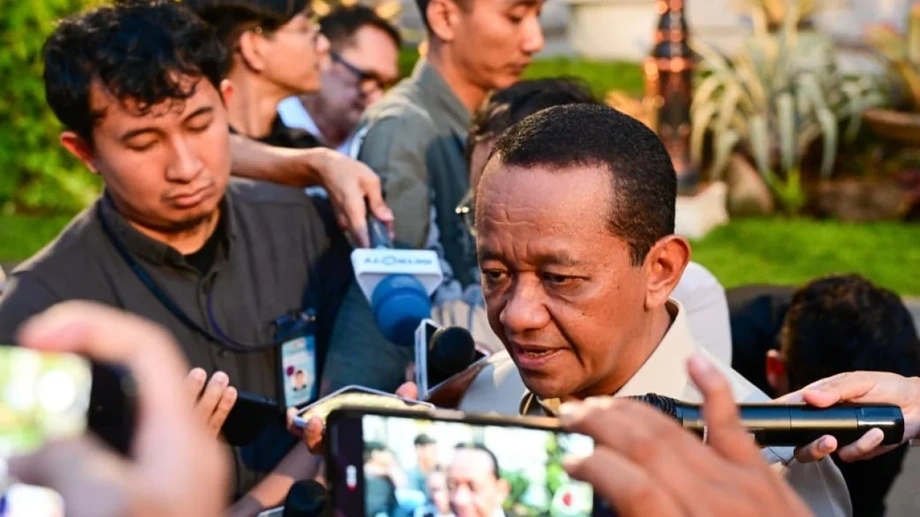
Suahasil Nazara, Indonesia's finance minister, pointed to domestic demand and budget support before the GDP release. He described the basis for his growth outlook:
If I may put it this way, growth will likely remain strong, supported by domestic economic activity,
Suahasil cited subsidies, social protection and efforts to stabilise food and energy prices, alongside investment in processing projects and infrastructure. These measures support demand by helping households meet essential costs and by directing spending towards businesses and public projects.
Gross fixed capital formation grew 6.06%, compared with 6.87% in the second quarter. This measure covers investment in assets such as buildings, machinery and equipment that can support production over time. Investment realisation reached Rp528.7 trillion, up 7.6%, under a separate investment tracking measure.
Investment and public spending both expanded strongly, yet both grew more slowly than in the second quarter. The acceleration in GDP also drew support from a smaller drag from net exports and a larger contribution from changes in inventories, meaning goods businesses hold for future use or sale.
Exports improve, but imports still subtract from growth
Exports of goods and services increased 7.49% from the preceding quarter. On an annual basis, exports in the GDP accounts grew 4.59%, while imports rose faster, at 7.31%.
Net exports, the difference between exports and imports in the GDP calculation, subtracted 0.3 percentage points from annual growth. That was a smaller drag than the second quarter's 0.9 percentage points, helping explain why total growth accelerated even as several domestic spending components slowed.
Imports are subtracted in the GDP calculation because household spending, business investment and government purchases can include goods made abroad. Imported machinery may help an Indonesian factory produce more later, while the machine itself was produced elsewhere.
The merchandise trade balance, which tracks goods crossing borders, moved to a surplus of approximately US$7 billion in the third quarter from a deficit of about US$2 billion in the second. September's surplus was US$3.36 billion, bringing the January through September total to US$10.61 billion.
September's trade figures also showed Indonesia's exposure to energy costs. Trade outside oil and gas produced a US$5.67 billion surplus, while oil and gas recorded a US$2.32 billion deficit. Higher international energy prices can increase the import bill even when manufactured and agricultural exports perform well.
More employment, but gains reach people unevenly
BPS reported 147.99 million employed people in August 2026, an increase of 1.44 million from August 2025. The unemployment rate was 4.75%, with agriculture, trade and manufacturing employing the largest numbers of workers.
Full time workers represented 67.47% of employment, while formal workers accounted for 42.07%. Employment totals and the kinds of jobs people hold are both relevant to household finances, because hours, earnings and employment protections shape how secure a family's income feels.
Mohammad Edy Mahmud, BPS deputy for balance and statistical analysis, said uneven growth across industries and regions could explain why some residents continued to experience financial difficulty. BPS measures the economy across the country, while an individual's experience depends heavily on their job and location.
Josua Pardede, chief economist at Bank Permata, called for job creation, stronger household purchasing power and investment that creates more value domestically. He favoured support for manufacturing that employs many workers, agriculture, trade and small businesses, alongside timely government payments for ongoing projects.
Indonesia's Human Development Index reached 76.59 in 2026, up 0.69 points. The index combines measures of health, education and living standards. DKI Jakarta ranked highest and Papua Pegunungan lowest, showing a wide geographical spread in development alongside national improvement.
The rupiah complicates interest rate decisions
The rupiah strengthened around the GDP release, with the dollar trading near Rp18,090 shortly afterwards. The currency had already been gaining before the announcement as the US dollar weakened, so domestic growth figures arrived during a broader improvement in market conditions.
Indonesia's currency nevertheless remained under pressure over the year. Its 8.3% decline against the dollar compared with falls of 7.7% for the Philippine peso and 6.6% for Thailand's baht. A weaker rupiah makes goods priced in dollars more expensive in local currency.
Bank Indonesia held its benchmark rate at 5.75% at its October 20 to 21 meeting and raised its deposit facility rate to 5.00%. The central bank had increased the benchmark rate three times since May, delivering a cumulative rise of one percentage point.
Lavanya Venkateswaran, senior ASEAN economist at OCBC, expects another increase of 25 basis points in December. A basis point is one hundredth of a percentage point, so that forecast means an increase of 0.25 percentage points. Higher rates can support the currency by making rupiah investments more attractive, while increasing borrowing costs.
October inflation of 3.23% was within Bank Indonesia's target range of 1.5% to 3.5%. Foreign exchange reserves stood at US$146.3 billion at the end of September, equivalent to about 5.3 months of imports. Investor concerns about fiscal plans, policy direction and the risk of a stock market classification downgrade continued to weigh on Indonesian assets.
Fires and diverging forecasts shape the outlook
Kalimantan's economy grew just 1.31% annually in the third quarter, down from 3.11% in the second, as severe forest fires and drought disrupted activity. Forestry output contracted 2.25%, reversing growth of 6.02% in the previous quarter.
Edy Mahmud said the fires had a relatively limited effect on national growth, although affected regions experienced disruption. Mining and quarrying also showed weakness over a longer period, contracting 0.94% during January through September despite recovering in the quarterly comparison.
The Macroeconomic, Finance and Political Economy Research Group at the University of Indonesia's Institute for Economic and Social Research warned about further agricultural disruption from El Niño. The group described how weather pressure could reach family budgets:
If the weather phenomenon materialises, it could disrupt agricultural production, push more people into poverty and fuel inflation, further eroding household purchasing power,
Forecasts reflect different judgments about those risks and continued public spending. OCBC expects annual growth of 5.2%, with scope for a higher result. Bank Danamon Indonesia economist Irman Faiz forecasts 5.4% in 2026 and 5.1% in 2027, and sees potential for momentum to continue into the fourth quarter.
The state budget assumes 5.4% growth, while a July budget outlook put the ambition higher, at 5.6% to 6%. Suahasil has suggested about 5.5%, and Bank Indonesia's forecast range is 4.9% to 5.7%. President Prabowo Subianto's longer term goal is 8% growth by 2029.
October's manufacturing purchasing managers' index rose to 54 from 52 in September. Readings above 50 indicate expansion in surveyed business activity, offering an early signal of continued industrial momentum. Higher energy costs, pressure on the rupiah and household purchasing power remain competing forces as Indonesia enters the final quarter.
Key Points
- Indonesia's GDP grew 5.47% annually in the third quarter, beating the 5.18% survey forecast.
- Growth for January through September reached 5.45%, compared with 5.01% a year earlier.
- Household consumption contributed 2.62 percentage points to growth, while manufacturing contributed 1.20 points on the production side.
- Government consumption rose 8.95% and fixed investment increased 6.06%, though both slowed from the second quarter.
- Employment reached 147.99 million in August, while formal workers represented 42.07% of those employed.
- The rupiah's weakness, regional fire damage and borrowing costs complicate the outlook; OCBC expects a December interest rate increase.