Rice support expands as Indonesia prepares for holiday demand
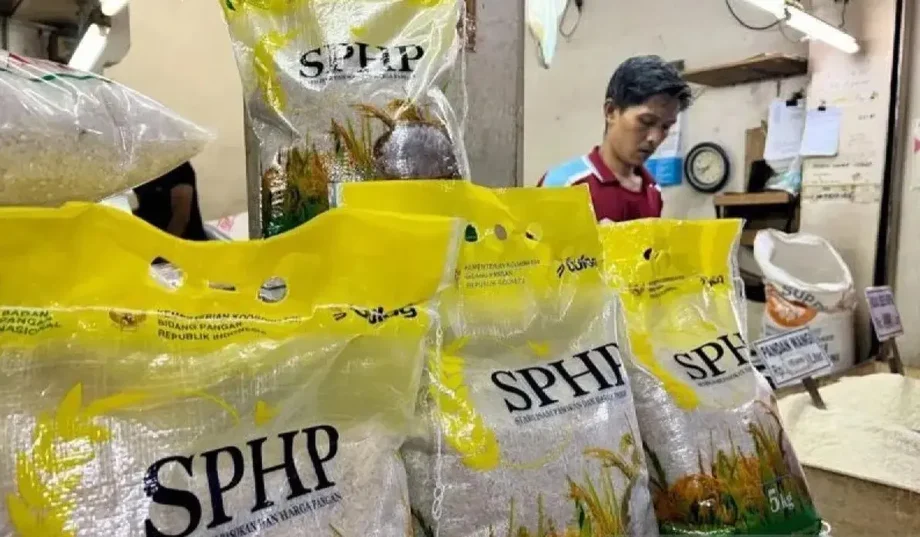
Indonesia has prepared an additional one million tons of rice for its Food Supply and Price Stabilization program, known as SPHP, ahead of Christmas 2026 and New Year 2027. The planned release comes as government rice reserves stand at about 4.5 million tons and officials seek to keep food affordable after a decline in rice production linked to the dry season.
Contents
- Rice support expands as Indonesia prepares for holiday demand
- What the lower rice price means for a household
- Regional price ceilings need attention
- Who can buy rice, and who receives it free?
- Where rice is sold and how much buyers can purchase
- October inflation slowed as rice releases continued
- How the additional allocation fits the year's program
- Corn and older rice target food production costs
- Weather and delivery remain the immediate concerns
- Key Points
Coordinating Minister for Food Zulkifli Hasan outlined the measures on November 3, 2026, during a rice aid distribution event in Lubuk Buaya, Koto Tangah district, Padang. He cited an SPHP selling price of Rp12,500 per kilogram, compared with a market price of around Rp15,000.
Hasan said the government intended the program to protect household spending as the end of the year approached:
SPHP rice is a government measure to ensure a stable supply of rice at affordable prices. Through this program, people are expected to meet their food needs without being burdened by price increases, especially toward the end of the year.
The announcement brings together three interventions aimed at different buyers: subsidized rice for the public, corn for smaller poultry businesses, and rice from older stocks for food manufacturers. Free rice assistance remains a separate program for eligible households.
October inflation figures give the government a more favorable starting point than September. Rice prices were still rising nationally, but much more slowly. The immediate task is to move supplies from warehouses into markets while preserving that slower pace of price increases.
What the lower rice price means for a household
At the prices Hasan cited, SPHP rice costs Rp2,500 less per kilogram than rice selling for around Rp15,000. That is a saving of about 16.7 percent. A household buying 10 kilograms would spend Rp125,000 instead of Rp150,000, leaving Rp25,000 for other needs.
Hasan, whose ministry coordinates food policy, said the government pays the difference:
The government provides a subsidy of Rp2,500 per kilogram so that people can buy SPHP rice at Rp12,500. The price difference is borne by the government, not a loss for the state logistics agency Bulog.
Bulog is the state logistics agency that manages government rice reserves and distributes rice through the program. The subsidy allows consumers to pay the stated lower price while the government carries the financial support described by Hasan.
For households with limited income, even a small rise in the cost of a staple can reduce the money available for other purchases. Hasan said that pressure was a reason for providing a cheaper rice option to the general public.
Regional price ceilings need attention
The Rp12,500 figure announced in Padang sits alongside a regional pricing system for SPHP rice in 2026. The National Food Agency, or Bapanas, sets maximum retail prices across three zones:
- Zone I: Rp12,500 per kilogram in Java, Lampung, South Sumatra, Bali, West Nusa Tenggara and Sulawesi.
- Zone II: Rp13,100 per kilogram in the rest of Sumatra, East Nusa Tenggara and Kalimantan.
- Zone III: Rp13,500 per kilogram in Maluku and Papua.
Padang is in West Sumatra, which falls in Zone II under that schedule. Hasan cited Rp12,500 at the Padang event, while the published zonal rules place the local ceiling at Rp13,100. A ceiling is the highest permitted consumer price, so a sale below it is possible; the announcement did not explain how the quoted price would apply across regions.
Using the same Rp15,000 market comparison, rice bought at the Zone II ceiling would cost Rp1,900 less per kilogram. At the Zone III ceiling, the difference would be Rp1,500. The household saving therefore depends on the price actually charged locally.
Who can buy rice, and who receives it free?
SPHP rice is sold to the general public. Buyers do not have to belong to the group eligible for free food assistance, Hasan said. This gives households outside the aid program access to a government supported rice supply.
Free rice aid is reserved for beneficiary families in deciles one through four, representing the poorest 40 percent of households under the classification used for assistance. A decile is one of 10 equally sized groups in a ranked population. The first four groups together account for four tenths of that population.
The November 3 event in Lubuk Buaya distributed rice aid allocated for October, November and December 2026. Hasan used that occasion to discuss SPHP sales as well, but the two programs serve people in different ways: one provides rice without payment to eligible families, while the other sells rice at regulated prices.
Government rice reserves support both channels. Their shared purpose is to make food accessible, although receiving free aid and buying SPHP rice involve different eligibility and purchasing rules.
Where rice is sold and how much buyers can purchase
Bapanas lists official SPHP sales channels including traditional market retailers, Bulog's Rumah Pangan Kita outlets, participating modern retailers, government food outlets and Merah Putih village or urban cooperatives. Bulog also distributes rice through Gerakan Pangan Murah, the government's affordable food market events, and other retail partners.
Head of Bapanas Decree No. 34 of 2026 sets purchase limits according to package size. Consumers may buy up to five packages weighing five kilograms each, for a total of 25 kilograms. For packages weighing two kilograms, the stated limit is two packages, totaling four kilograms.
Those limits are intended to spread supplies among buyers and prevent large purchases for resale. Consumers are prohibited from reselling SPHP rice after buying it.
Distribution also takes account of local harvests. Bapanas prioritizes areas outside major rice production centers and places that are not in their main harvest season. Limited distribution can still take place during a harvest, depending on consumer prices and the need to protect the price farmers receive for unhusked rice.
That approach addresses two pressures at once. Consumers need affordable rice, while farmers need buyers for their newly harvested crop. Sending subsidized supplies to every area at the same time could work against the effort to support farm prices during harvest.
October inflation slowed as rice releases continued
Bapanas, citing Statistics Indonesia, known as BPS, said monthly rice inflation fell to 0.08 percent in October from 0.80 percent in September. September's figure had been the highest monthly rice inflation rate of 2026, above the 0.65 percent recorded in March during the Ramadan and Eid period.
Monthly food inflation also slowed, falling to 0.77 percent in October from 1.46 percent in September. National inflation across goods and services eased to 0.22 percent from 0.33 percent over the same period.
For shoppers, slower inflation means prices are rising less quickly. October's positive rice inflation figure means the national measure still increased slightly from September, rather than returning to an earlier price level.
Bapanas recorded approximately 161,000 tons of government reserve rice distributed to the public during October, mostly through SPHP. Affordable food market events were held 1,595 times across all 38 provinces during the month.
The agency also supported movement of food from areas with surplus supplies to places facing shortages. Its Food Distribution Facilitation program moved more than 22.2 tons of various commodities in October, including red bird's eye chilies sent to areas experiencing price volatility.
How the additional allocation fits the year's program
The 2026 SPHP program began in March with an initial allocation of 828,000 tons and a stated price subsidy budget of Rp4.97 trillion. Bulog completed that first distribution assignment in the fourth week of September, according to Bapanas.
The additional one million tons prepared for the holiday period is 172,000 tons larger than the initial allocation, or about 20.8 percent more. Against government rice reserves of 4.5 million tons at the end of October, it represents roughly 22 percent of the stock.
The main steps unfolded over several months:
- March 4, 2026: Bapanas described the initial allocation and subsidy budget for a program beginning in March and planned to continue through December.
- Fourth week of September: Bulog completed the first SPHP distribution assignment.
- October: Around 161,000 tons of reserve rice reached the public, mostly through SPHP, while affordable food markets operated across 38 provinces.
- October 28: Bulog President Director Ahmad Rizal Ramdhani described preparations for an additional one million tons ahead of Christmas and New Year.
- November 3: Hasan outlined the rice, corn and food industry measures during the Padang aid event.
Rizal said adequate reserves needed to be matched by faster distribution through SPHP and food assistance. His message focused on getting rice to consumers, rather than leaving the benefit concentrated in warehouse stocks.
Corn and older rice target food production costs
The government has also prepared 150,000 tons of corn at Rp5,500 per kilogram for broiler and egg farmers operating micro, small and medium enterprises. Broiler chickens are raised for meat, while layer chickens produce eggs.
Corn is an input for poultry feed. Providing it at the announced price is intended to help smaller businesses obtain supplies and contain production costs, with the government seeking to limit pressure on consumer food prices.
Food manufacturers are being offered a different rice allocation: 380,000 tons that have been stored for more than a year, priced at Rp11,000 per kilogram. Hasan identified producers of cake flour and rice vermicelli among the intended users.
That industrial rice price is Rp1,500 below the Rp12,500 SPHP price Hasan quoted for consumers. The allocations have different buyers and uses: SPHP supplies household rice purchases, while the older stocks are designated as raw materials for processing.
Hasan said these measures were intended to keep raw materials available and prevent increases in the prices of finished food products. The announcements set out the quantities, intended recipients and selling prices, rather than a timetable for each shipment.
Weather and delivery remain the immediate concerns
Hasan linked the rice intervention to lower production following the dry season. Bapanas chief and Agriculture Minister Andi Amran Sulaiman also identified El Nino as a continuing challenge for food supplies in Indonesia and elsewhere.
El Nino is a Pacific Ocean climate pattern that can alter rainfall. Drier conditions can make it harder to grow rice where farmers depend on rain or have limited irrigation. This helps explain why the government is preparing releases despite holding substantial reserves.
Amran said Indonesia had prepared through measures covering production and distribution. The reserve of 4.5 million tons gives the government a supply it can draw on for market interventions and assistance to poorer families.
The practical priority before Christmas 2026 and New Year 2027 is getting that rice into the places where it is needed. Bulog's planned sales channels, Bapanas's regional targeting and the separate food aid program are the routes through which the announced stocks are intended to reach households.
Key Points
- Indonesia has prepared an additional one million tons of SPHP rice ahead of Christmas 2026 and New Year 2027.
- Hasan quoted a price of Rp12,500 per kilogram against a market price of around Rp15,000; published regional ceilings range from Rp12,500 to Rp13,500.
- SPHP rice is available to the public, while free rice assistance targets beneficiary households in the poorest 40 percent.
- Monthly rice inflation slowed to 0.08 percent in October from 0.80 percent in September.
- Government rice reserves stood at about 4.5 million tons at the end of October.
- Other measures cover 150,000 tons of corn for smaller poultry businesses and 380,000 tons of older rice for food processors.