A final descent after nearly 22 years of discovery
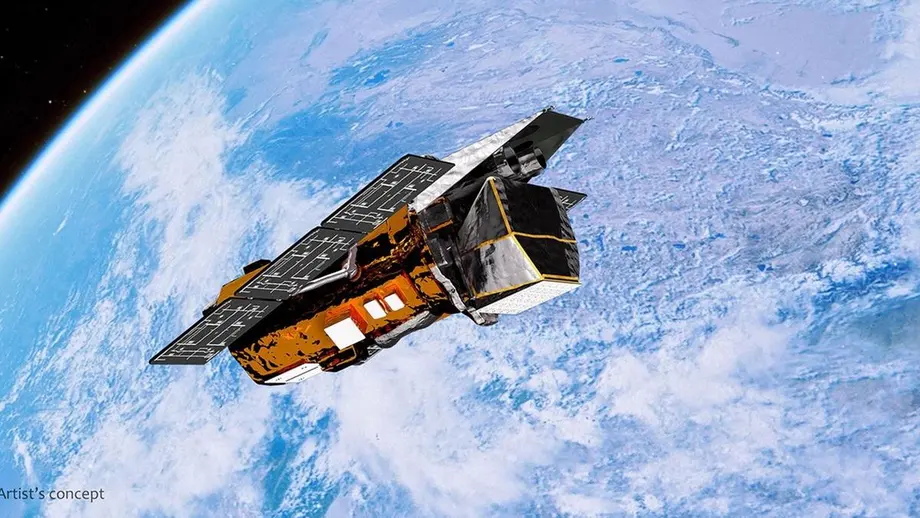
NASA's Neil Gehrels Swift Observatory, a space telescope weighing about 1,500 kilograms, is approaching an uncontrolled return to Earth after a roughly $30 million rescue attempt failed. Parts of India lie within the broad latitude band where surviving fragments could land, alongside areas of Africa, Australia, Southeast Asia, and Central and South America.
Contents
- A final descent after nearly 22 years of discovery
- Which parts of India fall inside the band?
- What could survive, and how large is the risk?
- Why solar activity brought Swift down faster
- A rescue robot never reached the telescope
- The dates that shaped Swift's final months
- What astronomers lose with Swift
- Tracking the fall from space and from India
- A growing disposal challenge for space agencies
- Key Points
The forecasts give different dates. An estimate attributed to NASA places reentry around November 4 at 3:30 a.m. Eastern time, or 2 p.m. in India, with a window of about 11 hours. The U.S. Space Force, which is tracking the observatory, predicts reentry on or around Friday, November 6. The final time and location remain uncertain as atmospheric drag changes the spacecraft's orbit.
Most of Swift is expected to burn up. Brad Cenko, NASA's mission chief scientist, said dense tungsten components and parts of the telescope's mirrors could survive the descent. Any surviving pieces are considered most likely to fall into the ocean.
The immediate concern is the spacecraft's final journey through the atmosphere. For astronomers, its loss also ends a mission that detected more than 2,000 gamma-ray bursts and observed about 1,400 exploding stars, while directing other observatories toward events that could fade before anyone else noticed them.
Which parts of India fall inside the band?
Swift's orbit is tilted about 20.6 degrees relative to the equator. Its path therefore stays between roughly 20.6 degrees north and 20.6 degrees south latitude, creating a belt around the middle of Earth within which its final descent could occur.
In India, that belt covers territory roughly south of a line running from Daman on the western coast to Cuttack in Odisha on the eastern coast. Mumbai, Hyderabad, Bengaluru and Chennai are inside it. Delhi, Kolkata and much of northern India are outside it.
A city's inclusion means the spacecraft's orbit passes through that range of latitudes. Where fragments actually land depends on where Swift reaches the atmosphere's denser layers, how it breaks apart and how the pieces travel afterward. A useful forecast must narrow both the time of descent and the spacecraft's position at that time.
The same belt stretches across large areas of ocean. Jonathan McDowell, an astrophysicist and honorary professor at Durham University, said he would be surprised if as much as 100 kilograms of the telescope's 1,500 kilograms survived. That amount would be about 6.7 percent of its mass, illustrating how much material could be destroyed during descent.
What could survive, and how large is the risk?
Tungsten is denser than lead and can withstand very high temperatures. Cenko identified components made from that metal, along with mirror fragments, as possible surviving debris. The observatory will encounter intense heating and mechanical forces as it enters thicker air, causing much of its structure to break apart and burn up.
Brad Tucker, an astrophysicist at the Australian National University, pointed to Earth's surface being approximately 70 percent ocean and 30 percent land when explaining why an ocean landing is more likely. The actual outcome will depend on Swift's final path within its orbital band.
A Swift casualty estimate attributed to NASA puts the chance of debris harming someone on the ground at about 1 in 2,100. A broader estimate also attributed to NASA places the chance of space debris causing a human casualty at no more than 1 in 10,000. The calculation methods and coverage needed to reconcile those figures have not been specified.
The Swift estimate concerns the possibility of someone being harmed somewhere across the potential debris area. The chance for any particular resident is much smaller. Scientists expect the risk to people and infrastructure to be very low, with most material destroyed and surviving fragments most likely reaching water or sparsely populated areas.
Why solar activity brought Swift down faster
Swift operated in low Earth orbit, where the atmosphere is extremely thin but still present. A spacecraft moving through that thin air experiences drag, a small braking force that gradually removes orbital energy and lowers its altitude.
Increased solar activity heated and expanded Earth's upper atmosphere over recent years. More air reached the heights where Swift was flying, increasing drag and making the observatory descend faster than expected.
A falling orbit can accelerate its own decline. As the telescope moves lower, it encounters denser air and stronger drag, which lowers it further. Close to Earth, even small changes in atmospheric conditions can shift the predicted reentry time.
Swift made its last observation on October 20. NASA ended scientific operations as its altitude fell to around 275 kilometres, where drag prevented the spacecraft from holding steady enough to observe its targets. Its systems were shut down by late October.
A rescue robot never reached the telescope
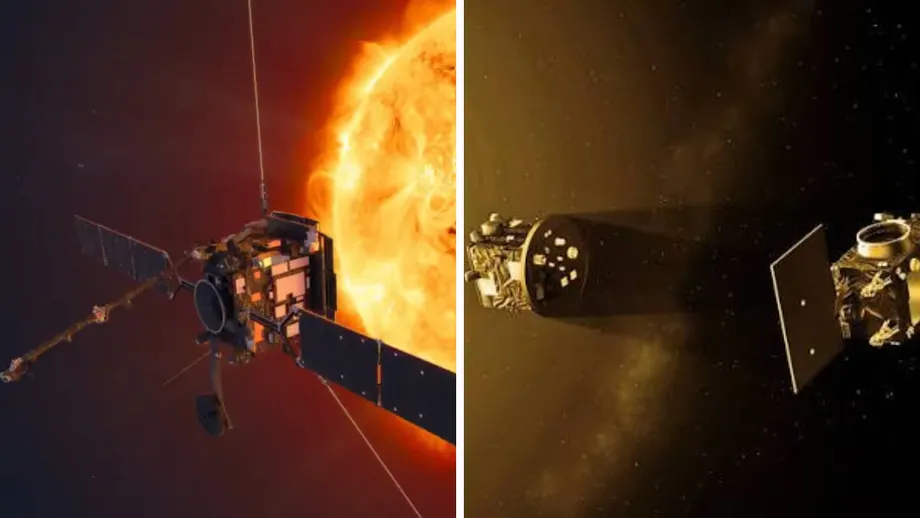
NASA hired Katalyst Space to try to raise Swift's orbit and extend its scientific life. The contract was worth about $30 million, and the company's Link spacecraft carried three robotic arms intended to capture the observatory before boosting it higher.
Link launched in July 2026 but developed a problem with its attitude control system. In spacecraft engineering, attitude means orientation: which direction a vehicle is pointing. Reliable control is essential when approaching another object closely enough to grab it.
The robot came no closer than approximately 12 to 15 kilometres from Swift. NASA halted the capture and boosting operation in August, and Link itself reentered the atmosphere in September.
Swift resumed observations after the rescue was abandoned and continued detecting energetic cosmic events. Its eventual shutdown followed the physical limits imposed by its shrinking orbit, rather than an immediate end to science when the rescue failed.
The dates that shaped Swift's final months
Swift's last year combined an attempted rescue, a brief return to observations and a final loss of pointing stability. The sequence explains how a telescope still capable of discoveries reached the end of its working life.
- November 20, 2004: Swift launched with a planned primary mission of two years.
- July 2026: Katalyst Space launched Link to capture Swift and raise its orbit.
- August 2026: NASA halted the rescue operation after Link's attitude control problem prevented capture.
- September 2026: Link reentered Earth's atmosphere.
- October 20, 2026: Swift made its final scientific observation as its altitude fell to around 275 kilometres.
- Late October 2026: The observatory's systems were shut down.
- Early November 2026: Forecasts placed Swift's reentry around November 4 or November 6, with tracking continuing.
The mission lasted nearly 22 years, approximately 11 times its original planned duration. That extended service gave astronomers a much larger record of short, powerful events than a mission ending after two years could have collected.
What astronomers lose with Swift
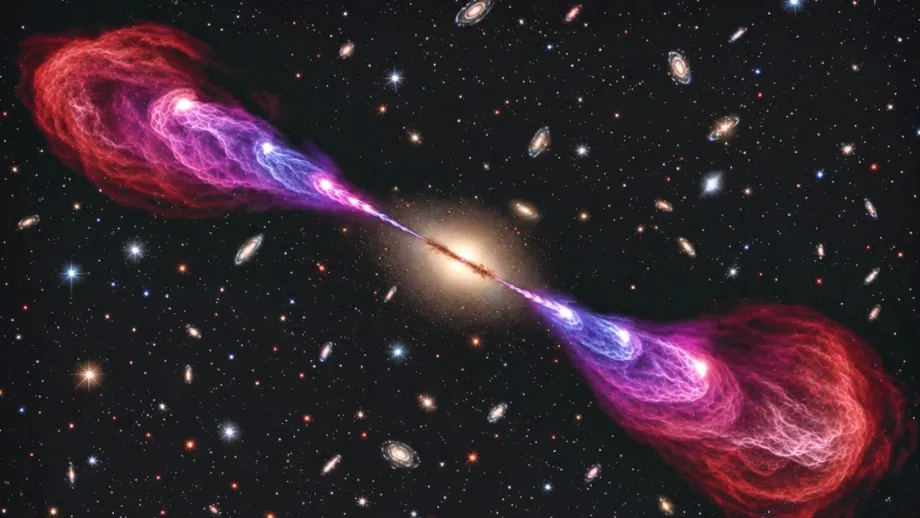
Swift was launched as the Swift Gamma-Ray Burst Explorer to investigate some of the universe's most energetic explosions. Gamma rays are an extremely energetic form of light. Brief bursts can accompany the collapse of massive stars or collisions involving neutron stars, the extraordinarily dense remnants of dead stars.
The observatory's ability to turn quickly toward a newly detected event gave it its name. Speed mattered because the signal from an explosion can change rapidly, leaving only a short opportunity to observe its earliest stages.
NASA regarded Swift as a first responder for other observatories, including the Hubble Space Telescope and the James Webb Space Telescope. Swift could identify an event and issue an alert, allowing those instruments to make more detailed observations. Different telescopes could then examine the same event using different kinds of light.
Its scientific record extended beyond gamma-ray bursts and supernovae. Swift observed comets, asteroids and black holes tearing apart nearby stars. Scientists are still working out how to replace its combination of rapid detection, quick movement and alerts to other observatories.
John Nousek, the Pennsylvania State University astronomer who led Swift's control team, described the long anticipated physical end of the observatory:
We've known this day would come since before Swift was launched. At least in low-Earth orbit, what goes up must come down. And that end is catastrophic.
Tracking the fall from space and from India
The U.S. Space Force is monitoring Swift's declining orbit. Radar, telescopes and orbital measurements help tracking organisations estimate a spacecraft's altitude, speed and path, then update the likely reentry window.
India also has equipment for following objects during their final orbits. The Indian Space Research Organisation's Multi-Object Tracking Radar at Sriharikota can track satellites and rocket bodies approaching atmospheric reentry where feasible. ISRO has not announced whether it is tracking Swift.
Swift is undergoing an uncontrolled reentry, meaning natural orbital decay is bringing it down without operators steering its final descent. During a controlled reentry, operators deliberately change an object's orbit to direct its return toward a selected remote area, usually over an ocean.
Tracking provides updated predictions; steering requires a spacecraft with the necessary propulsion and control. For Swift, the failed rescue left atmospheric drag determining the final descent. Small changes in drag, orientation and breakup can continue to shift the forecast until the final hours.
A growing disposal challenge for space agencies
The European Space Agency's Space Environment Report 2026, published in September using data through the end of 2025, recorded an average of more than three intact satellites or rocket bodies reentering each day. It also recorded about 10 new payloads being launched daily.
ISRO's Indian Space Situational Awareness Report 2025 recorded 1,911 reentries: 1,002 spacecraft, 657 debris pieces, 108 rocket bodies and 144 unidentified objects. Twelve were Indian. Those categories include both whole objects and fragments, giving a broader count than a measure limited to intact satellites and rocket bodies.
India's Debris Free Space Missions initiative, announced in April 2024 by then ISRO chairman S. Somanath, targets missions free of debris from all Indian space actors by 2030. Its guidelines call for controlled reentry or removal from orbit when spacecraft and rocket bodies finish their work.
Past incidents show why disposal planning matters. Metal objects fell in Maharashtra's Chandrapur district in April 2022 without injuring anyone. In March 2024, hardware struck a home in Naples, Florida. NASA identified that object as a battery mounting support from equipment discarded by the International Space Station in 2021, which had been expected to burn up completely.
Swift brings together two pressures facing space agencies: keeping productive observatories working for as long as possible and ensuring their eventual return is safe. Anyone finding suspected spacecraft debris should leave it untouched and report it to the authorities, because fragments may be hazardous.
Key Points
- Swift is approaching uncontrolled reentry after a failed rescue attempt costing about $30 million.
- Forecasts place its return around November 4 or November 6, with the final time and location still uncertain.
- The possible debris band extends between about 20.6 degrees north and south latitude, including parts of India.
- Mumbai, Hyderabad, Bengaluru and Chennai lie within that band; Delhi and Kolkata lie outside it.
- Most of the telescope should burn up, although tungsten components and mirror fragments could survive.
- Surviving debris is most likely to reach the ocean, and scientists consider the danger to individuals very low.
- Swift's nearly 22 years of work included more than 2,000 gamma-ray bursts and about 1,400 exploding stars.