Exports power a stronger third quarter
Hong Kong's economy grew 5.2% in the third quarter of 2026 compared with a year earlier, accelerating from 4.2% in the second quarter as goods exports surged 30.4%. The advance estimates, released on November 3, put growth over the first nine months at 5.1%, the fastest pace for that period in five years.
Contents
- Exports power a stronger third quarter
- What the GDP figures measure
- Goods trade gathers speed
- Household spending grows more slowly
- Investment improves, with different measures in view
- Property recovery varies by location
- Tourism and finance support services
- Hong Kong seeks more than AI listings
- Forecasts point to growth, with external risks
- Key Points
The Census and Statistics Department's figures, outlined in the government's GDP advance estimate announcement, showed an economy gaining speed through trade while domestic demand continued to expand. Private consumption rose 2.8%, investment in fixed assets increased 7.3%, and government consumption grew 1.7%.
The headline result exceeded the 3.6% average forecast in a survey of 10 economists by 1.6 percentage points. It also marked Hong Kong's 15th consecutive quarter of economic expansion. Compared with the immediately preceding quarter, output increased 1.9% after adjustment for regular seasonal patterns.
Households and businesses were experiencing that growth at different speeds. Financial activity, exports and demand for prime offices were strong, while economists identified weaker conditions in construction, restaurants and parts of the commercial property market. Household spending growth also remained below its pace at the start of the year.
What the GDP figures measure
Gross domestic product, or GDP, measures the value of goods and services produced within an economy. The figures are expressed in real terms, meaning they are adjusted for price changes so that growth reflects changes in activity rather than simply higher prices.
The 5.2% annual increase compares July through September 2026 with the same months of 2025. The 1.9% quarterly increase compares that period with April through June 2026, after seasonal adjustment. Both measures showed expansion, but they answer different questions about the economy's pace.
Hong Kong's annual growth accelerated by one percentage point from the second quarter, although it remained below the first quarter's 5.9%. Across the first nine months, the government described faster exports and steady domestic demand as the main supports for growth.
The year's progression shows how the headline result changed:
- First quarter of 2026: Real GDP grew 5.9% compared with a year earlier.
- Second quarter: Growth slowed to 4.2%.
- Third quarter: Growth accelerated to 5.2%, with a 1.9% increase from the preceding quarter after seasonal adjustment.
- November 3: The advance third quarter estimates were released.
- November 13: Revised GDP figures and an updated government forecast for 2026 were scheduled for release.
Goods trade gathers speed
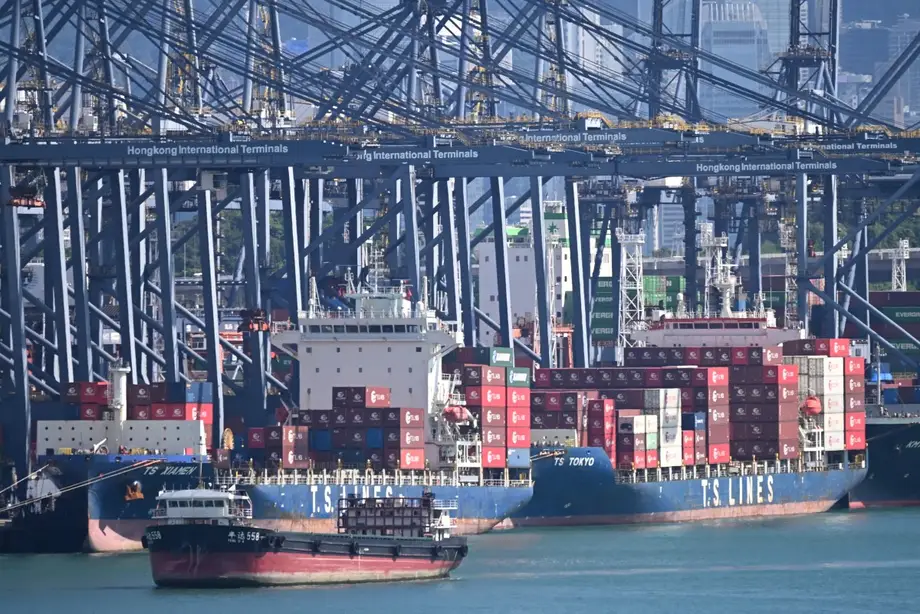
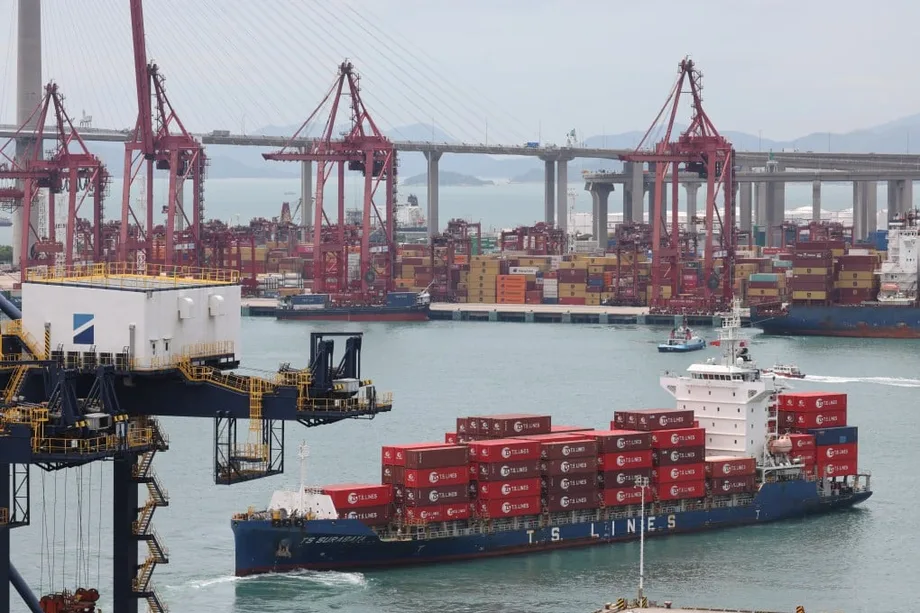
Goods exports rose 30.4% in real terms in the third quarter, following revised growth of 28.9% in the second quarter and 23.8% in the first. The annual export growth rate therefore increased by 6.6 percentage points between the first and third quarters.
Goods imports also expanded rapidly, rising 29.9%, compared with 29.3% in the second quarter. Their third quarter growth matched the pace recorded at the start of the year. Together, the figures showed substantial increases in goods moving through Hong Kong's trading economy.
Kenny Shui, vice president of Our Hong Kong Foundation, attributed export strength to demand for artificial intelligence and electronics. The government also expected strong global investment in artificial intelligence to continue supporting merchandise exports.
Artificial intelligence systems depend on computing equipment and related electronics. Spending on that infrastructure can support businesses involved in supplying and trading those goods. Hong Kong's export performance connects its economic outlook to that international investment cycle.
Household spending grows more slowly
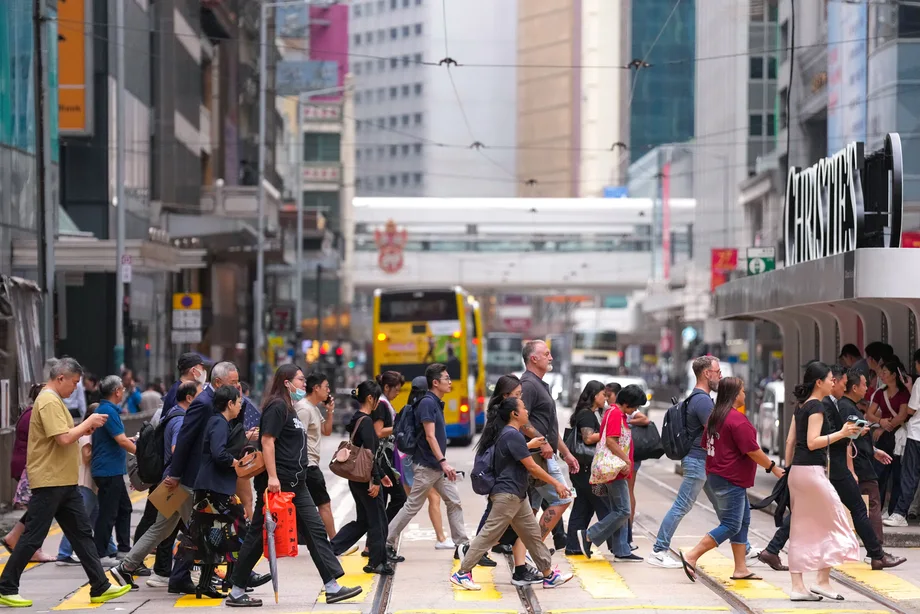
Private consumption expenditure increased 2.8% in the third quarter, easing from 2.9% in the second quarter and 4.9% in the first. Spending was still increasing compared with a year earlier, but its growth rate had slowed by 2.1 percentage points since the first quarter.
Shui said the gains in retail activity and investment had yet to reach households fully. He also pointed to unemployment of 3.9% and warned that interest rates could weigh on household spending and business investment.
Shui, whose foundation studies Hong Kong's economic and social development, described the gap between stronger economic activity and people's experience of recovery:
Growth momentum is broadening, but the recovery still needs to be felt more widely.
The government's outlook placed employment income alongside economic growth and positive business prospects as supports for future consumption. For shops and restaurants, that makes jobs and wages a practical link between rising GDP and stronger customer spending.
Investment improves, with different measures in view
Gross domestic fixed capital formation increased 7.3% in the third quarter. This measure covers spending on lasting productive assets, such as buildings and equipment, rather than purchases for immediate use. Government consumption, a separate spending category, rose 1.7%.
Financial Secretary Paul Chan also described investment as recording double digit growth and said businesses were investing more because they felt more positive about the outlook. His comments did not identify the investment measure behind that figure; the advance GDP breakdown put fixed capital formation growth at 7.3%.
Chan said the three main engines of growth, consumption, investment and exports, had all expanded. The detailed figures nevertheless show different speeds: goods exports grew much faster than either household spending or fixed investment.
For businesses, stronger investment can mean new equipment, premises or capacity. Its effect on employment depends on where that spending takes place and the activities it supports. Chan said the government wanted economic vitality to translate into gains in the labour market.
Property recovery varies by location
Chan said residential property prices had risen about 3% in the previous year and were expected to increase by 7% to 10% in 2026, depending on the district. He also described improvements in rents and occupancy in offices in core commercial areas, with retail shop rents and occupancy beginning to stabilise.
Ho Lok-sang, adjunct professor with the Academy for Applied Policy Studies and Education Futures at the Education University of Hong Kong, identified the strongest office recovery in centrally located Grade A premises. Grade A refers to offices at the premium end of the market.
Ho said demand remained weaker outside those prime locations and across other commercial properties. He argued that a broader recovery would take time and could require rents to fall, making space more affordable for businesses.
Ho explained his assessment of conditions beyond the strongest office segment:
On the outside of the Grade A and centrally located areas, office demand is still relatively weak, and the demand for commercial properties is still relatively weak.
Chan's positive assessment and Ho's caution describe different parts of the property market. Strong demand for selected offices can exist alongside vacancies and pressure on rents elsewhere, leaving landlords and businesses with very different experiences across locations.
Tourism and finance support services
Exports of services increased 4.3% in the third quarter, while imports of services rose 5.6%. Services exports include spending by visitors and services provided to customers outside Hong Kong, making tourism and financial activity important parts of the outlook.
Chan estimated that visitor arrivals would exceed 50 million during 2026. He said retail sales had increased for more than 10 consecutive months and that the catering sector had broadly stabilised in recent months.
Ho still identified retail consumption, restaurant business and construction demand as lagging areas. He said major events, including concerts and Halloween activities, could help attract more visitors, with longer stays and greater spending offering further support to local businesses.
Financial activity was a stronger area in Ho's assessment. He described a high level of initial public offerings, or IPOs, when companies first sell shares to public investors through a stock exchange. Such activity brings business to financial services firms involved in raising capital.
The government expected services exports to benefit from continued growth in visitor arrivals, busy travel across the border and active financial markets. Those channels connect Hong Kong's service businesses to both mainland China and international customers.
Hong Kong seeks more than AI listings
Chan said the government would continue encouraging overseas artificial intelligence companies to list in Hong Kong. He also wanted them to establish some research and business operations locally, creating jobs and supporting the city's technology industry.
A listing allows a company to raise money from investors. Locating research teams or business operations in Hong Kong would bring a different form of activity: staff, workplaces and spending connected with the company's everyday work. Chan's comments set out an ambition to secure both financing business and local employment.
After attending the Global Financial Leaders' Investment Summit, Chan said international financial leaders he met were generally positive about Hong Kong's development. He said the gathering helped investors understand mainland financial policy and assess opportunities in the Chinese market over a longer period.
Forecasts point to growth, with external risks
The government's forecast for full year real GDP growth stood at 3.5% to 4.5%, with an update due on November 13 alongside revised GDP figures. Ho expected growth above 4%, potentially reaching 4.5%.
Shui was more optimistic, forecasting fourth quarter growth of 4% to 5% and annual growth of around 5%. That would exceed the upper end of the government's existing range. His assessment depended partly on exports remaining strong and consumption and employment improving.
A government spokesperson gave a positive assessment of the outlook:
Looking ahead, Hong Kong's economic outlook remains positive, with incoming data pointing to sustained growth momentum.
The government identified Middle East geopolitical tensions and monetary tightening by major central banks as risks requiring close attention. Higher borrowing costs can make spending and investment harder to finance, while conflict can disrupt trade and raise energy costs.
Chan also cited elections in major economies, high oil prices linked to the Middle East conflict and shifts in international capital. He said the government was assessing mainland economic developments, geopolitics, financial flows and changes in international trade policy before forming its outlook for the following year.
Hong Kong enters the next forecast update with exports accelerating and services supported by tourism and finance. The central domestic challenge is whether that strength brings firmer demand to businesses still waiting for recovery and more spending power to households.
Key Points
- Real GDP grew 5.2% in the third quarter of 2026, up from 4.2% in the second quarter.
- Growth reached 5.1% over the first nine months, the fastest pace for that period in five years.
- Goods exports increased 30.4%, while private consumption grew 2.8% and fixed investment rose 7.3%.
- Tourism, finance and prime offices showed strength, while economists identified weaker conditions in other parts of the economy.
- The government expected AI investment to support exports, while warning about geopolitical tensions and monetary tightening.
- Revised GDP figures and an updated annual growth forecast were scheduled for November 13.