September trade surge beats market expectations
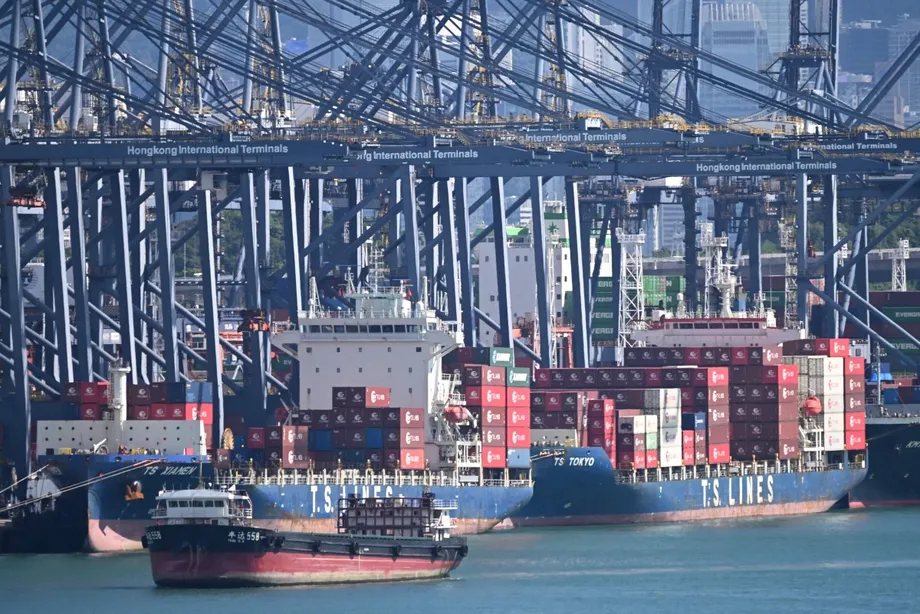
Hong Kong exported HK$762.6 billion worth of goods in September 2026, a record monthly value, as demand for electronics linked to artificial intelligence helped drive the fastest annual export growth in more than four decades. Exports rose 64.9% from September 2025, while imports increased 57.8% to HK$808.9 billion.
Contents
- September trade surge beats market expectations
- Growth accelerates beyond an already strong August
- Electronics supply the biggest gains
- Asian markets and the United States expand sharply
- Imports reveal a wider electronics and commodities boom
- A smaller monthly gap still leaves a large deficit
- Quarterly gains show momentum within 2026
- Dah Sing sees annual export growth above 40%
- Trade policy and transport costs remain pressure points
- Key Points
The Census and Statistics Department published its September trade statistics on October 28. The figures exceeded market forecasts of 51.6% export growth and 52% import growth. Export growth beat expectations by 13.3 percentage points, a substantial gap even after August's strong performance.
Electrical machinery and office and data processing equipment together accounted for HK$243.3 billion of the annual increase in September exports. Shipments to the United States rose 133.4%, while exports to Taiwan increased 159.3%. Strong growth across Asian markets accompanied the jump in sales to North America.
Hong Kong still imported more goods than it exported, recording a merchandise trade deficit of HK$46.3 billion. Yet exports grew faster than imports, and trade continued expanding when measured against the preceding quarter rather than a year earlier.
The results bring together three developments: rapidly growing demand for technology products, stronger shipments across several major destinations, and rising imports of electronics and commodities. For businesses handling goods, financing shipments or managing inventories, the figures point to a much larger value of trade moving through Hong Kong.
Growth accelerates beyond an already strong August
September's export growth rate was 11.9 percentage points higher than August's 53%. Imports followed a different course: their annual growth eased by 2.2 percentage points from August's 60%, although September's 57.8% increase still exceeded market expectations.
Exports recorded their 31st consecutive month of growth, with the latest 20 months each delivering increases of at least 10%. The longer streak counts every month of growth; the shorter streak covers the period of consistently stronger increases.
Across the first nine months of 2026, export values rose 45.2% compared with the same period in 2025, while imports increased 45%. September therefore added momentum to a surge that was already well established across the year.
The main dates and reporting periods are:
- August 2026: exports rose 53% and imports increased 60% from a year earlier.
- July to September 2026: exports rose 8.8% from the preceding quarter after seasonal adjustment; imports increased 7.9%.
- September 2026: exports reached HK$762.6 billion, up 64.9% from September 2025.
- October 28, 2026: the Census and Statistics Department released the September figures.
- Early November 2026: the department plans to publish its detailed September trade report.
- Mid-November 2026: a separate analysis of trade volumes and prices is scheduled for release.
Electronics supply the biggest gains
Electrical machinery, apparatus, appliances and related parts delivered the largest increase among the highlighted export categories. Their export value rose HK$155.6 billion, or 66.2%, compared with September 2025.
Office machines and automatic data processing machines grew even faster, increasing 183.7%, or HK$87.7 billion. This category includes equipment used to process information. A rise of 183.7% means the export value was about 2.84 times its level a year earlier.
The two categories together contributed roughly 81% of September's total annual export increase. That calculation uses their combined HK$243.3 billion gain against an increase of about HK$300.1 billion for all exports, derived from the published total and growth rate.
A Hong Kong government spokesman, commenting on the release, identified electronics associated with artificial intelligence as the main driver:
A Government spokesman said that merchandise exports surged further by 64.9% over a year earlier in value terms in September, driven by sustained stellar performance in exports of AI-related electronic products, marking the twentieth consecutive month of double-digit growth and the fastest monthly year-on-year growth in over four decades.
Artificial intelligence systems need computers, electronic components and equipment to process large amounts of information. Spending on that infrastructure creates demand for physical goods as well as software. Hong Kong's trade figures capture the movement of those goods across its border.
Asian markets and the United States expand sharply
Exports to Asia increased 67.5% in September, slightly faster than the 64.9% rise in exports to all destinations. Taiwan recorded growth of 159.3%, followed by Malaysia at 131.5%, Thailand at 118%, Singapore at 77.5% and mainland China at 68.1%. Exports to Vietnam rose 56.1%.
Mainland China also recorded export growth of 49.4% across the first nine months. Taiwan and Singapore posted increases of 82.2% and 81.8%, respectively, over that longer period, showing that their strong September figures followed substantial gains earlier in the year.
Outside Asia, September exports to Mexico rose 148.1%, while shipments to the United States increased 133.4%. The US increase was the largest since Hong Kong's export destination statistics began in 1973.
Four of the ten largest export destinations recorded growth above 100%: Taiwan, Malaysia, Thailand and the United States. Each therefore received more than twice the export value recorded in September 2025. Mexico also more than doubled, although it was outside that group of ten.
Across January to September, exports to the United States rose 70.7%, compared with increases of 64.2% for Thailand and 62.3% for Malaysia. September's acceleration was consequently spread across several markets rather than concentrated in a single destination.
Imports reveal a wider electronics and commodities boom
South Korea stood out among Hong Kong's suppliers, with imports rising 231.1% in September. Imports from Vietnam increased 118.7%, Malaysia 73.9%, India 61.3% and mainland China 55.6%.
Electronics again accounted for large increases in value. Imports of electrical machinery and related products rose HK$153.5 billion, or 64.5%. Office and data processing machines increased HK$60.6 billion, or 142%, while telecommunications and sound equipment rose HK$49 billion, or 81.7%.
Those three categories together added HK$263.1 billion to imports compared with September 2025. Their growth shows that the electronics expansion involved substantial flows into Hong Kong alongside the surge in outward shipments.
Commodities also contributed. Imports of nonferrous metals, meaning metals other than iron, rose 61.3% in September. Across the first nine months, their value increased 190.3% to HK$212.86 billion, nearly three times the level a year earlier. September imports of petroleum and related products rose 69.3%.
Import and export sector legislator Chung Ki-fung argued that commodity storage and delivery operations, alongside expansion into emerging markets, were supporting trade. He pointed to Hong Kong's role in arranging physical deliveries, financing and managing risks around commodities. His assessment gives a broader explanation of the trade expansion alongside the government's focus on AI electronics.
A smaller monthly gap still leaves a large deficit
September's HK$46.3 billion merchandise trade deficit was equivalent to 5.7% of imports. Put simply, Hong Kong imported HK$100 worth of goods for roughly every HK$94.30 it exported during the month.
For the first nine months, the cumulative deficit reached HK$417.7 billion, or 7% of imports. September's deficit therefore represented a smaller share of imports than the figure for January through September.
The deficit measures the gap between the value of goods entering and leaving Hong Kong. The merchandise figures cover physical products, while services such as transport, insurance and financial work are recorded separately.
Exports and imports grew at almost identical rates across the first nine months, 45.2% and 45%, respectively. That combination helps explain how Hong Kong could record exceptionally strong export growth while still importing a greater value of goods than it shipped out.
Quarterly gains show momentum within 2026
Hong Kong's exports rose 8.8% in the third quarter compared with the second quarter after seasonal adjustment. Imports increased 7.9% on the same basis, giving exports a lead of 0.9 percentage points.
Seasonal adjustment removes recurring patterns, such as changes associated with holidays and regular shipping cycles, to make neighbouring periods easier to compare. The quarterly figures show trade expanding within 2026 as well as against the corresponding months of 2025.
The Census and Statistics Department measures these trade values at current prices. The amounts reflect both how many goods are traded and the prices paid for them. Its scheduled release in mid-November will separate changes in volume from changes in prices, providing a fuller picture of the September increase.
Dah Sing sees annual export growth above 40%
Dah Sing Financial Group expects Hong Kong's exports could grow by more than 40% across 2026. September's 64.9% increase exceeded both the market forecast and the group's own expectation of 52.4%.
The group's chief economist and strategist attributed the acceleration mainly to demand for raw materials and electronics associated with artificial intelligence. The assessment also pointed to new smartphone and electronic product models introduced overseas during the quarter, which increased orders for products and components.
Telecommunications and sound equipment exports rose 67.9% in September. Chung also linked stronger trade in those products to preparations for Christmas and the year end shopping season, adding a consumer electronics explanation to the infrastructure spending associated with AI.
The first nine months' export growth of 45.2% provides a strong starting point for Dah Sing's annual forecast. The final result will also depend on shipments during October, November and December and how they compare with the same months of 2025.
Trade policy and transport costs remain pressure points
The government expects robust investment associated with AI and resilient global economic growth to continue supporting merchandise trade. Its outlook also identifies three risks: the Middle East conflict, protectionist measures by major economies and the rapid expansion of global AI investment.
Dah Sing highlighted energy prices and transport costs as channels through which the Middle East situation could affect trade. Higher fuel costs can make shipments more expensive, while pressure on overseas demand can influence the size and timing of orders.
Chung described his outlook as cautiously optimistic and called for greater support for trade financing and export credit insurance. Such insurance helps exporters manage the risk that overseas customers will fail to pay. He also advocated wider customs cooperation with emerging markets and more commodity transactions settled in renminbi.
Shipping policy adds another decision to watch. On October 23, the Office of the United States Trade Representative proposed extending the suspension of Section 301 port fees affecting vessels linked to China until January 9, 2027. The extension still awaited final approval at the time of the trade release. Shipping businesses must therefore plan around a proposed deadline while awaiting the final decision.
Hong Kong enters the final quarter with rapidly rising electronics trade and growth across major destinations. The next detailed releases will explain more about the products involved and how much of the increase came from larger quantities, while trade policy and transport costs will shape the conditions for subsequent shipments.
Key Points
- September exports reached a record HK$762.6 billion, rising 64.9% from a year earlier.
- Imports increased 57.8% to HK$808.9 billion, leaving a merchandise trade deficit of HK$46.3 billion.
- Electrical machinery and office and data processing machines together added HK$243.3 billion to export values.
- Exports to Taiwan rose 159.3%, the United States 133.4% and mainland China 68.1%.
- Exports grew 45.2% across the first nine months and 8.8% between the second and third quarters after seasonal adjustment.
- Dah Sing expects annual export growth above 40%, while the government flags conflict, protectionism and risks surrounding rapid AI investment.
- Trade volume and price figures are due in mid-November 2026.