A token price for a business losing millions
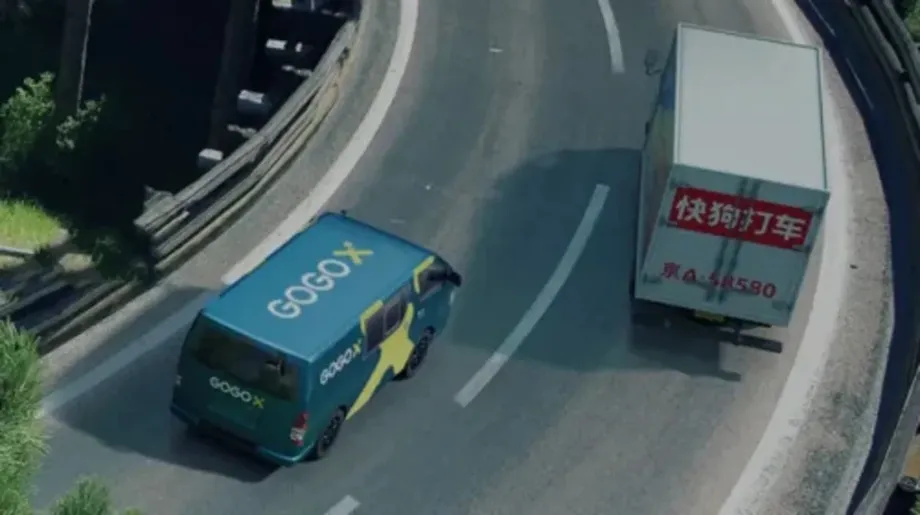
GOGOX Holdings, the Hong Kong listed logistics platform, agreed on October 16, 2026, to sell the company holding its mainland China operations for just RMB1. The business being sold recorded revenue of RMB44.016 million and a loss after tax of RMB49.259 million in the first half of 2026, meaning its losses exceeded its revenue.
Contents
- A token price for a business losing millions
- What Crestpoint would acquire
- Why one yuan can produce an accounting gain
- Mainland services are expected to continue
- How the mainland competition became harder to sustain
- Losses and falling cash narrowed the options
- Overseas markets already carry most of the business
- From a major merger to a much smaller listed group
- What must happen before the sale closes
- Key Points
The proposed buyer is Crestpoint Investment Limited, a Hong Kong investment company owned by businessman Ng Tsz Fung, whose name is also rendered as Ng Chi Fung. The transaction requires shareholder approval and other conditions before it can be completed.
GOGOX, traded under stock code 2246, also proposes changing its Chinese name to GOGO Tech while keeping its English name. The listed group would concentrate on Hong Kong and other overseas markets, where it operates under the GOGOX brand.
Mainland customers and drivers face a change of ownership rather than a shutdown, according to the company. GOGOX has clarified that the operating business would continue under its new owner, with existing service agreements remaining valid.
The financial stakes extend beyond the symbolic sale price. At the end of June, the listed group had cash and cash equivalents of RMB67.94 million, while its core Hong Kong and overseas revenue was also declining. Selling the mainland subsidiary would remove a source of losses from its accounts, but provide no meaningful new cash to fund the next stage of its business.
What Crestpoint would acquire
Crestpoint would buy all the issued shares of GGEx Holdings Limited, an investment holding company incorporated in the British Virgin Islands and wholly owned by GOGOX. GGEx holds the mainland operations through subsidiaries and contractual arrangements that give it control over operating businesses.
The businesses covered include Tianjin 58 Freight, Zhenjiang 58 Supply Chain, Hainan 58 Supply Chain, Hainan 58 Freight, Tianjin GOGOX Freight, GOGOX Tianjin and Anhui Supaida. Their activities include logistics, delivery solutions and technology services.
Buying the holding company allows Crestpoint to take over the business structure beneath it. The agreement therefore covers an operating network, rather than simply a brand name or an app.
GOGOX says Crestpoint and its ultimate owner are independent third parties. Its board considers mainland China no longer a core geographic priority and says the subsidiary's business coverage does not fully match the listed group's current strategy. Management wants to simplify the organisation and redirect resources toward its remaining markets.
Why one yuan can produce an accounting gain
GGEx's unaudited liabilities exceeded its assets by approximately RMB2.476 million on June 30, 2026. That negative balance, together with continuing losses, helps explain why the parties agreed on a nominal price.
The mainland business generated revenue of RMB166.386 million in 2024 and RMB132.159 million in 2025, a decline of about 20.6%. Its losses after tax were RMB151.973 million and RMB79.668 million respectively. Adding the RMB49.259 million loss in the first half of 2026 brings the losses over those two and a half years to about RMB280.9 million.
GOGOX estimates that the sale would create an accounting gain of approximately RMB2.476 million. When a subsidiary with more liabilities than assets leaves a group's accounts, removing that negative balance can produce a gain. The final amount will depend on the accounting values used when the transaction is recorded.
Cash is a different matter. The company expects no net sale proceeds after expenses. The main financial benefit would come from removing GGEx's future results from the listed group's consolidated accounts, which combine the parent company and its subsidiaries into one financial picture.
Mainland services are expected to continue
GOGOX has challenged descriptions of the deal as the termination of its mainland business. Its clarification says the transaction changes ownership of the operating entity and involves no shutdown, liquidation or relocation of the business.
The company says services for mainland users, customers and logistics partners are expected to continue in the ordinary course under the buyer. Service agreements with users and drivers would remain valid.
The practical change is therefore different for shareholders and customers. The listed group would stop owning the mainland operation and stop including its financial results in group accounts. Customers and drivers would continue dealing with the operating business after its ownership changes.
The proposed Chinese name change reflects the listed company's narrower geographic focus. It is conditional on completion of the sale and shareholder approval. Hong Kong and overseas operations would continue using GOGOX.
How the mainland competition became harder to sustain
GOGOX's mainland business traces its roots to 58 Express, founded in 2014 to serve freight customers including wholesale markets, delivery companies and retailers. Its later push toward individual customers brought it into more direct competition with Lalamove for moving jobs and occasional deliveries.
In 2018, the business secured US$250 million in financing and spent RMB524 million on sales expenses, more than its revenue that year. Coupons for customers and incentives for drivers helped platforms compete for both sides of the market: people needing goods moved and drivers willing to move them.
Didi Freight entered in 2020, initially in Chengdu and Hangzhou, adding another competitor using discounts and driver subsidies. GOGOX's sales and marketing spending reached RMB335 million in 2021 and RMB321 million in 2022, before falling to RMB82 million in 2025. The reduction from 2021 was about 75.5%.
Frost & Sullivan estimates cited in Lalamove's listing documents put Lalamove's mainland share of closed loop freight gross transaction value at 61% in 2025, followed by Didi Freight at 12.4% and GOGOX at 0.5%. Gross transaction value measures the value of freight transactions handled through a platform. On that measure, the two leaders together accounted for 73.4% of the market.
Earlier estimates for online same city logistics transaction value in 2021 put their respective shares at 52.8%, 5.5% and 3.2%. The estimates use different market definitions, while GOGOX's own order figures show a steep contraction: completed freight orders fell from 32.4 million in 2018 to 14.5 million in 2024, a decline of about 55%.
The platforms also historically charged drivers differently. Lalamove used membership fees, while GOGOX relied on commissions from transactions. Both approaches depend on attracting enough customers and drivers to keep deliveries moving. GOGOX's shrinking order volume left it competing with much larger networks while reducing its spending on customer acquisition.
Losses and falling cash narrowed the options
GOGOX remained unprofitable after its June 2022 listing. Annual group losses were approximately RMB1.209 billion in 2022, RMB1.101 billion in 2023, RMB194 million in 2024 and RMB163 million in 2025. The losses became much smaller, but still exceeded RMB2.6 billion across those four years.
In the first half of 2026, group revenue fell 10.9% to approximately RMB293 million. The loss attributable to shareholders was RMB70.86 million, while the total loss for the period was RMB71.205 million. These figures measure slightly different things because the total includes interests in subsidiaries held by other owners.
The company's adjusted net loss fell 68% to RMB23.858 million, and its gross margin rose from 28.4% to 29.9%. Gross margin is the share of revenue left after direct service costs, before expenses such as administration and marketing. Adjusted profit measures remove selected accounting items, which helps explain why the adjusted loss was smaller than the reported loss.
The mainland business also required reductions in goodwill, an accounting asset that can arise when a business is acquired for more than the value of its identifiable net assets. GOGOX recorded a mainland goodwill impairment of RMB61.6 million in 2025 and another RMB46.869 million in the first half of 2026 as growth expectations weakened.
Cash and cash equivalents fell 47% to RMB67.94 million, and operating activities used RMB17.177 million during the first half. GOGOX also redirected HK$107 million of remaining listing proceeds, originally intended for overseas investment and acquisitions, toward general working capital. That change puts more of its remaining funding toward keeping the business running.
Overseas markets already carry most of the business
Hong Kong and overseas operations accounted for 62% of GOGOX revenue in 2023, 74.8% in 2024 and 80.3% in 2025. Their share reached 85% in the first half of 2026, showing that the geographic shift was well advanced before the sale agreement.
Revenue in those markets nevertheless fell 4.3% to approximately RMB249 million in the first half of 2026. Their growing share of group revenue came as mainland revenue fell faster, dropping 35.7% from approximately RMB68.39 million to RMB44.016 million.
Hong Kong was GOGOX's largest individual market in 2025, contributing RMB273 million in revenue. South Korea generated RMB130 million and Singapore RMB79 million. Those three markets together supplied RMB482 million, around 72% of the group's approximately RMB671 million annual revenue.
India provided a brighter growth figure: revenue increased 12.5% in 2025, and coverage reached 25 states. GOGOX also has experience operating in markets including Vietnam, giving it an existing regional network rather than a business that must be built entirely from the beginning.
Competition follows the company abroad. Lalamove operates in Hong Kong and several Southeast Asian markets, while delivery services connected to larger apps compete for customers in parts of the region. Each country also requires spending on local compliance, driver management, pricing and customer disputes.
Lalamove's listing figures put its 2025 overseas gross margin at 70.7%, against 48.5% in mainland China. GOGOX's own group margin was 29.9% in the first half of 2026. The companies have different market and business mixes, leaving GOGOX's own revenue, costs and cash use as the measures that will determine how far its remaining resources can stretch.
From a major merger to a much smaller listed group
GOGOX's overseas foundations come from GoGoVan, founded in Hong Kong in 2013. Its 2017 merger with 58 Express brought together the Hong Kong operation and a large mainland freight network. The proposed sale would separate the listed group from the mainland business nine years after that combination.
The main milestones show how the company's ambitions and financial position have changed:
- 2013: GoGoVan was founded in Hong Kong.
- 2014: 58 Express was established in mainland China.
- August 2017: The two businesses merged.
- 2018: The mainland business adopted the Kuaigou Dache brand and pursued more individual customers.
- June 24, 2022: GOGOX listed in Hong Kong at HK$21.50 a share.
- December 2023: Chen Xiaohua resigned as chairman and executive director, with Lin Kai Yuen succeeding him as chairman.
- October 16, 2026: GOGOX signed the agreement to sell GGEx for RMB1.
The group's market value exceeded HK$14 billion during its early trading period in 2022. By October 16, 2026, it was approximately HK$74 million, a decline of more than 99%. The closing share price that day was HK$1.12. The collapse in market value has accompanied a retreat from the mainland growth strategy that once helped define the company.
What must happen before the sale closes
GOGOX expects to send shareholders a transaction circular by November 6, 2026, ahead of an extraordinary general meeting. No shareholder is required to abstain from voting. A meeting date has not yet been given.
Completion requires shareholder and regulatory approvals, settlement or release of related party balances, an internal restructuring and no material adverse change. The restructuring would make GGEx the sole shareholder of GOGOX PRC Group Limited.
The agreement sets April 16, 2027, as the long stop date, the deadline for meeting the conditions unless the parties agree otherwise. Completion is due within three business days after the final condition is fulfilled or waived. The amount of related party balances to be settled has not been disclosed.
For GOGOX, completing the sale would simplify the group and remove the mainland subsidiary's results from its accounts. Its next operating task would be to stabilise Hong Kong and overseas revenue while controlling costs. With no meaningful cash arriving from the disposal, that work would depend on the resources already available and any future financing it secures.
Key Points
- GOGOX agreed to sell GGEx, the holding company for its mainland operations, to Crestpoint Investment Limited for RMB1.
- The mainland business lost RMB49.259 million on revenue of RMB44.016 million in the first half of 2026.
- The company says mainland services and agreements with customers and drivers will continue after the ownership change.
- The sale could create an estimated RMB2.476 million accounting gain, with no net proceeds expected after expenses.
- Hong Kong and overseas markets supplied 85% of group revenue in the first half of 2026, but their revenue fell 4.3%.
- Shareholder approval and other conditions remain outstanding. The circular is expected by November 6, 2026, and the agreement's long stop date is April 16, 2027.