Technology exports power a record quarter
China exported more than 8 trillion yuan of goods in the third quarter of 2026, crossing that threshold for the first time as machinery, electronics, clean energy equipment and products supporting computing capacity drove sales abroad. Exports rose 22% from a year earlier during the quarter, extending an expansion increasingly tied to technology rather than inexpensive manufacturing alone.
Contents
- Technology exports power a record quarter
- How trade accelerated through the year
- Chips and industrial equipment lead the shift
- Electric vehicles and batteries add momentum
- Robotics shows what exporters are selling
- ASEAN grows faster than Western markets
- Why brands and services matter alongside technology
- Strong exports meet an uneven domestic economy
- Preparing for demand changes in 2027
- Key Points
For January through September, exports climbed 16.4% to 23.2 trillion yuan, according to figures presented by the General Administration of Customs on October 14. Imports grew faster, rising 22.3% to 16.74 trillion yuan. Together, goods entering and leaving China reached 39.94 trillion yuan, up 18.8%, the fastest growth for that period in five years.
The strongest product gains were striking: integrated circuit exports increased 99.1%, almost doubling, while electric vehicle exports rose 72.3%. Machinery and electrical product exports grew 23.7%, beating the growth rate for all exports by 7.3 percentage points.
China's trading relationships also broadened. Trade with ASEAN grew much faster than trade with either the European Union or the United States. That gave exporters a wider spread of customers as they faced tariff disputes, changes in global production networks and uncertainty about overseas demand.
The domestic picture was less even. Economic output grew 4.6% in the first nine months, while named economists pointed to declining private investment as a concern. Strong exports are bringing orders to factories, but turning those orders into sustained profits, business investment and household income remains a central economic task.
How trade accelerated through the year
Customs figures show that trade gathered speed across three consecutive quarters. September then delivered another milestone, with monthly imports and exports exceeding 5 trillion yuan for the first time.
- First quarter of 2026: total goods trade grew 15.3% from a year earlier.
- Second quarter: trade growth accelerated to 18.3%.
- Third quarter: total trade grew 22.3%, while exports separately rose 22% and exceeded 8 trillion yuan.
- September: total trade reached 5.16 trillion yuan, up 27.5%, marking a sixth consecutive month of growth in double digits.
- October 14: customs officials presented the figures for the first nine months.
September exports reached 3.03 trillion yuan, up 29.6%, while imports rose 24.6% to 2.13 trillion yuan. The acceleration therefore extended to both sides of trade, with China buying more goods abroad as well as selling more overseas.
The figures are measured in yuan and describe the value of goods traded. Prices can affect those values alongside the number of products shipped, a point particularly relevant to semiconductors, where rising prices were identified as part of the export growth story.
Chips and industrial equipment lead the shift
Industrial robots, electronic components, computer parts and electrical equipment together generated more than 10 trillion yuan in imports and exports during the first nine months. Trade in that group rose 58.9% and contributed 11.3 percentage points to the 18.8% increase in total goods trade.
Those figures put the group's contribution at roughly three fifths of total trade growth. The calculation shows how heavily the expansion depended on equipment and components used in modern production, communications and computing.
Integrated circuits, the tiny electronic devices commonly called chips, were a major export driver. They process information and control functions in products ranging from computers to vehicles. Their export value increased 99.1%.
Wang Qing, chief macro analyst at Golden Credit Rating, linked the chip surge to international spending on artificial intelligence and to prices. He described the forces supporting demand:
The global AI investment boom has kept overseas demand firm, and rising prices will continue to drive rapid growth in chip exports, which is currently the main driver of China's export expansion,
The equipment manufacturing sector contributed nearly 90% of the increase in exports, according to customs. Intermediate goods, meaning parts and materials that businesses use to make other products, accounted for more than half of exports. Chinese factories are therefore supplying a large volume of inputs to production elsewhere.
Electric vehicles and batteries add momentum
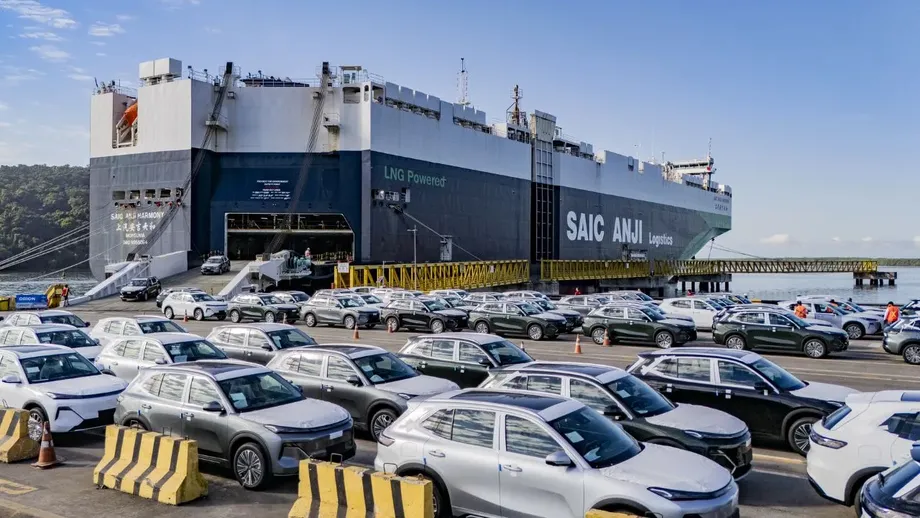
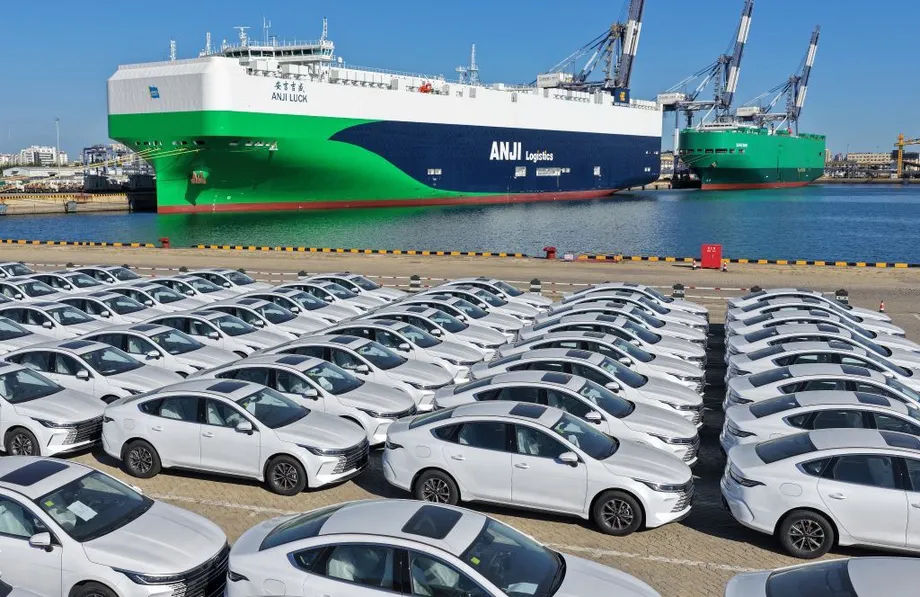
Electric vehicles were another major source of export growth, with their 72.3% increase outpacing the 16.4% rise in total exports. Lithium battery exports grew 36.4%, while exports of wind power generating sets and their parts increased 22.4%.
These categories connect Chinese manufacturing to demand for transport and electricity equipment. Batteries store energy, electric vehicles use it for movement, and wind turbines turn wind into electricity. Each category also requires networks of component makers, machinery suppliers and technical services.
Zhan Yubo, deputy director of the Institute of Economics at the Shanghai Academy of Social Sciences, attributed export resilience to changes in China's industrial structure. Emerging industries, he said, have supported fixed asset investment, industrial output and exports. Fixed asset investment means spending on durable business assets such as factories and equipment.
His assessment links the export figures to decisions made inside China: investment in production capacity and technology can create products that overseas customers want. The shift toward goods requiring more technical expertise is helping manufacturers compete through product capability as well as price.
Robotics shows what exporters are selling
EFORT Intelligent Robot Co., Ltd., based in Anhui province, provides a concrete example of this shift. Its overseas revenue increased more than 50% in the first half of 2026. A batch of spraying robots was being prepared for export to Italy after simulated painting tests on vehicle bodies.
You Wei, EFORT's chairman and chief executive, described the company's work for car manufacturers:
We provide well-known automakers like Maserati and Volkswagen with integrated robotics solutions for smart production, covering painting, welding, precision assembly and the handling of materials,
You said EFORT's overseas robot business had grown at a compound annual rate of nearly 100% over the previous three years. A compound annual growth rate describes the steady yearly pace that would produce the same change over a period, with each year's growth building on the previous year's business.
EFORT's example also shows why an equipment sale can involve much more than shipping a machine. Robots must perform particular tasks within a customer's production process. Supplying a coordinated system allows a manufacturer to compete on how well its equipment works for that customer.
ASEAN grows faster than Western markets
China's trade with ASEAN reached 6.84 trillion yuan in the first nine months, rising 22.7%. Trade with the European Union grew 8.4% to 4.78 trillion yuan, while trade with the United States increased 4.1% to 3.18 trillion yuan.
ASEAN trade was therefore more than twice the value of trade with the United States. Its growth rate was also faster than the 18.8% increase in China's total goods trade. These figures cover both imports and exports, giving a picture of commercial exchange in both directions.
Trade expanded with more than 180 countries and regions. Exchanges with free trade partners reached 19.55 trillion yuan, up 30%, and supplied more than 70% of the increase in total trade. Those partners accounted for about 49% of China's 39.94 trillion yuan in goods trade.
Exporters have also been broadening their reach toward countries participating in the Belt and Road Initiative, the Middle East and Latin America. A wider customer base spreads exposure to demand changes: weaker orders in one destination can be balanced by business elsewhere.
Foreign invested enterprises remained substantial participants in China's trading network. Their imports and exports rose 19% to 11.69 trillion yuan, about 29% of total trade. Their intermediate goods trade increased 27.4% to 7.9 trillion yuan, while their exports of high technology products grew 42.1%.
Why brands and services matter alongside technology
Ruan Qingsong, a professor at Tongji University's School of Economics and Management, identified two main adjustments among exporters: making products with greater added value and expanding into more markets. Added value is the extra worth created through design, technology, manufacturing expertise or services.
Ruan argued that companies should increase the technological content of their products while selling complete equipment systems with supporting services. Local warehouses and local operations can make it easier to deliver goods and serve overseas customers.
Brand recognition is another commercial challenge. Ruan said Chinese products can match European and American competitors in technological capability yet sell for less because international customers have less recognition of Chinese premium brands. His recommendation was to build international brands alongside technical expertise.
For manufacturers, that means success depends on more than increasing shipment volumes. A business also needs customers who trust its name, can obtain support and are willing to pay for the product's capabilities. Revenue growth and the profit earned from each sale are both relevant to whether a company can keep investing.
Strong exports meet an uneven domestic economy
China's gross domestic product reached 107.1 trillion yuan in the first three quarters, growing 4.6% from a year earlier, according to the National Bureau of Statistics. GDP measures the value of goods and services produced within an economy.
Quarterly economic growth was 5.0% in the first quarter, 4.3% in the second and 4.5% in the third. The third quarter brought a modest improvement of 0.2 percentage points, even as trade growth accelerated more sharply.
Services supplied a large share of domestic growth. The sector expanded 5.2%, accounted for 58.7% of GDP and contributed 66.3% of economic growth. Leasing and business services grew 12.3%, while information transmission, software and information technology services increased 10.4%.
Consumer spending also showed different speeds. Retail sales of services rose 5.0%, compared with 1.0% growth in retail sales of goods. Accommodation and catering services grew 5.5%. Households were increasing spending more quickly on services than on physical products.
Ruan identified falling private investment as a particular concern. He argued that a smaller decline, followed by recovery, would signal improving business confidence. Better orders and profits were central to that process because businesses need both customers and earnings to justify expansion.
Preparing for demand changes in 2027
Ruan cautioned companies against assuming that strong export growth in 2026 would continue uninterrupted into 2027. He urged preparation for possible fluctuations in overseas demand. The outlook presented no numerical export forecast for next year.
Wang Qing's assessment points to an immediate source of support: overseas investment in artificial intelligence and demand for chips. Ruan's recommendations address a longer business task, building products, brands and service networks that can retain customers when demand becomes less favorable.
Zhan called for breakthroughs in critical technologies where access is constrained, alongside policies that spread the gains from technological progress across society. His proposals included more balanced income growth, better support for healthcare and eldercare, and investment in public welfare.
Those priorities connect the export boom to domestic confidence. Stronger orders can improve business earnings; healthier earnings can support investment and employment. Household income and confidence about future care costs also shape how readily people spend. Sustaining growth therefore involves both competitive factories abroad and firmer demand at home.
Key Points
- China's exports exceeded 8 trillion yuan in the third quarter of 2026, rising 22% from a year earlier.
- Exports reached 23.2 trillion yuan in January through September, up 16.4%; imports rose 22.3% to 16.74 trillion yuan.
- Integrated circuit exports increased 99.1%, electric vehicles 72.3% and lithium batteries 36.4%.
- Equipment manufacturing contributed nearly 90% of the increase in exports, according to customs.
- Trade with ASEAN grew 22.7%, faster than trade with the European Union or the United States.
- Economists called for stronger brands, services and private investment while warning exporters to prepare for demand fluctuations in 2027.