More Than 21 Billion Payments in Eight Months
Vietnam recorded more than 21 billion cashless transactions worth over VND260 quadrillion in the first eight months of 2026, as payment companies expanded QR services at home and connections across Asia. Transaction numbers rose 34.56% from the same period in 2025, while their total value increased 13.26%, according to figures presented by the National Payment Corporation of Vietnam, known as NAPAS.
Contents
- More Than 21 Billion Payments in Eight Months
- Payment Numbers Are Growing Faster Than Value
- NAPAS Faces a Larger Operational Load
- VietQRPay Moves Into Everyday Services
- Five International Connections Work in Both Directions
- A Shared Platform for New Payment Services
- Vietnam Sets Account and Payment Targets for 2030
- Access and Security Remain Practical Priorities
- Payment Companies Share in the Expansion
- Key Points
The daily transaction value was put at approximately VND1.05 quadrillion, equivalent to about $40 billion. A quadrillion is one thousand trillion, a scale that reflects money moving repeatedly through the payment system as people and businesses transfer funds and settle bills.
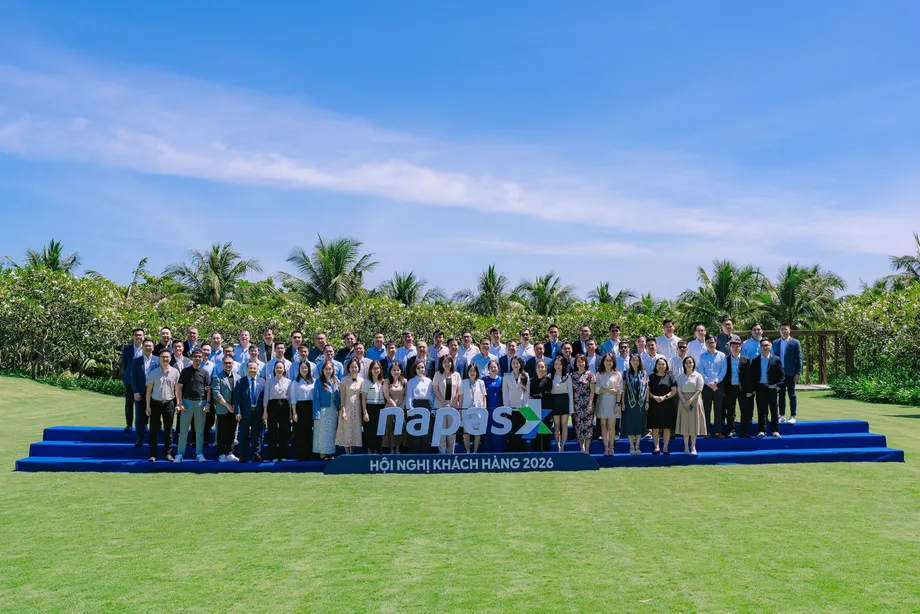
NAPAS presented the figures at its October 2026 customer conference for payment intermediaries in Nha Trang. More than 60 guests represented over 40 organisations, bringing together companies that help connect customers, merchants and banks.
The expansion reaches beyond transaction totals. QR payment numbers have increased twentyfold over five years, while NAPAS is extending services into hospitals, schools, transport, tourism and public services. Its international network now includes connections with six countries, although the rollout differs by market and payment direction.
Vietnam's government has also set targets for 2030: bank transaction accounts for 95% of people aged 15 and above, and annual cashless payment value equivalent to 30 times gross domestic product. Reaching more people, keeping services reliable and making different payment systems work together are central to that effort.
Payment Numbers Are Growing Faster Than Value
The State Bank of Vietnam had already recorded more than 15 billion cashless transactions worth over VND190 quadrillion, approximately $7.27 trillion, in the first half of 2026. It released those figures at an August 11 press conference in Hanoi for the 2026 Banking Industry Digital Transformation event.
Transaction volume in that period rose 34.28% from a year earlier, while value increased 12.24%. The figures for the first eight months show a similar pattern: payment numbers continued growing roughly three times as fast as the amount of money transferred.
The eight month growth rates imply that the average value per transaction fell by about 16% compared with the same period in 2025. That calculation compares the 13.26% increase in value with the 34.56% increase in volume. In simple terms, the system handled many more payments without an equally large rise in the amount attached to each payment.
The central bank also said that more than 95% of transactions at numerous Vietnamese credit institutions were taking place through digital channels. Its figures put payment account ownership above 89% among people aged 15 and older, showing how widely the basic tools for digital payments have spread.
NAPAS Faces a Larger Operational Load
NAPAS processed more than 10 billion transactions worth over VND46 quadrillion through its own system in the first nine months of 2026. Those figures cover its network, while the national totals describe the wider cashless payment market and cover a different period.
For NAPAS, rising traffic creates a practical requirement: payment infrastructure must stay safe, stable and continuously available while more organisations connect to it. A customer scanning a code and a business waiting for confirmation both depend on the systems behind the payment working reliably.
Nguyen Quang Minh, general director of NAPAS, said the organisation would continue increasing infrastructure capacity, expanding connections and supporting members and partners as they develop services. He described the goal as a payment ecosystem that is safe, convenient and sustainable.
NAPAS identified three priorities for its infrastructure: reliable and secure operation, flexibility for partners integrating services, and capacity to accommodate new demand. Its plans therefore address both the volume of transactions already flowing through the network and the services members want to introduce.
VietQRPay Moves Into Everyday Services
VietQRPay is the domestic part of the expansion. NAPAS is working with banks, payment intermediaries and other partners to increase QR payment acceptance in retail, healthcare, education, transport, tourism and public services.
A QR payment begins when a customer scans a code using a compatible payment application. The code provides information needed to direct the payment, reducing the need to enter those details manually. Its usefulness depends on whether the customer's application and the merchant's payment arrangements can work together.
NAPAS says shared infrastructure helps participating organisations introduce services and supports businesses, including household businesses, in accepting digital payments. Extending acceptance gives customers more places to use their accounts, from shops to essential services.
The twentyfold increase in QR payment numbers over five years shows how quickly this method has spread. NAPAS is seeking to turn that adoption into wider acceptance across the country, with banks and payment companies contributing their customer networks and services.
Five International Connections Work in Both Directions
VietQRGlobal connects Vietnam's QR payment network with Thailand, Laos, Cambodia, China, Singapore and South Korea. Connections with the first five countries operate in both directions, according to NAPAS.
That means Vietnamese users travelling to participating markets and visitors from those markets coming to Vietnam can use familiar payment applications to scan compatible QR codes. For travellers, the practical benefit is access to a payment method they already use. For participating merchants, the connection creates another way to accept payment from foreign customers.
South Korea is at a different stage. Although NAPAS includes it among the six countries with completed connections, payments by Vietnamese users in South Korea are still being rolled out. Connections with Taiwan and India are also being implemented; no completion dates were given.
NAPAS and its partners are promoting the services through foreign partner applications and at payment acceptance locations and tourist destinations in Vietnam. This addresses a practical part of international payment expansion: visitors need to know where their applications can be used.
The network's reach therefore depends on several pieces working together, including the connection between payment systems, the applications participating in each market and the merchants accepting the service. NAPAS is pursuing both technical connections and wider awareness among travellers.
A Shared Platform for New Payment Services
NAPAS is also developing its digital payment platform, NAPAS DPP, as a centralised and standardised way for members to connect services. The platform is intended to simplify integration and shorten the time needed to introduce new payment models, particularly in electronic commerce.
Integration is the technical work that lets different computer systems exchange payment instructions and information. Standardising that connection gives participating organisations a common set of requirements to work with as they build services.
NAPAS presents DPP as infrastructure that members and partners can use to develop their own payment services. Its role complements VietQRPay and VietQRGlobal: QR services extend where customers can pay, while DPP addresses how participating organisations connect and introduce new functions.
The focus on electronic commerce puts online transactions alongside payments at physical locations. For payment companies, a common platform is intended to make service development more straightforward as merchants and customers seek additional ways to complete purchases.
Vietnam Sets Account and Payment Targets for 2030
The government's National Financial Inclusion Strategy for 2026 to 2030 was approved through Decision No. 928/QD-TTg, signed on May 25, 2026. It sets targets of 95% account ownership among people aged 15 and above and cashless payment value equivalent to 30 times GDP by 2030.
State Bank figures cited by Deputy Prime Minister Nguyen Van Thang put bank account ownership at 88.96% at the end of 2025. The gap to the 2030 target is 6.04 percentage points. Cashless transaction value reached 28 times GDP in 2025, compared with the target of 30 times.
GDP measures the value of goods and services produced in an economy during a period. Payment totals measure money moving through the system, including transfers and settlements at different stages of business activity. The same money can circulate repeatedly, allowing annual payments to total many times annual GDP.
The main milestones show how payment growth and government policy have developed during 2026:
- May 25: Decision No. 928/QD-TTg approves the financial inclusion strategy and its 2030 targets.
- June 6: Deputy Prime Minister Nguyen Van Thang discusses digital finance priorities at a seminar in Ho Chi Minh City.
- August 11: The State Bank releases figures showing more than 15 billion cashless transactions in the first half of the year.
- October: NAPAS presents its network expansion plans at its customer conference in Nha Trang.
Access and Security Remain Practical Priorities
Deputy Prime Minister Nguyen Van Thang identified uneven access between urban and rural areas as a challenge at the June 6 seminar. Older people and people on low incomes were among the groups he said remained hesitant about, or lacked access to, modern payment methods.
Thang also pointed to cybersecurity, personal data protection and interoperability, meaning the ability of different systems to work together. He described digital payments as part of a wider change in how financial services reach people and businesses.
Digital data, digital identification, digital connectivity, and digital payments are gradually shaping a more modern, transparent, and convenient financial system for citizens and businesses.
The government has directed ministries, agencies and local authorities to expand digital financial services in rural and remote areas, promote electronic payments for public services and improve protection for users. Banks and technology companies have also been encouraged to reduce costs and improve service quality.
Those priorities connect directly with the expansion of payment acceptance. A person needs access to an account, an affordable service and places where that service works. Businesses and public bodies need dependable systems for receiving and confirming payments, while users need protection for their money and personal information.
Payment Companies Share in the Expansion
NAPAS used its Nha Trang conference to recognise payment intermediaries contributing to its network. MoMo received the Diamond tier of the Member of the Year 2026 awards, Viettel received Platinum and OnePay received Gold.
OnePay also received the Payment Gateway Transaction Value Leader award, while TikTok Pay received the Payment Gateway Growth Leader award. MoMo was recognised as a pioneer member for VietQRGlobal payments by Vietnamese users abroad.
Payoo, ShopeePay and FinViet received awards for growth in VietQRPay. Payme, Payoo and FinViet were recognised for growth in VietQRGlobal payments by visitors to Vietnam. ZaloPay, GPay and Payoo received Dynamic Member awards, while TikTok Pay, Epay and FPT Pay received Innovative Member awards.
The categories reflect the different parts of NAPAS's expansion: domestic QR acceptance, online payment processing, payments abroad and spending by international visitors. Its next phase centres on connecting more of these services while keeping the shared infrastructure reliable as transaction numbers rise.
Key Points
- Vietnam recorded more than 21 billion cashless transactions worth over VND260 quadrillion in the first eight months of 2026.
- Transaction volume rose 34.56%, while value increased 13.26%, compared with the same period in 2025.
- NAPAS processed more than 10 billion transactions worth over VND46 quadrillion in the first nine months.
- QR payment numbers increased twentyfold over five years.
- VietQRGlobal connections with Thailand, Laos, Cambodia, China and Singapore work in both directions. Payments by Vietnamese users in South Korea are being rolled out.
- NAPAS is developing connections with Taiwan and India and a standardised digital payment platform for members.
- Vietnam's 2030 targets include account ownership for 95% of people aged 15 and above and cashless payment value equal to 30 times GDP.