Daily gold payments face a lower threshold
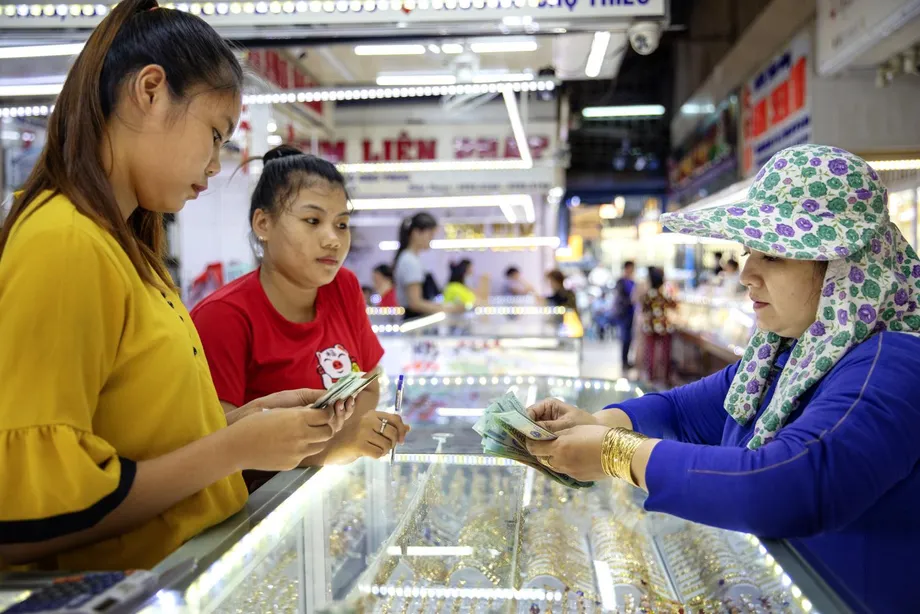
Vietnam is lowering the threshold for compulsory cashless payments in gold purchases and sales from VND 20 million to VND 5 million per customer per day under Decree 390/2026/ND-CP, issued and effective on October 16, 2026. The change brings smaller transactions within the payment requirement while removing a separate eligibility certificate requirement for jewelry producers.
Contents
- Daily gold payments face a lower threshold
- How the daily payment rule works
- How the legal framework has changed
- Jewelry businesses lose a special entry condition
- Raw gold imports remain tied to contracts
- Different routes for industrial gold
- Businesses must track gold beyond the border
- Who checks trading, weight and quality?
- What happens to applications and existing permits?
- Key Points
Deputy Prime Minister Nguyen Van Thang signed the decree, which revises Vietnam's framework for managing the gold business. Alongside the payment change, it updates rules for importing raw gold, tracking its use, supervising gold businesses and handling permits already issued.
The new payment threshold is one quarter of the previous VND 20 million level, a reduction of 75%. A customer whose gold purchases or sales reach exactly VND 5 million in a day falls within the requirement, because the rule applies to that amount or more.
The decree combines two different changes for businesses: fewer special entry requirements for making and selling gold jewelry and handicrafts, and detailed obligations covering payments, imported raw materials, records and quality. For customers, the most immediate change concerns how they pay for gold or receive payment when selling it.
How the daily payment rule works
Clause 10 of Article 4 of the revised framework applies the VND 5 million threshold to a customer's transactions within a day. The relevant amount is the daily total, rather than simply the value printed on an individual receipt.
A customer making two purchases of VND 3 million each in the same day would reach VND 6 million, above the new threshold. Customers and gold businesses therefore need to consider transactions together when determining whether the cashless requirement applies.
The revised wording requires payment through cashless instruments permitted under payment law. The earlier provision specified payment through accounts held by the customer and the gold business. The new wording does not list individual payment services or explain how transactions across different sellers will be combined.
How the legal framework has changed
Decree 390/2026/ND-CP amends Decree 24/2012/ND-CP, Vietnam's framework for managing gold business activities, as previously amended by Decree 232/2025/ND-CP. Its changes cover management principles, raw gold imports and exports, supervisory responsibilities and reporting.
The main dates show how the new measures fit into that framework:
- April 3, 2012: Decree 24/2012/ND-CP established the underlying gold business management framework.
- 2025: Decree 232/2025/ND-CP amended that framework, including the previous VND 20 million daily payment threshold.
- October 16, 2026: Decree 390/2026/ND-CP was issued and took effect, reducing the threshold to VND 5 million and introducing the other changes.
October 16 also serves as the dividing date for pending certificate applications and existing import and export permissions. Applications for a production certificate that is no longer required stop being processed, while previously issued trade permits generally retain their stated terms.
Jewelry businesses lose a special entry condition
Production, processing, purchase and sale of gold jewelry and handicrafts cease to be classified as conditional investment business activities under the revised framework. In simple terms, businesses no longer need to satisfy the special entry conditions removed by the decree to carry out those activities.
A certificate of eligibility for producing gold jewelry and handicrafts, previously issued by the State Bank of Vietnam, is no longer a condition for organizations or individuals to undertake production. The decree removes the relevant production, processing and trading provisions from the earlier framework.
Jewelry businesses must still comply with requirements covering product quality, standards, measurement, labels, displayed prices, invoices, supporting documents and taxes. For a shop or workshop, the practical change is the removal of a particular approval requirement while ordinary obligations toward customers and tax authorities continue.
Raw gold imports remain tied to contracts
Registered producers and processors of gold jewelry and handicrafts with processing contracts for overseas customers may be considered for a raw gold import license by the State Bank of Vietnam. The imports must support the processing contract and the export of the finished products.
Raw gold means material brought in for production, rather than a finished piece of jewelry ready for sale. The amount a business seeks to import must fit its overseas processing contract, linking access to the material with the work the company has agreed to perform.
Enterprises with foreign investment face an annual licensing assessment. The central bank considers production capacity, performance under processing or export contracts, and the previous year's jewelry and handicraft export report, where one exists.
Those enterprises must be established under Vietnamese law and registered to produce or process gold jewelry and handicrafts. Their requested raw gold imports must also match their processing or export contracts. Registration and a contract provide the basis for consideration; the State Bank decides whether to issue the license.
Different routes for industrial gold
Article 14 also sets out a route for importing and exporting particular forms of gold under enterprise registration documents, customs law and relevant sector rules. The categories include gold powder, solutions, solder flakes, gold salts, wire and tubes, together with partly finished gold jewelry.
Gold used to produce electronic components, electronic devices, medical equipment and medical instruments falls within the same provision. These uses connect the rules to manufacturers outside the jewelry trade, whose gold supplies enter a production process for another product.
The decree also updates a provision allowing sales of imported raw gold to enterprises registered to produce gold jewelry and handicrafts. Taken together, the changes link the treatment of gold to its form, intended use and the registered activities of the business handling it.
Businesses must track gold beyond the border
The amended information system requirement covers complete and accurate records of imported raw gold as it is imported, exported, purchased, sold, used and held in inventory. Inventory means the gold a business still has on hand.
Relevant businesses must maintain systems that process and store those records, including raw gold transaction data, and connect and provide information to the State Bank of Vietnam according to rules set by its governor. The records follow the material through business operations, rather than ending when a shipment clears customs.
Enterprises and commercial banks involved in gold business activities must also report gold bar production and trading, gold imports and exports, and the purchase, sale, use and remaining stocks of imported raw gold.
For businesses licensed to import raw gold for jewelry and handicraft work, reporting extends to performance under processing and export contracts and sales of imported material. This connects the reason for an import license with what the business subsequently does with the gold.
Who checks trading, weight and quality?
The State Bank of Vietnam retains inspection responsibilities within its management remit for gold bar production and trading, imports and exports of gold bars and raw gold, and compliance with licenses, quotas and reporting requirements. Quotas are the authorized limits placed on relevant imports or exports.
Its checks also cover the purchase, sale and use of imported raw gold. A business handling that material therefore has obligations both at the licensing stage and during later transactions and production.
The Ministry of Science and Technology leads work with the central bank and other agencies to develop and publish national standards for gold jewelry, handicrafts and bars. It also oversees measurement and quality for those products and raw gold during production, importation and circulation in the market.
The ministry's responsibilities include verifying the measuring instruments used by gold businesses. For customers, that places the accuracy of the equipment used to measure gold alongside the quality of the product itself within the inspection framework.
What happens to applications and existing permits?
The State Bank of Vietnam must stop processing applications to issue, amend or supplement jewelry production eligibility certificates that were submitted before October 16 but remained unresolved when the decree took effect. Applicants must be notified.
Any fees already paid are to be handled under the laws governing fees and charges. The transition provision directs how those payments must be dealt with without specifying an automatic refund for every applicant.
Previously issued gold import and export licenses, permits for temporarily importing raw gold to make products for export, and raw gold import and export quotas continue under their existing contents and expiry dates. They remain subject to adjustment or withdrawal under the law.
New licenses, amendments, supplements and extensions after the effective date follow the revised decree. Businesses with existing permissions can continue within their authorized terms, while future applications move onto the new framework. Jewelry producers, meanwhile, no longer need the abolished eligibility certificate but must continue meeting product, payment, documentation and tax requirements.
Key Points
- Gold purchases and sales totaling VND 5 million or more per customer in a day require cashless payment from October 16, 2026.
- The threshold falls from VND 20 million, a reduction of 75%.
- Gold jewelry and handicraft activities lose their special conditional business classification, while quality, labeling, invoice and tax rules continue.
- Raw gold import licensing remains tied to business registration, contracts and, for enterprises with foreign investment, an annual assessment.
- Relevant businesses must track imported raw gold through transactions, use and inventories and provide information to the central bank.
- Pending applications for the removed production certificate stop being processed; existing trade permits generally retain their stated terms.