Two key crossings halt commerce as traders count the cost
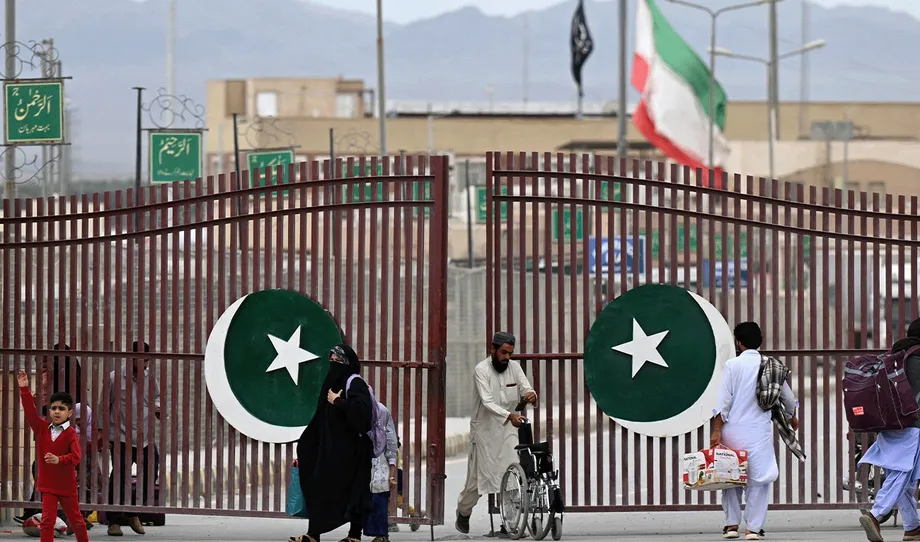
Pakistan has suspended trade through the Gabd-Rimdan and Taftan crossings with Iran, interrupting a route reportedly carrying more than 4,000 tonnes of liquefied petroleum gas each day and leaving large numbers of freight vehicles stranded. The Ministry of Commerce withdrew its earlier authorisation with immediate effect in a memorandum issued on Friday, October 16, 2026.
Contents
- Two key crossings halt commerce as traders count the cost
- Security measures follow kidnappings in Balochistan
- Banking restrictions complicate the picture
- Paid cargo and fresh food face mounting delays
- Why LPG supplies are under pressure
- June's dispute shows how customs delays affected trade
- Trade expansion plans meet another interruption
- How the restrictions have changed over time
- Key Points
The memorandum revoked order No. 9(3)2017-Iran, dated October 3, without stating a reason. Balochistan officials subsequently cited security, efforts to stop smuggling and changes to border administration. Iranian Foreign Ministry spokesperson Esmail Baqaei described technical problems and precautionary measures, saying officials were consulting to restore normal operations.
Former Quetta Chamber of Commerce and Industry president Ayoub Miryani put the number of containers stranded at Gabd-Rimdan at more than 2,000 and warned of losses running into billions of rupees. Other descriptions put hundreds of trucks carrying LPG, rice, fresh fruit and essential goods on both sides of the border.
Passenger movement continued at Gabd-Rimdan, according to Iranian Transit Office director general Syed Hossein Hosseini, while commercial operations stopped. The Quetta chamber advised businesses to stop placing new import and export orders until further notice.
The disruption reaches beyond transport companies. Pakistani exporters face delays delivering food to Iran, importers have money tied up in undelivered cargo, and fuel traders warn of tighter supplies in Karachi and other markets. Both governments describe the interruption as temporary, but neither has announced a reopening date or a timetable for releasing stranded freight.
Security measures follow kidnappings in Balochistan
Chagai Deputy Commissioner Bakhtiar Ismail said the suspension supported counterterrorism efforts and that trade would resume once effective measures were in place. Taftan lies in Chagai district, while Gabd-Rimdan, also known as crossing 250, serves the Gwadar area farther south.
Shahid Rind, adviser to the Balochistan chief minister on media and political affairs, said officials on both sides were working on security and administrative arrangements. He also said a coordinated system was being developed to improve border management and prevent smuggling.
Rind described the purpose of the temporary closure in these words:
The temporary closure was necessary to improve the security situation and administrative arrangements on both sides of the border.
The suspension came during a period of heightened insecurity in Balochistan. At least 20 police constables were kidnapped in Mastung on Friday while returning from a recruitment centre in Kalat. Armed men had also abducted Rakhshan Division commissioner Asad Ullah Kakar while he was travelling through Kharan district. No group had claimed responsibility for either kidnapping.
Taftan trade had already suffered disruption amid unrest. Businesses now face simultaneous restrictions at two important crossings, reducing their ability to move shipments from one route to another.
Banking restrictions complicate the picture
Peyman Sanandaji, head of the Transportation Commission at the Tehran Chamber of Commerce, gave a different description of the interruption. He said the shared land border remained open, rejected claims that a crossing had closed and attributed the halt in Iranian exports to banking sanctions. He said imports into Iran from Pakistan were continuing.
Pakistani importers must submit electronic import forms through Pakistan's banking system for goods bought from Iran, according to Sanandaji. Sanctions affecting Iranian banks make those transactions difficult. In practical terms, a shipment needs both permission to cross the border and financial paperwork that the banking system can process.
Iran's banking sector faces extensive US sanctions. Foreign banks dealing with sanctioned Iranian institutions can also face US measures, complicating payments between Iranian exporters and their Pakistani customers. Sanandaji warned that Iranian exports could remain effectively halted if those restrictions persisted.
His description of continuing Pakistani exports contrasts with the suspension of commercial operations described by Pakistani officials and Hosseini. For businesses, the immediate obstacles involve both border clearance and payments, while passenger access at Gabd-Rimdan continues under a different arrangement.
Paid cargo and fresh food face mounting delays
Miryani said the decision surprised the business community. His estimate of more than 2,000 stranded containers at Gabd-Rimdan points to a large backlog at a crossing that has become important for both Iranian fuel and Pakistani agricultural exports.
Hajji Liaquat Essazai, an LPG trader in Taftan, said the suspension arrived without advance notice. He described the uncertainty facing transporters:
Hundreds of trucks are now stuck at the border and we don't know how long this closure will last.
A customs clearing agent at Gabd-Rimdan said 65 containers he had already cleared were stranded. He also said Pakistani traders had paid their Iranian counterparts, while more trucks carrying fresh food were travelling towards the crossing from Sindh and Punjab.
For an importer who has already paid, a delay keeps money locked in goods that cannot yet be sold. Drivers and transport businesses must also wait with their vehicles. Fruit exporters face an additional problem: freshness declines while delivery dates slip, putting the value of their cargo at risk.
The Quetta chamber's instruction to pause new orders is intended to keep businesses from adding more shipments to the disruption. Existing contracts and cargo already on the road leave traders exposed even if they stop making new purchases immediately.
Why LPG supplies are under pressure
Gabd-Rimdan reportedly handles more than 4,000 tonnes of LPG imports daily. LPG is a fuel commonly sold in cylinders for cooking and other uses. A break in deliveries can affect wholesalers, retailers and households as existing stocks are used up.
At that reported flow, a halt lasting three days would interrupt the normal arrival of more than 12,000 tonnes. The eventual shortage would depend on stocks already inside Pakistan, supplies from other routes and how quickly delayed cargo could move after reopening.
Trade and energy businesses warned that the suspension could worsen LPG shortages in Karachi and elsewhere and push up prices in the open market. Taftan's existing difficulties make the loss of Gabd-Rimdan more serious because traders have fewer dependable alternatives.
Gwadar Chamber of Commerce and Industry president Jiand Hoot had previously described trade through Panjgur and Mand-Radig as virtually nonexistent because of poor roads and recurring attacks in which vehicles were set on fire. A crossing offers limited relief if trucks cannot reach it safely or roads cannot support regular freight traffic.
The current warnings concern supply risks rather than a documented nationwide price increase following the October suspension. Traders have pointed to a specific earlier episode, however, when delays at the same crossing coincided with complaints about expensive and unavailable LPG.
June's dispute shows how customs delays affected trade
In June 2026, Hoot blamed customs procedures for another halt at Gabd-Rimdan. He said hundreds of trucks carrying LPG had waited 10 to 15 days for clearance and alleged that Iranian commercial vehicles were being turned back from the National Logistics Corporation yard.
Hoot said LPG prices had risen in Karachi and parts of Punjab, with the fuel reportedly unavailable even at Rs400 per kilogram. He also cited shipping constraints in the Strait of Hormuz as another source of pressure on energy supplies. Those price and availability claims concerned June, several months before the latest suspension.
Pakistan Customs rejected the claim that border trade had stopped or an LPG crisis was under way. In a statement, it said 748 LPG goods declarations had cleared 17,353 metric tonnes between June 1 and June 8, with imports and clearance continuing without interruption.
Those figures amount to about 2,169 tonnes cleared each day across the eight days. The calculation gives a concrete measure of June's recorded clearance activity alongside the higher daily flow of more than 4,000 tonnes subsequently reported for the crossing.
Customs said LPG and bitumen were receiving priority through its green channel, a clearance route intended to move qualifying cargo more quickly. It attributed the return of 65 Iranian consignments to failures by some importers to follow legal clearance procedures. New controls, it said, targeted undeclared goods, theft and lost revenue.
The agency also reported customs revenue exceeding Rs12.7 billion for April to June 2026, with revenue and documented trade rising from the previous year. June's dispute exposed competing pressures at the crossing: businesses wanted cargo released faster, while customs defended checks designed to keep trade within legal procedures.
Trade expansion plans meet another interruption
Pakistan and Iran had spent months trying to make border commerce easier. Measures introduced from March included simpler customs procedures, formal recognition of Taftan as a customs station and notification of new transit routes.
On August 5, Prime Minister Shehbaz Sharif met a delegation of six Iranian officials led by Industry, Mines and Trade Minister Mohammad Atabak in Islamabad. The visit accompanied the tenth session of the Pakistan-Iran Joint Trade Committee.
The two sides agreed to support border operations around the clock, improve transport and cargo handling, and bring customs procedures into closer alignment. They also discussed cooperation in mining, including processing gemstones to increase their value before sale. Atabak said technical talks on a free trade agreement were continuing.
The leaders' bilateral trade target was $10 billion. A trade total of $2.8 billion cited in June 2025 puts that ambition in perspective: the target is about 3.6 times that earlier figure. Reaching it would require much more goods to move reliably, alongside workable payment arrangements.
October's suspension interrupts those efforts at the point where agreements become daily business. Longer opening hours bring little benefit to a truck awaiting security approval, customs release or banking documentation.
How the restrictions have changed over time
Different disruptions have affected different kinds of movement. In June 2025, Pakistan restricted pedestrians at Taftan and Gabd-Rimdan during fighting between Iran and Israel, while officials said commercial and customs operations continued. Pakistani citizens stranded in Iran could return through Gabd-Rimdan, but new entries into Iran were barred.
The latest arrangement at Gabd-Rimdan reverses that pattern: passengers continue to cross while commercial operations are suspended. The main developments are:
- June 15, 2025: Pakistan suspended pedestrian movement at Taftan and Gabd-Rimdan while officials said trade remained open.
- From March 2026: Pakistan and Iran introduced measures to simplify customs and develop formal trade routes.
- June 2026: Traders complained of prolonged LPG clearance delays; Pakistan Customs said imports continued and published clearance figures.
- August 5, 2026: Sharif and Atabak discussed the $10 billion trade target and arrangements for crossings to operate around the clock.
- October 16, 2026: The Commerce Ministry withdrew its October 3 order with immediate effect, suspending trade through Gabd-Rimdan and Taftan.
Officials from both countries are now in contact over restoring operations. For traders, the practical priorities are releasing cargo already at the border, processing payments and establishing reliable procedures before businesses commit to further deliveries.
Key Points
- Pakistan suspended trade through Gabd-Rimdan and Taftan after withdrawing an earlier Commerce Ministry order.
- Pakistani officials cited security and border administration; Iranian officials described technical problems, while a Tehran chamber official pointed to banking sanctions.
- A former Quetta chamber president estimated that more than 2,000 containers were stranded at Gabd-Rimdan.
- Passenger movement continued at Gabd-Rimdan while commercial operations were halted.
- The crossing reportedly handled more than 4,000 tonnes of LPG imports daily, making the interruption a concern for fuel supplies and prices.
- Both governments described the disruption as temporary, with consultations continuing and no reopening date announced.