A month in a canal draws extraordinary crowds
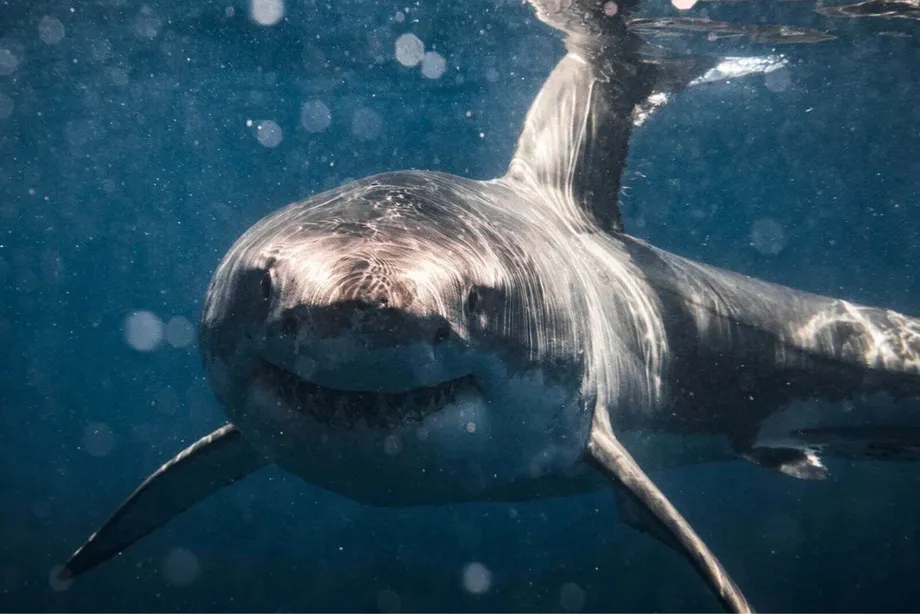
Busan's North Port Waterfront Park recorded 1.54 million cumulative visits by 6 p.m. on October 17, 2026, as crowds gathered to see Bukangi, a large shark that has spent 30 days in its artificial waterway. The Busan Facilities Corporation counted 42,000 visits that Saturday alone. Two operations to guide the animal back to open sea have failed.
Contents
- A month in a canal draws extraordinary crowds
- How the waterfront became a destination
- Two rescue operations ended with Bukangi still inside
- Why finding the exit may be difficult
- Injuries and autumn cooling increase concern
- What is known about the shark's identity?
- Food waste and bright lights create new problems
- A celebrity becomes a commercial opportunity
- Warming seas give the encounter a wider context
- The next decision concerns both rescue and the waterfront
- Key Points
The attendance total is equivalent to about 48% of Busan's population of 3.23 million. It counts visits to the park, including possible return trips, rather than individual people. Even with that qualification, the scale shows how one animal has transformed a waterfront usually visited by about 2,000 people a day during holidays.
Bukangi first appeared on September 18. Since then, visitors have lined the canal's railings and pedestrian bridges, holding up phones to photograph the shark as it swims past. Its nickname combines Bukhang, the Korean name for North Port, with the familiar Korean suffix "-i."
Busan has appointed the shark an honorary promotional ambassador, businesses have introduced merchandise, and President Lee Jae Myung visited the park on October 12. Alongside the enthusiasm, scientists and lawmakers are concerned about injuries, disturbance from lights and noise, restricted movement and the approaching seasonal drop in water temperature.
Authorities are monitoring Bukangi before deciding whether to make another rescue attempt. The immediate challenge is practical: how to help a large marine animal leave a shallow urban canal without causing further stress, while managing tens of thousands of spectators.
How the waterfront became a destination
Families began arriving early on October 17, with visitors taking turns at viewing spots along the water. Moon Ha-jun, a pupil in the fifth grade visiting with his family, said they left home at 8 a.m. and made the park their first stop in Busan. He described initially mistaking the shark for an orca because of its size.
Attendance had already reached extraordinary levels during the Chuseok holiday, when more than 483,000 visits were recorded. City figures put attendance at 607,000 between September 19, when counting began, and September 28. By October 17, the cumulative total was more than two and a half times that figure.
Friday's figures were less consistent. Busan city gave 1.48 million cumulative visits and 20,000 that day as of 6 p.m. on October 16; another account citing local authorities put the figures at 1.496 million and about 32,000. The Busan Facilities Corporation's later Saturday total put attendance firmly above 1.5 million.
Some convenience stores near North Port have experienced higher sales as visitors pass through the area. The crowds have also brought illegal parking, traffic congestion and pressure on pedestrian routes, turning the shark's unexpected stay into a daily management task for the surrounding district.
Two rescue operations ended with Bukangi still inside
Rescuers have tried both water jets and a large net to steer the shark toward the canal's exit. The operations depended on guiding its swimming direction rather than lifting it out of the water.
- September 18: Bukangi was first spotted in the artificial waterway at North Port Waterfront Park.
- September 29: Rescue boats used powerful water pumps to create noise, foam and currents behind the shark. The operation was suspended at about 3 p.m. after it failed to leave.
- October 2: Crews deployed a net measuring 50 meters long and 6.8 meters high, but it caught on the channel bottom.
- October 3: Around noon, the shark crossed over the net and returned to the stretch between the fourth and fifth pedestrian bridges.
- October 17: Bukangi remained in the canal after 30 days, with cumulative park attendance reaching 1.54 million.
During the operation using pumps, the shark slipped past the boats and returned farther into the canal. The net operation also failed to produce a lasting movement toward open water, despite a vessel pulling its center toward the sea.
Officials subsequently paused further attempts because repeated intervention could place excessive stress on the animal. Scientists had also warned that forcing it could cause injury or provoke aggressive behavior. No date for a third operation had been announced by October 17.
Why finding the exit may be difficult
Kim Hyun-woo, a senior researcher at the National Institute of Fisheries Science involved in the rescue effort, has pointed to the canal's complicated sensory environment. Noise, light and electrical interference may arrive from several directions, while water levels and currents change.
Kim described the conditions facing the animal:
There are too many external physical stimuli coming from different directions.
The canal is shallow and narrow compared with the open sea. Choi Youn, an honorary professor of marine biology at Kunsan National University and a shark specialist, has described repeated swimming along the edges as behavior that can keep a confined shark circling rather than finding an exit.
Water temperature and the location of food may also affect its movements. Ewha Womans University ecology professor Choi Jaecheon has urged people to consider those conditions when interpreting Bukangi's repeated returns to the same area.
Kim has said a successful rescue means the shark fully leaves the canal and reaches open sea. Moving it closer to the entrance, only for it to turn back, leaves the central problem unresolved.
Injuries and autumn cooling increase concern
Injuries have been observed around Bukangi's snout and head. Officials have described its condition as stable during earlier monitoring, but its prolonged stay has raised concerns about feeding, freedom of movement and exposure to disturbance.
Choi Yoon, a professor emeritus of marine biology at Kunsan National University, warned that dirty water could make the injuries more dangerous:
Pollutants entering the waterway could worsen infections in the wounds around Bukangi's snout and lead to deteriorating health.
The shark has not been observed hunting inside the canal. Officials have also said that its ability to feed and move is restricted. With autumn temperatures falling, the animal faces changing conditions in a small waterway where temperatures may vary sharply between day and night.
Cho Seung-hwan, a People Power Party lawmaker, raised those concerns during a parliamentary audit of the Ministry of Oceans and Fisheries in Busan. He called for formal instructions on how authorities should respond:
A rescue manual for Bukangi needs to be established.
Lawmakers from both major political camps sought rescue and management guidance, better shark detection, ecological research and coordination among agencies. Their requests extend beyond the next operation to how coastal authorities handle similar encounters.
What is known about the shark's identity?
Bukangi is generally described as approximately 3 meters long, although some estimates put its length at 3.5 meters. Species descriptions are more inconsistent: a detailed account identifies a female dusky shark, earlier descriptions called it a likely bronze whaler, and others used blacktip shark or blacktip reef shark.
An October 6 identification attributed to the National Institute of Fisheries Science described a female measuring about 3 meters, but English species labels remain inconsistent across accounts. Dusky sharks and bronze whalers are different species, making the terminology relevant to explanations of preferred temperatures, behavior and conservation status.
Choi Jaecheon has discussed possible explanations for the animal's stay, including food availability and reproduction. Those remain possibilities rather than observed events. The immediate management concerns are its visible injuries, repeated circling and continued confinement.
Food waste and bright lights create new problems
Visitors have thrown food waste into the waterway, including leftover boiled pork and kimchi stew. At night, some people have directed powerful flashlights at the shark, reportedly prompting unusual reactions. Citizens trying to stop the behavior formed an informal patrol, and arguments between visitors led to police being called.
Busan residents Jung Chang-geun and Jung Jun-bin urged people to protect the animal and avoid littering. Their concern reflects a practical problem for managers: public affection has brought many people to the canal, but some behavior is making the environment more difficult for the shark.
Busan has reportedly deployed more than 100 workers daily to monitor the shark and conditions around the park. Nighttime staffing remains stretched. Kim Heon-ho, head of the city's Park Planning Team, described the limits of existing measures:
There is a lack of nighttime personnel. We patrol at night and guide people through banners and broadcasts, but there are limitations with just that.
Choi Jaecheon also called for quieter visits so the animal could swim with less disturbance. Authorities plan to maintain safety controls around the waterway while consulting specialists about its care and possible release.
A celebrity becomes a commercial opportunity
Busan appointed Bukangi an honorary promotional ambassador on September 29. A city Instagram poll recorded 91% support among respondents for the idea, and the shark acquired the promotional title "Shafluencer." Mayor Chun Jae-soo publicly welcomed the attention it brought to North Port.
Local businesses quickly joined in. Daesun Distilling released a special edition of its soju with a shark character on the label. The Lotte Giants baseball team introduced a plush version of its mascot Nuri wearing a shark costume.
Busan's Dong District is holding a contest to design and name a North Port shark character, with entries due October 23. It plans to use the winning design for merchandise, emoticons and sculptures. A graduate student at Pukyong National University also developed a service allowing visitors to share sightings of Bukangi within the canal.
Trademark applications could complicate those plans. An individual filed an application on September 25 for a design combining the word "BUKANGI" with a shark image, covering products including mugs and key chains. Busan is pursuing its own applications related to the animal.
Noh Hyun-seok, co-executive director of the Busan Federation for Environmental Movement, has called for the city to examine North Port's water circulation and routes for marine animals. The group argues that extensive reclamation and artificial structures can make the waterfront difficult for animals to navigate.
Warming seas give the encounter a wider context
The National Institute of Fisheries Science recorded 46 sightings of large sharks along South Korea's east coast in the first half of 2026, compared with 12 during the same period a year earlier. That is nearly four times as many sightings, an increase of about 283%.
The institute also recorded at least 73 cases of shark bycatch from January through August 2026. Bycatch means animals caught unintentionally during fishing. Researchers found fish associated with warmer waters, including yellowtail and filefish, in the stomachs of sharks accidentally caught in eastern waters.
Several temperature measurements help explain why scientists are studying changes in where sharks and their prey live. The institute's 2026 Climate Change Report recorded a 1.60°C rise in annual average sea surface temperature in Korean waters between 1968 and 2025, compared with a global increase of 0.76°C over the same period. Korean waters averaged 17.17°C during the first half of 2026, the highest figure since measurements began.
Closer to Busan, the average sea temperature off Gijang was about 1.2°C higher in 2024 than in 2000, according to the institute. South Korea's meteorological service separately reported an increase of 0.7°C in sea surface temperatures around the peninsula over the past decade.
Warmer water can shift the location of fish that sharks eat. Predators may then follow those fish into places where they were previously less common. Choi Youn has identified this movement of prey as a possible reason for Bukangi's arrival.
The next decision concerns both rescue and the waterfront
Hong Sun-kee, director of the Institution for Marine and Island Cultures at Mokpo National University, says researchers need to investigate prey locations, ocean currents, tidal flows and the waterway's shape to understand Bukangi's movements. Inha University ocean sciences professor Kim Tae-won has also called for more research into the encounter.
Hong described how changing sea conditions can affect both predators and their food:
In simple terms, warming seas can change the movement patterns of both prey species and their predators.
Busan and the fisheries institute are continuing to monitor Bukangi's movements and health before choosing another intervention. Rescuers must weigh the risks of another operation against the risks of a longer stay as temperatures fall.
North Port's immediate needs are concrete: controlling waste and bright lights, managing crowds, watching the shark's wounds and identifying a workable route to open water. The wider task is to examine how animals enter and move through the waterfront, so the next unexpected visitor is easier to help.
Key Points
- North Port Waterfront Park recorded 1.54 million cumulative visits by 6 p.m. on October 17, including 42,000 that day.
- Bukangi first appeared on September 18 and remained in the artificial canal for 30 days.
- Rescue operations on September 29 and October 2 failed to guide the shark back to open sea.
- Injuries, restricted feeding and movement, disturbance and falling temperatures are central welfare concerns.
- Authorities are monitoring the shark before deciding whether to attempt another rescue.
- Rising shark sightings and warmer coastal waters have prompted calls for research and better response plans.
- Dong District's shark character contest closes on October 23.