New models put price and charging access at the centre of competition
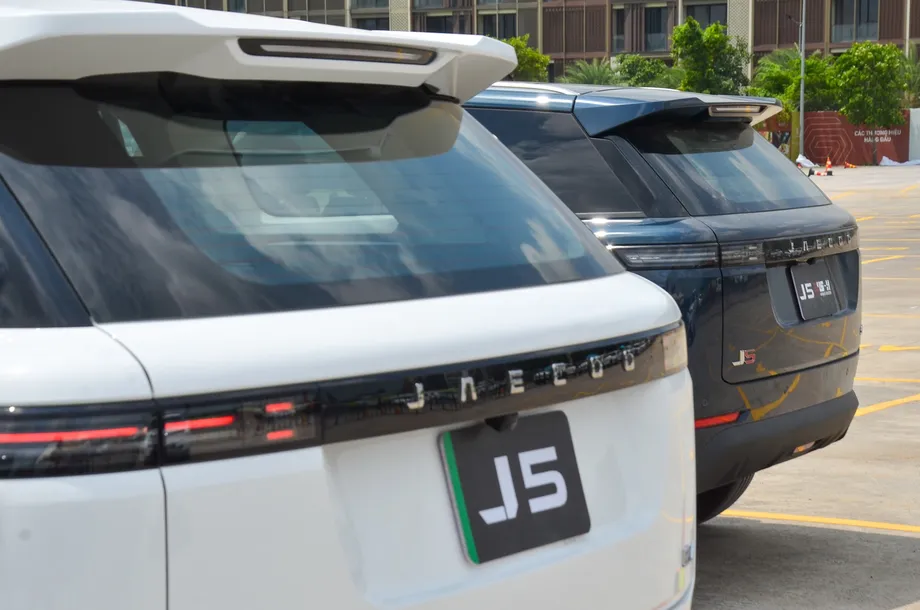
MG's new ZS hybrid costs 668 million dong, Jaecoo's J5 spans petrol, hybrid and electric versions from 599 million to 749 million dong, and BYD is preparing a Sealion 5 plug-in hybrid expected to cost below 790 million dong for its highest version. Chinese carmakers are widening their choices in Vietnam, with hybrids offering a way to attract buyers who want lower fuel use without relying entirely on public chargers.
Contents
- New models put price and charging access at the centre of competition
- A growing market, with electric cars taking the larger share
- MG makes fuel savings its main SUV pitch
- Jaecoo and BYD take different routes to hybrid buyers
- Wuling spreads its electric range across several budgets
- Darion and Lynk & Co face established electric rivals
- Charging expansion and a tax deadline shape the choice
- Service commitments will matter after the launches
- Key Points
The launches arrive as electrified vehicles take a larger share of Vietnamese sales. Battery electric cars and hybrids together accounted for 39.1% of recorded new vehicle sales in the first nine months of 2026, compared with about 17.1% in the same period of 2024. Battery electric vehicles delivered most of that increase.
Chinese brands face different competitive conditions in each category. Toyota leads recorded hybrid sales, while VinFast dominates electric vehicle deliveries. New entrants must compete with those established positions while building dealerships, repair services and confidence in their products.
Fully electric models are arriving at several prices, from Wuling's 279 million dong Mini EV Macaron to the Lynk & Co 02 at 818 million to 898 million dong. Their prospects depend partly on whether drivers can find convenient charging at home, near work or along regular routes.
Hybrids offer a more immediate route to buyers concerned about that practical problem. Even within this group, however, the differences matter: MG's ZS uses a hybrid system that needs no external charging, while BYD's planned Sealion 5 can be plugged in and also carries petrol for longer journeys.
A growing market, with electric cars taking the larger share
Vietnam Automobile Manufacturers Association members sold 35,094 vehicles in September 2026, up 38% from August and 14% from a year earlier. Adding Hyundai Thanh Cong's 3,872 vehicles and VinFast's 23,624 brings the combined September tally to 62,590.
Promotions, purchases postponed during August's traditional Ghost Month and deliveries of earlier orders helped bring customers back in September. Across the first nine months, the reported new vehicle total reached 498,923, including 282,029 vehicles sold by VAMA members, an increase of 12% for that group.
Battery electric sales reached 177,779 in the first nine months, up about 72% from a year earlier. Mild hybrids and conventional hybrids together reached 16,057, up 64%. Petrol and diesel vehicle sales also grew, by 8.6%, but their share fell as electrified models expanded faster.
Battery electric vehicles increased their recorded market share from 15.1% in the first nine months of 2024 to 35.9% in the same period of 2026. Hybrids rose from 2% to 3.2%, while petrol and diesel vehicles fell from 82.8% to 60.9%.
PwC's passenger vehicle figures show the same direction over a different period: electric and hybrid vehicles represented about 44% of sales in the first half of 2026, with more than 127,000 sold. The corresponding annual share was 22% in 2024 and 36% in 2025. Sales disclosure remains incomplete because several Chinese and luxury brands do not publish Vietnamese totals.
MG makes fuel savings its main SUV pitch
MG introduced the All-New ZS hybrid and MG GT sedan on October 16, 2026. The ZS combines a 1.5 litre petrol engine, an electric motor and a battery with a capacity of 1.83 kilowatt hours, producing a combined 197 horsepower.
MG claims mixed driving fuel consumption of 4.53 litres per 100 kilometres. At that rate, a journey of 1,000 kilometres would use 45.3 litres of petrol. Actual consumption depends on traffic, speed, load and driving conditions.
The ZS hybrid recovers energy during slowing and uses its engine and motor together to manage fuel use. Its small battery supports the petrol engine rather than requiring drivers to plan visits to charging stations. That makes it a different ownership proposition from a fully electric SUV.
MG lists the ZS at 668 million dong, accompanied by a fuel subsidy worth 20 million dong. Equipment includes a 12.3 inch central display, a 7 inch instrument display and active driving assistance. The company claims acceleration from zero to 100 kilometres per hour in 8.7 seconds.
The outgoing ZS had already shown some sales strength during clearance promotions. Nearly 1,300 were reportedly sold in the first eight months of the year, compared with about 780 MG5 sedans, putting ZS volume at roughly 1.7 times that of the MG5. The new hybrid gives MG a fresh product in a category where it has already attracted buyers.
MG is also competing for customers who still prefer conventional engines. Its new GT sedan costs 512 million dong in Luxury form and 586 million dong in Premium form, with launch support covering half the registration fee. The broader range lets MG pursue both buyers focused on purchase price and those willing to spend more for hybrid technology.
Jaecoo and BYD take different routes to hybrid buyers
Jaecoo's J5 offers petrol, hybrid and fully electric versions within a price range of 599 million to 749 million dong. Giving buyers several powertrain choices under one model name allows the brand to serve different charging circumstances and budgets.
The J5 is also the first Jaecoo model assembled at the Omoda & Jaecoo factory in Hung Yen. Local assembly gives the brand a production presence in Vietnam as it seeks to establish a lasting business alongside its imported competitors.
BYD's Sealion 5 is positioned as a more affordable plug-in hybrid SUV than the Sealion 6. Its highest version is expected to cost less than 790 million dong, with a claimed combined driving range exceeding 1,000 kilometres when both the battery and petrol tank are full.
A plug-in hybrid has a battery that can be charged from an external electricity supply and a petrol engine that can continue the journey. The Sealion 5's quoted distance combines both energy sources. Drivers who charge regularly can use electricity for part of their travel, while petrol provides flexibility on longer trips.
BYD planned the Vietnamese introduction for October 2026, without a specific launch date in the announcement. Its expected price and practical SUV positioning could give the Sealion 5 a larger sales role than the more expensive Sealion 6.
Wuling spreads its electric range across several budgets
Wuling and distributor TMT Group introduced four electric models on October 16: the Mini EV Macaron, Bingo 2026, Grango and Darion. Together, they cover compact urban cars, a hatchback and vehicles intended for families or passenger transport.
The Mini EV Macaron starts at 279 million dong for a version with a claimed range of 205 kilometres. A version claiming 300 kilometres costs 339 million dong. Its compact size places it at the urban end of Wuling's range.
The five seat Bingo 2026 costs 409 million dong in Base form and 469 million dong in Plus form, both claiming 333 kilometres of range. The 499 million dong Max version claims 410 kilometres. Equipment includes a lithium iron phosphate battery, CCS2 fast charging, a camera system showing the surroundings and two 10.25 inch displays.
CCS2 is the charging connector standard used for compatible rapid charging equipment. For buyers, the practical benefit depends on having accessible stations that their vehicle can use, with charging available when needed.
The Grango, priced at 519 million dong, has seven seats and an approximate range of 300 kilometres. Its focus on passenger transport gives it a possible role as Wuling's main volume model, particularly among operators who compare purchase price with the revenue a vehicle can earn.
Charging arrangements are especially important for those operators. A vehicle serving passengers throughout the day needs a workable balance between driving, charging and waiting. TMT's plan to combine Wuling vehicles, TMT EGreen charging and policies for transport businesses addresses those connected needs.
Darion and Lynk & Co face established electric rivals
Wuling's Darion moves into a more expensive part of the market. The Eco version costs 769 million dong and claims 450 kilometres of range, while the Luxury costs 839 million dong and claims 500 kilometres.
The seven seat Darion has electric sliding doors on both sides and a seating arrangement of two seats in the first row, two in the second and three in the third. Its luggage space can expand beyond 1,200 litres. Sliding doors offer a practical difference for passengers entering and leaving in confined spaces.
Darion competes with the VinFast Limo Green, VinFast VF MPV 7 and BYD M6. Its price places it well above Wuling's smaller cars and the Grango, making service quality and brand confidence important alongside seating and equipment.
Lynk & Co's first fully electric SUV, the 02, costs 818 million to 898 million dong. Access to charging remains a concern for potential buyers, and expansion of the VETC charging network could improve its usefulness.
VinFast presents a substantial competitive challenge across the electric market. It reported 23,624 deliveries in September, about 37.7% of the combined 62,590 vehicle tally, and placed six models among the month's ten best sellers. Its product range, sales incentives and free charging help shape what buyers expect from rival electric brands.
Charging expansion and a tax deadline shape the choice
TMT Group has stated a target of completing 30,000 charging stations with 60,000 CCS2 ports nationwide by 2030. That would mean an average of two charging ports per station. Hundreds of stations have reportedly been completed across 15 provinces.
The target sets out the scale of TMT's ambition, while the locations already operating determine where customers can charge today. The integrated vehicle, charging and transport business strategy is particularly relevant to Wuling's Grango and Darion, whose potential customers include operators with frequent daily use.
Battery electric cars also benefit from a registration incentive. Decree No. 51/2025/ND-CP keeps the fee for first registration at 0% through February 28, 2027. The exemption reduces an initial ownership expense for eligible electric cars during the current sales push.
Hybrids are attracting buyers within a much smaller recorded segment. Toyota sold 11,297 conventional hybrids in the first three quarters of 2026, accounting for roughly 70% of recorded hybrid sales, with the Corolla Cross leading the category.
Chinese brands therefore face established competitors in both markets. Honda began operating a hybrid assembly plant in Vietnam in early 2026, while Toyota was expected to start local hybrid assembly in early 2027. MG, Jaecoo and BYD are entering a segment where competition extends beyond the latest launch price.
Service commitments will matter after the launches
MG plans to open eight additional dealerships in the fourth quarter of 2026 and has announced a warranty lasting ten years on its newly launched models. More service locations could make routine maintenance and repairs easier for customers outside its existing network.
Dealership coverage, spare parts supply, repair quality and resale value will affect how these new models are received over time. A long warranty gives buyers a stated period of protection, while the terms of coverage and the ability to obtain repairs shape the ownership experience.
Vietnam's next milestones bring those promises into focus:
- October 16, 2026: MG introduced the ZS hybrid and GT sedan, while Wuling and TMT presented four electric models.
- Fourth quarter of 2026: MG plans eight additional dealerships.
- Early 2027: Toyota is expected to begin assembling hybrids locally.
- February 28, 2027: The current 0% fee for first registration of battery electric cars is scheduled to end.
- 2030: TMT targets 30,000 charging stations with 60,000 CCS2 ports nationwide.
Hybrids give Chinese manufacturers a route to customers who want electric assistance while retaining easy access to petrol. Fully electric cars offer a wider range of prices and body styles than before, but their appeal remains closely tied to charging convenience. Both strategies ultimately depend on reliable support after the purchase.
Key Points
- MG's ZS hybrid costs 668 million dong, while Jaecoo's J5 offers petrol, hybrid and electric choices from 599 million to 749 million dong.
- BYD's planned Sealion 5 plug-in hybrid is expected to cost below 790 million dong for its highest version.
- Wuling's expanded electric range runs from the 279 million dong Mini EV Macaron to the 839 million dong Darion Luxury.
- Electrified vehicles accounted for 39.1% of recorded new vehicle sales in the first nine months of 2026.
- VinFast leads electric deliveries, while Toyota accounts for roughly 70% of recorded hybrid sales.
- Charging access, dealerships, spare parts and repair services will help determine whether new launches become lasting sales successes.