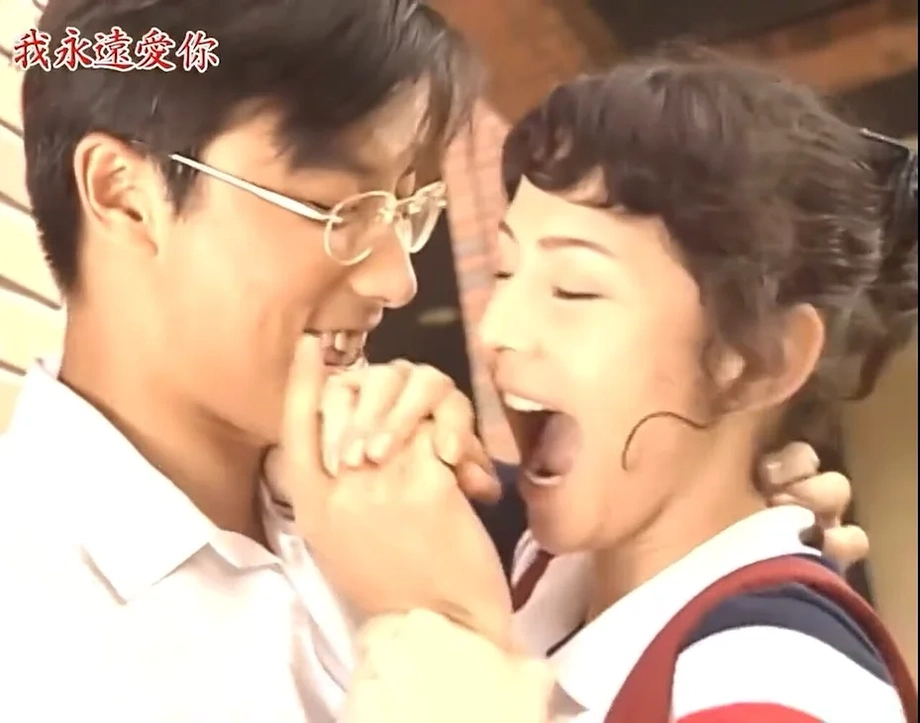
A 1997 romance brings an unexpected return to fame
Twenty-nine years after Lin Wei starred opposite Hsi Man-ning in the Taiwanese drama I Will Always Love You, its intimate scenes are bringing the 57-year-old former television leading man a new audience. Clips circulating on Threads have prompted comparisons with actor Greg Hsu, while television archives on YouTube are turning that attention into opportunities to watch entire dramas.
Contents
- A 1997 romance brings an unexpected return to fame
- Why viewers are comparing him with Greg Hsu
- Why the later broadcast slot mattered
- How Lin approached intimate scenes
- How the Flower Series got its name
- From fax machines to marathon streams
- Old interviews have returned alongside the dramas
- A technology business now takes priority
- What would bring him back to acting?
- Key Points
The renewed interest now extends beyond a few widely shared kisses. China Television's classic drama YouTube channel has made 29 Flower Series dramas available and is running marathon streams around the clock. Formosa Television's drama channel has also launched a marathon of I Will Always Love You, the 1997 production at the centre of the discussion.
Lin, who now runs a technology business developing artificial intelligence and virtual reality applications, sounds more surprised than eager to resume his former career. He joined Threads with help from his girlfriend and business partner, Cora, just two hours before a recent interview. At that point, he was still reluctant to publish his first post.
His response to the romantic scenes is equally practical. What younger viewers see as unusually bold performances, he remembers as work shaped by a later broadcast slot, a particular audience and the demands of a character.
Why viewers are comparing him with Greg Hsu
Threads users have nicknamed Lin an ancient-era Greg Hsu, a playful description of an earlier actor whose looks remind them of the contemporary Taiwanese star. The comparison centres on Lin's eyes, facial expressions and appearance from certain angles, alongside the romantic intensity of his performances.
Cora agrees that some angles look similar, particularly around the eyes and when the camera looks upward at him. Lin has acknowledged a resemblance in their manner and jokingly suggested checking the family tree for a connection. He also said Hsu was more handsome.
Lin said he has never met Hsu, does not know him and has not watched his work. His pleasure comes chiefly from seeing younger viewers discover performances that had largely belonged to an earlier television generation.
The response has reached people from his own early career, too. Lin said producer Chou Yu, who discovered him at the end of 1989, had also been asked about his sudden popularity. Friends were calling to ask what he had done to make his face appear throughout their feeds. From his perspective, daily life had continued as usual: meals, work and programming.
Why the later broadcast slot mattered
I Will Always Love You aired at 9:30 p.m., a detail Lin considers essential to understanding its approach to romance. He recalled that dramas shown at 8 p.m. were intended for families watching together, with kissing generally kept brief. The later slot allowed productions to explore desire and relationships more directly.
Some of the rediscovered dialogue is unusually explicit. In one scene, Lin's character praises the heroine's breasts. Asked about such lines, Lin described their tone as literary rather than embarrassing or especially shocking within the production.
Lin, explaining how he remembers the dialogue and its delivery, said:
That was how it was at the time. I thought it was fine! It had a very literary feeling.
He credited producer Wei Yueh-han with creating room for a different kind of drama as the producer prepared to develop work at Formosa Television. According to Lin, I Will Always Love You was aimed at university students and other younger viewers. Its kisses and physical closeness were part of that intended appeal.
The contrast between its original audience and its new one helps explain the revival. A production designed to attract young adults in 1997 is again reaching young adults, this time through short clips and streaming archives rather than a scheduled evening broadcast.
How Lin approached intimate scenes
Hsi Man-ning has previously described Lin as considerate during intimate scenes. She recalled that he brushed his teeth beforehand and spoke to his scene partner before filming, taking care to avoid an awkward physical collision.
Lin described those habits as basic hygiene and courtesy. When two performers move close together, he explained, they need to coordinate their movements. A kiss still requires practical decisions about timing, position and how each person moves toward the other.
Asked about the mechanics of screen kissing, including whether he used his tongue, Lin said the choice was guided by the feeling of the scene and how the story was progressing. He rejected the idea that a particular technique measured how deeply an actor had entered a role.
Lin also drew a firm line between portraying attraction and experiencing it privately. Asked whether he had fallen for a colleague or struggled to leave a romantic role behind, he said he went home after filming and already had a girlfriend at the time.
Lin, describing the difference between his romantic screen expressions and his ordinary behaviour, put it simply:
That was being at work! Chatting normally is being off work. That's the biggest difference.
How the Flower Series got its name
Producer Wei Yueh-han recalls a surprisingly simple origin for the Flower Series name. A screenwriter suggested that titles associated with flowers would do well on China Television. Several productions followed that naming pattern, and audiences came to know them collectively as the Flower Series.
Lin was one of a recurring group of performers associated with these dramas, alongside actors including Wang Shu-chuan, Hsi Man-ning, Lee Tien-chu, Chang Chen-kuang and Tu Shan-ni. Their stories placed marriage, family pressure, betrayal and romantic longing at the centre of the action.
Woman Flower provides a concrete example. Wang plays Sung Ling, a successful career woman whose mother-in-law mistreats her because she has not become pregnant. After an argument, she leaves home, drinks and mistakenly enters a hotel room, where she has a sexual encounter with Shen Chun-chung, played by Lin, a stranger who is about to marry.
The plot combines several pressures in a single encounter: expectations about motherhood, conflict within a household and an imminent wedding. Those connected problems help explain why viewers can be drawn from a short romantic clip into a much longer story.
Lin has offered his own explanation for the renewed interest. He believes the dramas' subjects still fit the pace of modern life and give viewers an outlet for their emotions. Misunderstandings and turbulent relationships remain central to the viewing experience, even as the clothes, technology and television style place the stories firmly in another era.
From fax machines to marathon streams
Wei remembers Sunflower generating an immediate audience response when it originally aired. After the production asked viewers whether they liked the story, he recalled, the fax machine kept running throughout the night, leaving paper scattered across the floor.
The producer also recalled strong audiences for Poppy Flower and Qixi Flower. He praised Lin as a serious actor with a handsome face and a model's physique, while admitting that the new Greg Hsu comparison had surprised him.
YouTube now provides a different route from audience excitement to extended viewing. China Television's classic drama channel has used Lin's new nickname in titles promoting Woman Flower and Sunflower. Viewers in the live chats have said they arrived after seeing the discussions on Threads.
Formosa Television's marathon of I Will Always Love You gives viewers another way to move beyond isolated scenes. Details such as pager messages, once an ordinary part of communication, have also become talking points for younger audiences encountering the drama today.
Neither the broadcasters nor Lin gave audience totals for the current revival. The concrete change is access: viewers who discover a scene on social media can now find much larger portions of the old television catalogue through the broadcasters' YouTube channels.
Old interviews have returned alongside the dramas
Clips of Lin's earlier variety show appearances have resurfaced as well. On Kangsi Coming, hosts Kevin Tsai and Dee Hsu questioned him about whether his performances with Hsi Man-ning had involved genuine romantic feelings. He denied falling in love with her outside the drama.
During that appearance, Lin recalled that his then wife, actress Kung Tsi-yan, had thrown away a recording of a drama containing kissing scenes. A broader retelling describes all the household tapes being discarded; Lin's own account referred to one production and included a qualification that it had not happened with every drama.
Lin and Kung met while working on The Flying Fox of Snowy Mountain, married in Vancouver in 1999 and had a daughter and a son. They later lived apart, with Lin in Taiwan from 2014 while his wife and children were in Hong Kong. In 2019, he confirmed that they were arranging a divorce.
Their daughter, actress Ashley Lam, has responded warmly to her father's renewed popularity. Lin said he saw her tell Hong Kong media that she was happy and moved to see so many people appreciating him, decades after those performances were filmed.
A technology business now takes priority
Lin's main work today is in technology. In 2019, he and Cora established a company working with artificial intelligence, or AI, and virtual reality, or VR. Their development work includes systems for training people involved in long term care.
AI refers to computer systems designed to carry out tasks such as recognising patterns or generating responses. VR creates a simulated setting that a user can experience through digital equipment. Lin's current work applies these technologies to education and training rather than television production.
Cora said his days are so focused on technology that he rarely checks his phone. Friends sometimes contact her when they cannot reach him. Even his new social media presence required practical help: she assisted him with resetting his Instagram password and setting up Threads.
Lin sees possible value in the attention beyond acting. He said the revival could help introduce people to his business and support plans to promote CPR in communities. CPR, or cardiopulmonary resuscitation, is an emergency response used when someone's heart has stopped pumping effectively.
His career has moved through several distinct stages:
- Late 1989: Producer Chou Yu discovered Lin, beginning his television career.
- 1997: Lin starred with Hsi Man-ning in I Will Always Love You.
- 1999: Lin and Kung Tsi-yan married in Vancouver.
- 2019: Lin entered the AI and VR business with Cora.
- During the current revival: Broadcasters launched marathon streams as clips spread on Threads.
What would bring him back to acting?
Lin has given different answers about returning to the screen. In one interview, he said he still felt the urge to act and was open to invitations. In the more detailed discussion of his current priorities, he said he probably would not return to sustained acting work because his life had moved into a new phase.
Cora supplied the practical limit: a drama invitation roughly a year earlier had been declined because filming would have required two or three months. A guest appearance lasting one or two days would be easier to consider. Advertising work also remains an option they would assess carefully.
Lin said that fully inhabiting a new character requires time he does not currently have. He might appear briefly in a film as a favour, but he expressed little attachment to the status he once enjoyed as a television star.
For now, the strongest return is happening through his existing work. The young actor on screen is reaching viewers who were not part of his original audience, while the man watching that response is concentrating on programming, training technology and a business built after his years as a romantic lead.
Key Points
- Lin Wei, 57, has gained new fans through clips of his 1997 drama I Will Always Love You.
- Threads users have compared his younger appearance with Taiwanese actor Greg Hsu.
- Lin said the drama's later broadcast slot and intended younger audience shaped its intimate scenes.
- China Television has made 29 Flower Series dramas available on its classic drama YouTube channel.
- Lin now works in AI and VR, including training systems for long term care.
- Brief guest appearances are possible, but lengthy filming commitments conflict with his business work.