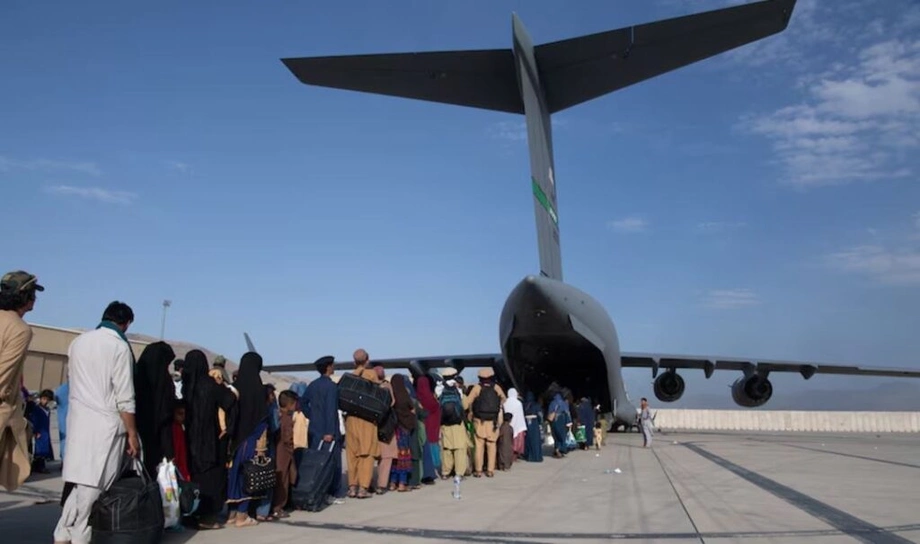
A planned flight puts Afghan families at the centre of a congressional appeal
Sixty-six members of the US Congress have urged the Trump administration to stop deportation flights involving more than 150 Afghans, as a sworn immigration officer's declaration describes a November 3, 2026, charter to Pakistan followed by transport overland to Afghanistan.
Contents
- A planned flight puts Afghan families at the centre of a congressional appeal
- What the flight declaration says
- Court challenges have produced different outcomes
- Who faces the greatest danger?
- Why the onward journey matters
- Washington's responses leave the arrangements unclear
- Pakistan is already a precarious waiting place
- The proposed operation exceeds a recent removal benchmark
- Lawmakers connect the dispute to future US partnerships
- Key Points
The bipartisan group, led by Democratic Representative Scott Peters of California, sent its appeal on Monday, November 2, to Secretary of State Marco Rubio and Homeland Security Secretary Markwayne Mullin. The lawmakers warned that relatives of former American military partners, political opponents of the Taliban and other vulnerable people could face persecution, torture or death.
Their demand covers deportation flights carrying Afghans or Iranians, whether directly to their home countries or through another country. For the Afghans detained in Louisiana, the central concern is what happens after a plane reaches Pakistan: the proposed journey would continue into Taliban territory.
A US official described plans involving nearly 200 Afghan nationals, while the congressional appeal cited more than 150. The official said preparations remained subject to change. Some detainees previously served in Afghan security forces or worked with American personnel; others have family connections that advocates say could expose them to retaliation.
The lawmakers framed the appeal around a promise to people who supported the American military during its 20 years in Afghanistan. In their letter, they wrote:
Our country made a promise never to abandon the Afghans who sacrificed their own and their family's safety to stand with American service members.
The administration has not publicly announced the operation. Pakistan has not publicly confirmed an agreement to receive the detainees and arrange their onward transfer.
What the flight declaration says
Sergio Aguilar, a supervisory detention and deportation officer at US Immigration and Customs Enforcement, described the route in an October 30 sworn declaration filed in Sadat v. Mullin. He said he initially understood that the charter would land in Afghanistan, then learned its destination would be Pakistan.
Aguilar's declaration stated:
The plane's final destination would be Pakistan with further transport onward to Afghanistan
The declaration concerned Said Mansor Sadat, a 30-year-old Afghan assigned to a special charter scheduled to leave Alexandria, Louisiana. US District Judge Michael Nachmanoff had ordered federal officials to explain whether the aircraft would travel directly to Afghanistan or stop in Pakistan.
Human Rights First said a flight from Alexandria to Pakistan was scheduled for Tuesday, November 3. Earlier descriptions put the possible departure as early as November 2. The sworn declaration identified November 3 as the scheduled date; departure had not been publicly confirmed.
The United States suspended operations at its Kabul embassy in 2021 and has no formal diplomatic relations with the Taliban authorities. Those circumstances complicate direct arrangements for returns to Afghanistan and help explain Pakistan's proposed role.
Court challenges have produced different outcomes
Sadat was subsequently removed from the passenger list and released from ICE custody, according to his lawyer, after a judge found that his continued detention violated his due process rights. Due process means the government must follow fair legal procedures when restricting a person's liberty.
Other detainees have had less success obtaining emergency intervention. In Texas, US District Judge Kathleen Cardone denied Basir Ahmad Ahmadi's request to stop his removal, finding that her district court lacked jurisdiction, meaning legal authority to decide that request.
The legal and political developments unfolded over several weeks:
- October 15: Cardone recorded that ICE had nominated Ahmadi for an Afghanistan removal operation tentatively scheduled for early November.
- October 29: Cardone denied Ahmadi's emergency request on jurisdictional grounds.
- October 30: Aguilar filed his declaration describing the Pakistan route. A Louisiana judge also denied an emergency request by Afghan detainee Khaled Khaleeq; notices seeking reconsideration followed.
- November 2: The 66 lawmakers sent their appeal to Rubio and Mullin.
- November 3: The charter described in Aguilar's declaration was scheduled to depart.
Who faces the greatest danger?
The detainees include people whose own activities, relatives or personal circumstances could make return dangerous. Lawmakers cited suspected support for the former Afghan government or American forces, criticism of the Taliban and identities that conflict with Taliban policies.
One Afghan man identified as Mohammad, 47, said he had been transferred from detention in Oklahoma to Louisiana for deportation. He is gay and married an American man in 2020. His family left Afghanistan as refugees in 1981, when he was two. After decades in the United States, he lost permanent residency following two felony convictions committed in his early twenties.
Another detainee's court records describe Taliban detention and torture in 2023 because of his wife's connection to the former Afghan government. She had served in the Afghan army and women's police force and assisted American forces. He entered the United States without authorization in 2024, remained in immigration detention and had his asylum application rejected.
Those histories show the different circumstances immigration authorities are handling within the proposed operation. Some detainees entered legally, others crossed without authorization, and some have criminal records. Lawyers are pursuing individual challenges based on each person's immigration history and fears of return.
Advocacy groups say some detainees have struggled to challenge removal because they lack legal representation. Simon Sandoval-Moshenberg, who represents Sadat and another Afghan facing deportation, said both clients were independently told they would be flown to Pakistan and taken overland to the Afghan border. His second client was awaiting a decision on an emergency request as of Monday night.
Why the onward journey matters
The congressional letter argues that US responsibility extends beyond the country where a deportation plane lands. Lawmakers said Washington must prevent people from being returned to places where they face torture, including when another government carries out the final transfer.
They urged the administration to tell Pakistan that the United States would not accept its participation in handing deportees over to the Taliban. Their appeal put that demand directly:
Do not hand over the people who stood alongside our troops to the Taliban, either directly or through Pakistan.
US protections against return to persecution or torture depend on the person's circumstances and legal findings. The protection status of everyone designated for this operation has not been publicly disclosed, and DHS has not specified whether Pakistan provided safety assurances covering both the transfer and subsequent treatment in Afghanistan.
The lawmakers also cited the State Department's Level 4 Do Not Travel advisory for Afghanistan. They pointed to former Afghan partners who went into hiding after the 2021 evacuation, faced persecution or were killed. Their argument connects the proposed removals to risks Washington already describes for people in Afghanistan.
Washington's responses leave the arrangements unclear
The Department of Homeland Security declined to confirm future removal operations, citing operational security and personnel safety. It defended its broader practice of sending migrants to countries other than their own, saying affected people receive notice and that ICE obtains diplomatic assurances about their safety.
A DHS spokesperson also stated:
When an individual is no longer in ICE custody, ICE is no longer responsible for them.
That position sits alongside the lawmakers' demand that Washington prevent a foreseeable onward transfer into danger. Sandoval-Moshenberg said his clients had not been told who would transport them across Pakistan or how that journey would be conducted.
The State Department had earlier said it had no plan to transfer Afghan migrants to Pakistan, following initial disclosures of possible removals. The later ICE declaration describes a scheduled operation using that route. Asked about the planned deportations at an October 31 news conference, Rubio referred the question to DHS.
The administration has agreements with at least 35 countries to accept deported migrants as part of its wider immigration enforcement campaign. For the Afghans involved here, the practical issue is whether Pakistan would provide a place to remain or serve as a transit point to Afghanistan.
Pakistan is already a precarious waiting place
Afghans seeking American protection have faced uncertainty in Pakistan for years. The proposed removals follow earlier deportation preparations described in October, when detained Afghans and their lawyers were being told to expect a flight without public details of the receiving arrangements.
AfghanEvac, an organization supporting former Afghan partners of the United States, says an understanding reached in autumn 2023 was intended to protect a documented group awaiting American immigration processing. Washington would process their cases, while Pakistan would refrain from harassment during that period.
The organization says that arrangement stopped functioning after US refugee processing halted in January 2025. Afghans waiting in Pakistan subsequently faced harassment, detention and removal to Afghanistan. A deportee arriving from the United States would therefore need secure permission to stay as well as protection against another removal.
The Taliban's Foreign Ministry said on Monday that it was ready to engage constructively with Washington over returning Afghan nationals. It called for responsible treatment and warned third countries against bargaining over Afghan citizens in exchange for temporary political concessions.
Regional removals are already continuing. Taliban deputy spokesperson Hamdullah Fitrat said on November 3 that 100 families, comprising 462 people, had been forcibly returned the previous day. His crossing figures listed 203 people at Silk Bridge in Nimroz, 62 at Torkham, 27 at Spin Boldak and 71 at Islam Qala. Those figures total 363 people, leaving a gap of 99 against the announced total.
The proposed operation exceeds a recent removal benchmark
The Deportation Data Project, a research initiative involving the University of California, Berkeley, and the University of California, Los Angeles, estimated that about 97 Afghan citizens had been returned to Afghanistan during the preceding four years, using immigration records obtained through public records requests.
A proposed operation involving more than 150 people would exceed that entire four-year figure by more than 53 people, or roughly 55%. The comparison explains why advocates describe the preparations as a substantial expansion in removals rather than another small operation.
More than 120,000 Afghans were evacuated during the 2021 withdrawal, with nearly 79,000 transferred to the United States during the August evacuation. Many entered under humanitarian parole, which allows a temporary stay, and later received temporary protection while seeking lasting immigration status.
Long immigration backlogs have left thousands waiting for decisions. Afghan advocacy groups are pressing Congress to restore protections for people who assisted US forces. The broader evacuee population includes people with different legal histories from those now in detention, but uncertainty over permanent status has made the deportation debate consequential for many families.
Lawmakers connect the dispute to future US partnerships
Louisiana Representative Troy Carter, whose state holds the detainees awaiting the proposed flight, described the removals as shameful and cruel. In a Sunday statement, he warned that Afghan families who worked alongside American forces could face revenge or death if returned.
Representative Sydney Kamlager-Dove said abandoning Afghan allies would weaken trust in future American partnerships. Senators Chris Coons, Jeanne Shaheen, Tim Kaine and Richard Blumenthal also criticized the proposed deportations and warned about the danger to former partners.
The congressional appeal joins two immediate demands: stop the flights and secure protection against onward removal from Pakistan. Court proceedings are moving person by person, while the lawmakers are seeking an administration decision covering the operation itself.
For detained Afghans and their relatives, those decisions determine where they will live next and whether family connections to the United States become a source of protection or exposure to retaliation. The scheduled November 3 flight gave the appeal urgency, while the individual court cases show that passenger lists can change before departure.
Key Points
- Sixty-six lawmakers urged Rubio and Mullin to halt deportation flights involving Afghans and Iranians.
- An ICE officer's sworn declaration described a November 3 charter to Pakistan followed by transport to Afghanistan.
- The congressional appeal cited more than 150 Afghans; a US official described plans involving nearly 200.
- People facing removal include relatives of former US military partners and others who fear Taliban persecution.
- Sadat was released and removed from the flight list, while other detainees continued pursuing emergency court challenges.
- Pakistan has not publicly confirmed its role, and DHS has not disclosed safety assurances specific to the operation.