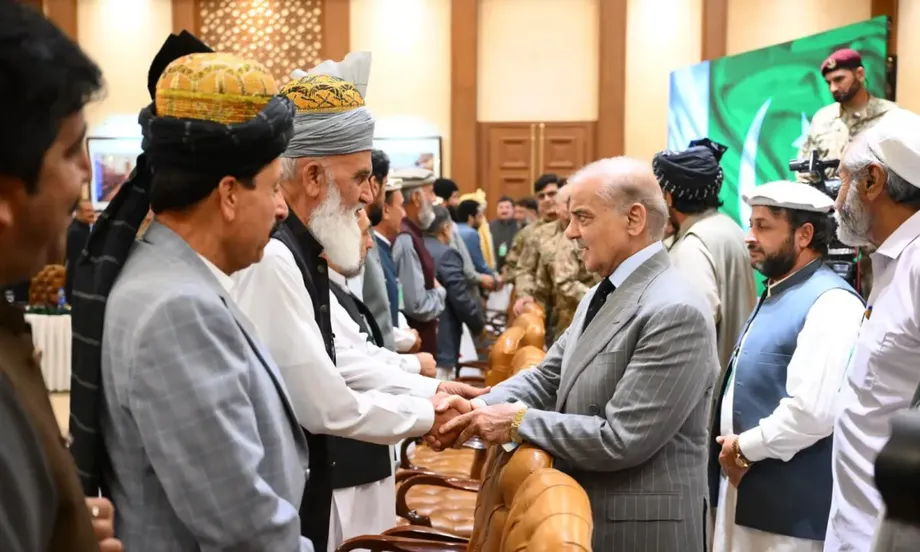
Security promises follow the removal of an elected government
Prime Minister Shehbaz Sharif has defended the October 11, 2026 imposition of emergency and governor's rule in Khyber Pakhtunkhwa, promising Rs160 billion for development as his government takes direct responsibility for a province facing rising militant violence and a widening political confrontation.
Contents
- Security promises follow the removal of an elected government
- What Shehbaz says made intervention necessary
- What the violence figures show
- Two constitutional powers with different effects
- Parliamentary approval and the court challenge
- A separate structure for 12 districts
- Rs160 billion, wheat and police equipment
- Detentions and disruption deepen the dispute
- How the confrontation developed
- Key Points
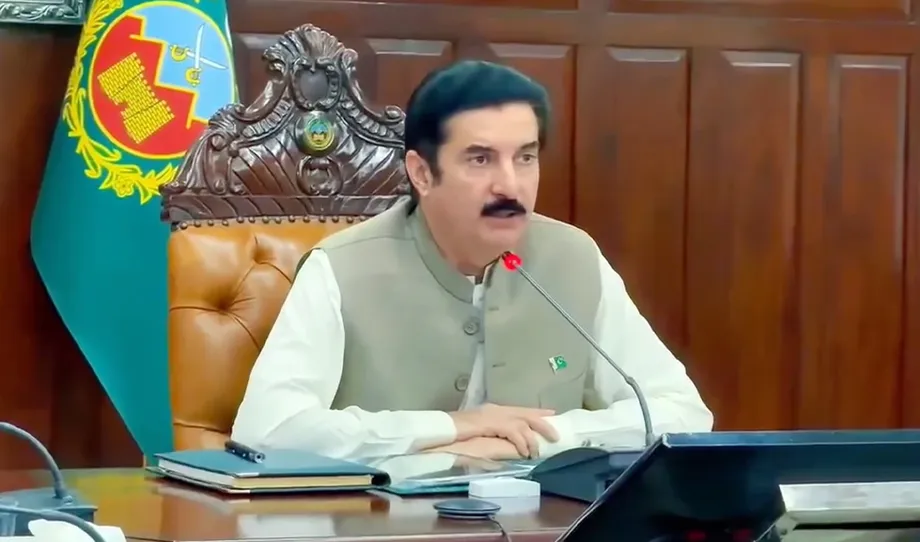
Speaking at Governor House in Peshawar during his first visit since the takeover, Shehbaz said the intervention followed failed negotiations and was necessary to restore security. President Asif Ali Zardari approved the measures under Articles 232 and 234 of Pakistan's Constitution, transferring executive authority from Chief Minister Sohail Afridi and his cabinet to Governor Faisal Karim Kundi.
The Pakistan Tehreek-e-Insaf party, which led the provincial government, has challenged the decision in the Peshawar High Court. Its leaders say Islamabad is using security concerns to remove an elected administration and weaken the party as it seeks the release of its jailed founder, former prime minister Imran Khan.
The confrontation now joins three immediate questions: how the province will be governed, whether additional money and equipment will improve security, and whether the federal intervention meets constitutional requirements. Residents are already dealing with consequences beyond the political dispute, including interrupted communications, school closures and restrictions surrounding protests.
Shehbaz chaired a meeting of the apex committee on the National Action Plan, Pakistan's framework for coordinating action against terrorism. Participants included Field Marshal Asim Munir, identified by the Prime Minister's Office as chief of defence forces and chief of army staff, Deputy Prime Minister Ishaq Dar, Interior Minister Mohsin Naqvi and Governor Kundi.
What Shehbaz says made intervention necessary
Shehbaz described the decision as having been taken under "extreme compulsion". He said a political committee spent 48 hours seeking a negotiated settlement and that he consulted Zardari twice before proceeding. Talks between federal and provincial representatives on October 2 and 3 ended without agreement.
The prime minister accused the PTI administration of neglecting education, healthcare, policing and public safety. He said 5,000 police positions remained vacant, Safe City projects were unfinished, and the Counter Terrorism Department lacked sufficient training, equipment and capacity. Safe City projects generally connect surveillance cameras and police control systems to help officers monitor incidents and respond.
Shehbaz also accused the previous provincial leadership of allowing militants to return after earlier security operations. He said Pakistan had restored peace by 2018 after losing around 80,000 lives and suffering enormous economic damage in the fight against terrorism.
PTI rejects the government's account of its approach to security. Former provincial finance minister Taimur Jhagra said the administration accepted responsibility for fighting terrorism and disputed the claim that it had abandoned that task.
Jhagra, a PTI leader, stated:
Of course the provincial government was fighting terrorism. We own the fight against terrorism individually and collectively. If the issue was terrorism, then Balochistan should have had a state of emergency before KP.
What the violence figures show
Law Minister Azam Nazeer Tarar told Parliament that Khyber Pakhtunkhwa had recorded 3,787 terrorist incidents over the previous year. Security briefings presented to the federal cabinet said incidents in the province rose by 195 per cent between March 1, 2024 and September 23, 2026, and that 73 per cent of attacks recorded there in 2026 targeted police and security personnel.
A rise of 195 per cent means the later figure was almost three times the starting figure. The concentration of attacks on security personnel also helps explain why police staffing, vehicles and training feature prominently in the government's response.
The Pakistan Institute for Conflict and Security Studies, an independent research organisation, counted 908 attacks nationwide in 2024 and 1,066 in 2025. It recorded another 1,232 during the first nine months of 2026, already 166 more than in all of 2025, or about 16 per cent higher. Most occurred in Khyber Pakhtunkhwa and Balochistan.
The institute's national attack count and the law minister's provincial incident count use different descriptions and coverage periods. Readers need those boundaries to understand the scale being described: one tracks attacks across Pakistan, while the minister cited a broader provincial tally of terrorist incidents.
Information Minister Attaullah Tarar went further than criticising provincial performance, alleging links between the PTI administration and militant groups. Interior Minister Naqvi said the government possessed evidence supporting its allegations. That evidence had not been made public when the measures were announced, and PTI disputed the accusations.
Two constitutional powers with different effects
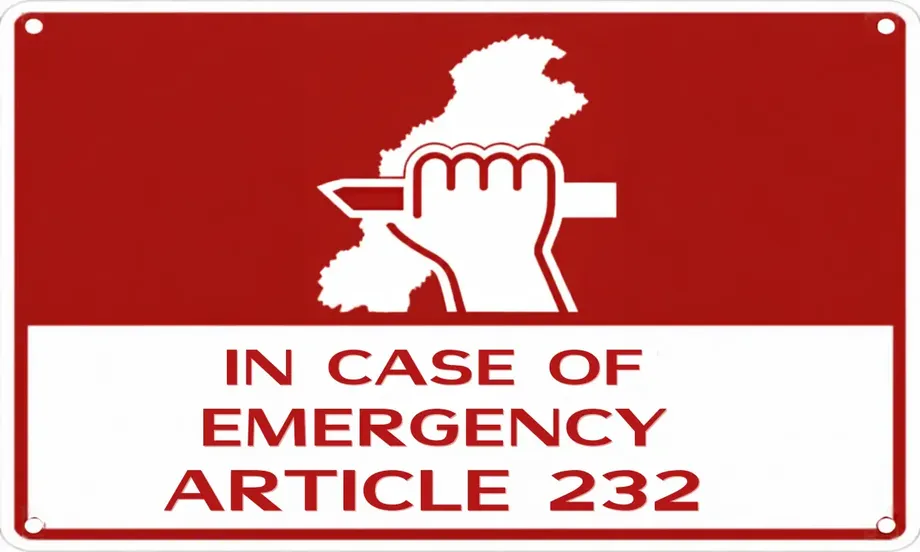
Article 232 concerns a grave security emergency, including an internal disturbance beyond a provincial government's ability to control. It gives Parliament wider authority to legislate on provincial matters. When federal and provincial laws conflict during the emergency, the federal law takes precedence.
Article 234 concerns a failure to govern a province in accordance with the Constitution. Under the arrangement imposed in Khyber Pakhtunkhwa, the chief minister and cabinet ceased to exercise office, the governor assumed provincial executive functions, and Parliament took over the provincial assembly's legislative powers.
An advisory council of 11 members was formed to assist Kundi, while Dr Muhammad Fakhr Alam Irfan was appointed chief secretary. The federal government also authorised Pakistan Army troops and assets to assist the civilian authorities.
Constitutional lawyer Hassan Abdullah Niazi, an adjunct faculty member at the Lahore University of Management Sciences, described the elected institutions as temporarily unable to function under the intervention. In his interpretation, they must be restored when the emergency ends.
Article 233, which concerns powers to suspend certain fundamental rights during an emergency, was not listed in the presidential summary. A separate order for designated districts did, however, state that the constitutional requirement separating the judiciary from the executive would not apply there.
Rida Hosain, a constitutional lawyer based in Lahore, explained the practical effect:
The constitutional provision that mandates the separation of the judiciary from the executive has been suspended, allowing executive officers to perform judicial functions.
Parliamentary approval and the court challenge
The National Assembly and Senate separately approved the Article 232 emergency proclamation amid opposition protests. The National Assembly resolution specifically referred to the second proviso of Article 232(1). Law Minister Tarar defended the parliamentary process as constitutionally proper.
The approval process has several stages. Because the proclamation proceeded without a provincial assembly resolution, separate approval by both federal houses was required within 10 days, by October 21. A joint sitting was also summoned to consider governor's rule, and a later account of Shehbaz's visit described Parliament as having endorsed both measures the previous week.
The stated deadlines require care. The parliamentary timetable described a joint sitting within 30 days, while the quoted text of Article 234 says governor's rule expires after two months unless approved by a joint sitting. That text permits extensions of no more than two months at a time, up to a total of six months. The emergency under Article 232 has separate approval and continuation rules.
PTI chairman Gohar Ali Khan filed a petition in the Peshawar High Court on October 14 seeking cancellation of the measures and restoration of the elected government. The petition argues that the conditions for invoking Articles 232 and 234 were unmet. No hearing date or ruling was given.
Gohar also questioned why the administrative takeover extended across the province when the special security arrangements focused on 12 districts. At a news conference, he asked:
If there is terrorism and an emergency is needed in 12 districts, then why is governor's rule across the whole province?
A separate structure for 12 districts
The federal government established an Area Development Secretariat for 12 designated districts, alongside an Area Representative and Development Council. The council includes 48 elders and prominent local figures and is chaired by Shaukatullah Khan.
The districts are Dera Ismail Khan, Tank, Lakki Marwat, Bannu, Bajaur, Mohmand, Khyber, Kurram, Orakzai, North Waziristan, South Waziristan Upper and South Waziristan Lower. Many lie along the Afghan border or in the former tribal areas.
An additional chief secretary heads the secretariat, whose orders carry the same legal effect as provincial government orders. Its responsibilities cover security, protection of residents, administration and development. The arrangement creates a more direct channel for federal decisions in the designated areas.
The dispute over who sets security policy predates the takeover. In July 2024, the provincial assembly sought consultation before any new military operation. In December that year, it unanimously opposed a potential operation in parts of Khyber and Bannu. A later grand jirga, a gathering of political and community representatives, called for negotiations with Afghanistan and provincial consultation over Afghan policy.
PTI says it was excluded from decisions affecting the province, which the federal government denies. Sindh Governor Nihal Hashmi offered a qualified defence of the intervention while speaking to Pakistanis in Toronto: he said he personally favoured democratic government over emergency rule, but argued that the measure was constitutional and necessary to stop assistance to enemies of the state.
Rs160 billion, wheat and police equipment
Shehbaz announced Rs160 billion for development projects while addressing the district council. He also promised wheat from Pakistan Agricultural Storage and Services Corporation stores to address shortages, directing the governor and chief secretary to ensure adequate supplies, including for tribal districts.
The prime minister said residents should receive wheat at the price charged by the federal government and warned against hoarding. For households, delivery arrangements and retail prices will determine how much the promise helps with daily food costs.
Police support includes directives to strengthen the Counter Terrorism Department and complete Safe City projects. Kundi approved relaxing a restriction on police vehicle purchases using money already allocated. An October 12 apex committee meeting had also called for additional equipment, vehicles, weapons and personnel.
Shehbaz said more than Rs800 billion had been provided, or was being provided, to Khyber Pakhtunkhwa for counterterrorism under arrangements associated with the 2010 National Finance Commission Award. The award governs how public revenues are shared between the federation and provinces.
The new Rs160 billion development announcement equals one fifth of the Rs800 billion benchmark cited for counterterrorism funding since 2010. The two sums cover different purposes and periods: one is a new development commitment, while the other describes years of security related allocations.
Detentions and disruption deepen the dispute
Minister of State for Interior Talal Chaudhry confirmed on October 12 that Afridi and some cabinet members had been placed in preventive custody. Preventive detention allows authorities to hold people on public order grounds rather than waiting for a criminal trial.
PTI demanded the release of detained leaders and disclosure of the legal grounds for holding them. The arrests coincided with attempts to disrupt a planned march to Islamabad demanding Imran Khan's release. Connectivity interruptions complicated efforts by party figures to contact colleagues.
Mobile and internet services were suspended in Swabi, while disruptions also affected parts of Peshawar and other selected areas. District administrations closed schools and colleges in Peshawar, Mardan, Swabi and Nowshera on October 12. A PTI protest in Bara on October 14 turned violent, leaving party workers and police injured.
Opposition leaders Mahmood Khan Achakzai and Allama Raja Nasir Abbas pledged a joint constitutional struggle on October 17. Achakzai proposed an all parties conference and said resignations from assemblies remained an option. JUI-F chief Maulana Fazlur Rehman accused the government of abandoning commitments made during negotiations.
PTI leaders retired Major Tahir Sadiq and former National Assembly member Eman Tahir added their opposition in a joint statement publicised on October 24. They called the measures unconstitutional and undemocratic and demanded their immediate withdrawal.
How the confrontation developed
The intervention followed years of disagreement over military operations and several weeks of failed political negotiations. Its implementation then moved quickly from a presidential decision to detentions, parliamentary votes and a court petition.
- July and December 2024: The KP Assembly demanded consultation over military operations and opposed a potential operation in parts of Khyber and Bannu.
- October 2 and 3, 2026: Federal and provincial representatives held talks that ended without agreement.
- October 11: Zardari approved emergency and governor's rule under Articles 232 and 234.
- October 12: An apex committee reviewed security measures, and Talal Chaudhry confirmed preventive detention of Afridi and some cabinet members.
- October 14: Gohar filed PTI's court challenge; violence at a protest in Bara injured workers and police.
- October 17: Opposition leaders announced plans for a joint campaign against the intervention.
- October 24: Tahir Sadiq and Eman Tahir demanded withdrawal of emergency rule.
Shehbaz has also made public welfare and corruption central to his defence of the takeover. He alleged Rs100 billion in corruption involving the Cities Improvement Project and Rs37 billion in the Kohistan District Accounts Office case, and accused officials of favouritism in placer gold contracts. These remain allegations in his account of provincial governance.
The prime minister expressed sorrow over the deaths of a teacher and children in a school roof collapse in Peshawar and directed Kundi to visit and ensure an investigation. Alongside the security commitments, that response places school safety, basic services and development delivery among the responsibilities now resting with the governor's administration.
Key Points
- Emergency and governor's rule were imposed on October 11, 2026, transferring provincial executive authority to Governor Faisal Karim Kundi.
- Shehbaz promised Rs160 billion for development, wheat supplies and stronger police capabilities.
- PTI challenged the intervention in the Peshawar High Court and demanded restoration of the elected government.
- A special administrative structure covers 12 districts, with a council containing 48 elders and prominent figures.
- Parliament approved the emergency amid protests; the constitutional process for governor's rule includes joint sitting approval and a maximum duration of six months.
- Political detentions, communications disruptions and temporary school closures accompanied the takeover.