A 6 Baht Fuel Discount Meets a Strained Public Fund
Thailand is considering cutting excise taxes on E20 gasohol and B20 biodiesel to keep them around 6 baht per litre cheaper than E10 gasohol and B7 diesel, while easing pressure on an Oil Fuel Fund with a net deficit of 103.561 billion baht.
Contents
- A 6 Baht Fuel Discount Meets a Strained Public Fund
- What the Price Gap Means for Drivers
- Why the Oil Fuel Fund Needs Help
- Subsidies Have Already Kept E20 and B20 Prices Steady
- Farmers and PTT Are Part of the Plan
- Tax Cuts Are One of Three Energy Price Tools
- The Dates That Shape the Decision
- A Smaller Budget Deficit Offers Some Room
- A Wider Debate Over Dedicated Tax Revenue
- Key Points
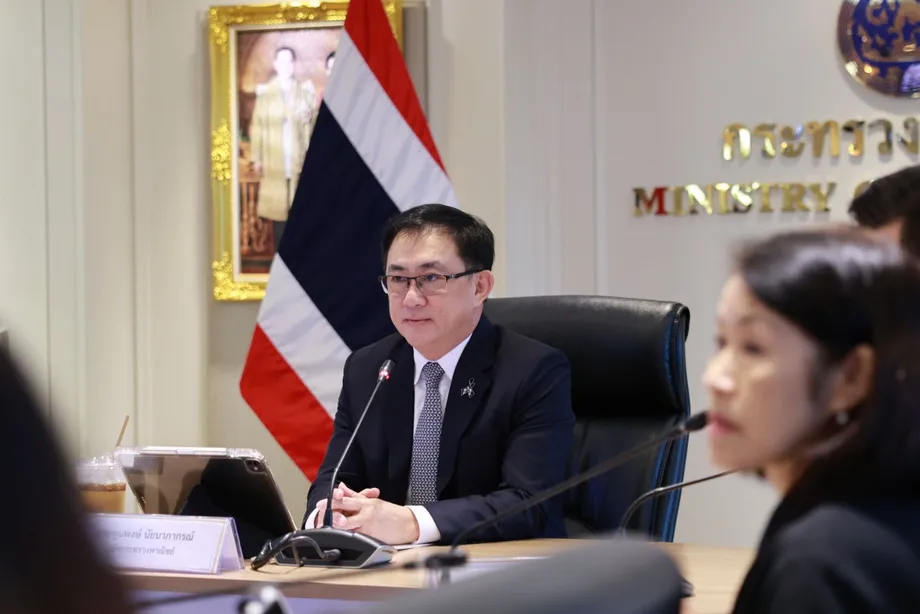
Prime Minister Anutin Charnvirakul said on October 24, 2026, that the Cabinet would consider E20 excise tax on Tuesday, October 27. Deputy Prime Minister and Finance Minister Ekniti Nitithanprapas has outlined a broader proposal covering both E20 and B20, following discussions with Energy Minister Akanat Promphan on October 22.
The proposal brings together three immediate concerns: rising fuel bills, demand for crops grown by Thai farmers, and the cost of keeping retail fuel prices below what they would otherwise be. The government wants motorists to choose fuels containing more domestically produced ethanol or biodiesel, while reducing the financial burden on the fund supporting those prices.
Ekniti said the Finance Ministry still needed to discuss the size of any reduction with the Excise Department director general. No final tax rate, implementation date or allocation between consumer relief and support for the fund has been announced.
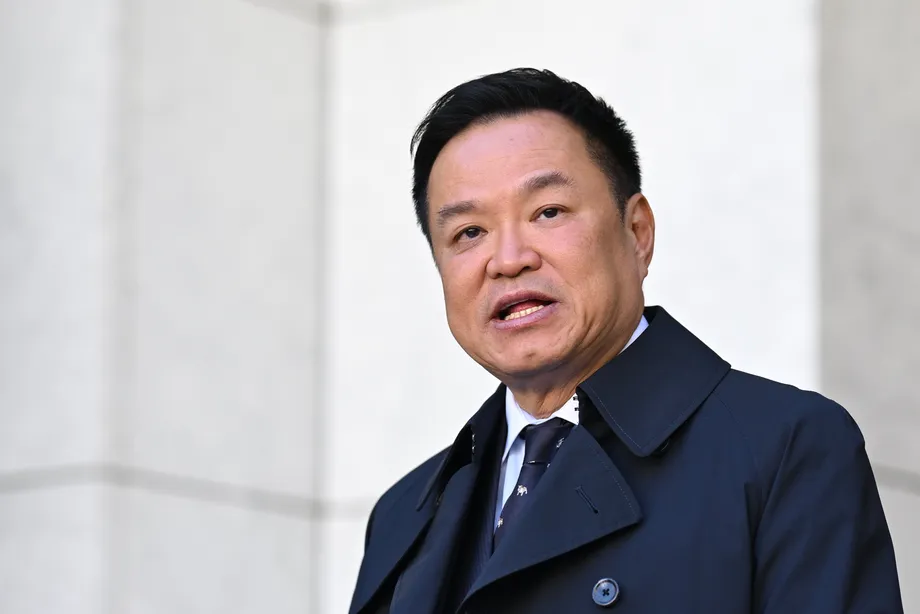
Anutin, who also serves as interior minister, linked the planned Cabinet discussion to volatile crude oil costs. Speaking at Sanam Luang in Bangkok, he said the government wanted to change Thailand's energy structure so that it relied less on crude oil. His announcement put E20 on the Cabinet agenda; the Finance Ministry's work also includes B20.
What the Price Gap Means for Drivers
E20 is petrol blended with 20% ethanol, while E10 contains 10%. B20 diesel contains 20% biodiesel, compared with 7% in B7. Ethanol can be produced from sugarcane or cassava, while palm oil is used to make biodiesel. The proposal favours the blends containing larger shares of these agricultural fuels.
Ekniti, explaining the objective as deputy prime minister and finance minister, described the intended price relationship:
"The principle is to help the Oil Fuel Fund maintain the price gap so that B20 and E20 remain around 6 baht per litre cheaper than B7 and E10," Ekniti said.
A discount of 6 baht per litre would mean a 240 baht difference when buying 40 litres. Drivers would still need to use a blend suitable for their vehicle. The financial incentive is intended to make the higher biofuel blends more attractive at the pump.
Excise duty is a tax charged on particular goods, including fuel. Reducing it can create room to lower retail prices or reduce the subsidy needed to hold them steady. Ekniti's proposal centres on preserving a price advantage while helping the fund meet its obligations.
Why the Oil Fuel Fund Needs Help
The Oil Fuel Fund Office estimated that, on October 18, the fund had assets of 36.201 billion baht and liabilities of 139.762 billion baht. Subtracting the assets from the liabilities gives its net deficit of 103.561 billion baht.
The oil account accounted for 62.359 billion baht of that deficit, while the liquefied petroleum gas account accounted for 41.202 billion baht. LPG therefore represented about 40% of the total, showing that the fund's financial pressure extends beyond petrol and diesel.
The fund collects money from some fuels and pays subsidies on others to manage retail prices. When its payments and other obligations outgrow its resources, maintaining those prices becomes harder. Ekniti said tax relief would help support its liquidity, meaning the money available to meet current payments.
The fiscal tradeoff is straightforward: cutting fuel tax reduces government revenue, while potentially reducing the amount the fund must spend to support prices. The burden shifts between the tax budget and the fund. The final pricing structure will determine how much of the benefit reaches drivers and how much relieves the fund.
Subsidies Have Already Kept E20 and B20 Prices Steady
Fuel support rates effective October 21 illustrate the cost of protecting the two blends. The subsidy for E20 rose by 0.69 baht to 4.91 baht per litre, while support for B20 rose by 1.08 baht to 7.63 baht per litre. Their retail prices stayed unchanged.
B7 diesel, E10 gasohol and ordinary petrol prices increased by 0.60 baht per litre in the same adjustment. B7's retail price reached 43.54 baht per litre even as its subsidy increased to 2.41 baht per litre.
B20 was receiving 5.22 baht more subsidy per litre than B7, based on those rates of 7.63 and 2.41 baht. Keeping B20 attractive therefore required substantially greater support for each litre sold.
A package of five measures submitted to Energy Minister Akanat and Permanent Secretary for Energy Chantanont Wannakejohn proposed an excise reduction of 1 to 2 baht per litre and a biofuel price advantage of up to 8 baht. Those figures were proposals from within the Energy Ministry; Ekniti's stated objective was around 6 baht, with the tax reduction still to be settled.
Farmers and PTT Are Part of the Plan
Ekniti said the policy was intended to benefit Thai growers of sugarcane, cassava and oil palm by encouraging greater use of fuels made from their crops. More ethanol consumption could create steadier demand for sugarcane and cassava, while greater biodiesel use could support demand for palm oil.
The Finance Ministry has also discussed a system for purchasing agricultural output in advance with PTT Public Company Limited. Such arrangements can give growers a clearer idea of demand before they sell their harvest. Ekniti presented the discussions as part of an effort to make demand more dependable over time.
The two parts of the policy would work at different points in the supply chain. A price discount encourages motorists to buy the finished fuel, while advance purchasing arrangements could give suppliers more certainty about future sales.
The proposed emergency package also called for the Department of Energy Business to work with vehicle manufacturers and fuel sellers on campaigns encouraging E20 and B20 use. Promoting compatible fuels would connect the government's price incentive with decisions motorists make when filling their tanks.
Tax Cuts Are One of Three Energy Price Tools
Ekniti had already outlined three main tools for managing energy costs in September: the Oil Fuel Fund, cooperation with refiners to reduce refining margins, and fuel excise measures. A refining margin is the difference between the value of refined products and the cost of crude oil used to produce them, before other business costs are accounted for.
The Energy Ministry's emergency proposals sought consideration of further refinery price relief after an existing reduction of 4 baht per litre was scheduled to end on October 31. The Energy Policy and Planning Office was asked to examine what further adjustment would be appropriate for November.
The wider package also called for faster reform of energy prices, continued support for biofuels and adjustments to other fuel prices as global costs changed. Its aim was to reduce pressure on the fund before turning to additional borrowing.
Ekniti warned in September that lower tax receipts could require more government borrowing because spending needs remained high. At that time, he said only 10 billion baht of borrowing room remained under the fiscal framework for fiscal 2026. He indicated that a fuel tax reduction, if adopted, would likely take effect in fiscal 2027.
The Dates That Shape the Decision
The proposal has developed alongside changes in subsidies and a wider review of government finances. The next scheduled decisions concern Cabinet consideration, refinery relief and the medium term fiscal plan.
- September 22, 2026: Ekniti outlined targeted fuel tax relief and warned about limited borrowing room in fiscal 2026.
- October 18: The Oil Fuel Fund's estimated net deficit stood at 103.561 billion baht.
- October 21: Higher subsidies for E20 and B20 took effect, keeping their retail prices unchanged.
- October 22: Ekniti discussed possible excise reductions with Energy Minister Akanat.
- October 24: Anutin announced that E20 excise tax would go before the Cabinet on October 27.
- October 31: The existing refinery price reduction was scheduled to expire.
- November: The Finance Ministry plans to discuss its revised fiscal framework with the Budget Bureau.
The Cabinet meeting is the next political decision point. The Excise Department discussions will be needed to turn the broad proposal into specific tax rates and a workable pricing structure.
A Smaller Budget Deficit Offers Some Room
Ekniti said the fiscal 2026 budget deficit was around 3.4% of gross domestic product, compared with a projection of 4.4%. GDP measures the value of goods and services produced in the economy. The improvement was 1 percentage point of GDP.
The minister attributed the stronger position to revenue exceeding expectations, particularly value added tax generated by domestic consumption. He said Thailand might reach its goal of limiting the annual budget deficit to 3% of GDP earlier than the existing fiscal 2029 target.
The Finance Ministry plans to review the Medium Term Fiscal Framework for fiscal 2027 through 2030 with the Budget Bureau in November. That review will bring updated revenue and spending figures into the government's borrowing plans.
Public debt still limits the room for new commitments. Public Debt Management Office figures put debt at 67.45% of GDP in July, 2.55 percentage points below the 70% ceiling. A National Economic and Social Development Council baseline projection put debt at 70.05% in fiscal 2028, before declining. Ekniti said stronger revenue could improve that trajectory.
Ekniti also cited government borrowing costs over 10 years of around 3.3% to 3.4%, compared with 5.2% for the United States and nearly 5% for France. He presented the comparison as a sign of Thailand's financial strength while arguing for continued fiscal discipline.
A Wider Debate Over Dedicated Tax Revenue
Ekniti's fuel proposal comes alongside a separate debate over roughly 12 billion to 14 billion baht a year in levies linked to alcohol and tobacco excise duties. Four proposed legislative amendments would replace dedicated funding with allocations through the annual government budget.
The arrangements support the Thai Health Promotion Foundation, Thai PBS, the Older Persons Fund and sports funding through the National Sports Development Fund. Under the proposals, the organisations and funds would seek money through the regular budget process instead of automatically receiving earmarked revenue.
Ekniti said the proposals originated in the legislature and indicated that the Finance Ministry would support their principle if asked for its view. He cited Section 26 of the State Fiscal and Financial Disciplines Act. The amendments were undergoing public consultation under Section 77 of the Constitution.
Civil society organisations opposed the change, arguing that annual budget allocations could affect the independence and continuity of the bodies receiving the money. The debate concerns who controls revenue and how reliably programmes can plan their spending.
For fuel policy, the immediate balance is between preserving a useful discount for motorists, supporting crop demand and limiting further financial pressure. The October 27 Cabinet discussion and November fiscal review will show how the government intends to fit those commitments into its budget.
Key Points
- The Cabinet is scheduled to consider E20 excise tax on October 27, 2026.
- The Finance Ministry is examining relief for both E20 and B20, aiming to keep them around 6 baht per litre cheaper than E10 and B7.
- The Oil Fuel Fund had an estimated net deficit of 103.561 billion baht on October 18.
- Higher subsidies effective October 21 kept E20 and B20 retail prices unchanged.
- The proposed tax rates and implementation date remain undecided.
- The government also wants stronger demand for sugarcane, cassava and palm oil, with PTT involved in discussions on advance purchases.
- A November fiscal review will weigh stronger revenue against spending needs and public debt close to its ceiling.