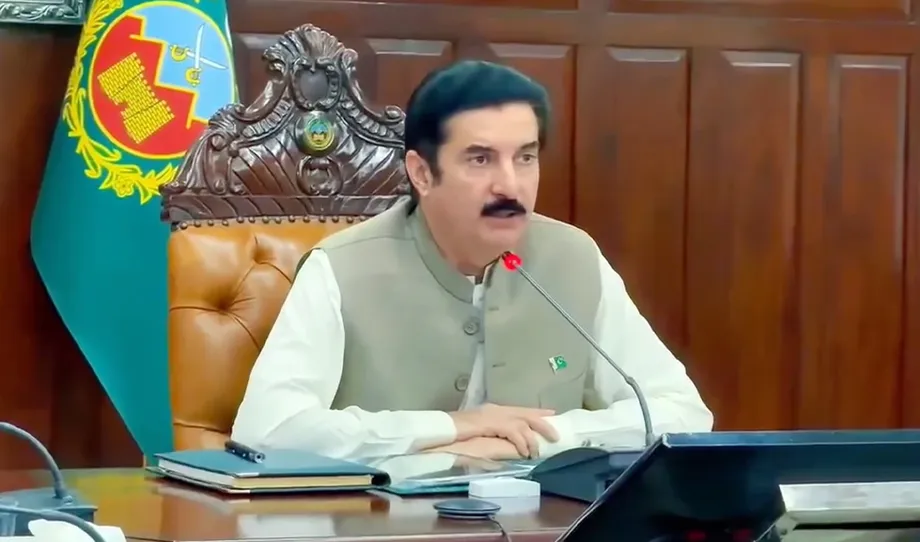
District officials gain power to order preventive detention
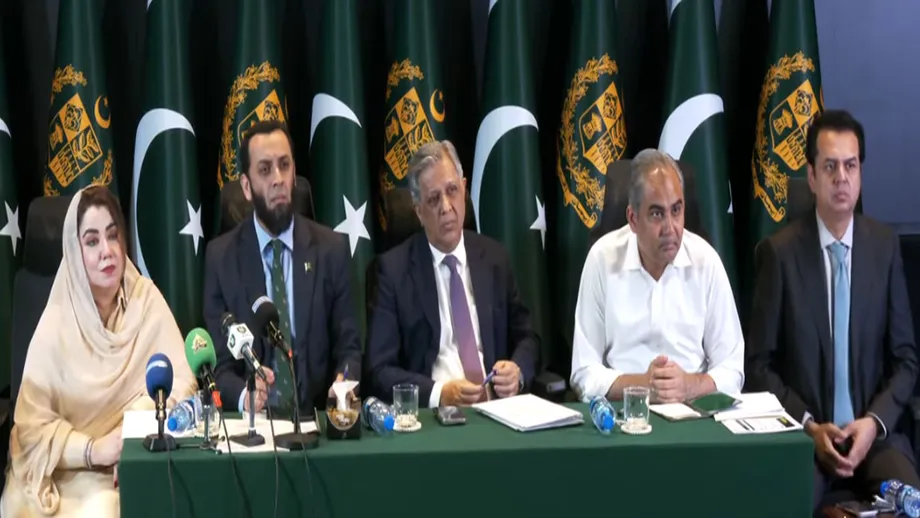
Khyber Pakhtunkhwa Governor Faisal Karim Kundi has given deputy commissioners across the province authority to order arrests and preventive detention under Section 3(1) of the West Pakistan Maintenance of Public Order Ordinance, 1960. The move places decisions affecting personal liberty in the hands of district administrators during emergency and governor rule imposed on October 11, 2026.
Contents
- District officials gain power to order preventive detention
- What the ordinance allows
- How powers reach the district level
- A court ruling already sets a demanding test
- Liberty protections remain central
- Emergency rule and the confrontation with PTI
- Deputy speaker wins temporary court protection
- What the security figures show
- The dates behind the current dispute
- Key Points
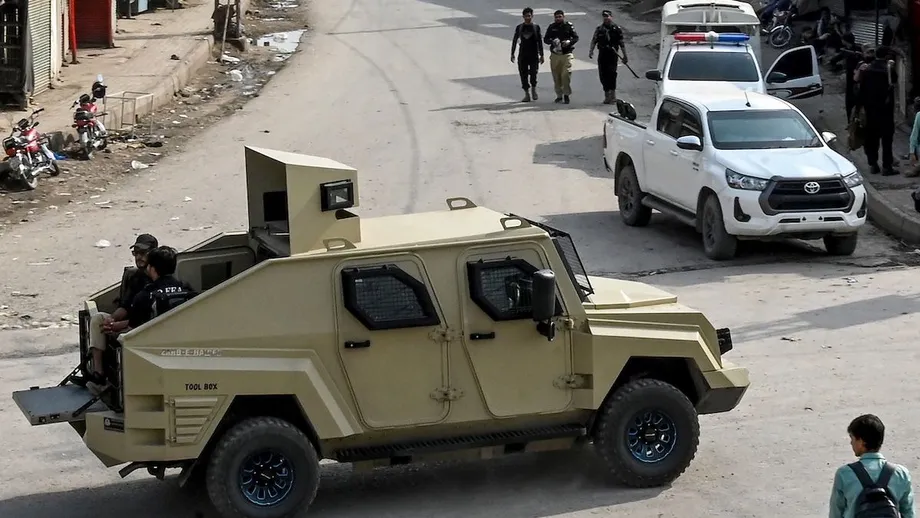
Kundi announced the delegation after a Wednesday meeting with commissioners and deputy commissioners about security. The announcement, reported on October 22, comes amid rising militant violence, the removal of the provincial government from executive authority and a confrontation over Pakistan Tehreek-e-Insaf demands for the release of its founder, former prime minister Imran Khan.
Preventive detention allows authorities to hold someone because they believe the person may threaten public safety or public order. Its purpose is to prevent anticipated conduct, rather than impose punishment following a criminal conviction. For residents, the practical change is that a district official can now make the detention decision under the delegated authority.
Kundi, explaining the decision in a post on X, said:
In view of the prevailing law and order situation, I have delegated powers under Section 3(1) of the West Pakistan Maintenance of Public Order (MPO) Ordinance, 1960, to deputy commissioners across Khyber Pakhtunkhwa to ensure timely and effective preventive action at the district level, reduce administrative delays and strengthen coordination with law enforcement agencies.
The governor also instructed officials to act strictly within the Constitution and the law. His announcement brings renewed attention to a May 2024 Peshawar High Court judgment that cancelled detention orders issued by deputy commissioners in Bannu and Karak because the authorities produced no supporting evidence.
What the ordinance allows
The provincial government's published public order ordinance gives the government power to order arrest and detention when it is satisfied that doing so is necessary to prevent conduct harmful to public safety or the maintenance of public order. Section 3(1) requires the decision to be made through a written order.
The same provision allows the government to extend detention repeatedly, with each extension lasting no more than six months. That limit applies to each extension; the provision allows further extensions when the government considers them necessary for the stated public safety or public order reasons.
Section 3 also describes a referral process. Under subsection (2), an authorized government servant who believes someone within their territory has acted, is acting or is about to act against public safety or public order must refer the matter to the government. Under subsection (4), the government can reject that referral or issue an arrest and detention order.
The distinction matters locally. An official who refers a suspected threat asks another authority to decide. An official with delegated Section 3(1) powers can make the detention decision within the authority granted to them. Kundi says shortening that administrative process will help officials respond more quickly.
How powers reach the district level
Section 26 provides the legal mechanism for delegation. It permits the government, through a written order, to authorize a government servant to exercise Section 3(1) powers within their jurisdiction, subject to any restrictions specified in that order.
The governor's announcement identifies the deputy commissioners receiving the powers and the provision they may exercise. The precise restrictions attached to the written delegation have not been disclosed in the announcement. Those terms matter because they define how far each official's authority extends.
Kundi, the governor now overseeing provincial administration, gave an explicit instruction about the use of the powers:
The powers must never be misused.
He also stated his priority:
The peace, security and protection of our people remain my foremost priority.
For district officials, faster decisions carry a corresponding responsibility to explain why a particular person should be detained. The 2024 court ruling provides a concrete example of the evidence and reasoning judges have required when reviewing such orders.
A court ruling already sets a demanding test
The Peshawar High Court's Bannu Bench considered detention orders issued by deputy commissioners in Bannu and Karak in W.P. No. 293-B/2023 and connected petitions. Its May 2024 judgment, announced on May 2, set the orders aside.
The judges found that the authorities had produced copies of the Section 3 notifications but no material supporting the decisions to detain the petitioners. The court described the grounds as vague and indefinite and concluded that the orders could not stand on either the facts or the law.
The Bannu orders referred to people allegedly staging protests, processions and rallies against the government and state because of political differences. In Karak, an order concerning former National Assembly member Shahid Khattak referred to his PTI affiliation, alleged encouragement of road blockages and language directed against security institutions and administrators.
The court examined whether officials had sufficient material to justify those allegations and their detention decisions. It found that they had failed to demonstrate the factual basis required to exercise the power lawfully.
The judgment explained that an official's satisfaction must have limits. The decision must be reasonable, and the official must have enough material to support it. That gives district administrators a practical standard: identify the conduct creating the threat, assess the supporting information and make a reasoned decision within the law.
Liberty protections remain central
The 2024 judgment discussed Article 9 of Pakistan's Constitution, which protects life and liberty except in accordance with law. It also examined Article 10, which addresses safeguards surrounding arrest and detention.
The court explained that ordinary arrest protections include being told the reasons for arrest, access to a lawyer and production before a magistrate within 24 hours. Preventive detention operates under the separate constitutional framework in Article 10(3) to (8), which creates exceptions to those ordinary safeguards.
Judicial review therefore becomes especially consequential for a person held under the ordinance. In the Bannu and Karak cases, the judges required the authorities to show the basis for their decisions and cancelled the orders when that basis was missing.
The court also said governments enforcing preventive detention laws must act with care and respect the legal limits on their powers. For families facing a detention order, the grounds recorded by the administration and the material supporting them can become central issues in a court challenge.
Emergency rule and the confrontation with PTI
President Asif Ali Zardari imposed emergency and governor rule on October 11 on Prime Minister Shehbaz Sharif's advice. The federal government accused the PTI administration in KP of failing to respond adequately to militant attacks. Executive authority shifted to Kundi, assisted by an advisory council of 11 members.
The October 11 intervention involved Articles 232 and 234 of the Constitution. Article 232 concerns an emergency proclamation, while Article 234 provides for federal intervention when a province cannot be governed in accordance with the Constitution. The two measures changed both the emergency framework and who exercised provincial executive authority.
The intervention came as thousands of PTI supporters, led by then chief minister Sohail Afridi, marched from KP toward Islamabad to demand Khan's release. Khan has been imprisoned since 2023 on charges he describes as politically motivated.
PTI rejects the federal government's account of its security record and says counterterrorism policy should be agreed through political consensus. It accuses the federal authorities of using security concerns to stop a peaceful protest march. Government representatives and PTI held talks before the march, but security remained a central dispute.
PTI chairman Gohar Ali Khan challenged governor rule in the Peshawar High Court on October 14. Afridi, provincial assembly speaker Babar Saleem Swati and other PTI leaders have also been taken into preventive custody following the intervention.
Deputy speaker wins temporary court protection
The Peshawar High Court has also intervened in a case involving deputy speaker Suriya Bibi, whose petition challenges the sealing of her official residence and an anticipated arrest under Section 3 of the ordinance. A bench comprising Justices Ijaz Anwar and Muhammad Faheem Wali ordered the residence provisionally reopened and restrained her arrest pending further orders.
The judges sought replies from the provincial government, the provincial police chief and other officials. The relief is temporary while the court considers the dispute.
Bibi's lawyer, Yasir Khattak, argued that Section 20 of the KP Provincial Assembly Speaker and Deputy Speaker (Salaries, Allowances and Privileges) Act, 1975 entitles her to an official residence throughout her tenure. He said the Race Course Garden residence in Peshawar had been allotted through a notification dated June 3, 2024.
Khattak alleged that police raided the property on October 11 and returned around midnight on October 14, when officials locked it. He argued that the action denied Bibi access to personal belongings, official documents and essential items.
Bibi asked the court to restore access and prevent unlawful raids or detention, particularly under Section 3. A case has also been registered against her over an alleged refusal to return an official vehicle. Her petition puts a specific question before the court: what legal authority supported the actions taken against her residence and the threatened detention.
What the security figures show
Federal minister Attaullah Tarar said this month that KP recorded 3,774 militant attacks during 2025 and 2,857 in the first nine months of 2026. He also gave figures of 3,512 deaths in militancy related incidents in 2025 and 2,775 during January through September 2026.
The shorter 2026 period had therefore already reached about 76 percent of the previous full year's attack total and 79 percent of its reported deaths. That comparison helps explain the scale of the security pressure cited by the federal government.
A comparison of monthly averages gives a more useful view of the different reporting periods. The attack figures amount to about 315 a month in 2025 and 317 a month during the first nine months of 2026. The reported death averages rose from about 293 to 308 a month.
These figures describe a continuing heavy burden of violence. Residents face risks to their lives, travel and daily activity, while police and administrators are under pressure to prevent further attacks.
Islamabad says most attacks were carried out by militant groups based in Afghanistan. Kabul denies that allegation. Within Pakistan, the political dispute concerns how to respond to the violence and how public order powers are being used during the confrontation with PTI.
The dates behind the current dispute
The latest delegation sits within a longer legal history and a short, intense period of political intervention. The main dates are:
- December 2, 1960: The West Pakistan Maintenance of Public Order Ordinance was formally promulgated under General Ayub Khan.
- 2023: Deputy commissioners issued the Bannu and Karak detention orders later challenged in the Peshawar High Court.
- May 2, 2024: The court set those orders aside after finding no supporting material for the detentions.
- October 11, 2026: Emergency and governor rule were imposed in KP.
- October 14, 2026: Gohar Ali Khan challenged governor rule. Bibi's lawyer also alleged a raid and the locking of her residence around midnight that day.
- October 22, 2026: Kundi's announcement delegating Section 3(1) powers was reported following his Wednesday meeting with district administrators.
The ordinance's use against political opponents has drawn criticism across different governments. Lawyer Ahsan Pirzada has cited arrests involving Pakistan Peoples Party protesters in 1997, MQM-H leader Afaq Ahmed in 2012 and PTI leaders and workers in 2023 as examples of its use against dissent.
The current delegation places renewed responsibility on district administrators to make prompt decisions supported by evidence. The 2024 ruling and Bibi's continuing case show how those decisions can come before judges, with a person's liberty, access to their home and ability to participate in political life at stake.
Key Points
- Governor Faisal Karim Kundi has delegated Section 3(1) preventive detention powers to deputy commissioners across KP.
- The ordinance requires written detention orders and allows extensions of no more than six months at a time.
- Section 26 permits delegation through a written order, subject to specified restrictions.
- The Peshawar High Court cancelled Bannu and Karak detention orders in May 2024 because authorities produced no supporting material.
- PTI has challenged the October 11 imposition of governor rule, while deputy speaker Suriya Bibi has secured temporary protection from arrest.
- Government figures put militant attacks at 3,774 in 2025 and 2,857 during the first nine months of 2026.