Senate panel sets deadlines for provincial resource shares
Pakistan's Senate Functional Committee on Devolution has demanded an operational system to give provinces an equal share in oil and gas resources, directing the Petroleum Division to consult provincial stakeholders and submit an implementation report within 15 days. The panel proposed two routes: transfer half of oil and gas company profits to provinces, or hand over half of the oil and gas wellheads.
Contents
- Senate panel sets deadlines for provincial resource shares
- What equal ownership means for oil and gas
- Audits and enforcement remain unresolved
- A dispute that predates the latest meeting
- The CCI is both a forum and a point of contention
- Employment quotas reach across federal institutions
- Absences bring notices and a new subcommittee
- Resource payments and the wider fiscal squeeze
- The Bottom Line
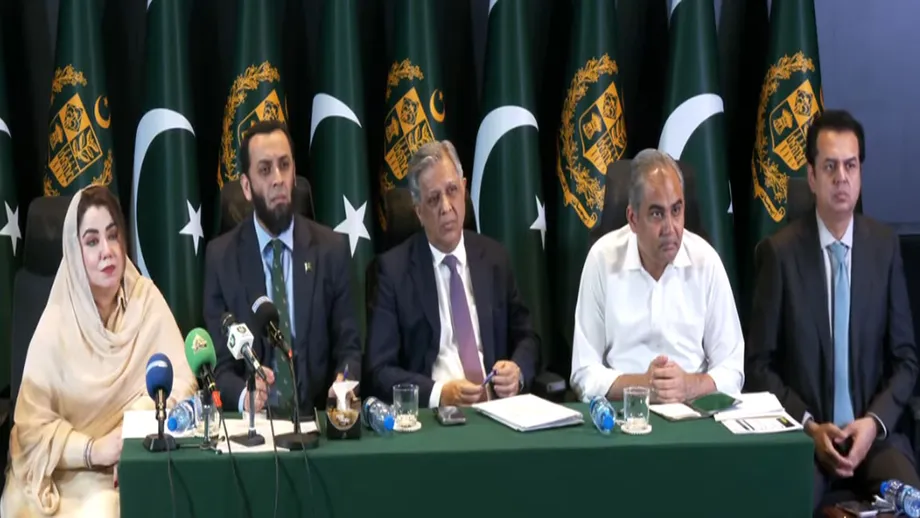
At a requisitioned meeting in Islamabad chaired by Senator Zamir Hussain Ghumro, the committee also gave the Establishment Division two weeks to explain how it would secure provincial representation in federal employment, including recruitment and promotions. Its review covered Basic Pay Scale grades 1 to 22, as well as corporations, statutory bodies and autonomous institutions.
Ghumro alleged that provinces had been denied profits from 13 state companies and entities, including Pakistan Petroleum Limited, for 16 years. He put the withheld amount at trillions of rupees, although no company accounts, audited calculation or province by province breakdown accompanied that allegation.
The committee's action is a parliamentary demand for implementation, not evidence that money or operational control has already changed hands. Its immediate test is whether federal departments produce mechanisms that turn constitutional ownership and employment provisions into identifiable transfers, appointments and shared decisions.
Senators Jan Muhammad Buledi and Poonjo Bheel attended, alongside officials from the Cabinet Division, the Council of Common Interests Secretariat, the Establishment Division and senior Petroleum Ministry officers. The committee expressed concern that the petroleum secretary and Federal Public Service Commission representatives were absent.
What equal ownership means for oil and gas
The resource dispute centres on Article 172(3) of the Constitution, introduced through the 18th Amendment. Subject to existing commitments and obligations, it provides for mineral oil and natural gas within a province, or the territorial waters adjacent to it, to vest jointly and equally in that province and the federal government.
This is a rule about ownership of resources. Applying it requires decisions about how the two governments participate in exploration, licensing, management and the distribution of financial returns. The committee said a comprehensive operational framework for that shared role had still not been fully realised, despite the passage of 16 years since the amendment.
The proposed alternatives address different parts of that problem. Sharing company profits would distribute financial returns. Transferring wellheads, the installations at the surface of producing wells, would involve assets and potentially operational responsibilities. A mechanism would have to specify which wells, companies and revenues were covered, and how each province's entitlement was calculated.
The distinction matters because equal ownership of oil and gas does not, by itself, explain how half of every company's declared profit should be allocated. The committee's proposal still needs rules connecting resources within provincial boundaries to corporate earnings, existing obligations and the federal government's share.
Audits and enforcement remain unresolved
Ghumro argued that the provinces should receive their share without further delay. One proposed financial route would distribute 50 percent of declared profits from state oil and gas companies after an audit by the Auditor General of Pakistan. An audit would be central to establishing what was earned, what was paid and what remained disputed.
The committee also warned that, if its directions were ignored, it could seek to have the Auditor General withhold and transfer funds directly. Senior officials, including federal secretaries, were warned of possible legal action for failing to ensure compliance within two weeks. These were warnings made during parliamentary oversight, rather than completed enforcement actions.
The deadlines should be distinguished. The Petroleum Division was directed to submit its implementation report within 15 days, while the Establishment Division was given two weeks for its employment compliance report. The broader warning of action within two weeks does not establish a separate, verified payment date.
No precise meeting date or subsequent hearing date is identified in the accounts of the proceedings. There is also no confirmed total payable to each province, no agreed allocation formula and no evidence that an audit or transfer has begun. Those missing details separate the committee's demands from a settlement that could actually be administered.
A dispute that predates the latest meeting
The current demand follows an earlier provincial push for shared resource control. In September 2017, all four provinces were seeking implementation of Article 172(3) through the Council of Common Interests (CCI), the constitutional forum for coordination between the federation and provinces.
At that time, the provinces said no exploration block had been offered for bidding for more than four years under the 2012 petroleum policy. An exploration block is an area made available to companies to search for oil or gas. The provinces wanted authority to identify prospects, conduct surveys and participate in awarding exploration rights.
The 2012 policy had envisaged a regulatory board bringing four provincial representatives together with the federal director general of petroleum concessions. Provincial complaints in 2017 were that no board meeting had been convened and provincial nominees had gone unpaid for more than three years. Sindh and Punjab recalled their representatives, while Balochistan and Khyber Pakhtunkhwa kept theirs in place.
The sequence shows that the disagreement concerns participation in resource decisions as well as the distribution of money:
- 2010: The 18th Constitutional Amendment established joint and equal provincial and federal ownership under Article 172(3).
- 2012: The petroleum policy set out arrangements for provincial participation in a regulatory board.
- September 18, 2017: Provincial demands for implementation included complaints about inactive governance arrangements and the absence of fresh exploration bidding.
- Latest committee meeting: The Senate panel sought an operational resource framework within 15 days and an employment compliance report within two weeks.
These earlier complaints do not establish the present status of every exploration block or board appointment. They do show that the latest committee is confronting a dispute over implementation that was already documented years ago.
The CCI is both a forum and a point of contention
Ghumro argued that moving oil, gas and regulatory oversight to the federal cabinet bypasses the CCI and reduces provincial input. Committee members also objected to repeatedly referring devolved matters to the CCI without concrete progress.
Those positions address two different failures: making decisions outside a forum designed to include provinces, and using referrals to that forum without delivering an outcome. The committee called on the Petroleum Division to work directly with all relevant provincial stakeholders on an actionable mechanism.
The 2017 dispute also included provincial complaints about Articles 154 and 158, concerning the CCI's responsibilities and priority for gas needs in a producing province. Sindh then said it produced more than 68 percent of Pakistan's natural gas but received only 44 percent.
That was a gap of more than 24 percentage points between its reported production share and allocation share. The figures were provincial claims from 2017, not current measures. They help explain why the argument extends beyond company profits to the availability of gas and a province's role in decisions about its resources.
Employment quotas reach across federal institutions
The committee's second major concern was provincial representation under Article 38(g). Its review extended across the federal pay structure, from BPS 1 to BPS 22, rather than focusing solely on entry level recruitment or senior civil servants. The panel demanded compliance in recruitment, promotions and transfers.
Ghumro alleged that thousands of positions allocated through provincial quotas, particularly those for Balochistan, remained vacant or had been bypassed through temporary and other hiring arrangements without proper provincial allocation. He said earlier Establishment Division letters had instructed ministries, divisions and the Federal Public Service Commission (FPSC) to prioritise unfilled shares for Sindh and Balochistan, but compliance reports had not been submitted.
The accounts give conflicting figures for Balochistan's senior representation. One figure describes only one officer in grade 22 representing the province across 38 federal divisions; another describes four of 38 federal secretaries as being from Balochistan. No explanation is given for whether these counts refer to different groups or periods.
Both figures were used to support the claim of low representation, but they should not be treated as interchangeable. A reliable assessment would require a roster specifying officers' grades, posts and provincial allocation, alongside the number of positions against which representation is measured.
The Establishment Division secretary assured the panel of compliance and said the provincial share framework covered all employees drawing salaries from the Government of Pakistan. He also said provincial shares, particularly Balochistan's, would be calculated and jobs provided. The committee demanded a mechanism covering appointments by promotion as well as other forms of appointment.
Absences bring notices and a new subcommittee
The committee formed a subcommittee to examine provincial shares in federal services across all grades and relevant institutions. This creates a separate channel for investigating whether vacancies, recruitment procedures and promotion decisions reflect the required provincial allocations.
It also issued show cause notices to provincial energy secretaries and the FPSC for failing to attend. Such notices require recipients to explain their absence before further action is considered. The committee warned that strict action could follow.
Ghumro, the committee chairman, criticised the absence of provincial officials from discussions affecting both resource ownership and employment representation:
"If provinces are least bothered about their share in services as well as in oil and gas reserves, it speaks volumes about their efficiency," the chairman remarked.
The criticism placed responsibility on provincial administrations as well as federal departments. For the resource framework to advance, provinces will need to participate in negotiations and identify their claims. For the employment review, the FPSC's involvement matters because the commission handles recruitment into federal services.
Resource payments and the wider fiscal squeeze
The meeting also examined the financial consequences of devolved subjects and the 7th National Finance Commission (NFC) Award. Ghumro put federal expenditure at about Rs19 trillion against total national tax and non tax revenue of Rs20 trillion, arguing that spending needed to be reduced drastically.
On those figures, federal expenditure equals about 95 percent of the cited national revenue total. That comparison indicates the scale of his concern, but it is not a complete budget calculation. The accounts do not specify the fiscal year, accounting basis or treatment of provincial transfers, so the Rs1 trillion difference should not be described as money freely available for distribution.
Revenue sharing through the NFC is also distinct from ownership under Article 172(3). The NFC concerns financial distribution between governments, while resource ownership, royalties and other direct payments involve separate constitutional provisions. Combining them into one percentage would obscure which entitlement is being discussed.
A financial federalism study hosted by the University of the Punjab describes the 18th Amendment as helping provinces obtain revenue from local sources and the divisible pool. It discusses Article 160 in relation to the NFC and Article 161 in relation to natural gas duties, royalties and proceeds, alongside payments associated with hydroelectric power.
The study records an increase in provincial transfers from 28 percent to 45 percent in 1991, a rise of 17 percentage points. It also describes crude oil royalties and the net development surcharge on gas as part of the 1995 NFC arrangements. These historical figures concern fiscal transfers, not proof that the current demand for half of company profits has already been implemented.
The authors identify delayed NFC awards, coordination among provinces and further exploration of local resources as continuing concerns. Their account helps distinguish established transfer channels from the new operational framework demanded by the Senate committee.
Ghumro also addressed the Prime Minister's rightsizing and austerity directions, including a freeze on new appointments. He argued that spending restraint must still allow constitutional provincial shares to be secured and past omissions corrected. The departments' reports will need to explain how they intend to reconcile those demands.
The Bottom Line
- The Senate committee proposed half of oil and gas company profits or half of wellheads for provinces as routes to implementing joint and equal resource ownership.
- The Petroleum Division must consult provincial stakeholders and report within 15 days; the Establishment Division was given two weeks for employment compliance.
- The alleged trillions of rupees in withheld profits have not been supported by an audited total or a provincial allocation breakdown.
- The employment review covers BPS 1 to 22 and extends to corporations, statutory bodies and autonomous institutions.
- Reports differ on Balochistan's senior representation, citing one grade 22 officer and four federal secretaries across 38 divisions.
- A subcommittee will examine employment shares, while provincial energy secretaries and the FPSC face notices over nonattendance.
- No completed resource transfer, agreed payment formula or subsequent hearing date has been confirmed.