A 2030 target moves from policy to construction
India's plan to gasify 100 million tonnes of coal by 2030 is entering a decisive construction phase. Bharat Coal Gasification and Chemicals Limited has begun work on a ₹25,000 crore project in Odisha, while a new assessment says the national target will depend on faster approvals, committed customers and plants designed for Indian coal.
Contents
- A 2030 target moves from policy to construction
- How much could India replace in imports?
- What the ₹37,500 crore scheme pays for
- The milestones between now and 2030
- Why a committed buyer matters to a lender
- Odisha puts the execution model to work
- Approvals and Indian coal shape the delivery risk
- Steelmakers want gas, but not always the plant
- Industrial heat could widen the customer base
- Deep coal and carbon costs require separate decisions
- Key Points
The assessment, released by Alvarez & Marsal in New Delhi on October 22, 2026, comes five months after the Union Cabinet approved ₹37,500 crore in incentives for surface coal and lignite gasification. The government expects that scheme to support about 75 million tonnes of gasification, attract ₹2.5 lakh crore to ₹3 lakh crore in investment and generate about 50,000 direct and indirect jobs across roughly 25 projects.
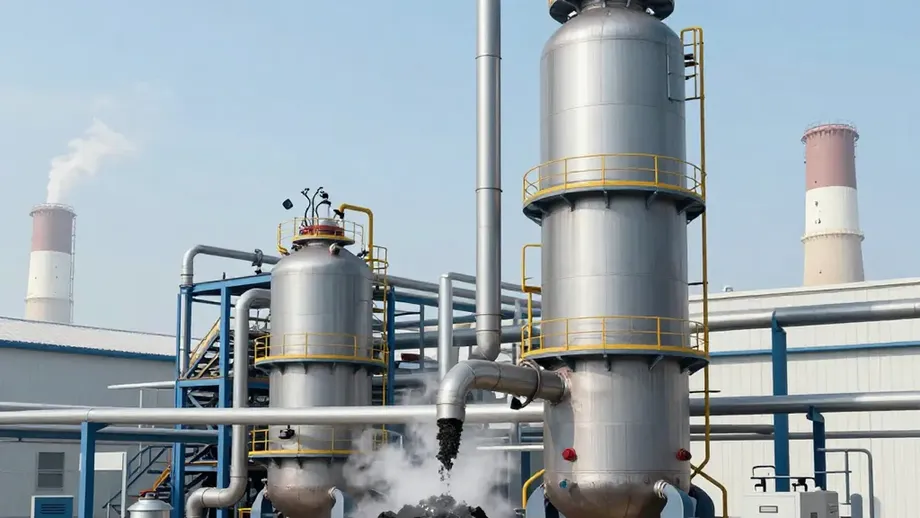
Coal gasification converts coal into synthesis gas, usually called syngas, which contains hydrogen and carbon monoxide. Factories can process it into fertilisers, chemicals and synthetic natural gas, or use it in steelmaking and industrial heating. India's goal is to turn a large domestic resource into products it currently buys abroad.
Alvarez & Marsal's October 22 statement identifies approvals, customers and construction performance as the central tests. Kunwar Vijayant Singh, managing director and co-lead for energy and resources at Alvarez & Marsal India, explained the conditions for delivery:
India has the coal and the demand. Whether we reach the 100 million tonne target will depend on how quickly projects can be approved, whether they have assured buyers, and whether they are executed with reliable utilities, accountable contractors and technology suited to Indian coal. Coordinated action on these fronts can move gasification from isolated projects to an integrated value chain.
How much could India replace in imports?
India imported about 94% of the methanol it consumed and about half its natural gas in the financial year 2024 to 2025, according to Alvarez & Marsal. Methanol is an industrial chemical and fuel ingredient; natural gas supplies fertiliser factories, industry and other consumers.
For the financial year 2025 to 2026, the assessment puts natural gas imports at about ₹1.18 lakh crore, urea imports at ₹46,000 crore and ammonia and methanol imports together at ₹9,600 crore. It estimates a potential annual import substitution opportunity of ₹1.96 lakh crore across gasification related products, including other chemicals.
The Cabinet's May statement uses a broader basket and an earlier financial year. It places imports of potentially replaceable products at about ₹2.77 lakh crore in 2024 to 2025, including liquefied natural gas, urea, ammonium nitrate, ammonia, coking coal, methanol and dimethyl ether. Actual savings would depend on domestic production costs, imported equipment and inputs, and how much output customers purchase.
For farmers, the connection is fertiliser supply: ammonia is used to make urea, a widely used nitrogen fertiliser. For factories, domestic gas and chemicals could reduce exposure to shipping disruptions and sudden international price increases. Buyers would still need dependable deliveries at prices they can afford.
What the ₹37,500 crore scheme pays for
The Union Cabinet approved the Scheme for Promotion of Surface Coal/Lignite Gasification Projects on May 13, 2026. Its scheme approval statement sets financial support at up to 20% of eligible plant and machinery costs, paid in four equal instalments tied to project milestones.
Support is capped at ₹5,000 crore per project and ₹12,000 crore across projects belonging to one corporate group. A ₹9,000 crore limit applies to each product category, except synthetic natural gas and urea. Companies will be selected through competitive bidding, with assessments covering costs, coal consumption and syngas production.
The government also extended coal supply agreements for syngas production to as long as 30 years. Such agreements, known as coal linkages, give developers greater certainty about their main raw material over the life of a plant. The scheme permits different technologies while encouraging domestic designs.
The ₹37,500 crore allocation equals 12.5% to 15% of the projected ₹2.5 lakh crore to ₹3 lakh crore investment, calculated from the government's figures. Developers and lenders therefore have to finance most of the programme. The government also projects ₹6,300 crore in annual benefits from coal and lignite use under the scheme, alongside GST and other tax receipts.
An older IEA policy entry, last updated on April 5, 2022, records investment of more than ₹4 lakh crore for the national ambition. The Cabinet's 2026 estimate of ₹2.5 lakh crore to ₹3 lakh crore covers around 25 projects under the newer scheme.
The milestones between now and 2030
India's programme has accumulated several rounds of policy support. The International Energy Agency records the target as a national policy dating from 2020 and lists its status as in force. The National Coal Gasification Mission followed in 2021, before financial incentive schemes in 2024 and 2026.
- 2020: India adopted the target of gasifying 100 million tonnes of coal by 2030.
- January 2024: The government approved an initial ₹8,500 crore incentive scheme.
- May 13, 2026: The Cabinet approved the additional ₹37,500 crore scheme, intended to support about 75 million tonnes of gasification.
- June 2026: The Talcher project to convert coal into urea was 72.56% complete.
- July 2026: The Ministry of Coal recorded 22.6 million tonnes a year of capacity operating or under implementation.
- September 7 and 8, 2026: The first application round for the new scheme closed with seven proposals, and the second round opened the following day.
- 2029: The Odisha ammonium nitrate project targets commissioning, ahead of the national deadline in 2030.
The ministry's July figure combines working plants with projects still being built. Reaching 100 million tonnes requires construction to finish and facilities to operate reliably. The Cabinet reported eight projects under implementation through the initial scheme, supported by ₹6,233 crore; former coal secretary Amrit Lal Meena described seven approved projects when discussing the first tranche.
Why a committed buyer matters to a lender
Coal gasification plants require large investments before they earn revenue. An offtake agreement is a promise by a customer to buy their output, often for several years. A dependable buyer and an agreed pricing arrangement help a bank judge whether a developer can repay its loans.
Alvarez & Marsal recommends purchase commitments or assured pricing from public sector fertiliser, refining and steel companies. Its assessment points to India's ethanol programme and the Great Plains plant in the United States as examples of arrangements that connect production with durable demand.
Coal India's planned purchase of ammonium nitrate from Bharat Coal Gasification and Chemicals Limited's Lakhanpur project provides a concrete domestic example. Coal India will use the product for blasting in mines, linking a coal producer, a chemical factory and a major customer within the same industrial chain.
The assessment also recommends capital support or funding to close financing gaps for early projects using unfamiliar technology. Government grants can lower the initial expense, while purchase contracts address the separate problem of future revenue. Both matter when lenders are considering a costly plant with limited domestic operating history.
Odisha puts the execution model to work
Bharat Coal Gasification and Chemicals Limited, or BCGCL, is owned 51% by Coal India and 49% by Bharat Heavy Electricals Limited, known as BHEL. Its ₹25,000 crore Odisha project is designed to produce approximately 660,000 tonnes of technical grade ammonium nitrate annually.
Managing director Peeyush Kumar said construction had started and ₹15,000 crore in contracts had been awarded. BHEL received ₹10,000 crore in work and Larsen & Toubro received ₹5,000 crore. Those awards amount to 60% of the total project cost; the remaining budget includes further work and expenses such as financing and land.
BHEL is responsible for gasification and syngas purification. Larsen & Toubro is handling ammonia synthesis and ammonium nitrate production. The plant uses domestically developed pressurised fluidised bed gasification technology, which brings coal into contact with reacting gases under pressure.
Odisha's high level clearance authority has given the project approval through a single window. Its progress will test how domestic technology, divided contractor responsibilities and a committed buyer work together. Commissioning is targeted for 2029; a detailed schedule for completing the remaining contract awards has not been announced.
Approvals and Indian coal shape the delivery risk
Gasification projects need land, environmental permissions, water access and dependable utilities. Alvarez & Marsal recommends a single statutory approval window with fixed deadlines and deemed approval, under which an application can be treated as approved after a specified period. It cites PM Gati Shakti as a precedent for coordination across government bodies.
Talcher in Odisha offers an execution lesson. Its project to turn coal into urea was 72.56% complete in June 2026, according to the institutional statement. The assessment draws attention to utility reliability, contractor accountability and technology suited to the coal being supplied.
Indian coal typically contains 25% to 45% ash, according to a September 2025 NITI Aayog workshop. Ash is the mineral material left after coal reacts or burns. A high ash content affects equipment performance and increases the amount of residue a plant must handle.
Research grants, pilot plants and demonstration units could help developers test domestic coal before committing to large facilities. Shared industrial hubs could spread the cost of oxygen production equipment, gas cleaning systems, pipelines, water services and other infrastructure across several factories. Environmental safeguards, including water and waste management, would need to be included in the design from the start.
Steelmakers want gas, but not always the plant
Jindal Steel's Angul complex in Odisha has used coal gasification since 2014. Syngas removes oxygen from iron ore in direct reduced iron production, creating sponge iron for steelmaking. The company has also injected syngas into a blast furnace to reduce its use of imported coking coal.
V.R. Sharma, Jindal Steel's managing director, put the plant's syngas cost at $7 to $8 per million British thermal units, compared with $12 to $16 for imported natural gas. A British thermal unit measures heat energy. Angul's access to coal, transport arrangements and existing facilities are important parts of that comparison.
Other steelmakers are exploring purchases rather than construction. Coal India and ArcelorMittal Nippon Steel India signed a memorandum of understanding to examine syngas use, while Shyam Steel submitted a bid under a government tender. Tata Steel chief executive officer and managing director T.V. Narendran explained his company's position:
We would be a consumer if there is coal gasification. We can be a consumer of the gas, because it is a very capital-intensive journey. We are not investing ourselves,
Cost expectations remain contested. Niladri N. Bhattacharjee, partner and metals and mining industry leader at Grant Thornton Bharat, estimates that favourable projects could save up to 15% in raw material costs, particularly away from the coast. A competing industry assessment argues that the additional gasification stage and its capital expense prevent cost reductions. Coal quality, transport, financing and plant efficiency will shape individual results.
Industrial heat could widen the customer base
Factories can use gasification for heat as well as chemical production. Roger Kumar, founder and managing director of CASE Group, has proposed a dedicated thermal gasification track alongside the programme's chemicals focus, with shared infrastructure and financing suited to smaller industrial users.
CASE Group says its nine gasifiers at Rungta Mines' Kamanda plant in Odisha replace up to 60% of furnace oil in straight grate pellet production and all furnace oil in a grate kiln with annual capacity of one million tonnes. A second phase targets 90% substitution in the relevant operations. The company says its system handles coal containing more than 40% ash and recycles process water through a zero liquid discharge design.
Kumar's proposals include national standards for efficiency, emissions, wastewater and reliability, better coal access for smaller users, and a platform connecting industry, universities and government. Common performance data would give buyers and banks a clearer basis for comparing equipment.
Coal supply has also expanded. India's total production reached 1,040 million tonnes in 2025 to 2026, including 210 million tonnes from captive and commercial mines. Companies building or planning gasification facilities include Coal India, Reliance, Adani, NTPC and Jindal Steel. New Era Cleantech is planning a Maharashtra facility costing more than ₹20,000 crore, initially producing ammonium nitrate and targeting commissioning by 2030.
Deep coal and carbon costs require separate decisions
India's National Coal Inventory 2025 records 400.715 billion tonnes of geological coal resources and 47.37 billion tonnes of lignite resources as of April 1, 2025. At least 175 billion tonnes of coal lie deeper than 300 metres, about 44% of the roughly 400 billion tonne total used in the assessment.
Underground coal gasification would convert suitable deposits into gas within the seam, rather than mining and transporting the coal. Its prospects depend on geology, economic feasibility and environmental safeguards. Surface gasification has a much longer commercial history; underground projects still require substantial demonstration before wider deployment.
Alvarez & Marsal estimates that gasification products could have a gross value five to 20 times that of selling the coal directly, depending on its assumptions. Developers must pay for conversion equipment, energy, water, gas purification and further chemical processing from that revenue.
Carbon management adds another expense. Coal gasification produces carbon dioxide, and carbon capture, utilisation and storage requires equipment to separate the gas and arrangements to use or store it. Steelmakers considering that option must weigh additional construction and operating costs against emissions targets and market requirements.
The practical test for 2030 is therefore broader than access to coal. India needs plants that finish construction, match domestic coal quality, manage water and waste, and deliver products that customers will keep buying. Odisha's projects, the next incentive awards and purchase agreements will provide the clearest measures of progress.
Key Points
- India aims to gasify 100 million tonnes of coal by 2030.
- The ₹37,500 crore scheme approved in May 2026 is intended to support about 75 million tonnes of coal and lignite gasification.
- Government projections include ₹2.5 lakh crore to ₹3 lakh crore in investment and about 50,000 direct and indirect jobs across roughly 25 projects.
- BCGCL has begun construction on its ₹25,000 crore Odisha project, targeting 660,000 tonnes of ammonium nitrate annually and commissioning in 2029.
- Faster approvals, dependable buyers, suitable technology and reliable construction are central to delivery.
- Import savings and commercial returns depend on production costs, financing, environmental management and sustained demand.