Rupee Support Extended as Maldives Faces Financial Pressure
India has approved the first rollover of a 30 billion rupee currency swap facility for the Maldives, with the extension taking effect on October 23, 2026. The decision follows a request from the Maldivian government and keeps an important source of foreign currency funding available to the island nation as it faces pressure on reserves and public finances.
Contents
- Rupee Support Extended as Maldives Faces Financial Pressure
- What a Currency Swap Does
- Two Currency Windows, Different Repayment Histories
- The Dates Behind the Decision
- Reserves Explain the Need for Breathing Space
- The IMF Warns That Debt Pressure Persists
- Treasury Debt Adds Another Layer of Indian Support
- Maldives Welcomes the Extension
- What Changes From October 23
- Key Points
The facility, worth Rs 3,000 crore in Indian numbering, was first drawn on April 23, 2026. It operates through an agreement between the Reserve Bank of India (RBI) and the Maldives Monetary Authority, signed during President Mohamed Muizzu's visit to India in October 2024.
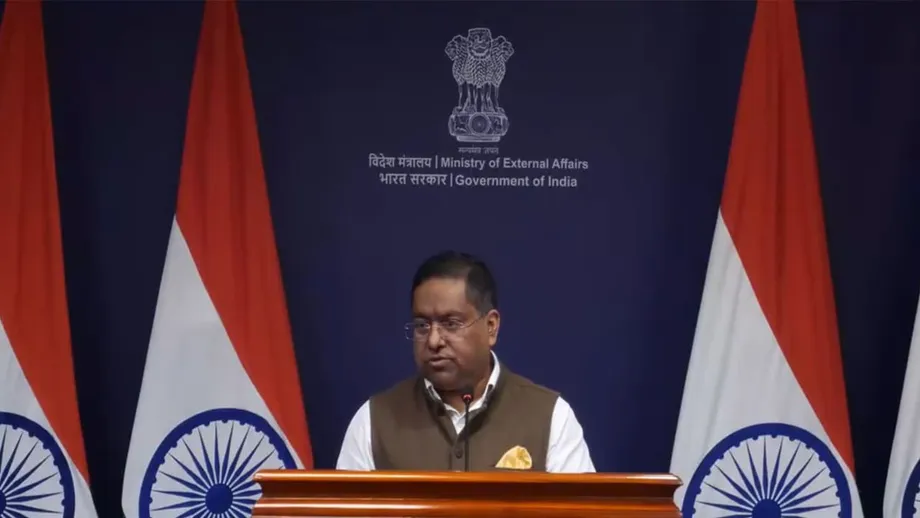
India's Ministry of External Affairs spokesperson, Randhir Jaiswal, announced the decision and connected it to the countries' development partnership.
We have a close development cooperation partnership with the Maldives. At the request of the Government of Maldives, we have decided that we will carry out the first rollover of the INR 3,000 crore currency swap with effect from 23 October 2026,
Jaiswal also described the expected benefit for the Maldivian economy.
The present rollover will add to the financial stability of the Maldives,
The decision extends an existing borrowing arrangement. For the Maldives, its practical value is continued access to Indian rupees at a time when managing foreign currency payments and government debt remains difficult.
What a Currency Swap Does
A currency swap allows one central bank to obtain another country's currency under agreed repayment terms. Here, the Maldives Monetary Authority gains access to Indian rupees through the RBI. Liquidity, the main purpose of the facility, means having money available when payments fall due.
A rollover extends the borrowing rather than requiring it to be repaid at the existing deadline. The Maldives therefore gains more time to manage its funding needs. The rupee facility remains money borrowed under an agreement, with repayment obligations.
The arrangement falls under the Framework on Currency Swap Arrangement for countries in the South Asian Association for Regional Cooperation (SAARC). The framework for 2024 to 2027 provides concessional terms, including favourable interest rates and other conditions intended to make the support easier to use.
Two Currency Windows, Different Repayment Histories
The RBI and the Maldives Monetary Authority signed their agreement on October 7, 2024. It made the Maldives eligible for $400 million through a window providing US dollars or euros, alongside 30 billion rupees through a separate Indian rupee window.
The distinction matters because the latest decision concerns the rupee facility. The Maldives repaid the $400 million currency swap earlier in 2026, while the 30 billion rupees first drawn in April are being rolled over from October.
Different currencies serve different payment needs. Rupee funding gives the Maldives access to Indian currency; dollar funding provides access to dollars. Both can help manage external payments, but their amounts and repayment histories need to be tracked separately.
The RBI agreement is valid until June 18, 2027. The rupee facility has been described as borrowing for three months, with earlier facilities extended to six months. The announcement gives October 23 as the rollover's effective date without specifying its new repayment deadline or interest rate.
The Dates Behind the Decision
The October extension is part of a financial relationship that predates the current agreement. The Indian High Commission says the RBI has provided the Maldives with cumulative currency swap support exceeding $1.1 billion since the regional framework began in 2012.
The main steps in the current arrangement are:
- 2012: The SAARC currency swap framework began.
- October 7, 2024: The RBI and the Maldives Monetary Authority signed the current agreement during President Muizzu's visit to India.
- April 23, 2026: The Maldives received the first drawdown of 30 billion rupees.
- Earlier in 2026: The Maldives repaid the separate $400 million currency swap.
- September 2026: A final $50 million Treasury bill repayment completed repayment of three bills totalling $150 million.
- October 23, 2026: The first rollover of the rupee facility takes effect.
- June 18, 2027: The current RBI agreement reaches the end of its validity.
The April drawdown and October rollover fall six months apart. The extension keeps the existing rupee support in place as the Maldives continues managing other debt payments.
Reserves Explain the Need for Breathing Space
The Maldives Monetary Authority's foreign currency reserve data put reserves at $532.55 million in September, down 37.5% from the same month a year earlier. A separate figure placed state reserves at $547 million at the end of September; the basis for the difference between the two measures was not specified.
The reported 37.5% decline means the $532.55 million reserve figure was roughly five eighths of its level a year earlier. Using that percentage, the earlier level works out at about $852 million, a reduction of approximately $320 million.
Foreign currency reserves are funds held by a country's monetary authority to help meet external payments and support confidence in its currency. For a country facing large payments abroad, the amount available matters because government obligations and other foreign currency needs can arrive before enough new money comes in.
The rupee rollover gives the Maldives continued access to one source of external funding. Its usefulness sits alongside the country's need to manage dollar obligations, replenish reserves and meet government spending commitments.
The IMF Warns That Debt Pressure Persists
The International Monetary Fund said in its June assessment that Maldivian public debt and the fiscal deficit were expected to remain elevated. It assessed both the general risk of debt distress and the risk linked to external debt as high.
A fiscal deficit occurs when government spending exceeds government revenue. Borrowing can cover the gap, but it also creates future repayment and interest costs. External debt adds another demand: payments must be made to creditors abroad, often in foreign currency.
The IMF said official support from other governments and increased international reserves had helped ease immediate external pressures. It also recommended further measures to preserve the country's exchange rate peg and restore financial stability.
An exchange rate peg keeps a currency at a set value against another currency. Maintaining it requires the authorities to manage foreign currency availability carefully. The IMF's assessment and the subsequent September reserve decline show why continued access to funding remains a pressing concern.
Treasury Debt Adds Another Layer of Indian Support
India's financial assistance also includes purchases of Maldivian government securities. The Indian High Commission listed two Treasury bonds worth $250 million and $100 million, together amounting to $350 million in borrowing over longer periods.
Treasury bonds and bills are promises by a government to repay money it has borrowed. Bonds generally run for longer periods, while bills are used for shorter borrowing. When India subscribes to these securities, it provides funds to the Maldivian government under their repayment terms.
India also subscribed to three Maldivian Treasury bills with a combined value of $150 million. The Maldives has repaid those bills. Its Finance Ministry confirmed that a $50 million repayment in September completed repayment of the debt taken in three instalments in 2019.
The Indian High Commission said the Government of India paid $42.8 million towards the interest incurred on the Treasury bill support. That amount equals about 28.5% of the bills' combined $150 million principal, illustrating the scale of the interest assistance across the borrowing period.
The financial measures serve related but different purposes: currency swaps provide access to another currency, while Treasury subscriptions finance government borrowing. India has used both channels in its support for the Maldives.
Maldives Welcomes the Extension
Maldivian Foreign Minister Iruthisham Adam thanked India's External Affairs Minister S Jaishankar and the Indian government for approving the rollover. She said the decision reaffirmed a friendship rooted in mutual respect, understanding and goodwill.
The Maldivian response focused on access to Indian rupees for liquidity and financial stability. For the authorities managing public finances, an extension provides more time to organise payments while keeping an established funding channel available.
India placed the decision within its Neighbourhood First policy and MAHASAGAR vision. The latter stands for Mutual and Holistic Advancement for Security and Growth Across Regions and forms part of India's stated approach to cooperation across the Indian Ocean and beyond.
The two governments also adopted a Joint Vision for a Comprehensive Economic and Maritime Security Partnership during Muizzu's October 2024 visit. India said it remained committed to implementing that agreement, linking the financial relationship with wider economic and maritime cooperation.
What Changes From October 23
The immediate change is continued access to the 30 billion rupee facility through a rollover of the existing drawdown. The Maldives gains time in managing that borrowing while facing high debt risks and lower reported foreign currency reserves.
The next dated milestone is October 23, 2026, when the rollover takes effect. The broader agreement remains valid until June 18, 2027. Alongside those dates, the repayment of the dollar swap and Treasury bills shows that the Maldives is both extending some obligations and settling others.
Key Points
- India approved the first rollover of a 30 billion rupee currency swap for the Maldives, effective October 23, 2026.
- The Maldives first drew the rupee funds on April 23, 2026, under an agreement signed in October 2024.
- The separate $400 million currency swap was repaid earlier in 2026.
- Maldives Monetary Authority data put September foreign currency reserves at $532.55 million, down 37.5% from a year earlier.
- The IMF assessed the country's general and external debt distress risks as high.
- The Maldives has repaid three Treasury bills totalling $150 million; India paid $42.8 million towards interest.
- The current RBI currency swap agreement is valid until June 18, 2027.