More Malaysian universities reach Asia's leading ranks
Malaysia has placed 11 universities in Asia's top 100 in the QS World University Rankings: Asia 2027, with Universiti Kebangsaan Malaysia entering the top 20 for the first time. Yet the stronger showing at the top comes alongside falling positions for more than half of the Malaysian institutions ranked in the previous edition.
Contents
- More Malaysian universities reach Asia's leading ranks
- UKM closes the gap with Universiti Malaya
- Private universities secure new milestones
- Why the national picture is mixed
- Employer reputation faces pressure
- Research measures show a narrower base
- International students are a major strength
- Hong Kong and China reshape the regional contest
- The decade behind the results
- Key Points
QS published its 2027 Asia rankings on 3 November 2026, assessing 1,722 universities across 26 higher education systems. Malaysia has 55 institutions listed, including six newcomers, making it the eighth most represented system.
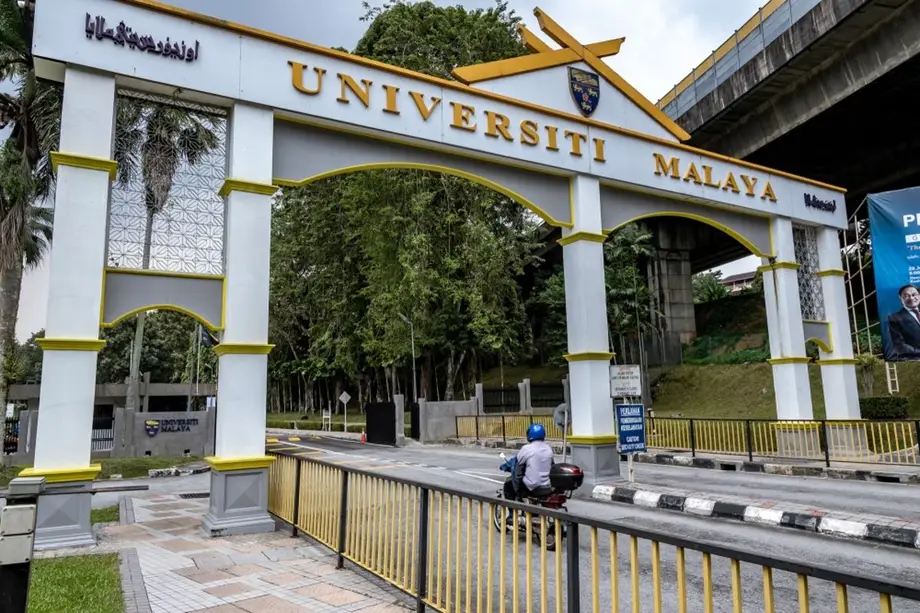
Universiti Malaya (UM) remains Malaysia's highest ranked institution at joint 17th, down from 15th. Universiti Kebangsaan Malaysia (UKM) climbed four places from 24th to joint 20th, bringing a second Malaysian university into the regional top 20.
Eight Malaysian institutions now sit in Asia's top 50, matching Japan and South Korea. Only mainland China has more, with 14. Malaysia had just two universities in that group in 2017, meaning its representation has quadrupled over the decade.
Malaysia's results reveal two different patterns. Its universities have a broad presence among the regional leaders for international students and academic staff. Research output, citations and employer reputation show more pressure, with many institutions losing positions in those measures.
For students comparing universities, the useful question is therefore more specific than whether Malaysia rose or fell: which institutions improved, and what do their strengths mean for the education and opportunities they provide?
UKM closes the gap with Universiti Malaya
UKM's move to joint 20th is its best regional position yet. One of its strongest improvements came in international research links, where it rose four places to 11th in Asia. This measure examines how widely a university works with researchers overseas.
UM retained a place among Asia's top 20 for the ninth consecutive year. However, it fell in six of the 11 measures used to calculate the rankings. Its employer reputation position dropped seven places to 17th, while its positions for international research links and international students each slipped three places.
Universiti Putra Malaysia placed 24th, followed by Universiti Teknologi Malaysia at 25th. Universiti Sains Malaysia climbed seven places to 27th, adding another gain among the country's leading public universities.
The Malaysian institutions in Asia's top 100 are:
- Universiti Malaya: joint 17th.
- Universiti Kebangsaan Malaysia: joint 20th.
- Universiti Putra Malaysia: 24th.
- Universiti Teknologi Malaysia: 25th.
- Universiti Sains Malaysia: 27th.
- Taylor's University: 32nd.
- UCSI University: 36th.
- Sunway University: 47th.
- Universiti Teknologi Petronas: 51st.
- Universiti Utara Malaysia: 82nd.
- INTI International University: 86th.
Universiti Teknologi Petronas fell from 44th to 51st, moving outside the top 50, while Universiti Utara Malaysia dropped 17 places to 82nd. Their declines show how the national total can improve even while individual universities lose ground.
Private universities secure new milestones
Taylor's University remained Malaysia's highest ranked private institution at 32nd, despite falling five places. UCSI University followed at 36th, while Sunway University entered Asia's top 50 for the first time after climbing from 55th to 47th.
INTI International University made an even larger move, rising 36 places from 122nd to 86th. Its first appearance in the top 100 helped lift Malaysia's total in that group from 10 to 11.
QS's official release gives a total of 16 Malaysian universities reaching record positions; another published tally puts the number at 17. The detailed account identifying 16 says 12 were private institutions, equivalent to three quarters of that group.
Those 12 were Sunway, INTI, Asia Pacific University of Technology and Innovation, SEGi University, IMU University, MILA University, Tunku Abdul Rahman University of Management and Technology, Perdana University, Quest International University, Nilai University, UNITAR International University and Universiti Islam Antarabangsa Sultan Abdul Halim Muadzam Shah.
Several institutions also passed new thresholds. SEGi and IMU entered the top 300, while Tunku Abdul Rahman University of Management and Technology entered the top 600. Among public universities, Universiti Malaysia Terengganu entered the top 150 and Universiti Malaysia Sabah reached the top 200.
Why the national picture is mixed
Of the 49 Malaysian universities listed in the previous edition, 20 improved, four stayed in the same position or band, and 25 declined. That means about 41% rose and 51% fell. Six new entries brought the current total to 55.
University rankings work like a race in which the number of competitors can grow and their pace can change. A university's position depends on its results relative to others, so maintaining a place becomes harder when competing institutions advance faster.
QS added 195 universities across Asia in this edition. Mainland China alone added 53, taking its total to 448. India added 34 to reach 325, while Japan had 153 ranked institutions.
Malaysia's share of universities losing positions was lower than the 71% recorded in India and 85% in Japan. Even so, its own results show that gains at a few institutions sit alongside a much wider contest to protect or improve regional standing.
QS senior vice president Ben Sowter described the competition and the qualities the organisation considers central to success:
This year's rankings are more competitive than ever, providing an important benchmarking tool for a region shaping global higher education. Research excellence, international engagement and reputation remain the foundations for success in an ever-advancing university ecosystem.
Employer reputation faces pressure
Employer reputation accounts for 20% of the QS Asia ranking. The measure reflects how employers view universities, giving it substantial influence over the final result.
QS said 86% of Malaysian universities lost ground on this measure. Because it carries one fifth of the ranking's weight, widespread declines can weigh heavily on national results even when universities improve elsewhere.
Malaysia nevertheless ranked fifth among the 26 systems for its average employer reputation score. Nine Malaysian universities placed in Asia's top 100 on this measure, compared with five in 2017.
The figures describe a strong position built over a decade alongside more recent competitive pressure. Malaysia has more institutions with leading employer reputations than in 2017, but many universities are now being overtaken in the indicator's rankings.
For a prospective student, employer reputation provides information about institutional recognition. A decision about a particular course also involves concrete questions about its content, professional accreditation, fees and routes into work, which a university's regional position cannot answer on its own.
Research measures show a narrower base
Malaysia had only one university in Asia's top 100 for papers per academic staff member and one for citations per paper. These measures examine different parts of research activity.
Papers per staff member measures publication output relative to the number of academics. Citations per paper measures how often other researchers refer to published work, giving an indication of its reach within research communities.
Across Malaysian institutions, 69% lost ground in papers per staff member and 61% declined in citations. QS identified faster research growth elsewhere in Asia and pointed to research funding, access to talented researchers and stronger international links as possible drivers.
UKM's 11th place for international research links offers one example of a Malaysian strength in collaboration. Universiti Pendidikan Sultan Idris led Asia in the Faculty with PhD indicator, which concerns the share of academic staff holding doctoral qualifications.
These results separate several tasks often grouped together under research quality: employing highly qualified academics, building partnerships, producing papers and publishing work that other researchers use. Malaysia's presence among the leaders is much broader in some of those areas than in others.
International students are a major strength
Malaysia had 31 universities in Asia's top 100 for international students and 24 for international academic staff, more than any other country or territory in each measure.
Measured against Malaysia's 55 ranked institutions, those totals represent about 56% for international students and 44% for international staff. Both are far larger shares than the country's representation among the top 100 for either research publication measure.
International students and academics bring people from different education systems into the same classrooms and research teams. For universities, attracting them also means providing enough teaching capacity, accommodation and student services as enrolment grows.
Sowter, QS's senior vice president, linked Malaysia's position as an education destination to a projection for the end of the decade:
"Its renown as an education hub in Southeast Asia is only growing, and research from QS suggests that, by the end of the decade, international student numbers are projected to reach about 260,000," Sowter said.
The figure is a projection for 2030. Malaysia's higher education blueprint through 2035 provides a longer planning horizon, although no specific next implementation deadline was given with the ranking results.
Hong Kong and China reshape the regional contest
The University of Hong Kong retained first place in Asia, followed by Peking University. Tsinghua University climbed six places to third, while City University of Hong Kong reached fourth and the Chinese University of Hong Kong fifth.
Hong Kong secured five places in the top 10, more than any other system. Hong Kong Polytechnic University and Hong Kong University of Science and Technology shared ninth place. All 11 ranked Hong Kong institutions reached Asia's top 500 for the first time.
Singapore's two leading universities moved outside the top five: the National University of Singapore placed sixth and Nanyang Technological University eighth. South Korea's KAIST returned to the rankings at 15th, while Yonsei University ranked 11th.
India's highest ranked institution, the Indian Institute of Technology Delhi, fell from 59th to 66th. India nevertheless increased its representation in the top 200 from 20 universities to 21, showing another case where a system gained breadth while its leading institution slipped.
The regional field also expanded geographically. The Maldives appeared for the first time, represented by the Maldives National University and Villa College. Malaysia's results therefore come within a ranking that is growing both in institutional numbers and geographic reach.
The decade behind the results
Malaysia's strongest comparison is with its own position a decade earlier. Sowter said the number of Malaysian universities in Asia's top 100 had more than doubled, while the top 50 total rose from two to eight.
The main dates and milestones are:
- 2017: Malaysia had two universities in Asia's top 50 and five in the top 100 for employer reputation.
- 2026 edition: Malaysia had 49 ranked universities, including 10 in the top 100.
- 3 November 2026: QS published the 2027 edition, listing 55 Malaysian universities, with 11 in the top 100 and eight in the top 50.
- 2030: QS projects that Malaysia could have about 260,000 international students.
- 2035: Malaysia's higher education blueprint extends to this year.
Malaysia has built a wider group of universities with strong regional positions. The immediate challenge visible in the numbers is to combine that growing reach with stronger research results and more competitive employer reputation across a larger share of institutions.
Key Points
- Malaysia has 55 universities in the QS Asia 2027 rankings, including six newcomers.
- Eleven Malaysian institutions reached Asia's top 100, up from 10 in the previous edition.
- UM remained the national leader at joint 17th; UKM entered the top 20 at joint 20th.
- Sunway entered the top 50 at 47th, while INTI reached the top 100 at 86th.
- Among the 49 previously ranked Malaysian universities, 20 rose, four stayed level and 25 fell.
- Malaysia led regional representation in the top 100 for international students and international academic staff.
- Research publication measures and employer reputation showed widespread declines in position.
- The University of Hong Kong retained Asia's top spot in a field of 1,722 universities.