Vietnam puts its own cryptography into silicon
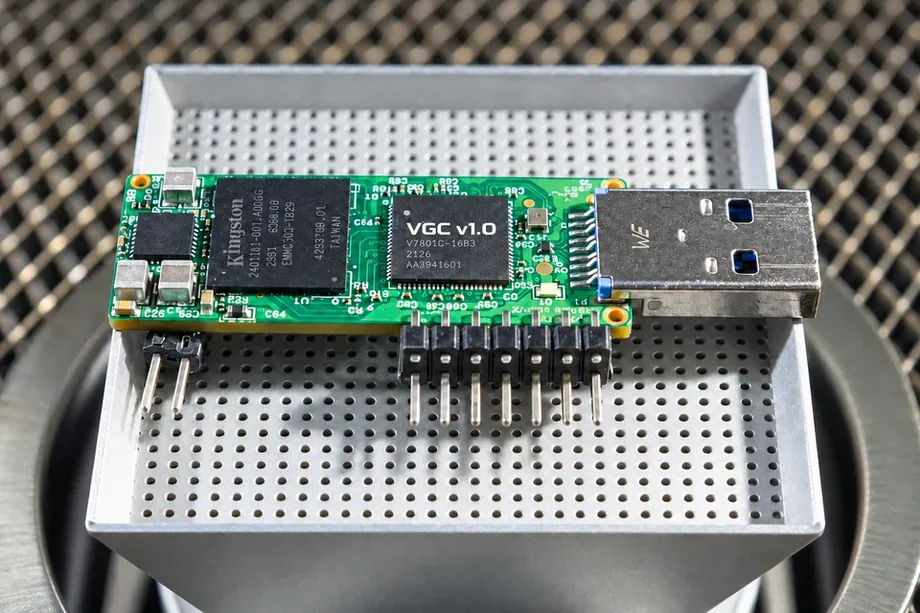
Vietnam's Government Cipher Committee and Viettel unveiled the VGC v1.0 security chip in Hanoi on November 3, 2026, bringing a Vietnamese cryptographic algorithm directly into hardware. The chip contains 300 million transistors inside a package measuring 10 by 10 millimetres, and its next planned destination is a national digital signature authentication system with more than 2 million certificates in circulation.
Contents
- Vietnam puts its own cryptography into silicon
- What is inside VGC v1.0?
- How fast is the cryptographic processor?
- From a joint project to a working USB prototype
- Secure storage comes before digital signatures
- Four commitments shape the next phase
- Why the reusable platform matters
- New cryptography and wider applications
- Hoa Lac connects chip design with manufacturing plans
- Key Points
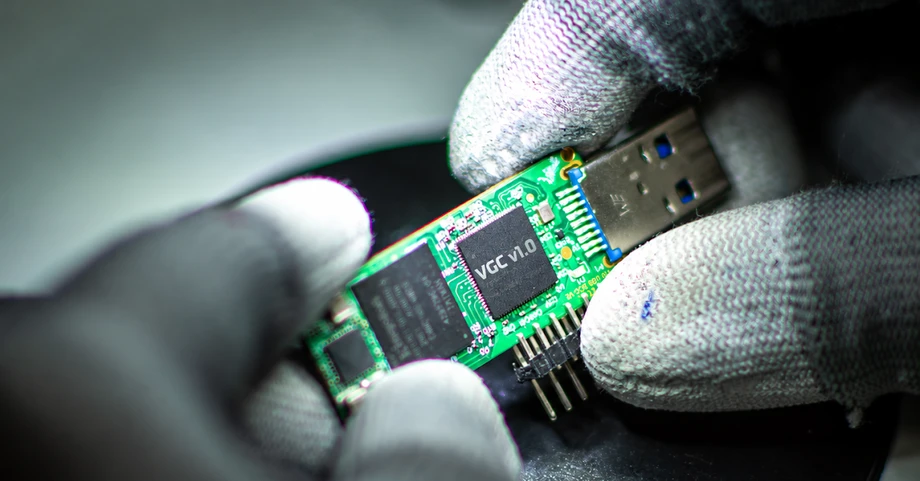
Viettel says testing showed encryption and decryption running approximately 15 times faster than a solution using only software for the same task. The first batch passed technical checks in the first quarter of 2026 and received certification for use in economic and social activities. Engineers completed a prototype secure USB device incorporating the chip in April.
The project took 24 months and involved more than 40 engineers and specialists. It brought together Factory M2 under the Government Cipher Committee and the Viettel Semiconductor Center, known as Viettel Semi. Their work produced both a chip and a reusable design platform intended to support later generations of security processors.
General Phan Van Giang, identified at the ceremony as deputy prime minister and minister of national defence, attended the launch at the Ministry of National Defence auditorium. He described the project as a step toward mastering core technologies and building Vietnam's own secure semiconductor platform.
The immediate practical change is in how Vietnamese cryptography reaches a device. Instead of running the national algorithm entirely as software on an existing processor, VGC v1.0 gives it a dedicated processing block inside the chip. That design connects the country's cryptographic research with the engineering needed to build working electronic products.
What is inside VGC v1.0?
VGC v1.0 uses the MKV block cipher developed by the Government Cipher Committee. A block cipher transforms fixed portions of readable information into encrypted data using a secret key. Someone with the appropriate key can reverse that process and recover the information.
MKV is implemented as a specialised cryptographic processor on the chip. Giving a repeated mathematical task its own circuitry can make it faster than asking a processor to carry out the same work through software instructions.
The processor platform uses RISC-V, an open instruction set architecture. An instruction set is the basic collection of commands a processor understands. Its open specification gives designers a foundation on which to build and adjust their own processor implementations.
Viettel manufactured the chip using a 28 nanometre CMOS process. CMOS is a widely used technology for building integrated circuits, while the process designation identifies the manufacturing technology. Viettel says this choice suits the security chip's requirements and could allow production at its own planned factory in Hoa Lac once that facility is complete.
How fast is the cryptographic processor?
Viettel and the Government Cipher Committee put the encryption and decryption improvement at approximately 15 times the speed of a solution using only software for the same task. Earlier project details put the development team's measured improvement at about 10 times.
Both figures concern cryptographic processing. For users, the relevant benefit is faster handling of the encryption and decryption work needed to protect information. A finished USB device also has to read, write and transfer data, so its practical performance depends on those components as well.
Engineers also protected the chip design before sending it to the fabrication plant. Those measures were intended to reduce the risk of design information leaking or being reconstructed through reverse engineering, the process of examining a product to work out how it was built.
From a joint project to a working USB prototype
Factory M2 and Viettel Semi divided responsibilities across cryptography and chip engineering. The Government Cipher Committee set security requirements, developed algorithms and evaluation criteria, and handled cryptographic core development, integration and inspection. Viettel designed the wider system on the chip and translated the design into an integrated circuit.
The testing involved the authority responsible for civil cryptography management and cryptographic product inspection. Its checks assessed conformity with the cryptographic standards incorporated into the product. The first certificate covered use in economic and social activities.
The project's main disclosed milestones show how the chip progressed into a device:
- Over 24 months, more than 40 engineers and specialists worked on the joint development project.
- In the first quarter of 2026, the first chip batch passed technical checks and received certification for the stated scope of use.
- In April 2026, engineers completed a prototype secure USB device using VGC v1.0.
- On November 3, 2026, the partners publicly launched the chip and platform in Hanoi and signed a further cooperation agreement.
Lieutenant General Vu Ngoc Thiem, head of the Government Cipher Committee, said the chip and devices incorporating it need continued completion, testing, evaluation and inspection for their intended operating environments. Products used to protect state secrets must meet the applicable standards and conditions.
Secure storage comes before digital signatures
Secure USB storage for Party, state and defence agencies is the chip's first application. The April prototype provided a working device in which engineers could integrate the processor and test its intended function.
The next proposed uses are USB tokens for digital signatures and identification chips serving the national digital signature authentication system. A USB token is a small physical device that can hold cryptographic credentials and perform operations needed to sign electronic documents.
A digital signature helps a recipient check who signed a document and whether it changed afterward. A digital certificate connects an identity with the public cryptographic key used in that verification. With more than 2 million certificates in circulation, the national system offers a substantial potential application for the platform.
For organisations, that could bring Vietnamese cryptographic hardware into the handling of electronic contracts, official records and other documents requiring authenticated approval. Integration into the national system is the planned next step, following the initial secure storage application.
Four commitments shape the next phase
Viettel and the Government Cipher Committee signed an agreement covering four areas: production of VGC v1.0 in quantity, development of a secure platform with multiple processor cores, specialist training, and testing and evaluation on actual devices before deployment.
The production plan aims to equip security devices used by the Government Cipher Committee. The platform work would combine multiple processing cores with dedicated cryptographic components for applications requiring greater processing capacity.
Training will cover integrated circuit design, cryptography and hardware security. Bringing those skills together matters because a security chip combines several jobs: defining the mathematics that protects data, designing circuitry to execute it, and checking that the resulting device behaves safely and reliably.
Lieutenant General Tao Duc Thang, Viettel's chairman and general director, described the commitment to further development at the launch:
Viettel is committed to working with the Government Cipher Committee to continue developing generations of security chips mastered by Vietnamese people, meeting the specific requirements of the nation,
The partners have not announced a timetable or volume for mass production, device prices, distribution arrangements or a completion date for the Hoa Lac factory. Those details will determine how quickly the project can move from initial devices into broader use.
Why the reusable platform matters
Viettel's broader objective is to retain designs, engineering methods and verification processes that later chips can inherit. Reusing a tested foundation can reduce the amount of work required when engineers add features or develop a new product.
The company is working on RISC-V processor cores with greater performance and architectures containing multiple cores. Multiple cores allow a chip to divide processing work among several units, while specialised cryptographic blocks can handle security operations.
The Government Cipher Committee and Viettel describe a development process in which new cryptographic algorithms are first checked through simulation, then implemented as dedicated hardware blocks within those wider processor designs. That would allow security functions to be included from the beginning of a product's design.
Google's Titan M on some Pixel devices and Apple's Secure Enclave illustrate the broader use of specialised hardware to protect data and cryptographic keys. VGC v1.0 follows that general direction with its own architecture, functions and Vietnamese cryptographic algorithm.
New cryptography and wider applications
The Government Cipher Committee's research priorities include post-quantum cryptography, lightweight cryptography and encryption with authentication for fast data connections. Each addresses a different practical need that could shape later chip designs.
Post-quantum cryptography aims to resist attacks involving future powerful quantum computers. Lightweight cryptography is designed for devices with limited processing power, memory or energy, such as small connected sensors. Authenticated encryption combines protection of a message's contents with a way to detect unauthorised changes.
Viettel is also targeting chips for artificial intelligence, 6G telecommunications, smart cameras, the Internet of Things, drones and robots. The company describes these as potential dual use products, meaning they could serve civilian and defence needs.
Financial institutions and banks are among the proposed users of security chips to protect records, contracts and customer data. Other possible applications include surveillance cameras, environmental sensors, monitoring stations and information systems supporting electricity, water, oil and gas, and telecommunications.
For those sectors, the partners' approach is to combine processing capabilities with Vietnamese cryptography in the same platform. A connected sensor and a large telecommunications system have very different limits and workloads, which is why the research programme includes both lightweight algorithms and cryptography for high volumes of data.
Hoa Lac connects chip design with manufacturing plans
Viettel's semiconductor factory project in Hoa Lac is the manufacturing counterpart to its chip design ambitions. The company says the selected 28 nanometre process could allow VGC v1.0 to be manufactured there after the plant is completed.
Chip design, fabrication, packaging and testing are separate stages. Designers specify the circuitry, fabrication plants create it on semiconductor wafers, and packaging makes the resulting chip suitable for connection to a device. Testing checks performance and conformity at different stages.
The VGC v1.0 partnership develops domestic expertise in the algorithm, circuit design and verification stages, while the Hoa Lac project is intended to add manufacturing capacity. Together, they form part of Vietnam's stated effort to reduce dependence on imported chips in key sectors and improve security of supply.
The launch was linked to Politburo Resolution No. 57-NQ/TW on science, technology, innovation and national digital transformation, and Prime Minister Decision No. 1018/QD-TTg on Vietnam's semiconductor industry development strategy. The concrete work now centres on producing chips in quantity, testing finished devices and developing the next platform.
Key Points
- Vietnam's Government Cipher Committee and Viettel launched VGC v1.0 in Hanoi on November 3, 2026.
- The chip uses RISC-V, a 28 nanometre CMOS process and a dedicated hardware implementation of the Vietnamese MKV block cipher.
- Viettel gives the cryptographic speed improvement as approximately 15 times that of software for the same task; earlier project details gave about 10 times.
- The first batch passed technical checks in early 2026, and a secure USB prototype was completed in April.
- Planned applications include digital signature tokens and identification chips for a national system with more than 2 million certificates in circulation.
- The cooperation agreement covers production, a platform with multiple cores, specialist training and testing on actual devices.
- Further development includes new cryptographic algorithms, wider civilian and defence applications, and potential manufacturing at Viettel's future Hoa Lac factory.