A 27 hectare project faces a tightening deadline
Vietnam's first semiconductor fabrication plant, a project estimated at US$1.3 billion at Hoa Lac Hi-Tech Park in Hanoi, is unlikely to begin trial production in 2027 as planned. A purchase agreement for essential equipment from Dutch supplier ASML remains unconfirmed, while satellite images taken in January and October 2026 showed no buildings at the site.
Contents
- A 27 hectare project faces a tightening deadline
- What Viettel promised in January
- What the site and company statements show
- Why the ASML negotiations matter
- Why 32 nanometres is an ambitious starting point
- Government support comes with a 2030 condition
- Domestic chip designers are planning around the factory
- Which chips could find buyers?
- Vietnam's existing chip industry offers a different foundation
- Key Points
The pressure concerns more than the start of construction. Viettel's January 16 announcement set a target of completing construction, receiving transferred technology and starting trial production by the end of 2027. The military run telecommunications and defence group then planned to spend 2028 through 2030 improving manufacturing processes and production efficiency.
A person familiar with the project attributed delays to Viettel's lack of experience building chip factories and administrative difficulties in obtaining government funding. Viettel maintains that work is proceeding according to its schedule and that activities are taking place in phases.
The project would give Vietnam a manufacturing capability that remains missing despite substantial investment in chip assembly, testing and packaging. Its intended customers include aerospace, telecommunications, automotive, medical equipment and automation businesses.
Vietnam's timetable also connects to other national plans. A domestic programme for shared chip fabrication expects to work with the plant, while government financial support for a first factory includes a production deadline in 2030. A delay would therefore affect both an industrial project and the research, training and product development activities being planned around it.
What Viettel promised in January
Viettel's groundbreaking announcement, published on January 16, 2026, said the Ministry of National Defence had assigned the project to the company under a government resolution. The 27 hectare site was presented as national infrastructure for chip research, design, experimentation and production, with space for later expansion.
Lieutenant General Tao Duc Thang, Viettel's chairman and chief executive, outlined three tasks for completion by the end of 2027: building the factory, receiving technology and beginning experimental production. The next three years would be used to refine processes and improve the production line to industry standards.
Prime Minister Pham Minh Chinh attended the ceremony and described the factory as part of Vietnam's strategy to participate more deeply in the global semiconductor value chain. Viettel also said the facility would help domestic design companies, technology startups and research institutions shorten the time needed to test and develop products.
The main dates show how several commitments now sit close together:
- February 26, 2025: Proposed support for a first small semiconductor factory was described, including funding tied to production before December 31, 2030.
- January 16, 2026: Viettel held the groundbreaking ceremony at Hoa Lac.
- October 2026: Satellite imagery still showed no buildings at the site.
- First half of 2027: Criteria, procedures and support arrangements for the plant's pilot production laboratory are expected to be completed.
- End of 2027: Viettel's target for completing construction, receiving technology and starting trial production.
- 2028 through 2030: Planned process improvements, leading toward full operation in 2030.
What the site and company statements show
Satellite imagery from Planet Labs PBC in January and Airbus in October showed no buildings on the planned factory site. An October visit also found land covered in vegetation. Those observations put the physical state of the project at the centre of concerns about next year's production target.
Viettel, responding to questions about progress, said the project was:
progressing in line with the established plan and schedule.
The company said activities were being carried out in phases. Vietnam's finance ministry did not respond to requests for comment. No revised production date or detailed public construction timetable accompanied Viettel's response.
The January plan requires several major tasks before a trial run can begin. Alongside the building itself, Viettel needs equipment, trained staff and a manufacturing process that can repeatedly produce working chips. Receiving technology from another company is also part of the announced schedule.
Why the ASML negotiations matter
Three people familiar with the matter said Viettel had been in discussions with ASML for months. The talks included buying a deep ultraviolet lithography machine, usually called DUV equipment. ASML declined to comment on its negotiations with Viettel.
Lithography uses light to transfer extremely small circuit patterns onto a light sensitive coating on a silicon wafer. Later processing turns those patterns into parts of the chip. A wafer is a thin, circular slice of semiconductor material on which many chips are made together.
Some DUV models may be subject to Dutch export controls. The specific models under discussion, and the reasons an agreement had not been reached, were unconfirmed. The procurement question therefore includes both selecting suitable machinery and securing the conditions needed for its delivery and use.
ASML said in October that demand linked to artificial intelligence could leave it unable to fully meet demand for its most advanced equipment over the next two years. Supply constraints for older equipment were described as lighter. Viettel's own prospects depend on the particular machinery it seeks and the outcome of its negotiations.
Vietnam already hosts operations belonging to ASML suppliers Coherent and VDL Enabling Technologies Group. Industry officials said their local facilities mainly serve customers other than ASML. Viettel still needs to secure the equipment and operating arrangements for its own production line.
Why 32 nanometres is an ambitious starting point
Viettel previously described plans to use a 32 nanometre manufacturing process, but that reference was later removed from its website. The company has not publicly disclosed whether it has partnered with an established chipmaker to supply manufacturing technology and expertise.
A process number such as 32 nanometres identifies a generation of chip manufacturing technology. Smaller numbers generally point to newer processes capable of packing more circuitry into a given area, although the number alone says little about whether a process is the best choice for a particular product.
Professor Tran Xuan Tu, director of the Institute of Information Technology at Viet Nam National University, Hanoi, said specialised chips commonly use processes between 32 and 65 nanometres. He identified opportunities in connected devices, information security, unmanned aircraft, electronic identification and artificial intelligence carried out inside devices.
India's Tata Electronics offers a useful comparison. Its US$11 billion project in Gujarat, undertaken with Taiwan's PSMC, plans to begin with 55 and 90 nanometre processes before moving to 28 nanometres. That announced investment is about 8.5 times the US$1.3 billion estimate for Viettel's factory, although the projects have different production plans.
The comparison shows that a much larger project with a named technology partner is also planning a gradual progression. For Viettel, the manufacturing process and the arrangements for acquiring expertise are central parts of delivering the 2027 target.
Government support comes with a 2030 condition
A National Assembly resolution described in February 2025 permits financial support for a first small semiconductor plant serving research, training, trial fabrication, technology verification and production of specialised Vietnamese chips.
Under the stated terms, central government support can cover 30% of project investment, capped at VND10 trillion, if the factory is accepted and brought into production before December 31, 2030. The prime minister selects the company carrying out the task and decides the specific support amount.
The framework also allows a company to allocate up to 20% of its taxable corporate income annually to its science and technology development fund during project preparation and implementation. Allocations for the project cannot exceed its total investment. Land may be assigned without an auction of land use rights or a tender to select an investor.
Nguyen Manh Hung, then minister of information and communications, described the proposal in 2025 as a facility costing less than US$1 billion that would combine research with production on a small scale. The later estimate for Viettel's project is about US$1.3 billion. The earlier description concerned the proposed support framework, while the later figure concerns the announced factory.
The funding rules give the 2030 milestone a practical consequence: production timing forms part of the stated eligibility conditions for direct budget support. The person familiar with Viettel's project cited administrative obstacles in securing government funding, but the amount approved or disbursed for the factory has not been disclosed.
Domestic chip designers are planning around the factory
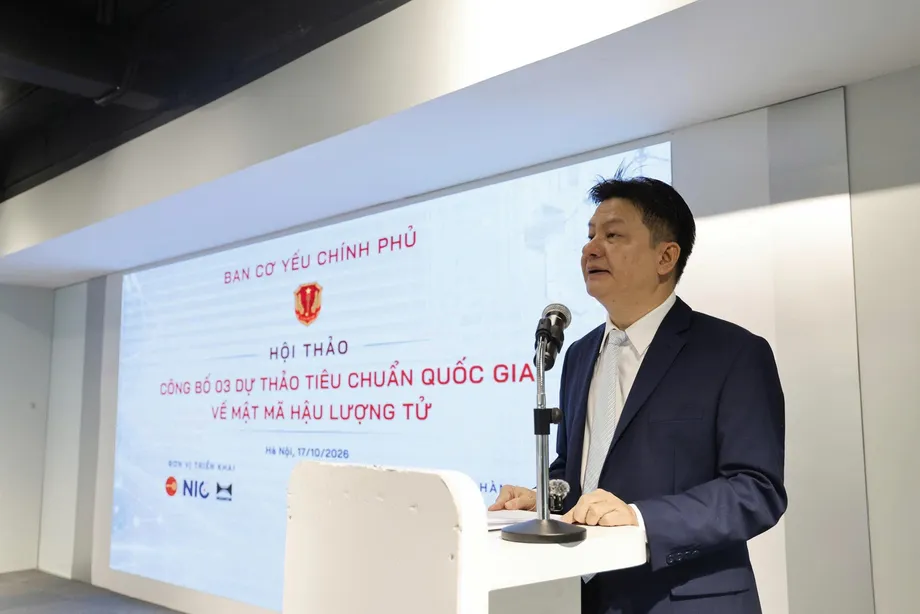
Nguyen Anh Tuan, director of the Viet Nam National Multi-Project Wafer Coordination Center, known as VNMPW/CC, said in October that the Hoa Lac plant was expected to begin pilot production in late 2027. The centre plans to coordinate domestic pilot fabrication runs with the factory.
Multi-project wafer production allows several chip designs to share a single wafer, dividing fabrication costs among different users. It helps companies and researchers obtain small batches for testing before paying for larger production runs. Current pilot fabrication coordinated through this approach still takes place overseas.
VNMPW/CC, which is supported by 21 domestic and international experts, expects the criteria, procedures and support arrangements for the plant's pilot production laboratory to be completed in the first half of 2027. A factory delay would affect the planned availability of a domestic venue for that work.
Nguyen Anh Tuan recommended beginning with one to three products whose customers already help define requirements and conduct trials. He said proposed projects should have measurable technical goals, a target price, clear manufacturing arrangements and commitments from users to test the chips.
Tran Xuan Tu also recommended working with international foundries, companies that manufacture chips for customers, while Vietnam develops its product capabilities. That route allows design and testing work to continue as domestic fabrication capacity is built.
Which chips could find buyers?
Nguyen Anh Tuan identified microcontrollers, secure chips for connected industrial devices, power and battery management chips, image processing chips, and security and signal processing chips for telecommunications as possible priorities. These products connect the factory's ambitions to specific equipment and customers.
Dr Dang Minh Tuan, senior vice president of CMC Technology Group and director of its Institute of Applied Technology Research, recommended testing demand before committing to final chip production. He described using field programmable gate arrays, devices whose logic can be reconfigured, to try designs in working systems and gather customer feedback.
Dang Minh Tuan said Vietnam's software and integration capabilities were useful strengths. He also explained that a commercially usable chip needs development tools, software libraries and reference solutions, so customers can build it into their products.
Viettel has already said it designed a 5G digital front end chip capable of one trillion calculations per second for radio signal processing. That design experience gives the company a connection to telecommunications applications, while the planned factory adds the separate task of manufacturing silicon reliably.
FPT chairman Truong Gia Binh has identified chips that run artificial intelligence within devices as an opportunity for Vietnam. Such edge AI chips process information in cameras, machines or other equipment rather than sending every task to a remote data centre.
Vietnam's existing chip industry offers a different foundation
Intel, Amkor Technology and Hana Micron operate semiconductor assembly, testing and packaging facilities in Vietnam. Samsung Electronics plans a chip testing facility, while FPT announced plans to establish an advanced testing and packaging plant, with its formal announcement scheduled for January 28, 2026.
Assembly and packaging protect manufactured chips and connect them to other electronics. Testing checks whether they work as intended. Fabrication creates the microscopic electronic structures on silicon, adding a different set of equipment, skills and operating requirements.
Viettel's January announcement described chip fabrication as roughly 1,000 consecutive processing steps over three months. A small deviation at one stage can affect later stages, making consistent production a demanding task even after machinery has been installed.
The company said the factory would also serve as a practical training centre. Vietnam aims to train 50,000 chip design engineers by 2030 and expand semiconductor employment to more than 100,000 people by 2040. The design target covers a different set of skills from those needed to operate a fabrication plant, which also requires expertise in equipment, materials and process control.
The factory sits within Vietnam's ambition to achieve growth of at least 10% through 2030 and become a high income economy by 2045. Its immediate test is more concrete: securing machinery and technology, building the production line and making working chips on a repeatable basis.
Key Points
- Viettel's US$1.3 billion factory at Hoa Lac faces a likely delay to its 2027 trial production target.
- January and October 2026 satellite images showed no buildings at the site. Viettel says work remains on schedule.
- Discussions with ASML include DUV lithography equipment, but a purchase agreement remains unconfirmed.
- The original timetable calls for trial production by the end of 2027 and process improvements from 2028 through 2030.
- A national coordination centre plans to use the factory for shared pilot fabrication, which currently takes place overseas.
- The stated government support framework ties direct budget assistance to production before December 31, 2030.
- Vietnam already has substantial chip packaging and testing operations. The Viettel project would add domestic wafer fabrication.