Missed Interest Payment Puts Rp400 Billion Bond in Default
Fitch Ratings Indonesia has downgraded a Rp400 billion senior unsecured bond issued by PT Pos Indonesia (Persero) to D(idn), or default, after the state postal company failed to pay interest due on September 28, 2026, within a contractual grace period of 14 business days. The bond, previously rated C(idn), matures on December 28, 2027.
Contents
- Missed Interest Payment Puts Rp400 Billion Bond in Default
- What Fitch's Default Ratings Mean
- Sukuk Payments Add to the Pressure
- How the Payment Problems Unfolded
- What Investors Will Be Asked to Discuss
- Danantara Plans a Logistics Parent Company
- Financial Repair Extends Into Daily Operations
- Postal and Financial Services Continue
- Key Points
The payment failure has brought two connected plans into focus: negotiations with investors over financial obligations and a proposal to make Pos Indonesia the parent company for a group of state logistics businesses. On October 26, Danantara Chief Operating Officer Dony Oskaria said the company would not be put into bankruptcy and that its finances would be reorganized.
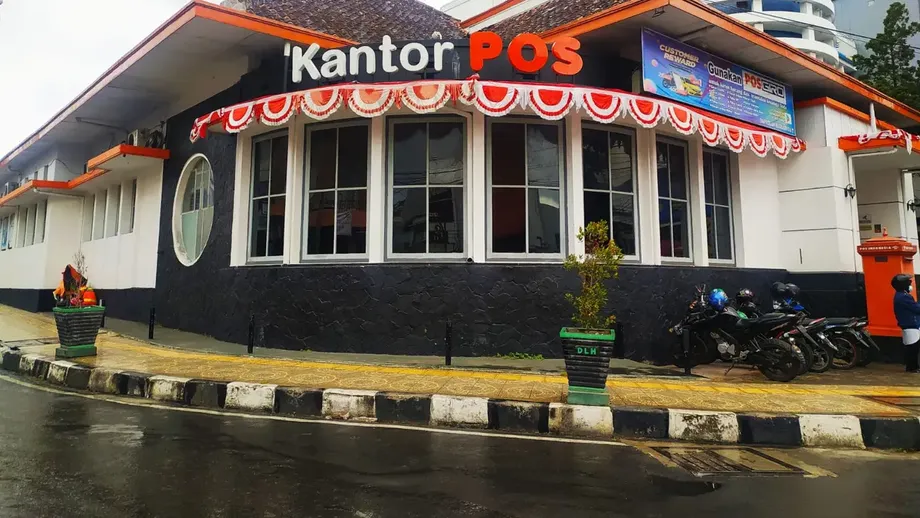
Pos Indonesia, also known as PosIND, says it is preparing meetings with bondholders and holders of Islamic securities in November 2026. Corporate Secretary Iwan Gunawan said the company was accelerating financial restructuring and business transformation while continuing postal, parcel, logistics, financial and government program services.
The immediate problem concerns money owed to investors before the securities reach their final repayment dates. A bond coupon is a scheduled interest payment. Although the Rp400 billion bond's principal falls due in December 2027, its interest must be paid along the way. Fitch's downgrade followed the failure to make one of those earlier payments.
The Rp400 billion figure is the size of the bond, rather than the amount of the missed coupon. The financial repair now involves several obligations, including sukuk, which are securities structured according to Islamic finance principles.
What Fitch's Default Ratings Mean
Fitch treats an unpaid interest or principal obligation as a default when the payment remains outstanding after any grace period allowed by the security's terms. A grace period gives the borrower extra time to settle a missed payment before that contractual threshold is reached.
The D(idn) rating applies to the affected bond. The suffix identifies Fitch's Indonesian national rating scale. Senior unsecured means the debt has a senior claim under its terms but has no specific assets pledged as collateral to its holders.
Pos Indonesia's National Long Term Rating had already fallen from C(idn) to RD(idn), meaning Restricted Default, on September 18, 2026. That company rating decision preceded the September 28 coupon deadline. The subsequent bond downgrade reflects the missed payment on that particular instrument after its grace period expired.
Restricted Default is used when an issuer has defaulted on an obligation while continuing to operate. The practical picture at Pos Indonesia therefore includes both a payment default affecting creditors and a business that says it is still serving customers.
Sukuk Payments Add to the Pressure
Fitch also lowered the rating on Pos Indonesia's second stage sukuk from C(idn) to D(idn) after an unpaid ijarah return installment. Ijarah is a lease based Islamic finance structure, under which investors receive agreed payments connected to the use of assets.
A further obligation involved the company's first stage sukuk, worth Rp1 trillion. Fitch said an ijarah return installment due on October 8, 2026, remained unpaid, although it was still within its contractual grace period of 14 business days at the time of that assessment.
The Rp1 trillion figure describes the sukuk issue, rather than the overdue installment. Its Series A, B and C mature in January 2028, January 2030 and January 2032 respectively. Like the conventional bond, these securities require payments before the final maturity dates.
The first stage sukuk is 2.5 times the size of the Rp400 billion bond, based on their stated issue amounts. That comparison shows the scale of the instruments involved; the cash required to settle the overdue payments depends on the installments themselves.
How the Payment Problems Unfolded
September and October brought several distinct rating and payment events. Keeping them in order helps explain why the company and individual securities carried different default designations.
- September 18, 2026: Fitch lowered Pos Indonesia's National Long Term Rating from C(idn) to RD(idn).
- September 28, 2026: The coupon on the Rp400 billion bond fell due. It remained unpaid through the contractual grace period of 14 business days, leading to the bond's downgrade to D(idn).
- October 8, 2026: An ijarah return installment on the Rp1 trillion first stage sukuk fell due. Fitch subsequently described it as unpaid but still within its grace period at the time of assessment.
- October 26, 2026: Pos Indonesia outlined its restructuring response, while Dony said it would become a logistics holding company and would not be put into bankruptcy.
- November 2026: Pos Indonesia plans meetings with bondholders and sukuk holders to discuss proposed changes to its financial obligations.
The November meetings move the process toward discussions with the people and institutions holding the debt. Pos Indonesia says it intends to settle its obligations through the applicable procedures and rules.
What Investors Will Be Asked to Discuss
Pos Indonesia is preparing a General Meeting of Bondholders, known by the Indonesian abbreviation RUPO, and a General Meeting of Ijarah Sukuk Holders, or RUPSI. These meetings provide a formal setting for discussing restructuring proposals with investors.
Financial restructuring means changing how obligations are managed or repaid so a company can address payment pressure. For creditors, the central questions are when they will receive money and what terms the company will propose. Pos Indonesia has announced the planned discussions, but has not disclosed the proposed repayment changes or exact November meeting dates.
Iwan said the company was coordinating with shareholders, creditors and other parties as the program proceeds. He described the work as a broad effort covering financial obligations, cash management, operating efficiency, assets, the distribution network and productive business development.
Investors therefore face a process that extends beyond paying one overdue coupon. The company is seeking to reorganize its finances while changing parts of its business, with creditor discussions forming one part of that effort.
Danantara Plans a Logistics Parent Company
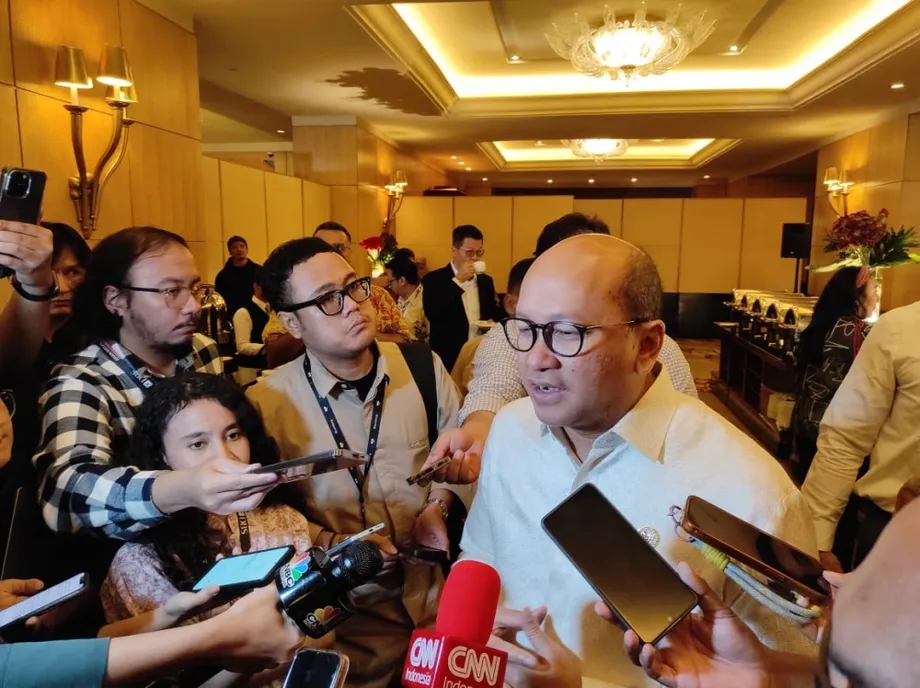
Dony said on October 26 at the Fairmont Hotel in South Jakarta that other state logistics businesses would be consolidated into Pos Indonesia. A holding company serves as the parent of a group of businesses, bringing them under a common corporate structure.
Dony, Danantara's chief operating officer, rejected the prospect of putting Pos Indonesia into bankruptcy and linked that position to its intended role. In Indonesian, he said:
PT Pos itu kan akan menjadi holding logistik kita.
His statement means Pos Indonesia is intended to become the group's logistics holding company. Dony said other businesses would enter the group through Pos Indonesia while its finances were put in order.
About 4,000 distribution channels were a central reason for choosing the company, according to Dony. That network gives the proposal an existing operational base. For a logistics business, distribution locations help connect the collection, movement and delivery of goods.
Dony's comments describe an ownership and business reorganization alongside the financial restructuring. Creditors are dealing with overdue payments today, while the holding company proposal concerns how state logistics operations would be organized.
Financial Repair Extends Into Daily Operations
Iwan's description of the recovery program places cash management alongside changes to the business itself. Liquidity, one of the company's stated priorities, means having enough money available when payments fall due. A business can have assets and customers while still struggling to find cash for a scheduled obligation.
Pos Indonesia plans to review its financial commitments, manage cash more closely, improve operating efficiency and make better use of its assets and network. It also wants to develop businesses that generate more productive and competitive activity.
Iwan said financial restructuring needed to proceed together with business and operational transformation. The aim is to address immediate cash pressure while building a healthier financial structure and a business able to keep operating over time.
The proposed logistics group and the review of Pos Indonesia's network are connected in practical terms. Dony sees the distribution channels as a base for the group, while the company lists better use of its network among its recovery priorities. Both plans place existing operations at the center of the response.
Postal and Financial Services Continue
Pos Indonesia says letter and parcel deliveries, logistics, financial services and services supporting government programs remain in operation during the restructuring. For customers, that means the company continues to accept and carry out its service responsibilities while it negotiates with creditors.
Iwan also said the company was working to improve service quality and strengthen relationships with customers and business partners. Keeping those relationships matters to the recovery program because the business transformation is intended to proceed alongside financial repair.
Pos Indonesia has pledged to conduct the process transparently and accountably, following corporate governance principles. It says material developments will be announced through its official channels under the applicable disclosure rules.
The next scheduled step is the planned November creditor meetings. Those discussions will bring the company's promise to address its obligations before bondholders and sukuk holders, while Danantara pursues its plan to organize state logistics businesses around Pos Indonesia.
Key Points
- Fitch lowered Pos Indonesia's Rp400 billion bond to D(idn) after a September 28 coupon remained unpaid beyond its grace period.
- The company's National Long Term Rating had already fallen to RD(idn) on September 18.
- The second stage sukuk was also downgraded to D(idn). An installment on the Rp1 trillion first stage sukuk was unpaid but still within its grace period at Fitch's assessment.
- Bondholder and sukuk holder meetings are planned for November 2026 to discuss restructuring proposals.
- Danantara intends to make Pos Indonesia a logistics holding company, drawing on about 4,000 distribution channels.
- Pos Indonesia says postal, parcel, logistics, financial and government program services continue operating.