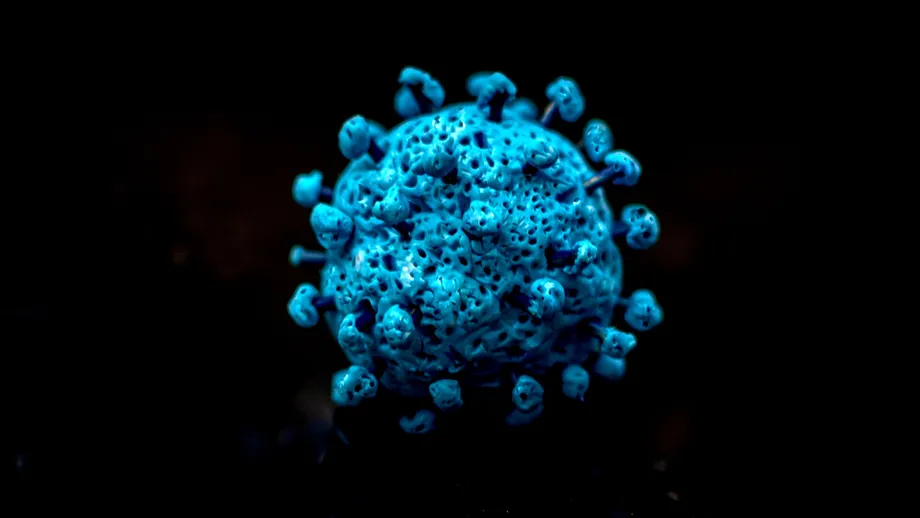
A vast viral community beneath the mining grounds
Scientists studying sediments from the Pacific Ocean's Clarion-Clipperton Zone have identified 11,742 distinct viruses, including 11,662 previously unrecorded varieties, in an area attracting intense interest from companies seeking metals from the seabed. The newly identified viruses account for more than 99% of the total, revealing a largely uncatalogued part of an ecosystem that mining could disturb.
Contents
- A vast viral community beneath the mining grounds
- How researchers found the hidden viruses
- What these viruses do in the seabed
- Why the same seabed attracts miners
- Disturbance can reach beyond the collector tracks
- A return to the 2021 mining trial
- Protected areas have few routes between them
- Where recovery could come from
- Decisions are approaching while surveys continue
- Key Points
The research, published in Nature Communications, involved Bowen Hou and Lilan Zhang of Chongqing University and Dong Sung of China's Second Institute of Oceanography. Their team examined more than 60 sediment samples collected in 2023 and 2024 from the region between Hawaii and Mexico, where the ocean reaches depths of about 6,000 metres.
Most of the viruses appear adapted to infect bacteria and archaea, two groups of microscopic organisms that help recycle nutrients in the seabed. The findings concern the workings of a remote ecosystem, with little apparent direct threat to human health.
The discovery comes as researchers investigate two connected problems: how mining might alter the seabed's microscopic communities, and whether protected areas could help damaged habitats recover. A separate computer modelling study suggests that the region's 13 protected areas exchange very few animal larvae, while a European expedition is examining damage left by a mining equipment trial in 2021.
Together, these investigations put specific numbers behind a difficult conservation problem. Scientists are still identifying the organisms living in the mining zone while governments and companies consider activities that would remove their habitat and disturb the sediment around it.
How researchers found the hidden viruses
The Chinese research team extracted DNA and RNA, molecules that carry genetic information, from sediment cores collected during the two sampling years. They used metagenomic sequencing, a method that reads genetic material from a mixed environmental sample rather than requiring each organism to be grown separately in a laboratory.
The approach lets scientists search a small amount of mud for genetic traces of many viruses at once. Comparisons with existing sequences then help them identify distinct viral groups and investigate which organisms those viruses may infect.
Only about 4% of the protein clusters identified in the study matched existing global databases. Proteins perform many of the jobs inside cells and viruses, and researchers group similar proteins to look for shared functions or evolutionary relationships. The low match rate shows how little of this deep ocean genetic diversity has been catalogued.
The two headline percentages describe different measurements. More than 99% refers to the viruses that had not previously been recorded; about 4% refers to matches between protein clusters and database entries. Both point to a community with limited representation in existing scientific records.
What these viruses do in the seabed
Bacteria and archaea carry out chemical reactions that move carbon, nitrogen, phosphorus, sulphur and metals through deep ocean sediments. In a place without sunlight, those reactions help sustain the local food web and determine how materials are stored or released.
Viruses influence these processes by infecting microbial hosts. Some carry auxiliary metabolic genes, genetic instructions that can change how an infected cell processes nutrients or copes with its surroundings. The team identified genetic clues suggesting that viruses in the nodule fields may influence microbial metabolism, including possible responses to metal stress.
Those functions still need further investigation. Genetic sequences give researchers a way to identify possible activities; measurements of living communities are needed to establish how those activities operate across the seabed.
The researchers described the purpose of their survey in Nature Communications:
vital pre-mining baseline of microbial ecosystem for future environmental impact assessments.
A baseline is a record of conditions before an activity begins. Here, it gives future surveys a starting point for tracking changes in viral communities, their hosts and the chemical processes they support.
Why the same seabed attracts miners
The Clarion-Clipperton Zone contains the world's largest known accumulation of polymetallic nodules. These lumps contain manganese, nickel, cobalt and other metals sought for industrial uses, including electronics and batteries.
The International Seabed Authority has granted 31 contracts for deep ocean mineral exploration, according to the figures accompanying the virus research. Seventeen are in the Clarion-Clipperton Zone, including five held by China. Exploration contracts allow investigation of deposits and environmental conditions; commercial extraction requires a further regulatory process.
Nodules also provide hard surfaces on a seabed otherwise dominated by fine mud. Animals attach to them, and some of those animals provide shelter for others. Removing a nodule therefore removes both mineral material and a place to live.
Dr Matthias Haeckel, a biogeochemist at the GEOMAR Helmholtz Centre for Ocean Research Kiel and chief scientist of the SONNE expedition investigating mining impacts, described their inhabitants:
Typically, we find two to three small organisms on each nodule,
Nodule growth is exceptionally slow. Haeckel's expedition account gives a rate of about one to two millimetres per million years. Rates vary among nodule types and locations, but rebuilding these habitats takes geological time, far beyond the duration of a mining project.
Disturbance can reach beyond the collector tracks
Mining vehicles would remove nodules and churn up surface sediment. Fine particles can rise into the water, drift and settle again, covering organisms outside the collector's immediate path. Animals fixed to nodules have little opportunity to escape.
Haeckel explained how that settling material can affect different animals:
Some organisms can clean themselves, others cannot. Those that filter their food from the water are also very likely to be affected,
The virus study points to another layer of disturbance beneath the visible animals. Shifting sediment could change where viruses and their hosts live, how they encounter one another and how microbial communities process nutrients and metals. Earlier disturbance experiments cited by the authors found effects in nodule field sediments lasting decades.
The team also identified a possible source of partial recovery: viral populations and genetic functions shared by deeper and surface sediments. Deeper communities might contribute to rebuilding some surface communities after disturbance. The extent of that contribution, and the effects of mining on these viruses and their hosts, remain unknown.
A return to the 2021 mining trial
The research vessel SONNE's SO322 expedition is examining a Clarion-Clipperton Zone site where Belgian company Global Sea Mineral Resources tested a remotely controlled collector in spring 2021. The trial took place at depths exceeding 4,000 metres.
Over 74 hours, the machine travelled about 32 kilometres and collected nodules across 54,000 square metres. That is 5.4 hectares, an area large enough to let researchers investigate both the tracks themselves and surrounding sediment affected by the trial.
The expedition brings together 39 researchers from 17 institutions in seven European countries. Its equipment includes the remotely operated vehicle KIEL 6000, the autonomous underwater vehicle ABYSS, instruments placed on the seabed and sediment sampling devices. The work forms part of MiningImpact, a research programme studying potential mining effects since 2015.
Scientists plan to examine habitats on the seabed and in the water, assess how long sediment plume effects persist and investigate whether artificial hard surfaces could support recolonisation where nodules have been removed.
Haeckel described the scale of the remaining identification work:
Many species in the CCZ are extremely rare; about 90% of the species that we have sampled so far are still unidentified and have no name. And no one knows how many species are still to be discovered,
That estimate concerns species sampled by the expedition researchers, while the virus study's 99% figure concerns newly recorded viruses in its sediment survey. Each measures a different part of the region's poorly catalogued biodiversity.
Protected areas have few routes between them
A study led by Molly Kendall James and colleagues, published in Nature Ecology & Evolution, examined whether the Clarion-Clipperton Zone's 13 Areas of Particular Environmental Interest function as a connected conservation network.
Many seabed animals begin life as larvae carried by currents. If larvae can travel between protected areas, populations may exchange genes and supply new individuals to other locations. The researchers modelled that movement using ocean circulation data and more than 68 million simulated particles per run.
The particles represented larvae drifting near the seabed for 19, 35 or 69 days. Simulations covered January and July in both 2019 and 2023. Even at the longest duration, median travel distances stayed below 100 kilometres, compared with gaps of roughly 200 to 800 kilometres between protected areas.
Only five of 156 possible direct connections between reserves showed any exchange. Fewer than 0.02% of simulated larvae released from one protected area reached another, and three routes accounted for more than 99% of transfers between reserves.
The model kept larvae within roughly 10 metres of the seabed. Actual larval lifespans in the region are poorly known, and swimming higher into different currents could change their journeys. The results describe the connections expected under those specific conditions, giving planners a testable starting point.
Where recovery could come from
Mining areas in the model received 76% of their settling larvae from within mining zones themselves, 19% from unprotected areas outside mining zones and just 5% from the protected network. Local populations therefore supplied most of the simulated replenishment before disturbance.
The researchers then tested a scenario in which mining areas stopped supplying larvae. Unprotected areas outside mining zones provided 81% of the remaining settlers, while protected areas supplied 19%. That shift shows why habitat outside designated reserves can matter greatly to recovery.
The team identified 53 proposed corridor cells, each measuring 100 by 100 kilometres, that could connect existing reserves through intermediate habitat. Their combined area would be 530,000 square kilometres.
Protecting those cells enabled 151 indirect pathways in the model and increased movement between reserves by a factor of 406. The proportion of particles released from protected areas that reached another protected area rose from about one in 5,556 to one in 14.
Only 11% of the proposed corridor area overlapped existing contract zones. Under the disturbance scenario, the expanded protected network supplied 36% of remaining settlement in mining areas, compared with 19% under the existing arrangement.
The model examined the loss of larval sources. Sediment plumes, noise and other effects extending beyond mining boundaries would require further assessment. Its practical contribution is to identify places where protecting additional habitat could improve routes between populations.
Decisions are approaching while surveys continue
The evidence now spans genetic surveys, ocean circulation models and direct examination of a mining trial site. Each addresses a different part of the same decision: what could be lost, how disturbance spreads and where recovery might begin.
The main events and announced next steps include:
- 2015: MiningImpact began studying the environmental effects of potential mining in the deep ocean.
- Spring 2021: Global Sea Mineral Resources tested its collector in the Clarion-Clipperton Zone.
- 2023 and 2024: Researchers collected sediment samples used in the virus survey.
- SO322 expedition: Scientists are investigating the legacy of the 2021 trial and possible routes to recolonisation.
- November 19, 2026: Two United States seabed lease sales off American Samoa are scheduled, according to the announced plan.
The American Samoa proposal concerns a different Pacific location from the Clarion-Clipperton Zone. The two proposed lease areas cover more than 31 million acres combined and sit beside the Rose Atoll Marine National Monument. Governor Pulaali'i Nikolao Pula has opposed commercial mineral extraction in the territory's waters.
The United States proposal illustrates the wider pressure to open Pacific seabed deposits while ecological investigations continue. In the Clarion-Clipperton Zone, the new virus catalogue offers a concrete tool for environmental assessment: researchers can now look for changes in thousands of previously unrecorded viral groups, alongside changes in animals, sediment chemistry and connections between habitats.
For conservation planning, the studies point to two tasks that must proceed together. Scientists need to understand the organisms and processes within a patch of seabed, while regulators need to consider how that patch connects to surrounding areas. Removing nodules affects the first; disrupting routes for recolonisation affects the second.
Key Points
- Researchers identified 11,742 viruses in Clarion-Clipperton Zone sediments, including 11,662 previously unrecorded varieties.
- Most appear associated with bacteria and archaea and may influence nutrient cycling and responses to metals.
- Sediment disturbance could affect viral communities as well as animals living on nodules.
- A circulation model found only five direct connections among 156 possible routes between 13 protected areas.
- Adding 53 proposed habitat corridors greatly increased connections in the model.
- The SONNE expedition is examining the effects of a 2021 mining trial to inform environmental assessments and regulation.