A village mystery with a longer history than first reported
Kazakhstan's National Nuclear Center recorded more than 140 episodes of a mysterious sleeping illness by January 19, 2015, in an investigation that eventually lasted from April 2014 to November 2016. Residents of Kalachi and nearby Krasnogorsk in northern Kazakhstan were falling into prolonged states of sleep or unconsciousness, sometimes lasting up to six days.
Contents
- A village mystery with a longer history than first reported
- What happened to the people affected?
- How the investigation unfolded
- Why investigators examined the uranium mine
- What the air measurements showed
- Why the official explanation became less simple
- Why groundwater remains a different hypothesis
- Relocation changed lives before the science was settled
- What the end of reported episodes leaves unanswered
- Key Points
The center's account also places the first symptoms in July 2012, earlier than the spring 2013 starting point widely associated with the outbreak. More people sought medical help in 2013, when the illness began attracting public attention.
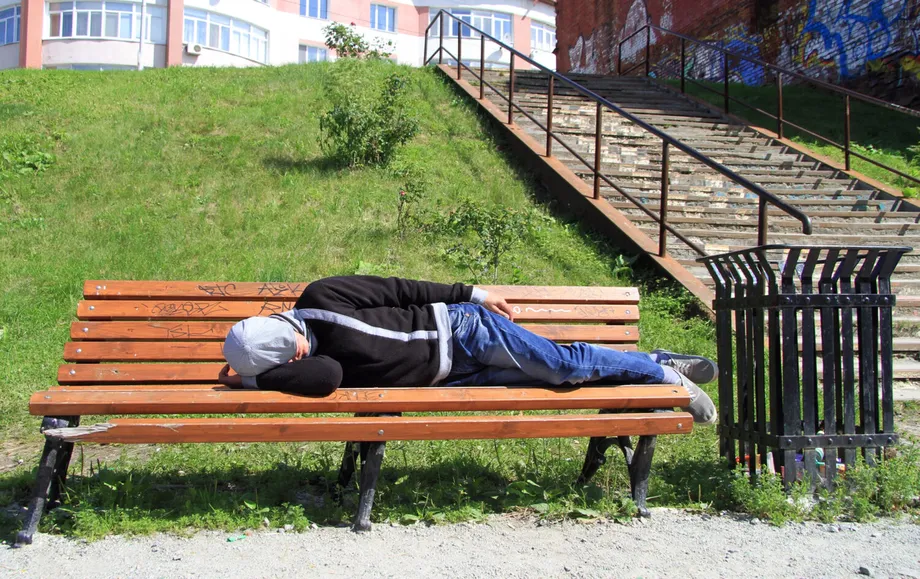
Children fell asleep at school. Adults became incapacitated during ordinary activities. Some patients experienced repeated episodes, followed by headaches, weakness, memory loss and confusion. Residents also described frightening hallucinations.
Officials eventually pointed to carbon monoxide and other gases, while researchers at Nazarbayev University proposed contamination of shared groundwater. The most detailed official environmental account describes a possible combination of pollutants and reduced oxygen, rather than a single confirmed trigger.
The investigation therefore leaves two connected stories: a serious illness that disrupted village life, and a search for its cause in which public declarations sounded more definite than the later scientific account.
What happened to the people affected?
Kalachi resident Viktor Kazachenko described losing consciousness while travelling by motorcycle with his wife. He said he set out on August 28 and became aware of his surroundings again in hospital on September 2. It was his second episode; the first had lasted three days.
Kazachenko, explaining the sudden loss of awareness, said:
My brain switched off.
His recovery extended beyond waking up. He described severe headaches, rising blood pressure and lasting distress. Other residents reported dizziness, nausea and exhaustion that continued after the prolonged sleep ended.
Igor Samusenko, whose son was affected, described the difficulty of waking a child during an episode:
If you try to wake him, it seems he wants to open his eyes, but can't. He just sleeps and sleeps.
Doctors used the description "encephalopathy of an unknown origin" for some patients. Encephalopathy means a disorder affecting how the brain works; the wording reflected the uncertainty about what was making people ill.
Counts varied because some residents became ill several times. By March 2015, accounts described more than 120 affected residents and 152 episodes, including two on March 1. The National Nuclear Center's earlier figure of more than 140 also counted recorded episodes. Keeping people and episodes separate is necessary when describing how widely the illness spread.
How the investigation unfolded
Kazakhstan mobilised a broad investigation. By the end of 2014, more than 20,000 laboratory and clinical tests had examined air, soil, water, food, animals, building materials and residents. Patients were also sent to hospitals in Astana for further examinations.
The main developments stretched across several years:
- July 2012: The National Nuclear Center's later account dates the first recorded symptoms to this month.
- 2013: More residents sought medical help, and public attention grew.
- April 2014: The center began its comprehensive environmental investigation.
- January 2015: Relocation was under way, and the center recorded more than 140 episodes by January 19.
- March 2015: The reported total reached 152 episodes.
- 2015: Deputy Prime Minister Berdibek Saparbaev announced an explanation involving carbon monoxide, hydrocarbons and reduced oxygen.
- November 2016: The center's comprehensive study ended.
- May 23, 2022: The center published a retrospective account of its findings.
- November 10, 2023: Institute director Asan Aidarkhanov again identified carbon monoxide as a likely cause.
The National Nuclear Center study is particularly useful because it brings together measurements, proposed explanations and observations from monitoring after the main outbreak period.
Why investigators examined the uranium mine
The abandoned Soviet uranium mine beside the settlements was an obvious focus for residents and investigators. It had closed in the 1990s, leaving behind workings that could be examined as possible sources of radiation, gases or contamination.
The National Nuclear Center measured a gamma radiation background of 0.10 to 0.12 microsieverts per hour, which it described as normal. Checks of residents found no elevated or excessive amounts of radioactive substances in their bodies.
The environmental survey did identify isolated fragments of rock containing more natural uranium, associated with former mining activity. Across the wider village environment, however, the center described natural radioactive substances as typical for Kazakhstan.
Radon required separate examination. This radioactive gas can escape naturally from uranium bearing ground and collect inside buildings. The center reported maximum concentrations of 1,500 becquerels per cubic metre in living spaces and 15,000 in basements. A becquerel measures radioactive decay, while the volume indicates how much air contained it.
Average indoor radon concentrations were 180 becquerels per cubic metre in 2015 and 130 in 2016. Those averages were much lower than the highest individual measurements, showing how much conditions could vary between spaces.
The center sent radiation findings to the National Radiation Protection Institute in Prague and Russia's Medical-Biological Agency. Their assessments supported its conclusion that radiation was unlikely to explain the sleeping syndrome. Investigators then concentrated more closely on the composition of the air people breathed.
What the air measurements showed
The National Nuclear Center reported average indoor carbon monoxide concentrations of 10 milligrams per cubic metre and carbon dioxide concentrations of 0.1%. It also detected hydrocarbons, including benzene, toluene and forms of xylene, with concentrations varying over time.
Carbon monoxide, or CO, interferes with the blood's ability to carry oxygen. Carbon dioxide, or CO2, is a different gas. Oxygen is the gas the body needs to keep the brain and other organs functioning. Investigators considered whether changes in several of these gases together could explain the symptoms.
Oxygen concentrations sometimes fell to 19.5% during periods lasting four to six days, according to the center. Its account says episodes became more frequent when carbon monoxide and carbon dioxide increased while oxygen decreased.
Sergey Lukashenko, then director of the center's institute for radiation security, said in January 2015 that carbon monoxide in some affected homes was ten times higher than recommended. He said such exposure could cause symptoms resembling those experienced by residents.
The center also found excessive carbon monoxide during stove use. This brought a source inside village homes into the investigation alongside the possibility of gases travelling upward through geological structures from underground.
Its researchers examined carboxyhaemoglobin in residents' blood as an indicator of carbon monoxide exposure. Carboxyhaemoglobin forms when carbon monoxide attaches to the protein that normally carries oxygen. The retrospective account describes this testing without presenting patient results that connect each episode to a measured exposure.
Why the official explanation became less simple
Deputy Prime Minister Berdibek Saparbaev presented the gas explanation as a resolution in 2015. He connected the illness to the closed uranium mine and described carbon monoxide accumulating there.
Saparbaev, announcing the government's explanation, said:
The oxygen in the air is reduced accordingly, which is the real reason for the sleeping sickness in these villages.
The National Nuclear Center's later account used more cautious language. It proposed that breathing an altered mixture of air, containing less oxygen, more carbon monoxide and carbon dioxide, and volatile organic compounds, could account for the syndrome.
One observation complicated the picture: during a year of gas monitoring, investigators detected elevated carbon monoxide and nitrogen dioxide while recording no sleeping syndrome episodes. The center concluded that several factors might need to coincide under particular conditions, and said it could not predict when that combination would occur.
Asan Aidarkhanov, director of the center's Institute of Radiation Safety and Ecology branch, returned to carbon monoxide in November 2023. He suggested stove use and the village's position in a low lying area as possible contributors. His explanation placed more weight on household combustion and local geography than the earlier public account centred on the mine.
Aidarkhanov also described monitoring as finding no readings above limits, whereas the center's detailed retrospective records elevated gas concentrations and excessive carbon monoxide during stove use. His brief description leaves unclear which measurements, substances or monitoring periods he meant.
Why groundwater remains a different hypothesis
Nazarbayev University researchers proposed chemical contamination of shared groundwater, possibly connected to mining waste. Their statistical model examined a different route of exposure: substances entering water used by residents rather than gases entering the air.
The team acknowledged that confirming its hypothesis required physical access to the mine workings. The proposed chemical source and its movement through the ground therefore remained unconfirmed.
Air and groundwater explanations call for different investigations. The gas hypothesis requires measurements of what people breathed around the time they became ill. The groundwater hypothesis requires identification of the chemical involved, its route into the water supply and the amount residents consumed.
Early accounts described water and soil samples without abnormal readings. The university's later model kept attention on the possibility of a contamination route that would need more direct examination.
The gas explanation has the stronger record of direct environmental measurements: investigators recorded carbon monoxide, other pollutants and changing oxygen concentrations. The remaining task is to connect a particular exposure, or combination of exposures, to the timing and severity of individual illnesses. No final account identifying that connection for all episodes has been presented.
Relocation changed lives before the science was settled
Kazakhstan began moving residents while the investigation continued. In January 2015, more than half of Kalachi's reported population of 582 planned to relocate. Saule Agymbayeva, deputy head of Esil district, said families with children would receive priority.
By March, around 100 people had been resettled, while 425 remained in Kalachi. Another stage of the evacuation recorded 68 of 223 families relocated, approximately 30%. These figures describe different moments in the programme and use different units, people in one case and households in the other.
Authorities offered new homes and jobs elsewhere in the Akmola Region. Kalachi mayor Asel Sadvokasova, who had herself experienced an episode, described the programme as voluntary. Officials promised to maintain services, including schools and medical care, until the last resident agreed to leave.
For residents with homes, work and family histories in the village, moving carried its own uncertainty. Kazachenko resisted leaving after four decades there. His wife Raisa described a lifetime rooted in the same street.
Raisa Kazachenko, explaining her concern about resettlement, said:
Now where will they send me? What's awaiting me there?
For those families, the immediate decision concerned where to live safely and how to rebuild daily life, even as scientists continued debating the cause.
What the end of reported episodes leaves unanswered
Episodes declined and were reported to have stopped as relocation progressed. The National Nuclear Center's monitoring also included a period without recorded cases. The relationship between relocation, changing environmental conditions and the disappearance of illness remains uncertain.
A November 2023 account included a brief reference to another eight affected people, but supplied no date or clinical detail for those cases. It gives no usable timeline for a new outbreak.
Kalachi's central unresolved issue is now quite specific: which substance or combination of conditions caused prolonged unconsciousness, why only some residents became ill, and why episodes occurred at particular times. Investigators gathered extensive environmental data, yet the proposed explanations still need a firm connection between exposure and illness.
The experience also changed the meaning of safety for the village. Residents faced the risk of suddenly becoming incapacitated, the burden of recovery and the prospect of leaving home. Those consequences were concrete long before the investigation produced a complete explanation.
Key Points
- The National Nuclear Center dates the first symptoms to July 2012 and recorded more than 140 episodes by January 19, 2015.
- Residents experienced prolonged sleep or unconsciousness, sometimes followed by memory loss, headaches, weakness and hallucinations.
- Radiation assessments led investigators away from radiation as the cause.
- Environmental testing detected carbon monoxide, other gases and periods of reduced oxygen.
- The center proposed a possible combined effect of several air pollutants, while university researchers proposed groundwater contamination.
- Families were relocated while investigations continued, with priority given to households with children.
- A definitive connection between a specific exposure and all the recorded illnesses remains unresolved.