A controlled reaction starts the next phase at Rooppur
Bangladesh's first nuclear power reactor achieved a controlled, self sustaining chain reaction at 3:34 p.m. on October 11, 2026, moving the Rooppur project into a new commissioning phase. The next major tests extend beyond the reactor itself: engineers must check equipment at increasing power levels, prepare the generator for connection to the national grid and complete further regulatory procedures.
Contents
- A controlled reaction starts the next phase at Rooppur
- What first criticality means inside the reactor
- November targets depend on testing
- How Rooppur reached this stage
- Emergency preparations face a November review
- Safety systems and the people responsible
- How much electricity could Rooppur contribute?
- The financing extends beyond startup
- Russia supplies the fuel, with regional training support
- Key Points
The Russian Embassy in Bangladesh announced on October 13 that Unit 1 had reached its minimum control level. The project schedule points to first electricity around November 20, while Rosatom expects grid connection by the end of November. Commercial operation is scheduled separately for December 2026.
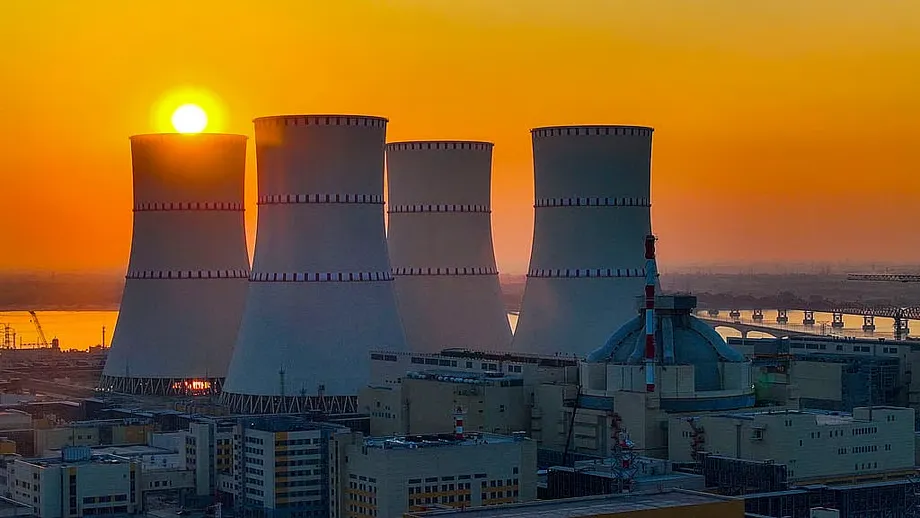
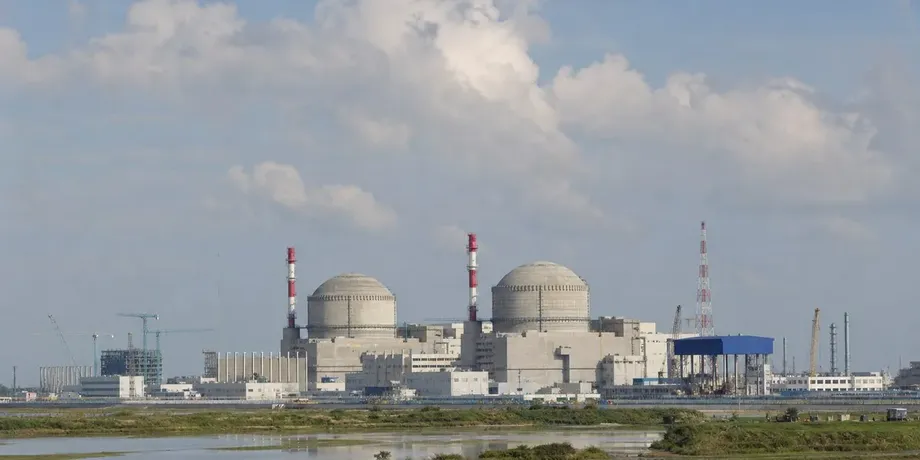
Rooppur stands in Ishwardi, Pabna, about 160 kilometres northwest of Dhaka. Its two Russian designed VVER-1200 reactors each have a planned gross generating capacity of 1,200 megawatts, giving the station a combined capacity of 2,400 megawatts.
Md Anwar Hossain, secretary of the Ministry of Science and Technology, said the reaction began after regulatory approval and the completion of required compliance procedures, technical checks and external certifications. He described the commissioning team's initial results:
For the first time, the commissioning team began the fission reaction at unit-1 today. We successfully started the process while every parameter performed according to design,
The October 11 start of controlled fission followed permission from the Bangladesh Atomic Energy Regulatory Authority, or BAERA, to advance into the next commissioning stage. For electricity consumers, the immediate change is progress toward a new source of supply; delivery still depends on the tests that follow.
What first criticality means inside the reactor
Uranium atoms inside the reactor split in a process called nuclear fission. Each split releases heat and particles called neutrons, which can cause other uranium atoms to split. First criticality occurs when this process sustains itself under the reactor's controls, initially at very low thermal power.
Operators monitor the reaction and keep it within prescribed limits. In this setting, criticality is the technical name for a stable operating condition. The October 11 achievement begins the process of checking how the reactor behaves while producing nuclear heat.
Dr Md Zahedul Hassan, managing director of Nuclear Power Plant Company Bangladesh Limited, explained that the heat will ultimately produce steam, which drives turbines connected to electricity generators. Several linked systems must work together before that electricity can reach homes and businesses.
Rooppur uses a pressurised water reactor. Water circulating through the reactor is kept under pressure so that it can carry heat without boiling. Steam generators transfer that heat to a separate water circuit, where steam is produced to turn the turbine.
November targets depend on testing
Project officials expect the physical startup phase, which includes first criticality, to take about 30 to 40 days. Engineers will monitor reactor measurements, safety systems and control equipment before raising power in steps according to test results.
Rosatom Director General Alexey Likhachev described the achievement and the work of the project team in the statement relayed by the Russian Embassy:
Reaching the minimum control level is an important milestone in the implementation of the Rooppur NPP project and a major achievement for the entire team,
The November 20 target for initial electricity and Rosatom's expectation of connection by the end of November describe the next operational objective. Grid connection requires the generator to match the electricity network's operating conditions before supplying power.
No firm date for commercial electricity supply has been confirmed. The revised schedule agreed in June 2025 places Unit 1's commercial operation in December 2026 and Unit 2's in December 2027. Initial grid supply can occur during commissioning, while commercial operation follows the required testing and acceptance procedures.
How Rooppur reached this stage
The World Nuclear Association's Bangladesh country profile records a project history stretching back to the selection of the Rooppur site in 1963. The current construction programme took shape through agreements with Russia and a main contract signed in December 2015.
The sequence from construction to criticality shows how much preparation came before the first controlled reaction:
- December 25, 2015: The general construction contract was signed, with an original value of $12.65 billion.
- November 30, 2017: Construction began on Unit 1.
- July 14, 2018: Construction began on Unit 2.
- September and October 2023: The first nuclear fuel arrived at the site and was formally handed over.
- 2025: Cold and hot functional tests were completed, checking plant systems before nuclear operation.
- April 2026: BAERA issued the commissioning licence, allowing fuel loading to begin later that month.
- May 2026: Loading of all 163 fuel assemblies into the Unit 1 core was completed.
- October 11, 2026: Unit 1 achieved first criticality at 3:34 p.m.
The April permission is dated April 16 in the project account. Further approval allowed the October move into controlled fission, reflecting a commissioning process in which the regulator authorises successive stages.
Unit 1 was initially expected to be commissioned in 2023. The World Nuclear Association records delays associated with the COVID-19 pandemic and Russia's invasion of Ukraine, followed by revisions to construction, financing and operating schedules.
Emergency preparations face a November review
An International Atomic Energy Agency Emergency Preparedness Review mission is scheduled to visit Bangladesh from November 8 to 18. The review will assess readiness for potential nuclear emergencies shortly before the project's target period for first grid supply.
At a preparatory workshop in Dhaka, Anwar called for the country's emergency response arrangements to meet international standards. He asked agencies to prepare written procedures for sending immediate information to national leaders and coordinating action both inside and outside the plant.
The workshop identified responsibilities across BAERA, the Bangladesh Atomic Energy Commission, the administrations of Pabna and Kushtia, law enforcement agencies, the Armed Forces, environment officials and specialist medical teams.
Participants highlighted evacuation, medical treatment, radiation isolation, search and rescue, and continuous monitoring of radiation and environmental conditions. These arrangements concern the communities around the station as well as the people operating it.
BAERA Chairman Mahmudul Hasan said the aim was to establish a unified emergency response framework and clarify each organisation's responsibilities before the IAEA delegation arrives. Anwar described the review as an opportunity to identify gaps and improve preparations.
Safety systems and the people responsible
Rosatom describes the VVER-1200 as a Generation III+ design with active and passive safety systems, a containment structure and systems for managing accidents. Active systems use powered equipment or control actions. Passive systems use physical processes, such as gravity or natural circulation, to perform safety functions with less dependence on powered machinery.
The containment structure provides a barrier around key reactor equipment. During commissioning, specialists must check equipment and safety functions at the power levels specified in the testing programme.
Rosatom says six VVER-1200 units are already operating, four in Russia and two in Belarus, with similar reactors under construction in Egypt, Hungary, Turkey and China. Bangladesh is adopting a design that has operating examples elsewhere while building its own workforce and regulatory experience.
The Nuclear Power Plant Act 2015 established Nuclear Power Plant Company Bangladesh Limited to operate Rooppur. Ownership remains with the Bangladesh Atomic Energy Commission, while BAERA is responsible for regulation. The World Nuclear Association says Rosatom will maintain the station during its first year of operation before handover to the commission.
Bangladeshi personnel have trained abroad as part of that preparation. More than 500 Bangladeshis had completed internships at Russia's Novovoronezh II plant by the end of 2019. India's Nuclear Power Corporation has also trained Bangladeshi nuclear engineers, and regulatory cooperation with India covers nuclear safety and radiation protection.
How much electricity could Rooppur contribute?
Bangladesh generated about 101 terawatt hours of electricity in 2024, according to International Energy Agency and World Bank figures reproduced in the World Nuclear Association profile. Natural gas supplied 66.2 terawatt hours, coal 20.3 and oil 12.5. Together, those fossil fuels accounted for roughly 98% of the stated generation total.
Electricity access reached 99.5% of the population in 2024, according to the World Bank figures in the profile, yet people depending on the grid continued to experience frequent power cuts. The profile puts electricity demand growth at about 7% a year.
Rooppur is projected to supply more than 10% of Bangladesh's electricity demand once both units are commercially operating. Its planned contribution is a substantial source of low carbon generation in a system heavily dependent on natural gas, coal and oil.
The World Nuclear Association lists each reactor at 1,200 megawatts gross, while a technical description gives Unit 1 a rating of 1,080 megawatts. The profile also lists 2,160 megawatts for the two units under construction. Gross output measures electricity produced by the generators before the station's own consumption; the technical description does not specify the basis of its lower rating.
Megawatts describe how much power a plant can produce at a particular moment. Terawatt hours measure electricity generated over time. Rooppur's yearly contribution will depend on its operating level, maintenance periods and the completion dates for both units.
The financing extends beyond startup
The World Nuclear Association records the December 2015 main contract at $12.65 billion, including fuel for the first few years, with Russia financing 90%. Its detailed financing history identifies an $11.38 billion Russian credit facility agreed in 2016; another published project estimate puts Russian state loans at $11.9 billion.
Bangladesh approved an increase in the project's local currency cost to about Tk 1.39 trillion in January 2026. The increase was about 23%, mainly because the taka had lost value against the dollar. A weaker taka means Bangladesh needs more local currency to meet costs denominated in dollars.
The same approval extended the project completion date to June 2028. That broader project deadline sits alongside the separate commercial operation targets for the two reactors.
A protocol signed with Russia in July 2025 extended loan disbursement to 2027 and deferred the start of principal repayments to September 2028. The financing terms retained an interest rate cap of 4% when the reference rate changed from Libor to the US Secured Overnight Financing Rate in 2023.
Russia supplies the fuel, with regional training support
Rosatom's role continues through the fuel cycle. Its fuel company TVEL finalised a supply contract with the Bangladesh Atomic Energy Commission in August 2019, and all fuel for Rooppur is being provided by Russia.
Agreements also provide for used fuel to be returned to Russia for reprocessing. Used fuel remains radioactive after removal from a reactor, so its handling, storage and eventual transport require continuing technical and regulatory arrangements.
Rooppur also adds a new participant to South Asia's nuclear electricity sector. India has 8.78 gigawatts of installed nuclear capacity, while Pakistan's stations at Chashma and Karachi are described as producing about 3,500 megawatts. Bangladesh's planned gross capacity at Rooppur is 2,400 megawatts, or 2.4 gigawatts.
India's involvement in training gives the project a regional connection alongside its Russian technology and financing. Bangladesh appointed India's Global Centre for Nuclear Energy Partnership as a consultant for Rooppur's construction and operation in 2017, and the two countries signed agreements covering nuclear cooperation, regulation and project support.
For Bangladesh, the immediate calendar now runs through the November emergency preparedness review, further reactor tests and the targeted grid connection. Each step has a concrete purpose: checking the machinery, preparing public agencies and bringing a new generating source into the electricity system.
Key Points
- Rooppur Unit 1 achieved first criticality at 3:34 p.m. on October 11, 2026.
- The reactor is undergoing commissioning tests before electricity supply to the national grid.
- The project targets first electricity around November 20; Rosatom expects grid connection by the end of November.
- An IAEA emergency preparedness review is scheduled for November 8 to 18.
- The revised schedule targets commercial operation in December 2026 for Unit 1 and December 2027 for Unit 2.
- The two reactors have a combined planned gross capacity of 2,400 megawatts and are projected to supply more than 10% of national electricity demand.
- Bangladesh's revised project cost is about Tk 1.39 trillion, with Russian loan principal repayments deferred to September 2028.