457 British deaths at the centre of a widening dispute
Britain has rebuked US Defence Secretary Pete Hegseth over his claim that only a handful of NATO allies contributed meaningfully to the Afghanistan war, pointing to 457 British military deaths during a conflict fought after an attack on the United States. Poland and Czechia have also challenged his remarks, while American veterans have warned about damage to trust between allies.
Contents
- 457 British deaths at the centre of a widening dispute
- What Hegseth told future officers
- Britain answers with its military losses
- Poland points to years securing Ghazni
- Czechia and US veterans join the criticism
- How large was the coalition effort?
- Article 5 and the dates behind the dispute
- A second clash after Trump's January remarks
- Britain restates its position on Ukraine
- Key Points
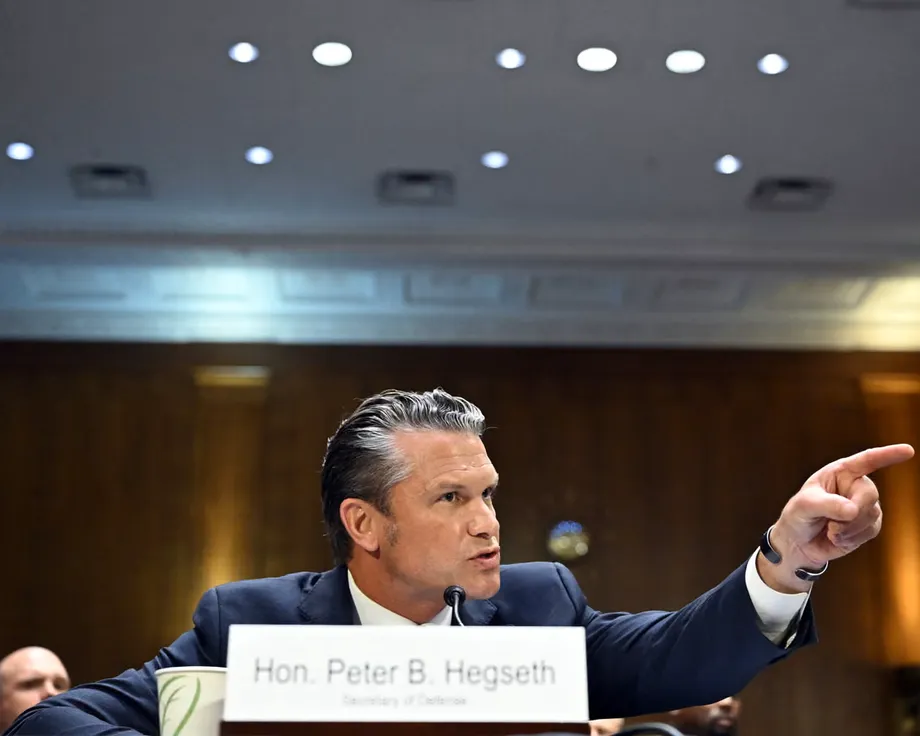
Speaking at the University of Tennessee in Knoxville on Saturday, October 17, 2026, Hegseth recalled seeing about 50 national flags at coalition headquarters in Kabul. He then suggested that perhaps five countries contributed and that only one or two were involved in combat by the end.
The response from Downing Street on Monday, October 19, was direct. A spokesperson for Prime Minister Andy Burnham said thousands of British and allied families had made sacrifices and that diminishing their role was wrong.
The dispute concerns a mission involving 51 NATO and partner nations. Figures presented to the US Senate Armed Services Committee in 2021 recorded 2,465 American military deaths and more than 1,100 deaths among troops from NATO and partner countries. Britain suffered the second highest military death toll after the United States.
London's criticism also came alongside a renewed declaration of support for Ukraine, as President Donald Trump's approach to Russia and President Volodymyr Zelenskyy placed further strain on relations with European allies. Downing Street defended past military service while making clear that its present commitment to Kyiv remained unchanged.
What Hegseth told future officers
Hegseth addressed military students, including cadets preparing to become Army officers, drawing on his experience as a captain and Minnesota Army National Guard instructor in Afghanistan. He described the many flags at the headquarters of the International Security Assistance Force, known as ISAF.
The defence secretary initially described the international presence positively, before questioning how many countries were participating in combat:
Except there were maybe five that contributed. It was actually closer to one or two that by the end were actually involved in kinetic operations.
Military officials use the term kinetic operations to mean fighting involving weapons or physical force. Hegseth's complaint was about what he considered an unequal division of that fighting among coalition members.
Hegseth also repeated a joke that ISAF meant "I Saw Americans Fighting", rather than the force's actual name. He described the feeling behind the joke as demoralising and argued that displaying a national flag in a coalition was different from providing military capability.
His remarks reached beyond a comparison of troop numbers. By suggesting that so few countries contributed, he prompted governments and veterans to respond with the names of places where allied forces served and the numbers who died or were wounded.
Britain answers with its military losses
Downing Street's response focused on the people who served and the reason Britain joined the campaign. British troops went to Afghanistan in 2001, after the September 11 attacks triggered NATO's collective defence commitment.
Burnham's official spokesperson said the British and allied contribution should be judged against the sacrifices made by military personnel and their families:
Thousands of British and allied families made huge sacrifices to play their significant part in that war and uphold our values, and more than 450 British personnel never returned.
The spokesperson said those sacrifices were made for collective security and in response to an attack on an ally. Collective security means countries treating a threat to one member as a shared concern, rather than leaving that country to respond alone.
The spokesperson concluded:
We are incredibly proud of our armed forces, and their service and sacrifice will never be forgotten. And it is wrong to diminish their role.
The figure of 457 British deaths gives the dispute a concrete human scale. Britain's response placed those deaths, and the experience of surviving personnel and families, at the centre of its objection to Hegseth's description.
Poland points to years securing Ghazni
Polish Foreign Minister Radosław Sikorski responded on Sunday, October 18, by directing attention to Ghazni, a province where Polish forces had responsibility for security between 2008 and 2013.
Sikorski challenged Hegseth to repeat his comments to bereaved Polish families:
Tell that ... to the families of 44 Polish soldiers who died securing the tough Ghazni province.
Poland's total of 44 deaths is also described in a more detailed breakdown as 43 soldiers and one civilian employee, identified in another account as a paramedic. More than 200 Polish personnel were wounded during the mission.
More than 33,000 Polish military personnel and defence ministry employees served in Afghanistan across nearly two decades. Poland joined the international coalition in 2002 and ended its mission with the withdrawal of foreign forces in 2021. At the height of its deployment, more than 2,500 Polish soldiers were responsible for security in Ghazni.
Jan Grabiec, chief of staff to the Polish prime minister, also objected to Hegseth's remarks. He said NATO allies should not mock "the blood shed alongside one another".
Poland's response supplied a specific example of what participation meant: thousands of personnel taking responsibility for security in a named province over several years, with deaths and injuries continuing to affect families after the deployment ended.
Czechia and US veterans join the criticism
Czech Foreign Minister Petr Macinka said Hegseth's words lacked respect. Fourteen Czech army personnel died in Afghanistan, placing Czechia among more than 30 nations whose personnel died on duty during the conflict.
Macinka called for countries to recognise every person who served or died in a joint operation:
Allies should honor every life lost in a joint military operation, as well as every soldier who took part in Alliance operations.
The Czech foreign minister added that his country expected the same respect in return. Canada's losses exceeded 150 military personnel, while France, Germany, Italy, Poland and Denmark each lost dozens.
American veterans also challenged Hegseth. Retired General Ben Hodges, a former commander of US Army Europe who served as director of operations for Regional Command South in Kandahar in 2009, called the remarks "shameful".
Hodges pointed to more than 1,000 allied service members killed alongside American troops. He also questioned why the defence secretary would disparage allies before cadets who would become officers.
Amy McGrath, a Marine veteran and former F/A-18 pilot, described serving two tours alongside allied forces. She said she had "shared tents and flew missions in the same skies" with them.
McGrath connected recognition of that service to future military cooperation:
When our SecDef diminishes their sacrifice, he damages trust with allies we may need again.
How large was the coalition effort?
Fifty-one NATO and partner nations deployed troops to Afghanistan. All 28 countries that belonged to NATO during the period described participated, while partners outside the alliance also contributed.
ISAF initially provided security in and around Kabul. Its area of responsibility expanded across Afghanistan by the second half of 2006, bringing its forces into increasing combat with a growing insurgency. At its peak, the force numbered more than 130,000 personnel.
The United States bore the largest military death toll. The 2021 figures presented to the Senate Armed Services Committee listed 2,465 US deaths alongside more than 1,100 among troops from NATO and partner countries. Those numbers put the allied and partner losses at more than 44 for every 100 American deaths.
Britain's 457 deaths amounted to more than 18 for every 100 American deaths, using the same US figure. The comparison shows both the scale of America's losses and why other governments reacted so strongly to the suggestion that their forces contributed little.
The governments responding to Hegseth framed the issue around military service, shared danger and obligations to an ally. Hegseth framed it around the distribution of combat duties and capability. Those competing descriptions explain why a speech about military burdens became a dispute over respect for the dead.
Article 5 and the dates behind the dispute
NATO invoked Article 5 of the North Atlantic Treaty on September 12, 2001, following the attacks on the United States the previous day. The provision treats an armed attack against one member as an attack against all and commits members to assist.
The response to September 11 remains the only invocation of Article 5 in NATO's history. That fact is central to the British argument: allies went to Afghanistan after the United States was attacked, acting on a shared security commitment.
The mission and the latest dispute span several key dates:
- September 12, 2001: NATO invoked Article 5 after the attacks on the United States.
- 2001: Britain sent troops to Afghanistan.
- 2002: Poland joined the international coalition.
- Second half of 2006: ISAF's area of responsibility expanded across Afghanistan.
- 2008 to 2013: Polish forces provided security in Ghazni province.
- 2021: Foreign forces withdrew, ending Poland's mission and the wider military campaign.
- October 17, 2026: Hegseth made his remarks at the University of Tennessee.
- October 18 and 19: Sikorski and Downing Street publicly challenged his account.
A second clash after Trump's January remarks
Hegseth's comments revived an argument that had already caused anger in Britain earlier in 2026. In January, Trump suggested that NATO allies in Afghanistan had stayed away from the main fighting.
Trump described non-American troops as having stayed "a little back, a little off the front lines". Keir Starmer, who was British prime minister at the time, called the remarks "insulting and frankly appalling" and said the president should apologise.
Trump later praised British troops following the backlash and a telephone call with Starmer. In a Truth Social post, the president referred to the 457 British deaths, recognised the many injured and described British soldiers as exceptionally brave.
The October dispute therefore reopened an issue Washington and London had already confronted: how American leaders describe allied service in a war that began as a response to an attack on the United States.
Britain restates its position on Ukraine
Downing Street's firm response on Afghanistan came alongside more cautious language about Trump's approach to Russia and Ukraine. Trump had renewed criticism of Zelenskyy and limited intelligence sharing that helps Ukraine respond to Russian missile and drone attacks.
Intelligence sharing gives a country access to information gathered by partners, which can help it identify threats and prepare a response. Restrictions affect a different part of military cooperation from troop deployments, but both depend on working relationships between governments.
Asked about a proposed peace summit involving the United States, Russia and China without Ukraine, Burnham's spokesperson did not directly endorse or reject the idea. No date for such a meeting was given.
The spokesperson said Britain's position was to seek a just and lasting peace and that Ukraine should speak for itself. Referring to the prime minister's meeting with Zelenskyy the previous week, the spokesperson stated:
Our support for Ukraine is unwavering.
London's two responses had different tones. On Afghanistan, it directly rejected Hegseth's description of allied service. On Ukraine, it restated British policy without directly confronting every proposal attributed to Washington. In both cases, the government's message centred on maintaining security commitments to partners.
Key Points
- Britain said Hegseth was wrong to diminish NATO allies' role in Afghanistan, where 457 British military personnel died.
- Hegseth told military students on October 17 that only a few coalition countries contributed and one or two were involved in combat by the end.
- Poland cited 44 deaths and years securing Ghazni; Czechia recalled its 14 military deaths.
- Figures presented to a US Senate committee in 2021 recorded 2,465 American deaths and more than 1,100 among NATO and partner troops.
- The Afghanistan mission followed NATO's only invocation of Article 5, after the September 11 attacks.
- Downing Street also reaffirmed support for Ukraine amid disagreements over Washington's approach to Russia and peace talks.