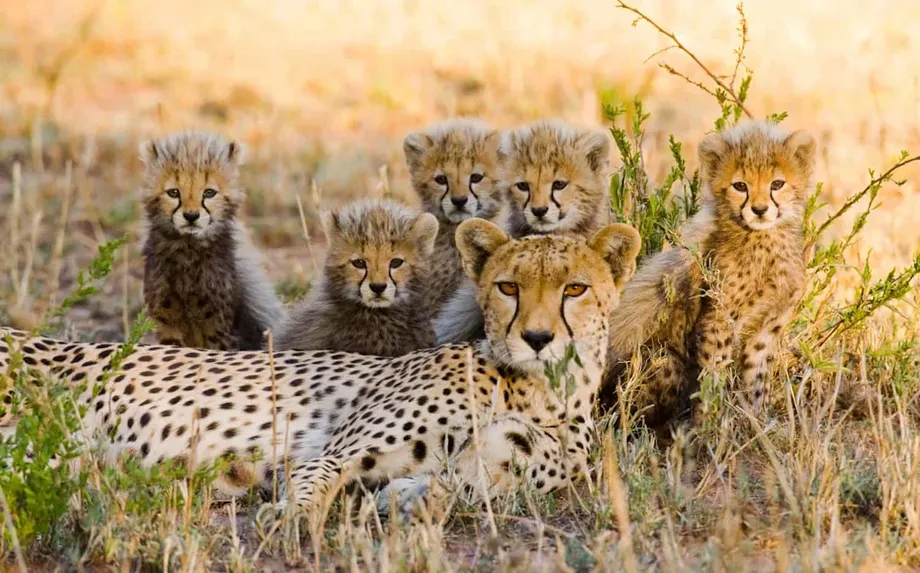
Nine new cubs, followed by a loss at Kuno
Five cubs born on October 5, 2026, at Kuno National Park marked a new step for India's Project Cheetah: their mother was born in India, and their father came from Botswana. The litter followed four cubs born to another Indian female in September, bringing nine births in less than a month.
Contents
- Nine new cubs, followed by a loss at Kuno
- What makes the Botswana cubs different?
- How the population reached this point
- A partnership built before the flight
- What Project Cheetah is meant to achieve
- Seven deaths keep survival in focus
- Expansion reaches a tiger reserve
- Why Gandhi Sagar has not matched Kuno's breeding
- Access to records becomes another test
- Key Points
Environment Minister Bhupender Yadav announced that the October births had raised India's cheetah population to 60, including 41 born in the country. A week later, on October 12, an eight-month-old cub from a different litter was found dead at Kuno, reducing the reported population to 59, including 40 born in India.
The births and the death capture the programme's central challenge. Cheetahs are reproducing in India, and some females born there have reached breeding age and produced cubs themselves. Keeping those cubs alive, establishing animals beyond Kuno and reducing dependence on enclosures remain the next tests.
The latest population figures place 53 cheetahs at Kuno, four at Gandhi Sagar Wildlife Sanctuary and two at Veerangana Durgavati Tiger Reserve, all in Madhya Pradesh. Of Kuno's 53 animals, 15 were reported to be ranging freely in the wild.
Those figures put the breeding celebrations in perspective. About 68% of India's current cheetahs were born in the country, calculated from 40 of 59 animals. At Kuno, about 28% were ranging freely, calculated from 15 of 53. The programme is producing a new generation while still managing much of the population in enclosures.
What makes the Botswana cubs different?
KJP21, the mother of the five cubs born on October 5, was 32 months old. She is the third female born in India to reproduce, after Mukhi and KGP12, according to Yadav.
The minister described the cubs' ancestry and the population total in his announcement:
With the arrival of these five cubs, the cheetah population in India has reached 60, including 41 Indian-born cheetahs. Importantly, these cubs also mark the beginning of the Botswana lineage in India, as their father is a Botswana male cheetah — adding a new genetic lineage to India's growing cheetah population,
The father was among nine cheetahs brought from Botswana in February 2026. His offspring are the first cubs born in India with a parent from that group.
Genetic diversity means having different inherited traits within a population. Bringing in breeding animals from another population can broaden the range of those traits and give managers more options when pairing animals. For a programme that began with a small number of imported cheetahs, the ancestry of new cubs matters alongside their number.
KGP12's four cubs, born in September, carry a different kind of importance. KGP12 is a daughter of Gamini, a cheetah brought from South Africa. Her reproduction shows that a female raised in Indian conditions can survive to breeding age and produce another generation there.
How the population reached this point
India declared the cheetah extinct nationally in 1952. The last confirmed wild animals were three shot in 1947 in the forests of Koriya, in present-day Chhattisgarh. Project Cheetah began restoring the species seven decades later using animals from Africa.
The main stages of the programme show how imports, births and expansion have developed together:
- September 17, 2022: Eight cheetahs from Namibia, five females and three males, arrived at Kuno.
- February 2023: Twelve cheetahs arrived from South Africa.
- 2023: Jwala produced the first cheetah cubs born in India in more than 70 years.
- February 2026: Nine cheetahs, six females and three males, arrived from Botswana.
- September 2026: KGP12 gave birth to four cubs at Kuno.
- October 5, 2026: KJP21 gave birth to five cubs fathered by a Botswana male.
- October 7, 2026: Two cheetahs were introduced at Veerangana Durgavati Tiger Reserve.
- October 12, 2026: Aasha's cub was found dead, bringing the reported national population to 59.
The three international transfers brought 29 cheetahs to India: eight from Namibia, 12 from South Africa and nine from Botswana. The current population reflects births and deaths since those arrivals, rather than simply the addition of cubs to the imported animals.
Earlier litters in 2026 included Aasha's five cubs in February and Jwala's five on March 9. Accounts give Gamini's February 18 litter as either three or four cubs. KGP12 also delivered four cubs on April 11, all of which were found dead about a month later, before her September litter.
A partnership built before the flight
Botswana's involvement began with government discussions in December 2024, as India sought to broaden the programme's founding population beyond Namibia and South Africa. Yadav raised the proposal with Botswana's then environment and tourism minister, Boipuso Wynter Mmolotsi.
The partnership advanced during President Droupadi Murmu's visit to Botswana in November 2025. Murmu and Botswana President Duma Gideon Boko witnessed a symbolic release of eight cheetahs captured in the Ghanzi region into a quarantine facility at Mokolodi Nature Reserve.
The eventual transfer involved nine animals. After quarantine and arrangements for veterinary checks, export permissions and clearances under the Convention on International Trade in Endangered Species, the cheetahs travelled from Mokolodi to Gaborone. They were flown to India with Indian Air Force assistance and then taken by helicopter to Kuno.
A delegation of three people from Botswana, including veterinarians and an expert in preventing poaching, subsequently visited Kuno and Gandhi Sagar and met National Tiger Conservation Authority officials. The cooperation extended beyond supplying animals to sharing experience in their care and protection.
What Project Cheetah is meant to achieve
The National Tiger Conservation Authority's Project Cheetah objectives go beyond increasing the number of cheetahs. The authority says the programme aims to restore the animal's ecological role within its historical range, contribute to global cheetah conservation and potentially improve livelihoods in nearby communities.
The authority also describes cheetahs as a flagship for protecting prey and other threatened species in grassland and semi-arid ecosystems. A flagship species attracts attention and resources that can support the wider habitat around it.
The programme is overseen by the NTCA, working with the Madhya Pradesh Forest Department, the Wildlife Institute of India and specialists from southern Africa. Its published documents include disease risk analysis, annual progress reports, a 2024 action plan for Gandhi Sagar and procedures for nursing females and vulnerable cubs. An Annual Progress Report 2025 is listed as published in 2026.
The government's stated target is a population that can sustain itself by 2032. In practical terms, enough animals must survive, hunt and reproduce for successive generations to replace losses. Breeding by females born in India is one part of that process; survival and access to sufficient habitat are others.
Seven deaths keep survival in focus
Aasha's cub was found after forest staff noticed during morning monitoring on October 12 that she was moving with only four of her five young. A search located the missing cub's body. Park officials ordered a postmortem examination, and its cause of death had not been announced.
Kuno National Park Director Uttam Kumar Sharma said officials were investigating the death and awaiting the examination's findings.
The loss brought the reported number of cheetah deaths in India during 2026 to seven. Four cubs died in May. An Indian female identified as KGP-11 died in June after suffering injuries in Morena district. Gaurav, a cheetah from Namibia, died on September 21 after being found weak and dehydrated with an underlying chronic condition.
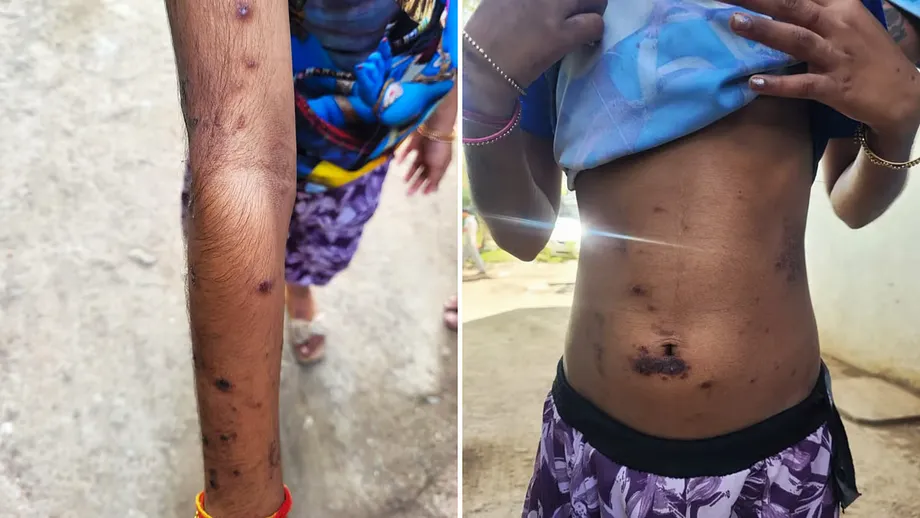
Earlier years also brought losses from illness, infection, injury and difficulties adapting to the new environment. In 2023, wounds beneath the coats of several cheetahs became infested with maggots, prompting reviews of management and release procedures. A male named Pawan drowned in August 2024.
These events make the survival of young animals a central measure of progress. A litter adds to the population immediately, but its contribution to future generations depends on cubs reaching adulthood and eventually breeding. KGP12's April losses and September births show how quickly the programme's prospects can change within the life of one female.
Expansion reaches a tiger reserve
Veerangana Durgavati Tiger Reserve became the programme's third location when two cheetahs were introduced on October 7. Before that move, L. Krishnamurthy, additional principal chief conservator of forests for wildlife, confirmed that the forest department had sought NTCA permission to transfer animals there.
The move brings cheetahs into a reserve where coexistence with tigers is planned. Managers must account for prey, space and the presence of other large predators as they assess how the animals settle.
Kuno still holds about 90% of the national population, calculated from 53 of 59 animals. Establishing animals at two other locations spreads the programme geographically, while leaving most cheetahs concentrated at its original site.
At Kuno, the 38 animals outside the group ranging freely were reported to be in enclosures or soft release bomas. A boma is a fenced area used to help animals settle, allow observation or manage their release. The balance between enclosure management and independent life in the wider landscape will help show how the programme develops.
Why Gandhi Sagar has not matched Kuno's breeding
Gandhi Sagar had four cheetahs in the latest count, but no births had been reported there despite observed mating. Its animals include the female Dheera and males Prabhas and Pavak, all originally brought from South Africa. A Botswana female, Radha, also known as CCB-2, was moved from Kuno in September 2026.
The animals have been kept in separate adjoining enclosures with arrangements allowing mating. Both males had previously fathered cubs at Kuno, according to Susan Yannetti of the Metapopulation Initiative in South Africa.
Yannetti identified several possible influences on breeding: the number and sex of animals, compatibility, age, health, stress and opportunities to mate. She said Gandhi Sagar was still establishing its population and that drawing conclusions about reproductive failure would be premature.
The difference between the two sites matters for expansion. Kuno's breeding record gives managers experience, while Gandhi Sagar requires its own assessment of animal health, behaviour and conditions. Moving cheetahs to a new location begins another period of adjustment and monitoring.
Access to records becomes another test
Ajay Dubey, an activist based in Bhopal, sought postmortem reports for cheetahs that had died since the programme began in 2022. His request under the Right to Information Act was rejected on October 9, citing national security concerns under Section 8(1)(a).
Dubey questioned the use of an exemption concerning India's sovereignty and integrity for records about animal deaths. He also sought information about foreign trips by officials connected with Project Cheetah and was told that the information did not exist.
Mortality findings and movement records would help researchers examine how health, habitat and management affect survival. Conservation researchers have sought independent access to such information, while critics have also questioned the resources directed towards cheetah imports when threatened native grassland species need protection.
The NTCA's own objectives place habitat and other species within the programme's purpose. Evaluating progress therefore involves several concrete outcomes: cubs surviving, adults living and breeding in suitable landscapes, protection for grassland wildlife and benefits for surrounding communities, including livestock farmers affected by predators.
India now has more cheetahs born domestically than imported survivors, a new Botswana lineage and animals at three locations. The route towards the 2032 target depends on turning those developments into repeated survival and reproduction across enough suitable habitat.
Key Points
- Nine cubs were born at Kuno in September and October 2026, including five with a Botswana father.
- KJP21 became the third female born in India to reproduce, after Mukhi and KGP12.
- Aasha's cub died on October 12, reducing the reported population to 59, including 40 born in India.
- Kuno held 53 cheetahs, Gandhi Sagar four and Veerangana Durgavati Tiger Reserve two.
- Fifteen of Kuno's 53 cheetahs were reported to be ranging freely.
- Gandhi Sagar had recorded mating but no births, while access to postmortem records remained disputed.
- The government's target is a population that can sustain itself by 2032.