A sound lure catches 49 Aedes mosquitoes in campus trial
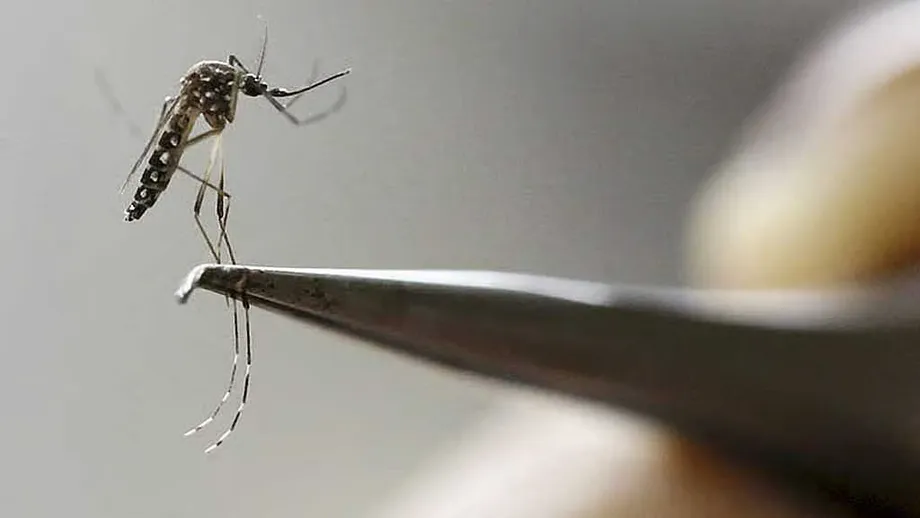
A mosquito trap developed at Dhaka University captured 49 Aedes mosquitoes during an outdoor trial, compared with one caught by a similar trap operating without sound, according to the university research laboratory behind the project. The device, MAST-CloudNet, combines a sound lure, a camera and artificial intelligence to help identify places where dengue vectors are multiplying.
Contents
- A sound lure catches 49 Aedes mosquitoes in campus trial
- How sound becomes a mosquito count
- Why researchers are watching males
- What the tests found
- A Tk12,000 device with battery backup
- A neighbourhood trial planned for 2027
- The next version would process data inside the trap
- Engineering and zoology meet in one device
- Key Points
The researchers plan to place 10 to 15 traps in residential areas under Dhaka South City Corporation during June and July 2027. Their aim is to turn mosquito counts into maps that can alert authorities to rising Aedes activity and help them decide where to direct preventive work.
The university announced the development on October 16, 2026. Its researchers said the study was published on October 8 in IEEE Transactions on Instrumentation and Measurement under the title "MAST-CloudNet: IoT-Enabled Acoustic Trap With Real-Time AI Surveillance of Aedes." The Dhaka University Research Fund financed the work.
The device targets male mosquitoes by imitating the flight sound of females. Although female mosquitoes bite people and transmit dengue, males can provide an earlier clue to new mosquito populations because they mature sooner and tend to stay near breeding sites.
That makes the project a surveillance tool: its main purpose is to show where mosquito activity is increasing so that people responsible for prevention can respond. The planned neighbourhood trial will test how well this approach works beyond the university campus.
How sound becomes a mosquito count
MAST-CloudNet plays sound at frequencies between 350 and 500 hertz, mimicking the wingbeats of female Aedes mosquitoes. Hertz measures how many times something vibrates each second. Here, the sound acts as a lure for males seeking females.
A fan pulls approaching mosquitoes into the trap and onto yellow sticky paper. A camera inside the device photographs the insects, then sends the images over the internet to a cloud server, a remote computer that processes the information.
An artificial intelligence model examines the photographs to identify Aedes mosquitoes and count them. The results appear on a web dashboard, allowing users to monitor catches remotely instead of visiting every trap simply to read its count.
The system connects several steps that would otherwise require separate work: attracting insects, collecting them, photographing them and producing a usable record. With traps in several locations, a central dashboard could show which monitored areas are recording more Aedes activity.
Why researchers are watching males
Male Aedes mosquitoes become adults before females and remain close to breeding grounds, according to the researchers. A rise in male catches can therefore signal that a new generation of mosquitoes is emerging nearby.
For a neighbourhood, the practical value would be an earlier indication of where to look for breeding sites. Rather than spreading inspection work evenly across every monitored location, authorities could use rising catches to help prioritise particular areas.
A mosquito count measures insect activity. Dengue risk also involves the females that bite people and carry the virus. The researchers are using males as an advance signal of growing vector populations, with the intended benefit of directing prevention before those populations expand further.
The planned maps would bring those local signals together. Several traps reporting rising catches in nearby residential locations could help authorities identify a concentration of Aedes activity and organise a more focused response.
What the tests found
Laboratory cage tests found that the trap using sound caught almost five times as many Aedes mosquitoes on average as a similar trap without sound. Researchers then operated the device outdoors on the Dhaka University campus for three consecutive days.
The outdoor trial took place amid heavy rain, strong winds and urban noise. The team said the device continued operating throughout the test. The laboratory's project description gives the comparison: 49 Aedes mosquitoes in the active trap and one in the silent control.
The laboratory also reports 83.1% target selectivity. Selectivity describes how much of the catch consists of the insects being sought. This matters because a surveillance trap is more useful when it concentrates on the target mosquitoes instead of collecting large numbers of other insects.
The laboratory and outdoor results describe different testing conditions. The cage experiments produced the average increase of nearly five times, while the outdoor comparison recorded 49 against one over a short campus trial. The next phase will examine performance across more locations before wider deployment.
A Tk12,000 device with battery backup
Each MAST-CloudNet unit costs about Tk12,000 to assemble, according to the researchers. They put the comparison cost of a CDC light trap at about Tk25,000 and a BG-Sentinel trap at about Tk20,000.
Using those figures, the university device costs Tk13,000 less than the CDC light trap, a reduction of 52%. It costs Tk8,000 less than the BG-Sentinel trap, or 40% less. Those differences could matter when an organisation needs several monitoring points rather than a single device.
A set of 10 to 15 units would cost approximately Tk120,000 to Tk180,000 to assemble at the stated unit price. That calculation covers the traps themselves; deployment also requires arrangements for connectivity, server processing, maintenance and field visits.
The device can operate on battery power for approximately four and a half hours during an electricity outage. Its central server can process data from multiple traps, and the team expects sharing that computing capacity across a larger network to reduce the operating cost per unit.
A neighbourhood trial planned for 2027
Dhaka South City Corporation's residential areas are the proposed setting for the next major test. Researchers intend to deploy 10 to 15 devices during June and July 2027 and use the resulting counts to map emerging concentrations of Aedes mosquitoes.
The exact neighbourhoods and installation dates have not been announced. The larger trial is intended to provide further field evaluation before commercial deployment, including experience with operating several traps across inhabited areas.
The project has several dated milestones:
- October 8, 2026: Publication of the MAST-CloudNet study, according to the university announcement.
- October 16, 2026: The university announced the device and its testing results.
- June and July 2027: Planned deployment of 10 to 15 traps in residential areas under Dhaka South City Corporation.
For residents, the intended outcome is more specific information about where Aedes activity is increasing. For the researchers, the neighbourhood deployment will provide a broader test of collecting and comparing mosquito records across a working network.
The next version would process data inside the trap
The university laboratory is also developing a successor called MAAS-IoT. Its working optical detector prototype has already recorded wingbeats from live male Aedes mosquitoes. An optical detector uses light to sense movement, allowing researchers to measure wingbeat patterns.
MAST-CloudNet sends photographs to a remote server for analysis. The successor is being developed to classify insects directly inside the device, using a small computer called a microcontroller. This approach is often called edge AI because the processing happens where the information is collected.
The laboratory says classification within the device, LoRa networking and an enclosure suitable for field use are still in development. LoRa provides radio communication over long distances while using little power. The team's planned LoRaWAN connectivity would allow compact mosquito records to travel without each trap depending on a nearby Wi-Fi connection.
Solar power and better protection against sun and rain are also planned. The laboratory describes autonomous surveillance networks powered by solar energy as its longer term goal. The working optical prototype is an early component of that effort, while the current camera system provides the starting point for field evaluation.
Engineering and zoology meet in one device
The project brings together the Microsystems and Nanoengineering Lab in Dhaka University's Department of Electrical and Electronic Engineering and the Genome-Guided Vector Control and Innovation Lab in the Department of Zoology.
The collaboration connects knowledge of mosquito behaviour with electronics, imaging and data processing. The sound lure depends on understanding how males respond to female flight tones. The fan, camera, internet connection and classification software turn that response into a record that can be viewed remotely.
Dhaka University Vice-Chancellor Professor ABM Obaidul Islam welcomed the development and said identifying areas with increasing Aedes populations would help authorities take preventive measures. He also urged further refinement for effective use in the field.
The next practical step is to move from a brief campus test to monitoring across residential locations. The proposed 2027 deployment will give the team a chance to examine how consistently the devices operate and how useful their combined records are for locating rising mosquito activity.
Key Points
- MAST-CloudNet uses sound, a fan, a camera and cloud AI to attract, capture and identify Aedes mosquitoes.
- The outdoor campus trial caught 49 Aedes mosquitoes in the active trap, compared with one in a silent control.
- The laboratory reports 83.1% target selectivity; laboratory cage tests found nearly five times the average catch with sound.
- Each unit costs about Tk12,000 to assemble and has approximately four and a half hours of battery backup.
- Researchers plan to deploy 10 to 15 traps in Dhaka South residential areas during June and July 2027.
- A successor prototype has recorded live male wingbeats, with classification inside the device, radio networking and field housing still under development.