Indonesia's market slump brings a state investor into focus
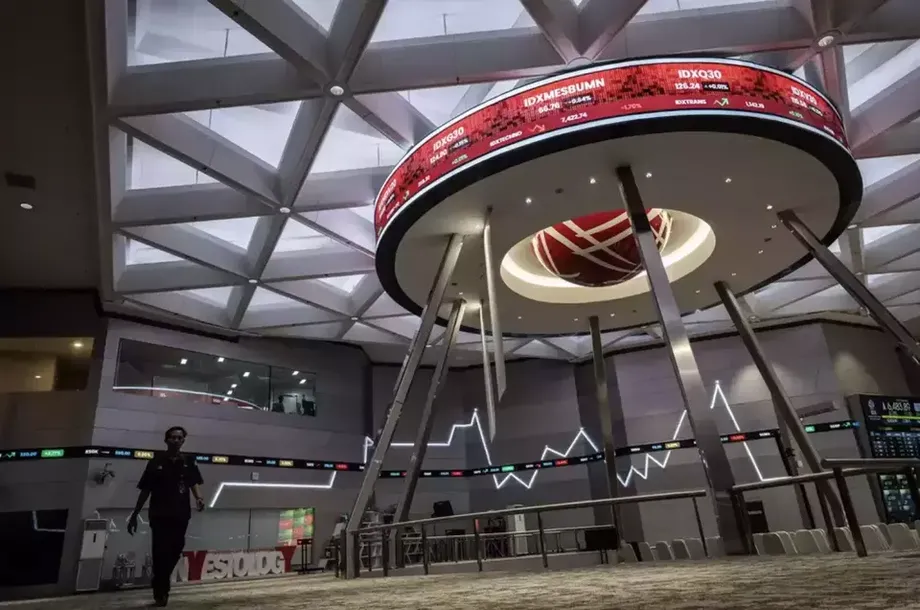
Indonesia's Danantara is considering increasing its holdings in listed state companies after the Jakarta Composite Index closed below 5,000 on October 19, 2026, as investors reacted to MSCI's proposed change in the country's market classification. The benchmark fell 188.49 points, or 3.64%, to 4,996.60, with declining stocks outnumbering advancing stocks by more than six to one.
Contents
- Indonesia's market slump brings a state investor into focus
- What Danantara intends to buy
- A trading day dominated by selling
- Why MSCI's proposal matters
- How the announcements unfolded
- Rosan sees value in banks and infrastructure
- Pandu's broader US$5 billion commitment
- Economic coordination reaches the palace
- Stock exchange ownership reform continues
- Danantara's mandate extends beyond listed shares
- Key Points
Dony Oskaria, Danantara's chief operating officer and head of Indonesia's state enterprise management agency, BP BUMN, said the fund would examine companies' financial strength before buying. Speaking at the Presidential Palace complex in Jakarta, he described the market movement as normal financial market volatility and maintained that Indonesia's economic fundamentals remained sound.
The comments put Danantara's investment decisions alongside a broader effort to restore confidence in Indonesian shares. President Prabowo Subianto called senior financial officials to the palace that day, while MSCI's consultation on moving Indonesia from Emerging Market to Standalone Market status continued to weigh on trading.
Two investment figures frame the discussion: an additional US$1 billion, about Rp18 trillion, being prepared for Indonesian capital markets through the end of 2026, and a broader US$5 billion plan for Indonesian businesses over six to nine months. The larger commitment was described before MSCI's October 15 proposal.
For shareholders, the immediate issue is how much buying Danantara will undertake and which businesses it will choose. For Indonesia, the challenge also involves market reforms that could influence whether international investment funds continue to hold its shares.
What Danantara intends to buy
Dony said Danantara would give priority to listed state enterprises, known in Indonesia as BUMN, with good performance and strong fundamentals. In plain terms, that means assessing the business behind a share: its earnings, finances and ability to keep operating successfully, rather than choosing a stock simply because its price has fallen.
Danantara would evaluate suitable shares and increase its ownership where it saw value, he said. Buying additional shares would give the fund a larger stake in the companies selected. His comments presented the market decline as an opportunity to invest in businesses it considers financially sound.
Dony did not identify target companies, purchase dates or the amount that would actually be deployed. The relationship between the additional US$1 billion capital market allocation and the broader US$5 billion domestic investment plan was also unspecified. Investors therefore have an indication of Danantara's intentions, while the size and timing of individual transactions remain open.
A trading day dominated by selling
The Jakarta Composite Index, commonly called the IHSG, opened at 4,961.88 on October 19. Indonesia Stock Exchange trading figures put its daily range at 4,907.37 to 5,012.87. An early reading of 4,916.60 represented a fall of about 5.18%, before the index recovered some ground to close at 4,996.60.
The closing level was about 89 points above the day's low, yet selling remained widespread. A total of 656 shares fell, 100 rose and 43 were unchanged. Among those 799 stocks, approximately 82% finished lower, showing how broadly the decline reached across the market.
Trading value reached about Rp24.97 trillion, with 33.81 billion shares changing hands in approximately 1.61 million transactions. Every sector index declined. Basic materials suffered the largest sector loss, at 4.57%, followed by infrastructure at 4.45% and consumer cyclicals at 4.09%. Consumer cyclicals include businesses whose sales tend to rise and fall with household willingness to spend.
Other major benchmarks also fell. The LQ45 lost 3.95% to 488.46, the KOMPAS100 dropped 4.10% to 630.96, and the Jakarta Islamic Index declined 4.51% to 287.84. Each recorded a larger percentage fall than the main composite index.
Why MSCI's proposal matters
MSCI proposed moving Indonesia from Emerging Market to Standalone Market status on October 15. A consultation allows the index provider to seek feedback before deciding how to classify a market. Indonesia has until April 2027 to carry out reforms.
Market classifications matter because many investment funds use MSCI indices to decide which countries and companies to hold. Emerging market funds seek exposure to economies within that category. Moving Indonesian shares outside the relevant indices would change where those shares fit in investors' portfolios and could lead funds to reduce their holdings.
Standalone status places a market outside MSCI's emerging and frontier market groupings. The practical concern is the connection between classification and demand for shares: businesses can continue operating while investment funds change their allocations because the rules governing their portfolios have changed.
The composite index fell 11.6% following the MSCI news and was down just over 40% for the year in the broader market account accompanying Danantara's investment plans. Indonesia retained its Secondary Emerging classification in FTSE Russell's annual review, illustrating that index providers make their own assessments rather than issuing a single shared classification.
How the announcements unfolded
Danantara's public investment plans developed across several dates. The sequence matters because its wider domestic commitment preceded the MSCI announcement, while its leaders reiterated their willingness to buy shares after market selling intensified.
- October 6, 2026: Danantara announced a US$250 million investment in HighPeak Energy, an oil and gas producer based in Texas.
- October 12: Chief investment officer Pandu Sjahrir described a plan to invest US$5 billion in Indonesian businesses over the following six to nine months, speaking at the DBS Asia Future Forward Conference in Singapore.
- October 15: MSCI proposed changing Indonesia's classification from Emerging Market to Standalone Market.
- October 16: Danantara chief executive Rosan Perkasa Roeslani said falling share prices offered opportunities for investment over the long term.
- October 19: Dony outlined the possibility of increasing stakes in listed state companies, senior officials attended the presidential palace, and the IHSG closed at 4,996.60.
- April 2027: Indonesia reaches the reform deadline associated with MSCI's proposed classification change.
The timetable puts two separate tasks alongside each other: Danantara's selection of investments and the authorities' work on market reform. Purchases would affect ownership and demand for particular shares, while reforms would address the market framework within which domestic and foreign investors trade.
Rosan sees value in banks and infrastructure
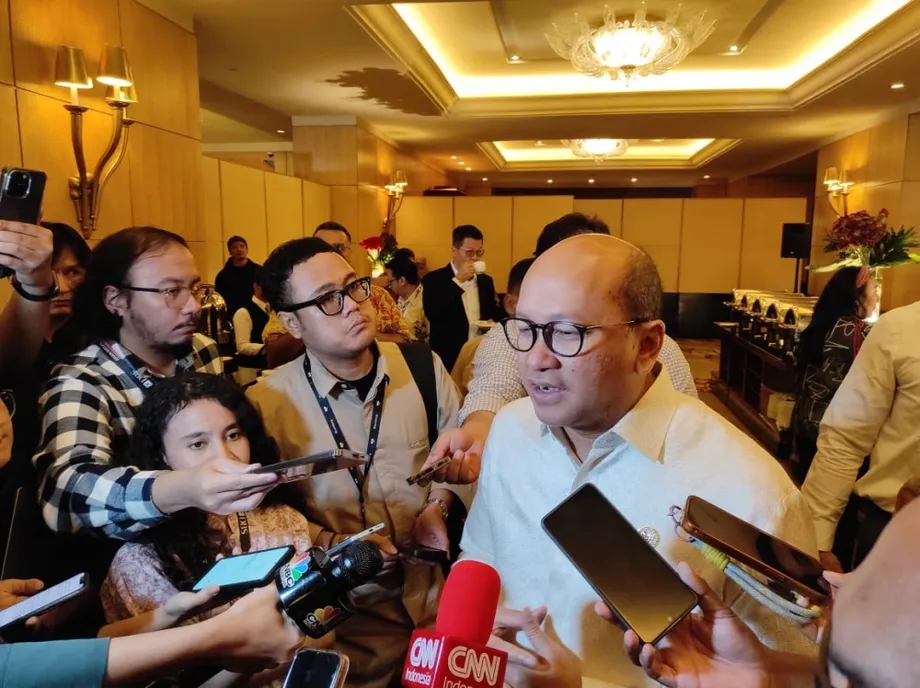
Rosan, Danantara's chief executive, said on October 16 that lower valuations had created opportunities in Indonesian companies, particularly state enterprises. He described the fund's approach as investing over the long term rather than entering and leaving positions to profit from brief price movements.
Banking, infrastructure and telecommunications were among the sectors he identified. Rosan said some bank shares were trading below book value, a measure based on a company's recorded assets after subtracting its liabilities. A price below book value means investors are valuing the shares at less than that accounting measure.
Rosan's argument was that financially strong businesses could be purchased at more attractive prices during the selloff. He also attributed pressure on shares partly to trading factors and market rumors, alongside investors' concerns about the wider market environment.
The October 19 session showed how differently individual stocks could move even during widespread selling. Within the LQ45, Vale Indonesia rose 4.93%, Adaro Andalan Indonesia gained 2.78%, and Perusahaan Gas Negara advanced 2.52%. Merdeka Copper Gold fell 7%, while Amman Mineral Internasional and Merdeka Battery Minerals each lost 6.95%.
Pandu's broader US$5 billion commitment
Pandu Sjahrir, Danantara's chief investment officer, described the fund's domestic investment approach at the Singapore conference on October 12. His comments focused on the health of Indonesian businesses and Danantara's willingness to buy companies it considers attractive.
"We're encouraging our guys to focus on the fundamentals of Indonesian businesses because they're growing healthily," Pandu said.
The US$5 billion plan covers Indonesian businesses over six to nine months. Its scope is broader than the additional US$1 billion being prepared for capital market investment through December 2026. The figures describe commitments with different stated coverage and time periods.
Pandu also acknowledged how investor sentiment could affect share prices. Indonesian consumer stocks had fallen more than 20%, he said, with shares connected to mining and energy performing worse. His assessment helps explain Danantara's approach: the fund is looking at companies' operations while the market is rapidly reassessing what their shares are worth.
Economic coordination reaches the palace
Rosan and Dony attended the Presidential Palace complex on October 19 for a meeting led by Prabowo. Dony described its subject as coordination in the economic sector. Rosan deferred questions about the falling stock index until after the meeting.
Friderica Widyasari Dewi, chair of the Financial Services Authority's board of commissioners, arrived at about 3:55 p.m. Western Indonesia Time. She said she had prepared reports, while indicating before the meeting that she had not been told whether the discussion would address the effects of MSCI's announcement.
The gathering brought Danantara's investment leadership and the financial regulator to the same venue during a severe market decline. Their comments before the meeting centered on coordination, investment opportunities and preparedness, rather than a detailed package of market measures.
Stock exchange ownership reform continues
Dony also said the planned demutualization of the Indonesia Stock Exchange was progressing well as part of the transformation of the country's capital markets. Rosan had expressed support for reform efforts by the Financial Services Authority, known as OJK, and the exchange.
Demutualization means changing the exchange's ownership structure. The Indonesian exchange is currently owned by securities companies; the planned change would allow a broader ownership base. This concerns who owns the organization running the marketplace, while Danantara's proposed investments concern shares traded within that marketplace.
Both issues matter to investors watching Indonesia's response to the MSCI consultation. One involves the rules and structure of the market. The other involves a major domestic investor's willingness to commit capital during falling prices.
Danantara's mandate extends beyond listed shares
Danantara, launched by Prabowo in 2025, has responsibilities that reach beyond stock purchases. Its asset management arm supervises and corporatizes more than 1,000 state enterprises, while its investment management arm pursues returns through bonds, public markets and domestic and foreign equities.
Its development fund directs capital toward national projects with substantial social benefits and lower immediate commercial returns, including the Giant Seawall Project along Java's northern coast and a coal gasification program. Pandu described the investment test in terms of economic benefits as well as direct financial returns.
"The idea is to create economic value, and not necessarily commercial value first—that's an important distinction," Pandu said.
A fourth unit, Danantara Resources Indonesia, is scheduled to launch fully in January 2027 as a digital platform centralizing natural resource exports, beginning with coal, palm oil and ferroalloys. The proposed export role has also attracted concern about expanding state control. Dedi Dinarto, associate director at advisory firm FGS Global, warned in May that introducing another layer of state control while the rupiah and equities were weak could become a confidence issue.
Danantara's US$250 million HighPeak Energy investment shows another part of its remit. Pandu described that transaction as a way to learn about shale technology and bring knowledge back to Indonesia. The fund has also recruited former GIC executives Daniel Lim and Weihan Wong for global private market coverage and has about 500 employees.
These responsibilities place the proposed purchases of Indonesian shares within a much larger institution. Danantara is managing state assets, seeking investment returns, funding development projects and pursuing knowledge transfers at the same time. Its next purchases will show how the stated preference for financially strong businesses translates into specific investment decisions during the market downturn.
Key Points
- The IHSG closed at 4,996.60 on October 19, down 188.49 points, or 3.64%, with 656 stocks falling and 100 rising.
- Danantara is considering larger stakes in listed state companies selected for their financial strength and performance.
- An additional US$1 billion is being prepared for Indonesian capital markets through the end of 2026, alongside a broader US$5 billion domestic business investment plan.
- MSCI proposed moving Indonesia from Emerging Market to Standalone Market status on October 15, with reforms due by April 2027.
- Danantara leaders have identified banking, infrastructure and telecommunications as areas of interest while supporting capital market reform.
- Target companies, purchase amounts and transaction dates have yet to be announced.