A larger portfolio and a much larger funding plan
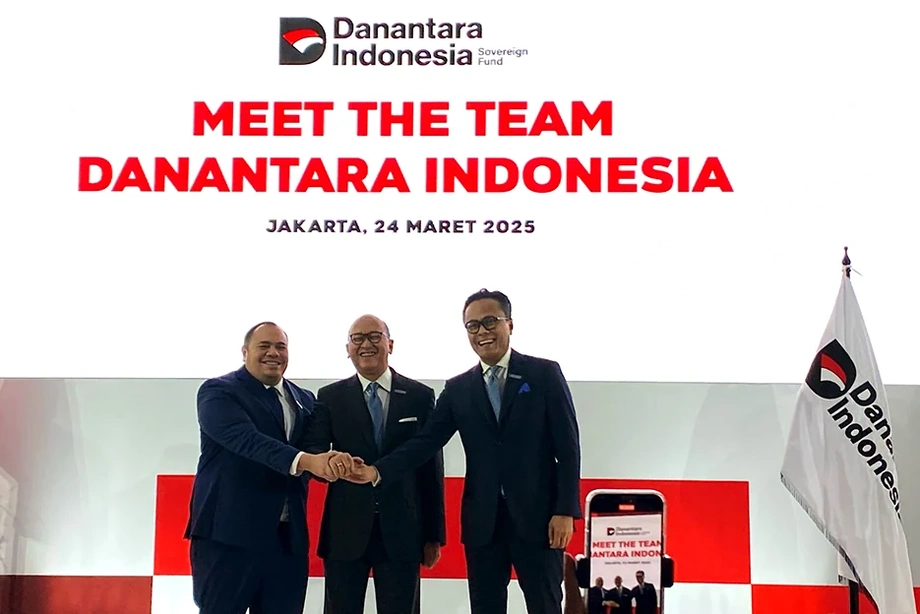
PT Danantara Investment Management, known as DIM, is aiming for a balance sheet worth Rp421 trillion in 2027, up from a projected Rp248 trillion at the end of 2026. The increase is Rp173 trillion, or about 70 percent. To support that expansion, DIM plans Rp122 trillion of new borrowing and the realisation of more than Rp100 trillion in new investments during 2027.
Contents
- A larger portfolio and a much larger funding plan
- How borrowing and new capital would pay for expansion
- Three Danantara entities with different jobs
- Where the Rp133.09 trillion investment pipeline points
- What sits behind the profit recovery
- The rupiah and interest rates can move profit by trillions
- Jobs, waste and the test of turning plans into projects
- A week of investment pressure and parliamentary scrutiny
- What to Know
Net profit is forecast to reach Rp5 trillion to Rp6 trillion in 2027, compared with a revised projection of Rp800 billion for 2026. The lower end of that target is 6.25 times the 2026 projection. DIM had originally budgeted Rp3.4 trillion of profit for 2026 in its Corporate Work Plan and Budget, but pressure on the capital market forced a sharp revision.
DIM enters 2027 with Rp69 trillion in realised and signed private investments from its first year of operation. Those investments cover 39 selected transactions after the company screened more than 600 opportunities. The 39 selections amount to less than 6.5 percent of the opportunities examined. DIM projects that the portfolio will create more than 50,000 jobs and attract more than Rp200 trillion in additional investment with partners.
The Rp421 trillion figure describes the planned scale of DIM's balance sheet, rather than its annual profit or spending. A balance sheet brings together the assets and funding under a company's management. The Rp69 trillion investment figure also combines realised investments with signings, so it should not be read as Rp69 trillion of cash already paid out.
How borrowing and new capital would pay for expansion
Danantara's chief investment officer, Pandu Sjahrir, presented the funding plan to Commission XI of the House of Representatives at a working meeting on Tuesday, 24 November 2026. He said the Rp122 trillion would come from three channels: bonds sold globally, bonds denominated in rupiah and credit facilities from banks.
Pandu explained the borrowing target in his own words.
Global bond issuances, rupiah bonds and credit facilities will amount to approximately IDR 122 trillion.
BPI Danantara, the institution above DIM, is also expected to provide an additional Rp50 trillion of capital in 2027. New debt and capital would therefore total Rp172 trillion, almost exactly the Rp173 trillion gap between the Rp248 trillion portfolio projection for 2026 and the Rp421 trillion target. Pandu's funding presentation used a different starting point, putting the 2026 balance sheet at Rp214 trillion. On that basis, the expansion would be Rp207 trillion. No explanation for the different starting values was given at the hearing.
The funding calculations used an exchange rate of Rp17,400 per US dollar. DIM entered the plan after raising Rp68.7 trillion through Patriot Bonds during 2026 and another US$1.5 billion, approximately Rp27 trillion, through global bonds. Those earlier issuances show that the company has already used both domestic and international funding.
Harris Turino, a member of Commission XI, asked management what percentage of the planned issuance would be offered domestically and how the remainder would be divided globally. No percentage was given in the exchange. Pandu said changes to the funding mix remained manageable, describing the difference as around 0.3 percent in terms of return on equity and net income. Return on equity measures profit against the capital supplied by shareholders.
Three Danantara entities with different jobs
BPI Danantara, formally Badan Pengelola Investasi Daya Anagata Nusantara, is an institution under Indonesia's president. It manages government investments and the assets of state enterprises, known as BUMN. Its structure separates commercial investment from the supervision of state companies and from development spending.
- PT Danantara Asset Management, or DAM, oversees the operational activities of state enterprises and carries out other tasks assigned by BPI Danantara.
- PT Danantara Investment Management, or DIM, manages investments with a focus on financial and commercial returns.
- PT Danantara Development Management Fund, or DDMF, manages investments directed towards national development and public services.
The Rp421 trillion balance sheet, Rp122 trillion borrowing plan and Rp5 trillion to Rp6 trillion profit forecast all concern DIM. Its commercial mandate explains why the parliamentary presentation paired investment opportunities with revenue, financing costs and measures of return.
Where the Rp133.09 trillion investment pipeline points
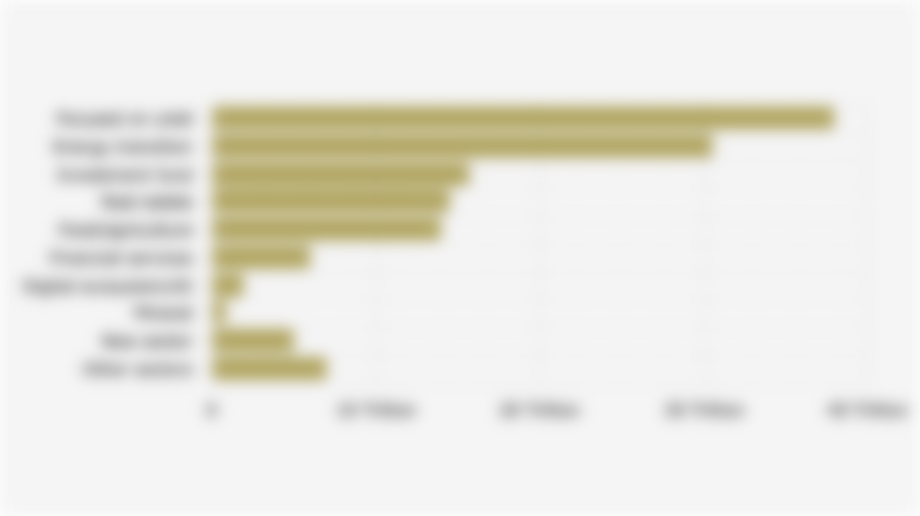
Stefanus Ade Hadiwidjaja, DIM's managing director of investment, gave Commission XI a sector breakdown on Wednesday, 25 November 2026. He said DIM planned to channel Rp133.09 trillion into investments by 2027, with the largest allocations going towards assets that generate periodic returns and towards the energy transition.
- Investments focused on yield: Rp37.95 trillion.
- Energy transition: Rp30.52 trillion.
- Investment funds: Rp15.62 trillion.
- Real estate: Rp14.52 trillion.
- Food and agriculture: Rp13.92 trillion.
- Financial services: Rp5.97 trillion.
- Digital ecosystems and artificial intelligence: Rp1.88 trillion.
- Minerals: Rp780 billion.
- New sectors: Rp4.98 trillion.
- Other sectors: Rp6.96 trillion.
Yield refers to income produced by an investment. The category includes private credit and real estate that is already profitable. Private credit generally means lending to businesses in search of interest payments, rather than buying shares and waiting for their value to rise. The list also contains a separate real estate allocation. Investment funds, by contrast, were described as focusing on returns or asset growth over a longer period.
The two largest categories total Rp68.47 trillion, about 51 percent of the stated pipeline. Energy transition alone accounts for roughly 23 percent. Food and agriculture receive a larger allocation than financial services, digital technology and minerals combined.
Stefanus cautioned that the sector map was a target pipeline rather than a fixed list of commitments.
This is our target pipeline profile, although it's not limited to this list. There's a possibility, because investments are dynamic, there might be other pipelines. What's here could also be dropped.
What sits behind the profit recovery
DIM expects total revenue of Rp21 trillion to Rp22 trillion in 2027, supported by treasury management, financial market investments and private investments. Treasury management involves handling cash and financial assets so that money is available when needed while still earning a return.
Between Rp13.5 trillion and Rp14.5 trillion of revenue is expected to come from sources that are not directly affected by capital market movements. Another Rp7 trillion to Rp8 trillion would be exposed to market volatility. That distinction matters after capital market pressure helped reduce the 2026 profit projection, even though treasury management, private investment revenue and cost control remained in line with or above their targets.
The main expense projections for 2027 are:
- Operating expenditure of Rp2.2 trillion to Rp2.4 trillion, compared with Rp1.4 trillion in 2026. Operating expenditure covers the regular cost of running the business.
- Transaction, financial and other expenses of Rp13.2 trillion to Rp13.7 trillion, compared with Rp3.5 trillion in 2026. The projected range is nearly four times the 2026 figure.
- Estimated foreign exchange losses of Rp2.5 trillion.
- Tax expenses of around Rp3 trillion.
Pandu connected the higher transaction and financial expenses to the money DIM intends to borrow.
The reason these figures are relatively high is the cost of financing, as we borrow funds from third parties.
The target for return on average equity would rise from a projected 0.89 percent in 2026 to 4 percent in 2027. This measure compares profit with average shareholder capital over a period. A return of 4 percent means Rp4 of annual profit for every Rp100 of average equity. The target therefore depends on earning more from a much larger capital base, while also paying the costs associated with new borrowing.
The rupiah and interest rates can move profit by trillions
DIM built its 2027 projections around economic growth of 5.2 percent to 6 percent, inflation of 2.5 percent to 3.2 percent, an exchange rate of Rp17,200 to Rp17,400 per US dollar and a deposit interest rate of 5 percent. These are planning assumptions: changing any of them can alter the financial result.
The growth range matches Bank Indonesia's 2027 outlook, which also projected expansion of 5.2 percent to 6 percent. The central bank's range for 2026 was 4.9 percent to 5.7 percent. DIM's currency assumption is separate from the central bank's budget assumptions and is used to calculate the investment manager's own revenue, funding and profit.
Pandu told lawmakers that currency movements had one of the largest effects on the forecast.
I would like to reiterate that every Rp400 change in the exchange rate could cause net income to decrease or increase by approximately Rp2 trillion.
A Rp2 trillion swing is equivalent to roughly 33 percent to 40 percent of the entire Rp5 trillion to Rp6 trillion profit target. Deposit rates create another sensitivity: every movement of half a percentage point is expected to change net profit by around Rp600 billion. The funding plan's Rp17,400 exchange rate assumption sits at the upper end of DIM's main currency range, making the treatment of global bonds and foreign currency assets especially relevant to the final result.
Jobs, waste and the test of turning plans into projects
More than 50,000 projected jobs and more than Rp200 trillion of investment with partners give the plan a wider economic purpose than enlarging DIM's portfolio. If realised, Rp200 trillion from partners would be almost three times the Rp69 trillion private investment figure. The jobs number remains a projection, not a count of people already hired.
Public policy observer Trubus Rahardiansah assessed the investment direction on Tuesday, 24 November 2026. He said the value of money committed was insufficient on its own and set out three measures for judging performance.
There are three things to look at: what the output is, second, the outcome, and third, of course, the impact.
An output could be a completed facility. The outcome would be what that facility actually does, such as processing waste or producing electricity. The impact would cover broader changes, including employment, stronger strategic sectors and benefits received by the public.
Trubus singled out projects known in Indonesia as PSEL, which process waste to generate electricity. Such projects address two practical needs at once: reducing the waste that cities must manage and adding a source of power. He also connected faster implementation with Indonesia's reputation among international investors.
So it must be realised, and if possible, it should even be accelerated. Accelerated so that Indonesia's investment climate, in relation to international trust, continues to grow.
DIM's sector pipeline of Rp133.09 trillion and its goal of realising more than Rp100 trillion of new investment in 2027 describe different parts of that task. The first maps where money could be allocated, while the second concerns investments targeted for realisation during the year. No site by site construction schedule was given for the waste to energy projects, and the employment projection did not provide a breakdown by project.
A week of investment pressure and parliamentary scrutiny
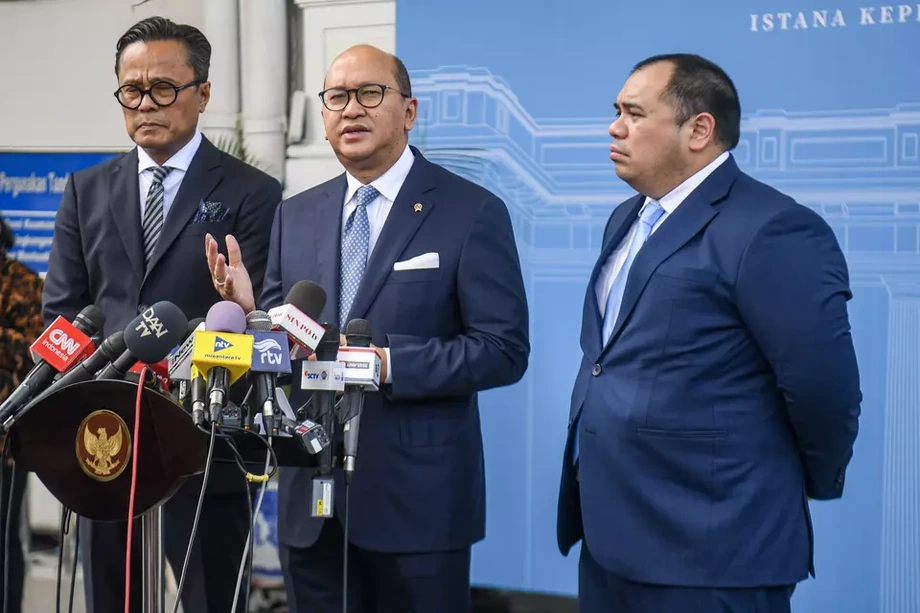
President Prabowo Subianto added a separate investment assignment on 24 November, when he met Rosan Roeslani, chief executive of BPI Danantara and Indonesia's investment and downstreaming minister, at the Presidential Palace. Prabowo directed Rosan to follow up immediately on a China investment package worth US$15 billion, or about Rp273.4 trillion at the exchange rate used for that announcement.
The package consists of 35 business agreements signed in Shenzhen on 20 November 2026. Its sectors include industrial estates, petrochemicals, renewable energy, manufacturing, electric vehicles, digital technology, data centres, pharmaceuticals, vaccines and infrastructure. Rosan said the projects had cleared China's National Development and Reform Commission and its process for approving investment abroad. Garibaldi Thohir, chairman of the China committee at Indonesia's Chamber of Commerce and Industry, projected more than 30,000 jobs from that package. This estimate is separate from DIM's projection of more than 50,000 jobs.
Dony Oskaria, Danantara's chief operating officer, addressed a different side of the investment challenge two days later. During a Commission VI hearing on 26 November, he described financial engineering, investment without adequate attention to returns and improper deals hidden inside subsidiaries as problems within the broader portfolio of state companies. The state company cleanup included bringing in public accounting firms and tightening approval rules.
Dony cited Kimia Farma's low factory utilisation and a Krakatau Steel blast furnace representing Rp26 trillion of investment that he said had never operated since construction. Those examples concerned the wider state enterprise portfolio, while DIM's parliamentary presentation concerned its commercial investment pipeline. Together, they show why project selection, financing costs and eventual operating results will all matter to the 2027 plan.
The announcements and hearings ran across several dates:
- 20 November 2026: Thirty five Indonesian and Chinese business agreements were signed in Shenzhen.
- 24 November: Pandu presented DIM's funding plan to Commission XI, Prabowo ordered faster follow up on the Shenzhen agreements, and Trubus set out his tests for investment results.
- 25 November: Stefanus presented the Rp133.09 trillion sector pipeline and said individual projects could still be added or dropped.
- 26 November: Dony described accounting, investment and subsidiary governance problems in the broader state company portfolio.
- End of 2026: DIM projects Rp800 billion of net profit, with the portfolio summary putting its balance sheet at Rp248 trillion.
- 2027: DIM targets a Rp421 trillion balance sheet, Rp5 trillion to Rp6 trillion of profit and more than Rp100 trillion of new investment realisation.
No date was given for the first 2027 bond issuance, and the domestic share of the borrowing plan remains unspecified. The next measurable tests will be the funding actually raised, projects that survive the changing pipeline, investment realised during 2027 and the number of projected jobs that become actual employment.
What to Know
- DIM targets a Rp421 trillion balance sheet in 2027, about 70 percent above the Rp248 trillion portfolio projection for the end of 2026.
- The funding plan includes Rp122 trillion of new debt and an expected Rp50 trillion capital injection from BPI Danantara.
- Net profit is projected at Rp5 trillion to Rp6 trillion, compared with Rp800 billion in 2026.
- A Rp133.09 trillion sector pipeline puts Rp37.95 trillion into investments focused on yield and Rp30.52 trillion into energy transition.
- DIM's first year produced Rp69 trillion in realised and signed private investments across 39 transactions selected from more than 600 opportunities.
- More than 50,000 jobs and more than Rp200 trillion of partner investment are projections tied to the portfolio.
- Every Rp400 movement in the exchange rate could shift net profit by about Rp2 trillion, according to Pandu Sjahrir.
- The domestic share of planned bond issuance and detailed schedules for individual projects have not been given.