Surprise Searches at Work and Home
Officials from North Korea's Socialist Patriotic Youth League collected and inspected young people's mobile phones during unannounced searches at a factory and a workers' dormitory in Chongjin on 14 and 15 November 2026. They were looking for stored material such as South Korean dramas and films. Possessing or watching such content can bring years of reeducation through labor under the Law on Rejecting Reactionary Ideology and Culture. Five or six young people handed over phones at the factory, where no offending videos were found, according to an internal source in North Hamgyong Province.
Contents
- Surprise Searches at Work and Home
- How the Factory Inspection Unfolded
- Why Phones Are Being Left at Home
- The 2020 Law Behind the Fear
- What the Punishment Articles Say
- A Short Timeline of the Controls
- Phones That Serve Daily Needs
- Censorship Inside the Handset
- Earlier Testimony on Punishment and Bribery
- What the Searches Change in Chongjin
- Key Points
The first inspection took place at a factory in the Songpyong District on 14 November. The second occurred the following day at a dormitory in Nongpo-dong, also in Songpyong, used by workers belonging to the Kim Chaek Iron and Steel Complex. At the factory, officials acted immediately after a life review session and just before the young workers were due to leave. At the dormitory, Youth League cadres gathered residents in a corridor and told them to submit their phones for examination.
Street checks were already familiar. Enforcement personnel could stop a passing young person and examine a handset, but the source said it was rare for officials to enter a workplace, meeting place or dormitory and inspect numerous devices together. The consecutive searches therefore caused anxiety beyond the people whose phones were examined. A device normally used for calls and messages had become something that could expose its owner, colleagues and workplace to punishment.
How the Factory Inspection Unfolded
District Youth League cadres from its ideology and student departments arrived without warning on 14 November. After the life review, they made the young members sit down again and asked anyone carrying a mobile phone to raise a hand. A life review is a regular group session in which participants examine their conduct and ideological discipline, often through criticism and self-criticism.
Nobody initially volunteered. The cadres then said they had already established who possessed phones through the chairman of the factory Youth League committee. The source relayed their subsequent instruction to the room.
Put your devices on the desks and everyone go outside.
Five or six young people who had phones submitted them and waited outside. The officials examined data stored inside each device, returning the handsets only after the inspection had finished. Although the search uncovered no particular problem, the cadres used the occasion to deliver a warning about ideological discipline and honest living.
The district officials told the assembled young workers that consuming prohibited material would bring consequences, using language that left no room for exceptions.
We will never tolerate the act of watching unhealthy videos.
Why Phones Are Being Left at Home
Young workers have responded by avoiding taking phones to political study sessions and lectures where another surprise inspection might occur. Some workplaces have actively encouraged this behavior. Their concern extends beyond the individual owner: if prohibited footage were discovered on a phone belonging to one member, the workplace organization and its officials could also be held responsible.
The source said young people believed that attracting the attention of Youth League cadres could bring disadvantages or entangle them in trouble even when they had not intended to violate a rule. Leaving a handset elsewhere removes it from an immediate mass inspection. It also illustrates the practical effect of the searches, with people changing where they carry an increasingly important means of communication.
The 2020 Law Behind the Fear
The Presidium of the Supreme People's Assembly passed the Law on Rejecting Reactionary Ideology and Culture on 4 December 2020, during a session presided over by Choe Ryong-hae. The legislation was amended on 19 August 2022. Its four chapters contain 41 articles: Articles 1 to 7 set out definitions and aims, Articles 8 to 14 assign enforcement responsibilities to local officials, Articles 15 to 26 address access to and use of media, and Articles 27 to 40 prescribe punishments.
Article 2 describes reactionary ideology and culture as the rotten ideology and culture of hostile forces. Its definition includes South Korean publications, described in the state's terminology as puppet publications, that allegedly paralyze revolutionary and class consciousness. It also covers unhealthy and exotic ideas and culture considered incompatible with the North Korean system.
When the law was passed, the Korean Central News Agency, the state's official news service, explained its intended purpose in the following terms.
Further cementing our ideological, revolutionary and class positions by thoroughly preventing the inroads and spread of the antisocialist ideology and culture and firmly maintaining our idea, spirit and culture.
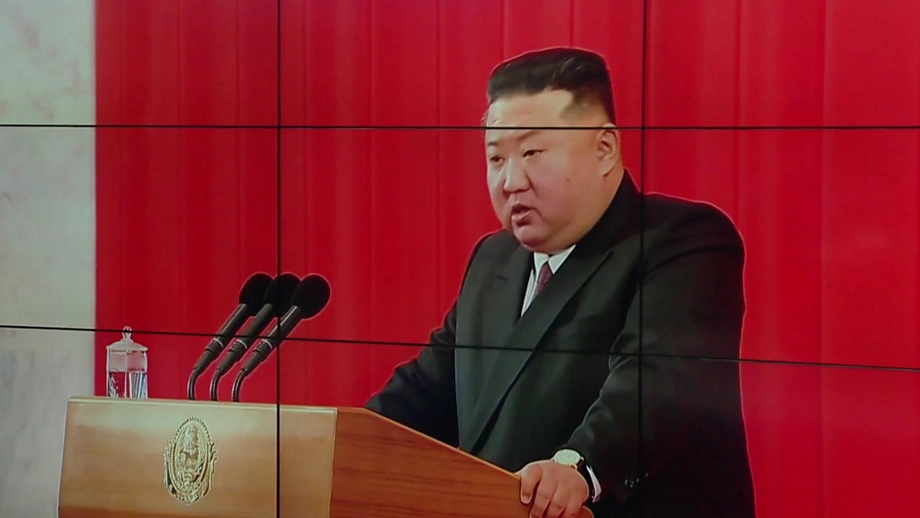
North Korean leader Kim Jong Un has overseen a broader campaign against South Korean popular culture. The law gives officials a detailed basis for punishing possession, viewing, importing and distribution, rather than treating a phone inspection simply as a matter of workplace discipline.
What the Punishment Articles Say
Article 27 directly addresses South Korean films, recordings, compilations, books, songs, drawings and photographs. A person who sees, hears or keeps such material faces five to ten years of reeducation through labor, with more than ten years in serious cases. The same article covers importing or distributing South Korean songs, drawings, photographs or designs. Reeducation through labor means detention combined with compulsory work, making the potential consequences of a saved video vastly more severe than losing a phone or receiving a warning.
Other articles extend the legislation to different kinds of content and conduct:
- Article 28 provides up to five years of reeducation through labor for seeing, hearing or keeping enemy material, rising to five to ten years in serious cases. Importing or distributing enemy films, recordings, edited materials or books can bring more than ten years. Importing or distributing a large quantity, reaching many people, or organizing group viewing can bring lifelong reeducation through labor or death.
- Article 29 sets five to ten years for viewing or keeping sexually explicit material or material promoting obscenity or superstition, with longer sentences in serious cases. Creating, importing or distributing it can bring lifelong reeducation through labor, while production or distribution involving a large quantity can bring death.
- Article 30 provides up to five years of forced labor for seeing, hearing or keeping other foreign films, music, books, images or clothing considered contrary to socialist culture and the North Korean way of life. Illegally importing or distributing foreign films, recordings, edited materials or books carries five to ten years.
- Article 31 addresses recordings, photographs and printed matter containing impure culture. Article 32 allows a brief period of labor for speaking, writing or singing in a South Korean manner, with up to two years for serious offenders.
A saved drama can consequently involve more than the content of one file. Investigators can consider how it entered the country, whether copies were shared and whether other people watched it. Those distinctions separate a possession case from accusations involving distribution or organized viewing.
A Short Timeline of the Controls
The Chongjin searches followed several years in which legal penalties and technical controls developed alongside one another.
- 4 December 2020: The Presidium of the Supreme People's Assembly passed the Law on Rejecting Reactionary Ideology and Culture.
- 19 August 2022: The legislation was amended. Research published that year by Martyn Williams through NK TechLab's Project Reveal also documented phone surveillance software.
- June and July 2025: Examinations and investigations described automatic language substitution, concealed screenshots, digital content checks and an identification system linking users to their devices.
- 14 and 15 November 2026: Youth League officials conducted the factory and dormitory inspections in Chongjin.
- 24 November 2026: The internal source in North Hamgyong Province relayed details of the two episodes.
The dates show why the inspections cannot be understood only as a local disciplinary exercise. Officials searching a handset operate within a legal framework that specifies prison labor and, for the gravest distribution offenses, capital punishment.
Phones That Serve Daily Needs
North Korean smartphones can look like conventional Android handsets, with touch screens, cameras, applications and mobile connections. They run modified versions of Android and support activities including reading official news, watching authorized videos, buying goods and making payments. At least 24 mobile brands are believed to be present in the market, although Apple and Samsung are absent and many devices appear to come from Chinese manufacturers.
Kwangmyong, the national intranet, supplies approved websites and services instead of open access to the global internet. Users cannot freely visit Google, YouTube, foreign social networks or overseas websites. Available services include Manbang, a video platform, and Samhung E-Wallet, a digital payment application.
An analysis of two recent phones also described functions for ordering food, reserving taxis, purchasing medicine and paying for public transport. These features explain why mobile devices have become useful in ordinary life. The same handset can provide payments and entertainment while restricting the information and applications its owner is allowed to use.
Censorship Inside the Handset
A phone smuggled out of North Korea and examined in June 2025 automatically replaced South Korea with puppet state when text was entered. It also changed oppa, a Korean term that can mean an older brother or, in some contexts, a boyfriend, to comrade. A warning said the word should be used only for siblings. The keyboard was therefore enforcing political vocabulary as well as correcting typing.
Trace Viewer supplied another control. The tool took screenshots approximately every five minutes while the phone was operating and stored them in a concealed directory. The owner could find indications that records existed but could not open or delete the images. Martyn Williams had documented the tool in Project Reveal, published by NK TechLab in 2022. Later versions displayed icons with dates and times rather than allowing the user to view the screenshots.
Digital signature checks provide a further barrier. The phone can verify whether an application or file has been authorized and block unapproved software or foreign content, including South Korean films and videos. This mechanism complements a physical inspection: officers can search stored data directly, while the device itself restricts some material before an owner can open it.
A July 2025 investigation into Mobile User Identification described an application assigning an identifier containing ten digits. The identifier was linked to personal information, the SIM card and the phone's IMEI, a number that identifies the device hardware. Together, these systems connect a person, a handset and approved digital services, reducing the anonymity that an owner might otherwise expect.
Earlier Testimony on Punishment and Bribery
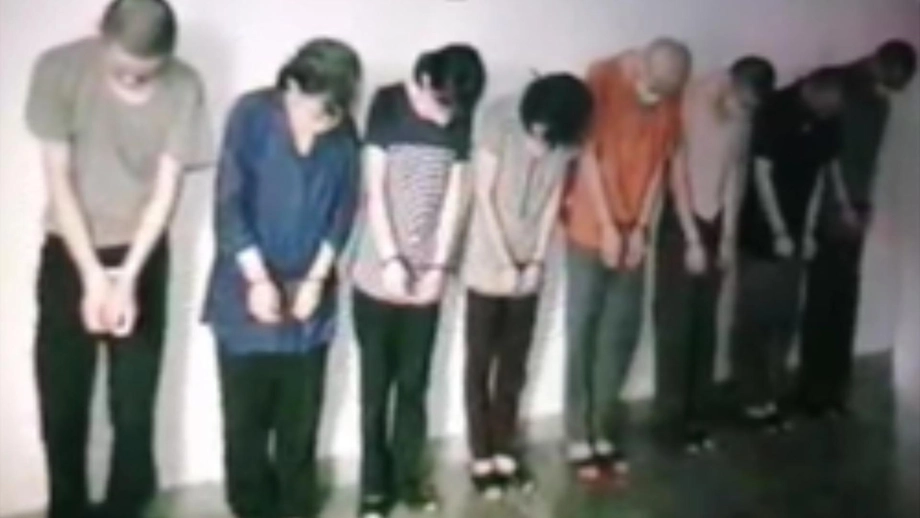
Amnesty International interviewed 25 North Koreans who escaped between 2012 and 2020 about enforcement against foreign media. Their accounts, including testimony on executions, described warnings for some viewers and years in labor camps for others. Families reportedly paid bribes of $5,000 or $10,000 to secure release from reeducation camps, placing money and connections at the center of the outcome.
Witnesses described public executions, including accounts involving teenagers, connected with watching or sharing South Korean television and music. Schoolchildren were reportedly made to attend executions intended to frighten the population. The entertainment mentioned included Squid Game, Descendants of the Sun and songs by the K-pop group BTS. Former residents also said officials and security personnel consumed some of the same material for which ordinary citizens could be severely punished.
Amnesty's account described sentences of five to 15 years of forced labor for watching South Korean entertainment, compared with the five to ten years stated in Article 27 before serious cases are considered. Sarah Brooks, Amnesty International's deputy regional director, characterized the system as repression reinforced by corruption: access to information was criminalized while officials could profit from people desperate to avoid punishment.
The chronology requires care. The 25 interviewees had escaped by 2020, so much of their testimony concerns enforcement before the December 2020 law. Accounts involving Squid Game include an incident reported in 2021 and information passed through family connections. Together, the testimony describes severe punishments preceding the statute and the later legal framework that formalized them.
What the Searches Change in Chongjin
For young people in Chongjin, the immediate change is visible in daily behavior: phones are being left behind for study sessions and lectures, while a dormitory or factory floor can become an inspection site without warning. Collective checks also give workplaces a reason to police their own members before district or enterprise officials arrive.
No central Youth League order directing the two searches has been confirmed. It is also unknown whether anyone received criminal punishment, and no separate result was given for the dormitory inspection. No date for further searches was announced. The confirmed details nevertheless show enforcement reaching into the places where young people work, sleep and attend compulsory political activities.
Key Points
- Youth League officials inspected phones at a Chongjin factory on 14 November 2026 and at a workers' dormitory the next day.
- Five or six factory workers submitted devices; no offending videos were found during that inspection.
- Some young people and workplaces now avoid bringing phones to study sessions and lectures.
- Article 27 of the 2020 law sets five to ten years of reeducation through labor for viewing, hearing or keeping South Korean material, with longer sentences in serious cases.
- Large-scale distribution of enemy material or organized group viewing can bring lifelong labor or death under Article 28.
- North Korean phones can also restrict applications, replace typed expressions and take concealed screenshots.
- No central order for the Chongjin searches has been confirmed, and it is unknown whether they resulted in criminal punishment.