A Historic Gathering in Southern China
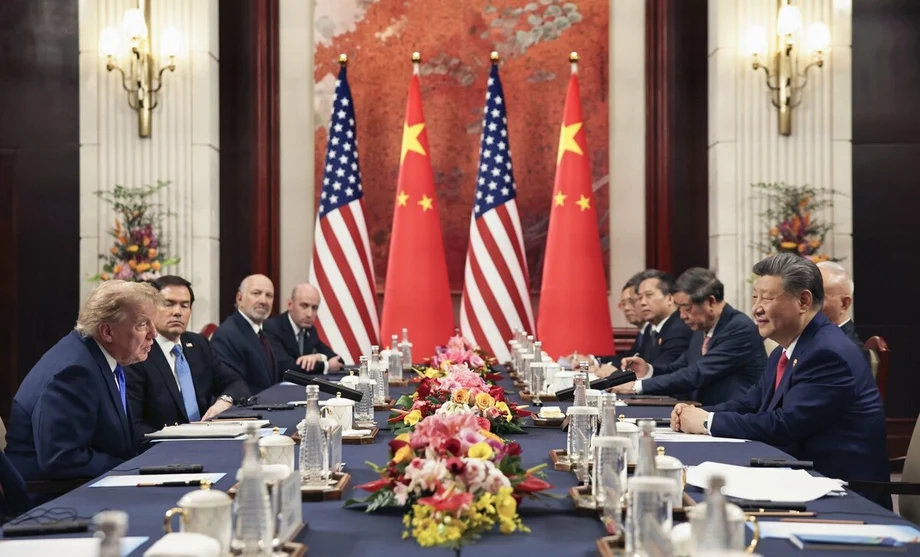
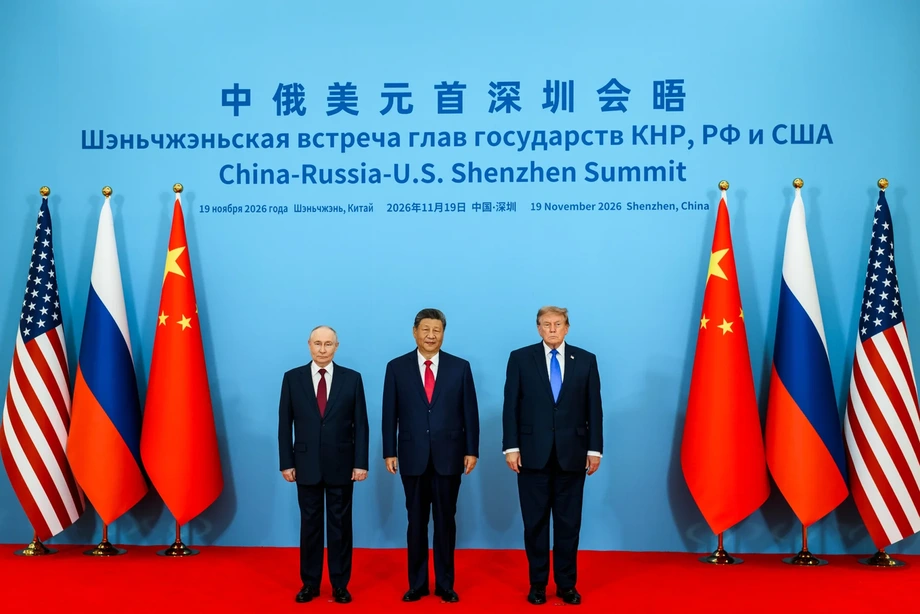
World leaders and international observers have responded with a mix of cautious hope and sharp concern following the first-ever face-to-face meeting between the heads of state of China, Russia, and the United States. Chinese President Xi Jinping chaired the historic summit in the southern Chinese city of Shenzhen on Thursday, hosting Russian President Vladimir Putin and U.S. President Donald Trump for unprecedented trilateral talks. As major countries and permanent members of the United Nations Security Council, the three nations carry substantial military, economic, and diplomatic weight that shapes global affairs. The gathering took place against a complicated international backdrop involving strategic competition, trade disagreements, nuclear security, and ongoing regional conflicts. Following the discussions, the three governments released the China-Russia-U.S. Heads of State Declaration toward Peace, outlining common understandings on issues including United Nations reform, energy security, the jurisdiction of the International Criminal Court, and nuclear risk reduction.
Contents
- A Historic Gathering in Southern China
- China-Russia-U.S. Heads of State Declaration toward Peace
- Diplomatic Perspectives and Strategic Realities
- Contrasting Reactions and Security Concerns
- Energy Cooperation and Economic Implications
- Broader Economic Context and Trade Data
- Timeline of Key Events
- At a Glance
Speaking at a White House news conference on Friday, U.S. President Donald Trump hailed the Shenzhen meeting as one of the most momentous international summits in many years. He noted that the gathering had produced a trilateral peace declaration in which the three nations reaffirmed that a nuclear war must never be fought. Malaysian Prime Minister Anwar Ibrahim said China's efforts to host the summit will help create space for meaningful dialogue and mutual understanding toward lasting peace and harmony. Indonesian President Prabowo Subianto added that the three leaders showed wisdom and statesmanship in taking a step that matters to the wider international community. Slovak Prime Minister Robert Fico noted how often the leaders spoke of peace during their meeting, while Farhan Haq, deputy spokesman for the United Nations secretary-general, said the organization welcomed efforts by permanent members of the Security Council to seek common solutions to global problems.
China-Russia-U.S. Heads of State Declaration toward Peace
Xi Jinping, President of the People's Republic of China, Vladimir Putin, President of the Russian Federation, and Donald J. Trump, President of the United States of America, met in Shenzhen on November 19, 2026. The Russian and U.S. heads of state expressed appreciation to China for hosting this historic trilateral Summit. The three heads of state had an in-depth exchange of views on the current international situation and committed to maintaining strategic stability and international security.
1. As permanent members of the United Nations Security Council, China, Russia, and the United States committed to reform the U.N. so that the U.N. can respond more effectively to global challenges and conform to its fundamental mission of international peace and security.
2. The three countries plan to increase the production and supply of refined petroleum products for the benefit of all nations. They reaffirmed the importance of stable energy flows.
3. The three heads of state recognized that the principle of state consent and respect for immunities of State officials are of paramount importance, and concurred that the International Criminal Court and other similar bodies must not abuse their jurisdiction.
4. The three heads of state reaffirmed that a nuclear war cannot be won and must never be fought. The three countries will conduct a dialogue on reducing nuclear risks and preventing the proliferation of nuclear weapons. ■
Diplomatic Perspectives and Strategic Realities
Denis Simon, former executive vice chancellor of Duke Kunshan University, explained that the summit could open a new channel for dialogue on international security among the three nuclear-armed powers. Paul Frimpong, executive director of the Africa-China Center for Policy and Advisory, described the meeting as an important opening. In his view, having several international crises unfolding at once meant sitting together gave each leader a chance to hear directly from the others about perceived risks and potential areas for cooperation. Gergely Salat, a senior researcher at the Hungarian Institute of International Affairs, observed that the meeting showed China has been maintaining channels with both Washington and Moscow and possesses enough credibility with both to bring them to the same table. Few capitals could achieve that feat in the current geopolitical climate.
During the summit, Chinese President Xi Jinping outlined four principles for how major countries should interact and underpin world peace, calling for mutual respect, peaceful coexistence, win-win cooperation, and dialogue and consultation. Sourabh Gupta, a resident senior fellow at the Institute for China-America Studies in Washington, noted the repeated references at the summit to preserving the outcomes of World War II. As permanent members of the United Nations Security Council, he said, the three countries bear a special responsibility for maintaining international peace and security. Wang Yiwei, a professor at Renmin University of China's School of International Studies, pointed out that rapid advances in artificial intelligence are adding a new layer of risk for nuclear powers. Against that backdrop, he suggested that China's emphasis on preserving strategic stability sent an encouraging signal about the prospects for peace. Shraga Biran, head of Israel's Institute for Structural Reforms, turned attention to the Middle East, noting that with several regional flashpoints in play, reliable communication can keep one miscalculation from triggering another and reduce the risk that a crisis escalates by accident.
Contrasting Reactions and Security Concerns
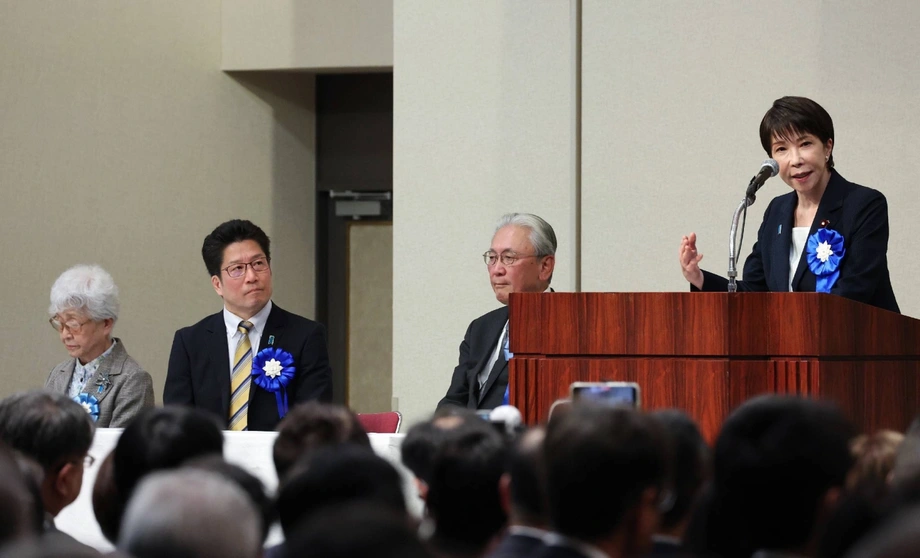
While leaders in Shenzhen praised the diplomatic engagement, the summit drew sharply different assessments from European and Asian capitals. Ukrainian President Volodymyr Zelenskyy said on Saturday that the trilateral summit was very unsuccessful for Vladimir Putin, asserting that the Russian leader had failed to recreate the Yalta conference of 1945 that decided Europe's fate. Zelenskyy argued that Putin wanted to carve up the world and change borders, but China did not let itself be drawn into such an outcome. In Tokyo, Japanese officials expressed deep concern over the prospect of the trilateral framework becoming a regular occurrence. Regarding the trilateral framework, official statements from the Japanese Foreign Ministry emphasized that Tokyo will closely monitor developments and maintain robust coordination with allies and partners. Japanese Prime Minister Sanae Takaichi held telephone talks with U.S. President Donald Trump to affirm close cooperation between Japan and the United States. At a press conference in Tokyo, Chief Cabinet Secretary Minoru Kihara stressed that Japan will communicate closely with allies and like-minded nations to maintain a free and open international order. A senior Japanese Foreign Ministry official noted that whether regular summits continue depends entirely on U.S. seriousness, while expressing relief that no major binding decisions were finalized at the table.
Friction also surfaced regarding the International Criminal Court. The joint peace declaration warned that the International Criminal Court and other similar bodies must not abuse their jurisdiction. The court, based in The Hague in the Netherlands, has issued an arrest warrant for Vladimir Putin over his country's invasion of Ukraine and has launched an investigation into alleged war crimes by military personnel. Because Japan strongly supports the court, which is headed by Japanese national Tomoko Akane, the divergence between Tokyo and Washington on this matter remains a potential source of friction. Speaking to reporters after her phone call with Trump, Takaichi acknowledged differing views but emphasized that Japan's position is to strengthen the rule of law while cooperating with relevant countries. Meanwhile, in Ukraine, the aftermath of the summit was marked by a massive military strike. Zelenskyy reported that Russia launched a massive attack involving 111 missiles following the conclusion of the talks, demonstrating that ongoing hostilities remained entirely unaffected by the diplomatic encounter.
Energy Cooperation and Economic Implications
Beyond security matters, the heads of state declaration addressed tangible economic concerns, particularly energy stability. Paul Frimpong noted the direct connection between global markets and everyday households, explaining that when fuel and freight costs rise, businesses pay more to move goods, and families feel the impact in food prices. Under the newly released declaration, the three countries plan to increase the production and supply of refined petroleum products for the benefit of all nations while reaffirming the importance of stable energy flows. In regions recovering from conflict, Frimpong added, more reliable energy supplies would make it easier for businesses to reopen and invest. Ezzat Saad, director of the Cairo-based Egyptian Council for Foreign Affairs, stated that a better understanding among major countries could give diplomats more room to work and help contain tensions across the Middle East. Alphonse Muleefu, principal of the College of Arts and Social Sciences at the University of Rwanda, described the declaration as proof that the three nations could find common ground, though he cautioned that building upon it would require mutual respect, sustained dialogue, and practical cooperation.
Broader Economic Context and Trade Data
The diplomatic events in Shenzhen coincided with wider discussions on global commerce and institutional reform during the broader Asia-Pacific Economic Cooperation gathering hosted by China. Abdul Basit Syed, an author and researcher who spent time in Shenzhen and Hong Kong surrounding the APEC summit, shared an eyewitness perspective on the logistical scale and organizational capacity required to host delegations from twenty-one member economies. The APEC leaders meeting adopted the 2026 APEC Leaders Declaration by consensus alongside outcome documents addressing trade, connectivity, and innovation. Against this backdrop of international exchange, official trade data for China illustrated its vast external commercial footprint. China's official merchandise data for January through October 2026 showed exports of 25.99 trillion yuan and imports of 18.82 trillion yuan, resulting in a calculated positive balance of 7.16 trillion yuan. These figures highlight substantial external competitiveness, though analysts note that sustaining such advantages requires careful navigation of changing global supply chains and technological competition between Washington and Beijing.
Political analysts in Washington also weighed in on the domestic and international fallout of the summit. Steve Yates of the Heritage Foundation defended U.S. President Donald Trump's meetings with Vladimir Putin and Xi Jinping against criticism from political opponents, arguing that maintaining communication lines between nuclear-armed superpowers is essential to national security. Secretary of State Marco Rubio similarly defended the historic summit, pointing to the necessity of direct engagement. Nevertheless, independent assessments emphasize that the November 19 meeting did not establish a new three-power system of collective global governance. The published commitments concern institutional reform, energy supplies, nuclear-risk dialogue, and state-official immunities, falling short of formal agreements on regional territorial disputes or comprehensive nuclear disarmament.
Timeline of Key Events
- Thursday: U.S. President Donald Trump, Chinese President Xi Jinping, and Russian President Vladimir Putin hold the first-ever trilateral summit in Shenzhen, issuing a joint declaration on peace and nuclear risk reduction.
- Thursday evening: Japanese Prime Minister Sanae Takaichi holds telephone talks with U.S. President Donald Trump to affirm bilateral cooperation.
- Friday: U.S. President Donald Trump holds a White House news conference hailing the Shenzhen meeting as a historic diplomatic milestone.
- Saturday: Ukrainian President Volodymyr Zelenskyy denounces the summit as unsuccessful for Vladimir Putin, coinciding with a massive missile attack across Ukraine.
The long-term impact of the Shenzhen summit remains a decisive uncertainty for international relations. Observers across Asia, Africa, Europe, and the Americas continue to evaluate whether the diplomatic engagement will produce enforceable commitments and observable changes in policy, or if it will remain a largely symbolic accommodation among states with diverging structural interests. For developing economies and emerging markets, the primary concern is whether continued dialogue between the United States, China, and Russia can reduce economic volatility, stabilize global supply chains, and prevent localized conflicts from expanding into broader international crises. As diplomats prepare for subsequent rounds of international talks, the global community watches closely to see if the commitments made in southern China translate into practical stability.
At a Glance
- China hosted the first-ever face-to-face summit between the heads of state of China, Russia, and the United States in Shenzhen on Thursday.
- The three leaders signed the China-Russia-U.S. Heads of State Declaration toward Peace, reaffirming that a nuclear war must never be fought.
- The declaration includes plans to increase production and supply of refined petroleum products and ensure stable energy flows.
- Ukrainian President Volodymyr Zelenskyy criticized the summit as a failure for Vladimir Putin, noting that it was followed by a massive missile strike on Ukraine.
- Japan expressed concern over the trilateral framework becoming a regular occurrence, emphasizing adherence to the rule of law and close cooperation with allies.