A Palace Order to Turn Signatures Into Projects
President Prabowo Subianto used a meeting that lasted about three hours at the Presidential Palace in Jakarta on Tuesday, 24 November 2026, to push a US$15 billion China investment package into its next stage. The instruction went to Rosan Roeslani, chief executive of BPI Danantara and Indonesia's investment and downstreaming minister, who said the president wanted the agreements signed in Shenzhen followed up without delay.
Contents
The package is worth about Rp273.4 trillion at an exchange rate of Rp18,227 per US dollar. It is not a single factory or a single loan. It is a bundle of 35 business agreements signed at the Indonesia-China Business Forum in Shenzhen on 20 November, covering industrial estates, petrochemicals, renewable energy, manufacturing, electric vehicles, digital technology, data centres, pharmaceuticals and vaccines, and infrastructure.
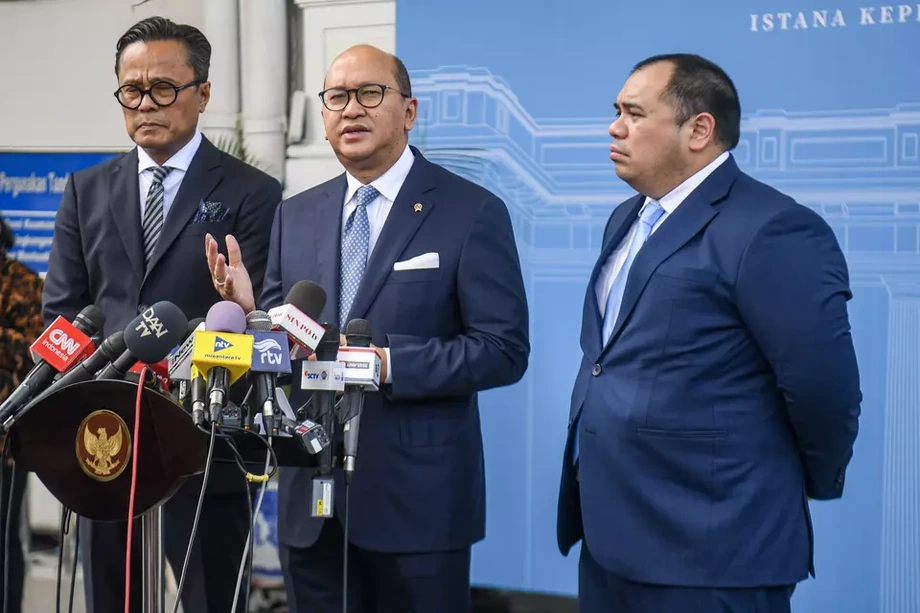
Rosan spoke to journalists after the meeting, which was also attended by Bahlil Lahadalia, the coordinating minister for downstreaming and energy transition, and Dony Oskaria, chief operating officer of BPI Danantara. Rosan said the Chinese side had cleared the main outbound investment gate.
The agreements signed in Shenzhen, worth approximately US$15 billion, were also directed by the President to be followed up immediately.
His account places the emphasis on speed, but also on a condition that matters for any Chinese investor: approval from Beijing. Rosan said the projects had secured clearance from China's National Development and Reform Commission and its outbound direct investment process.
What the 35 Agreements Cover
The Shenzhen forum gathered Indonesian and Chinese business leaders on the final day of Prabowo's China visit. The 35 memoranda of understanding ranged from industrial parks to vaccines, a spread that mirrors the government's wish to move beyond raw commodity exports.
Kadin's China committee chair, Garibaldi Thohir, said the commitments fit national priorities in food security, mineral processing, new energy, the digital economy, biotechnology, manufacturing, and infrastructure and logistics. He projected more than 30,000 jobs in Indonesia, with technology transfer and training as part of the package.
For comparison, the commitments reached during the 2024 Indonesia-China Business Forum in Beijing were valued at $10.7 billion. Today's achievement reflects the confidence that Chinese partners have in Indonesia, a confidence that has continued to grow year after year.
The $15 billion is about 40% more than the $10.7 billion recorded at the 2024 forum in Beijing, using the figures Garibaldi gave.
Two announcements sit alongside the business deals. Prabowo said Indonesia would build 10 smart cities with a Chinese consortium and put digital technology, including artificial intelligence, into all schools with Chinese industry participation. Those plans form part of the wider Shenzhen haul rather than separate line items in the $15 billion forum total.
Why Beijing's Approval Is the Gate That Matters
Chinese companies cannot move money offshore for an investment without passing through a system run by the NDRC, China's top economic planning agency. Rosan said the $15 billion package had NDRC approval and had also cleared the outbound direct investment process, which is the channel Chinese firms use for overseas projects.
They can be followed up immediately because investments from China must obtain approval from the Chinese government. All the necessary approvals have been secured.
The rules around that system are changing. On 22 October 2026 the NDRC published Order No. 49, a set of measures for outbound investment that take effect on 1 December 2026. The measures replace 2017 rules and extend the approval and filing system to resident individuals and other organisations, not just companies.
For a deal of this size, several obligations matter. A Chinese investor must file a pre-work report at least 10 working days before major steps if the Chinese investment amount is US$100 million or more or the project bears on diplomatic relations. It must file a completion or termination report within 10 working days, report major adverse events immediately, and submit an annual report by 30 June. Non-sensitive investments routed through controlled overseas entities need a reinvestment report at least 10 working days before they are made.
The measures carry penalties. Failure to obtain approval or complete a filing, or submitting false materials, can bring confiscation of illegal gains and fines of 0.1% to 0.5% of the Chinese investment amount, rising to 0.5% to 1% if the breach is not corrected. Investing in prohibited areas can lead to an order to dispose of the investment and fines of up to 1%. Authorities may also bar an investor from outbound investment for one to three years.
Rosan's statement that approvals are in hand does not end the paperwork. The new rules follow an investment through its life, so the Chinese partners in the Shenzhen deals will have reporting duties after the signing ceremony. Those duties can affect timing if a Chinese party has to wait for a filing or faces a compliance problem.
The Larger $86.8 Billion Haul
The $15 billion forum package sits inside a larger set of agreements from Prabowo's China trip. On 18 November, during the APEC leaders' meeting in Shenzhen, four cooperation agreements worth about $71.8 billion were signed. The signings included a $50 billion memorandum between PT Kota Masa Depan Indonesia, a Danantara company, and a consortium led by Shaanxi Construction Engineering Group for smart city development.
Hisense signed a $10 billion commitment for a joint research laboratory, talent development and home appliance manufacturing with the Ministry of Higher Education, Science and Technology and Danantara. A $1.8 billion memorandum on coal-to-ethanol technology brought together that ministry, state energy company Pertamina and Beijing Petrochemical Engineering. The four agreements were valued at about $71.8 billion in total.
Bahlil put the total potential from the trip, including the business forum, at $86.8 billion. That is close to Rp1,600 trillion. The figure combines the $71.8 billion from the APEC signings with the $15 billion from the 35 forum agreements.
Prabowo described the numbers as still growing.
A few days ago, I calculated a total of approximately $71.8 billion. Today, the figure stands at around $15 billion, with more to be added in the coming days and weeks.
The visit also produced a decision to launch partnership talks on a Comprehensive Economic Partnership Agreement, announced by Xi Jinping and Prabowo at Kylin Villa in Shenzhen on 20 November. The two leaders met a day after the APEC summit ended, and Xi said strategic trust between the countries had grown more solid.
Jobs, Skills and the 2027 Test
At the palace meeting, Prabowo asked the government to work out how many jobs each investment could create, not just how much capital it would bring. Rosan said the president wanted a detailed employment impact from projects that have so far been described in aggregate.
These investments can now move forward because they have received approval from the Chinese government. The president wants us to respond promptly, including by assessing how many jobs they could generate.
The 30,000 figure attached to the forum is a projection. It comes with promises of technology transfer and training, including cooperation with Chinese universities. Garibaldi said the aim is to prepare Indonesian workers for roles that go beyond construction and assembly.
We will also continue to collaborate with business partners in both nations to prepare Indonesia's human resources through education and training initiatives in partnership with leading Chinese universities.
Bahlil gave the clearest date for the next stage. He said implementation of the commitments from the APEC meetings is expected to begin in 2027. Rosan did not identify individual projects, their schedules or job numbers at the briefing, so the first groundbreakings remain without a published date.
The same palace meeting covered a separate talent program for state-owned enterprises. Dony Oskaria, who also heads the state-owned enterprise regulatory agency, said 400 young people with IQ scores above 120 are in training, with a target of about 1,000. The program is meant to build a pool of leaders for state companies, including those that will manage the new investments.
Downstreaming and the Growth Math
Downstreaming means processing raw materials inside Indonesia instead of shipping them out for others to refine. The policy is central to Prabowo's plan to lift economic growth to 8% by 2029, and the China package is meant to supply projects that can add value in petrochemicals, metals, batteries and manufacturing.
The palace meeting looked at 2027, when the government expects the first wave of these projects to move. Rosan said the discussion covered how much investment and Danantara would contribute if the economy grows at 6%, 6.5% or up to 8%.
Bahlil described the meeting as a follow-up to the ASEAN Summit in Manila and the APEC meeting in Shenzhen.
The president's instructions are very clear: we must accelerate downstream industries and several program components that follow up on our visits to the ASEAN Summit in Manila and the APEC meeting in China.
The coordinating ministry's task is to turn the signed commitments into factories, offices and training places. Danantara, created in March 2025, is the state investment agency behind several of the signings. Its senior leaders have been in demand at the palace; Rosan and Dony left a financial briefing on 25 November after a palace summons.
Timeline: From APEC to the Palace
- 18 November 2026: Prabowo arrives in Shenzhen for the APEC leaders' meeting; four agreements worth $71.8 billion are signed, including the $50 billion smart city memorandum.
- 19 November 2026: Prabowo speaks at the APEC plenary and meets other leaders.
- 20 November 2026: Xi and Prabowo announce the launch of CEPA talks at Kylin Villa; 35 Indonesia-China business agreements worth about $15 billion are signed at the business forum.
- 23 November 2026: Bahlil puts the total potential from the China trip at $86.8 billion.
- 24 November 2026: Prabowo instructs ministers at the palace to follow up the $15 billion package and calculate its employment impact.
- 1 December 2026: The NDRC's new outbound investment measures take effect.
- 2027: Bahlil expects implementation of the APEC commitments to begin.
Key Points
- Prabowo ordered follow-up on 35 China agreements worth about $15 billion, or Rp273.4 trillion.
- The deals were signed in Shenzhen on 20 November 2026 and cover industrial estates, petrochemicals, renewables, manufacturing, EVs, digital technology, data centres, pharmaceuticals and infrastructure.
- Rosan Roeslani said NDRC and outbound investment approvals are secured, clearing the main Chinese regulatory gate.
- The $15 billion forum package is part of a larger $86.8 billion haul from the China trip, including $71.8 billion signed during APEC.
- Kadin projects more than 30,000 jobs; Prabowo wants a detailed employment calculation.
- Bahlil Lahadalia expects implementation to begin in 2027.
- China's new NDRC outbound investment rules take effect on 1 December 2026 and add reporting duties and penalties.