State Takeover Targets One of the World's Largest Pulp Estates
Indonesia has stripped one of the world's largest pulp mills of its primary wood plantation estate, taking back 338,536 hectares in Riau Province from PT Riau Andalan Pulp and Paper (RAPP). Acting under Forestry Ministerial Decree No. 971 of 2026, signed on Thursday, November 19, 2026, Jakarta revoked RAPP's forestry permit as an administrative sanction over alleged environmental violations and land encroachment.
Contents
- State Takeover Targets One of the World's Largest Pulp Estates
- What Violations Did the Task Force Cite Against RAPP?
- What Happens to 41,000 Workers and the Pangkalan Kerinci Mill?
- How Big Is APRIL Group and Why Does Riau Depend on It?
- Wood Supply Squeeze and Frozen Forestry Certification
- RAPP Response and Conservation Claims
- Parallel Action Against Palm Oil Mill PT Gemilang Sawit Lestari
- Wider Indonesian Crackdown and Pressure From Singapore
- Timeline of Key Events Around RAPP and Indonesia's Forest Crackdown
- At a Glance
RAPP operates as the main manufacturing and forestry arm of Asia Pacific Resources International Limited (APRIL Group), Indonesia's number two producer of pulp and paper. Its revoked Forest Utilization Business License, known in Indonesia as a PBPH, was originally issued on September 21, 2021 under Decree SK.827/MENLHK/SETJEN/HPL.0/9/2021 and covered industrial forest plantations across six Riau districts: Pelalawan, Siak, Kuantan Singingi, Indragiri Hulu, Kampar, and the Meranti Islands.
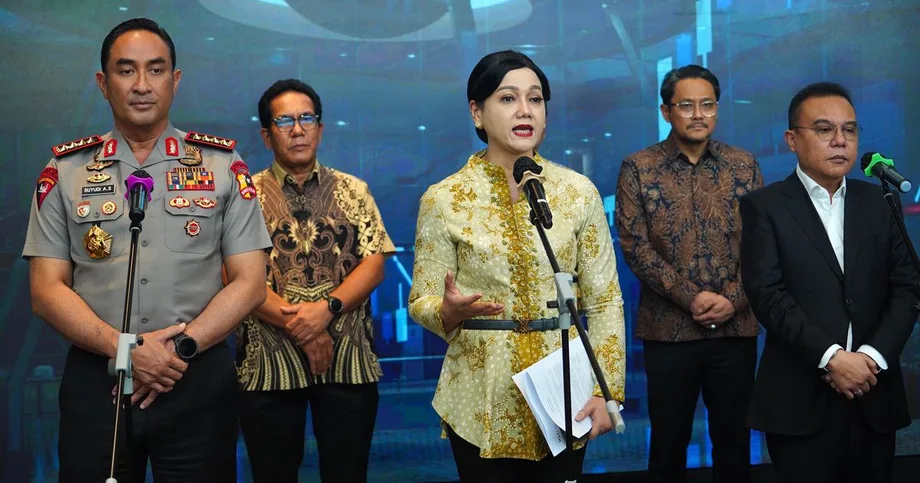
Industrial forest plantation permits allow companies to plant, manage, and harvest fast growing trees such as acacia and eucalyptus on state forest land to supply paper and packaging mills. On Friday, November 20, 2026, the government's Forest Area Enforcement Task Force, known as Satgas PKH, announced the takeover in Kuantan Singingi regency and sealed the concession area. Deputy Defense Minister Richard Tampubolon, the deputy attorney general for special crimes, the regional military commander, and three deputy ministers joined provincial leaders and police officials for the enforcement action.
The reclaimed estate equals roughly 4.5 times the land area of Singapore and accounts for more than half of APRIL Group's 618,100 hectares of industrial plantations. Task force spokesperson Barita Simanjuntak said all corporate activity inside the concession had stopped, while stressing that losing the license does not erase RAPP's duty to repair damaged land or face legal accountability.
With the revocation of the permit, all activities within RAPP's licensed area have been halted, and the area has returned to state control.
What Violations Did the Task Force Cite Against RAPP?
Investigators from Satgas PKH reported violations covering about 19,100 hectares inside the concession, representing less than 6 percent of the 338,536 hectare total. According to task force figures, oil palm plantations occupied 18,362.74 hectares, unlicensed mining openings covered 541.46 hectares, and damaged protected zones totaled 211.54 hectares.
Authorities did not state who planted the oil palms inside the pulpwood estate. Alongside those land use findings, the task force cited recurring fires on peatland and failures to safeguard the buffer zone around Tesso Nilo National Park, a vital forest corridor and habitat for the critically endangered Sumatran elephant.
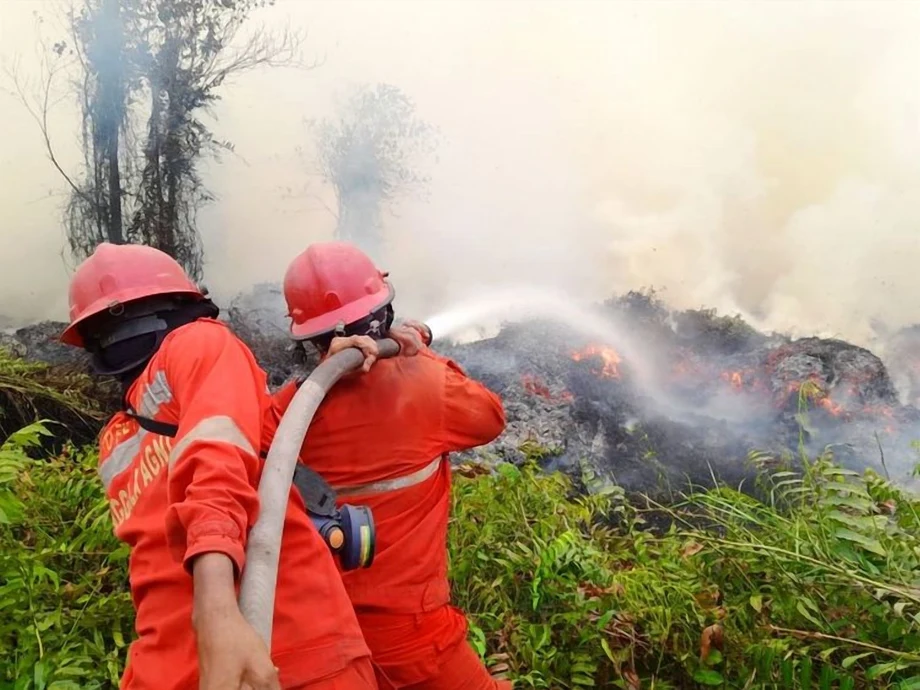
Peatlands consist of deep layers of waterlogged organic soil that store vast amounts of carbon. When companies drain peat to grow commercial crops, the dried soil catches fire easily and can burn underground for weeks, sending thick smoke across Southeast Asia while destroying wildlife shelter around protected parks.
Environmental group WALHI Riau said its monitoring recorded fires across RAPP's concession in 2015, 2016, 2017, 2020, and again in 2026. That record includes a March 2026 blaze on peat forest at the Mandau estate, which RAPP previously stated had spread from outside its concession boundary. Speaking on Monday, November 23, 2026, Ristianto Pribadi, head of public relations and foreign cooperation at the Ministry of Forestry, explained that the revocation aimed to enforce forest compliance and safeguard ecological functions.
That step is part of enforcing compliance in the use of forest areas, protecting peat ecosystems, and safeguarding ecological functions and wildlife habitats.
What Happens to 41,000 Workers and the Pangkalan Kerinci Mill?
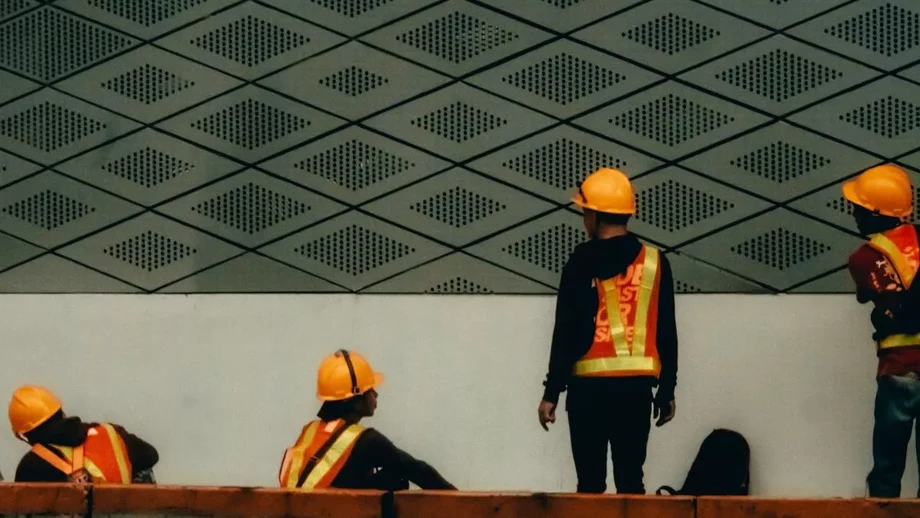
Over the weekend following the announcement, Satgas PKH spokesperson Barita Simanjuntak promised there would be no layoffs at RAPP. He said enterprises owned by the state and regional governments would step in to keep operations running under a coordinated mechanism overseen by Satgas PKH alongside 12 ministries and agencies.
Several critical operational details remain undecided. The task force has not named the state or regional enterprises that will manage the 338,536 hectares, explained how the handover will function, or clarified who will harvest the standing timber and on what terms RAPP's Pangkalan Kerinci mill will purchase wood. The Ministry of Forestry also handed responsibility for explaining the future of factory operations to Satgas PKH for coordinated handling across agencies.
In Pekanbaru on Monday, November 23, 2026, Acting Riau Governor SF Hariyanto met leaders of the RAPP labor union to calm anxiety among staff. He pledged that the provincial government would forward worker concerns to Jakarta and urged employees to remain at their posts.
The government remains present for the public and the workers. There is not a single intention by the government to carry out layoffs. Workers should keep working and do not need to feel afraid.
Ilham Jumadil Karim, chairman of the Riau Complex Labor Union Alliance (ASPERIKOM), told provincial officials that workers and their families urgently need certainty over who will manage the estate next. H Jufri, head of the Pelalawan branch of the Indonesian Employers Association (APINDO), similarly urged Jakarta to hold constructive talks with the company to protect legal certainty and Riau's investment climate.
At the national parliament in Jakarta on November 23, 2026, Commission II lawmaker Azis Subekti of the Gerindra Party welcomed the forest crackdown while warning authorities not to let ordinary laborers bear the cost of corporate decisions or become bargaining chips against inspections.
Forests can disappear little by little over many years. A laborer's wages can vanish in a single day. When a forest area is brought under order, those two realities suddenly collide.
How Big Is APRIL Group and Why Does Riau Depend on It?
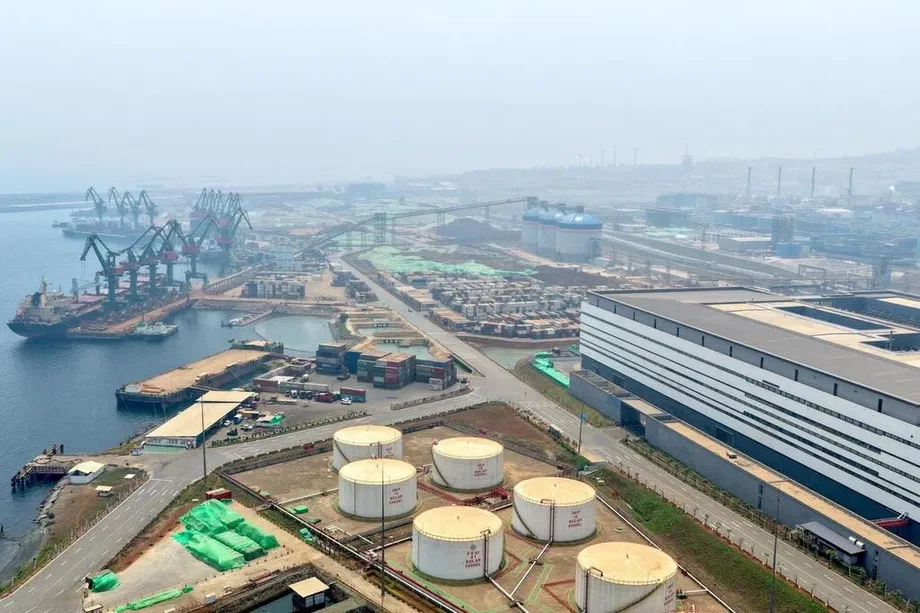
RAPP was legally established under Deed No. 76 on May 15, 1989, and began developing plantations and a mill complex at Pangkalan Kerinci in Pelalawan regency in 1993. Commercial pulp production followed in 1995 and commercial paper manufacturing began in 1998, transforming a settlement of roughly 200 residents in 1993 into a regency capital of 250,000 people today, with an estimated 20 percent linked to RAPP operations.
APRIL Group and RAPP sit inside Royal Golden Eagle (RGE), the global conglomerate founded by billionaire Sukanto Tanoto in 1973 as Raja Garuda Mas. Headquartered in Singapore, RGE employs more than 80,000 people globally across pulp and paper, palm oil, viscose fiber, specialty cellulose, and energy, with corporate profiles putting group assets at more than US$35 billion to US$40 billion.
Directly, RAPP and APRIL employ more than 41,000 workers and buy goods and services from hundreds of local businesses. Company economic impact studies estimate that RAPP supports roughly 170,000 jobs across Riau and 300,000 nationwide, while contributing more than Rp 350 trillion to Riau's regional gross domestic product between 2016 and 2025. Over the past decade, APRIL also spent Rp 970 billion on community programs across five regencies, including stunting reduction in 138 villages and maternal health equipment for 26 community health centers.
At Pangkalan Kerinci, RAPP's flagship industrial complex can produce up to 2.8 million tonnes of pulp and 1.15 million tonnes of paper per year. APRIL expanded the site with a US$1 billion viscose fiber plant under Asia Pacific Rayon in 2018 and began commissioning a US$2.3 billion (Rp 33.4 trillion) packaging board mill under PT Riau Andalan Paperboard International in 2024, designed for up to 1.2 million tonnes of annual output. More than 85 percent of production is exported to over 100 countries, reaching 119 markets.
Wood Supply Squeeze and Frozen Forestry Certification
Even before Decree No. 971 took effect, APRIL Group faced tightening raw material supplies in Sumatra. Across Indonesia, APRIL manages 1.4 million hectares in total, including 618,100 hectares (43 percent) of industrial plantations divided between 12 concessions it manages directly and 28 concessions operated by exclusive partner suppliers.
According to APRIL Group's 2025 sustainability report, its integrated mills processed 15.5 million tonnes of wood and fiber in 2025 to make roughly 4 million tonnes of pulp. Partner suppliers provided 50 percent of that fiber, APRIL's own plantations supplied 32 percent, open market suppliers accounted for 16 percent, and community forests delivered 2 percent.
Earlier in 2026, four partner suppliers lost their forestry permits during Jakarta's enforcement campaign, cutting APRIL's wood supply in Riau by an estimated 15 percent. To plug that gap, APRIL announced in late May 2026 that it was shifting its deforestation cutoff date from 2015 to 2020, allowing purchases from two Kalimantan forestry companies, PT Industrial Forest Plantation and PT Mayawana Persada, which monitoring platform Nusantara Atlas reported had cleared nearly 80,000 hectares of forest between 2015 and 2024.
Changing the cutoff date kept APRIL locked out of the Forest Stewardship Council (FSC), an international certification system that assures buyers that paper and wood products come from responsibly managed forests. In June 2026, the FSC stated that APRIL had satisfied earlier conditions linked to a September 2025 suspension over a violent incident at Toba Pulp Lestari, yet kept the suspension in place over APRIL's revised wood sourcing policy. Auriga Nusantara executive director Timer Manurung described the May cutoff change at the time as reckless and highly irresponsible.
RAPP Response and Conservation Claims
In a written statement issued on Friday, November 20, 2026, RAPP and APRIL said they had only learned of the permit revocation through news coverage and were still waiting for official notification and further details from Jakarta. Management stressed that its immediate priority is protecting the livelihoods of local communities and minimizing disruption for contractors, customers, and suppliers.
We respect the government's authority and will continue to engage constructively with the relevant authorities. We are currently awaiting formal notification and further clarification, and will respond through the appropriate channels once we receive them.
Defending its environmental record, APRIL noted that it conserves nearly 500,000 hectares of natural forest alongside its plantations, including the Restorasi Ekosistem Riau peatland program backing Indonesia's national climate goal, FOLU Net Sink 2030. Since 2014, its Fire Free Village Programme has worked with more than 40 villages and cut burned land in participating areas by more than 90 percent, building on ISO 14001 certification from 2002, UN Global Compact membership in 2006, and admission to the World Business Council for Sustainable Development in 2007.
RAPP has faced state intervention before, though never on this scale. In October 2017, the environment ministry cancelled RAPP's work plan covering 10 years for failing to comply with new peatland rules, halting operations until the company agreed to submit a revised plan, whereas Decree No. 971 revokes the underlying concession entirely. WALHI Riau executive director Eko Yunanda urged the government to guarantee full environmental restoration after taking back the land and to include local workers and Indigenous communities in planning the recovery.
Parallel Action Against Palm Oil Mill PT Gemilang Sawit Lestari
During the same enforcement operation in Kuantan Singingi regency, Satgas PKH moved against palm oil operator PT Gemilang Sawit Lestari (PT GSL). Investigators found indications that PT GSL's independent palm oil mill, which lacks its own plantation estate, had been buying and processing palm fruit harvested illegally inside state forest zones, encouraging broader encroachment into nearby woods.
In its November 20, 2026 statement, Satgas PKH said it recommended cancelling and rejecting PT GSL's pending application to release about 32 hectares of forest land so the area could revert to the state. Lawmakers and officials reporting the subsequent field takeover placed the seized mill, plantation, and forest release area at 42 hectares.
Wider Indonesian Crackdown and Pressure From Singapore
President Prabowo Subianto created Satgas PKH in January 2025 under the leadership of Defense Minister Sjafrie Sjamsoeddin to reclaim forest areas converted without permission. In its first year alone, the task force took back 4.09 million hectares of illegal oil palm inside the forest estate, and Attorney General figures cited by officials place total reclaimed forest land at 6,220,845.93 hectares, comprising 6,206,212.14 hectares of plantations and 14,633.79 hectares of mining sites. RAPP's 338,536 hectares equal about 5.4 percent of that reclaimed total.
Separately, the Ministry of Forestry sanctioned 32 companies over fires on their land, and in January 2026 revoked the permits of 28 companies after deadly floods and landslides struck Aceh, North Sumatra, and West Sumatra. That January wave stripped permits from Toba Pulp Lestari, which the FSC counts inside APRIL's corporate group, along with two suppliers linked to APRIL, PT Sumatera Riang Lestari and PT Sumatera Sylva Lestari, with criminal investigations opened and plantations slated for state enterprise PT Agrinas Palma Nusantara.
Regional pressure over transboundary smoke has also sharpened enforcement across Indonesia's pulp sector. In October 2026, Singapore's National Environment Agency sent preventive notices to 10 companies in Indonesia and information requests to 10 firms based in Singapore, while Singapore Senior Minister K. Shanmugam publicly linked rival Asia Pulp & Paper (APP) Sinar Mas to three South Sumatra suppliers tied to fires: PT Bumi Andalas Permai, PT Bumi Mekar Hijau, and PT Sebangun Bumi Andalas Wood Industries. WALHI also flagged a March 2026 fire covering about 616 hectares near PT Arara Abadi in Riau.
APP Sinar Mas denied responsibility for fires recorded between July and October 2026 at those three supplier estates, saying the blazes started outside concession boundaries and pointing to its zero burning policy and nearly US$300 million in firefighting investments. On November 4, 2026, Singapore passed sweeping amendments to its haze legislation, increasing financial penalties and authorizing commercial restrictions against companies tied to smoke pollution.
Timeline of Key Events Around RAPP and Indonesia's Forest Crackdown
- May 15, 1989: PT RAPP is legally founded under Deed No. 76, with plantation and mill construction starting at Pangkalan Kerinci in 1993 and pulp output launching in 1995.
- October 2017: Indonesia's environment ministry cancels RAPP's work plan covering 10 years over peatland rules, forcing a temporary operational pause.
- September 21, 2021: RAPP receives PBPH Decree SK.827/MENLHK/SETJEN/HPL.0/9/2021 covering 338,536 hectares in Riau.
- January 2025: President Prabowo Subianto establishes Satgas PKH to reclaim forest land used without authorization.
- January 2026: Following deadly Sumatra floods and landslides, Indonesia revokes permits from 28 companies, including Toba Pulp Lestari and two suppliers linked to APRIL.
- March 2026: Fires burn peat forest at RAPP's Mandau estate and near PT Arara Abadi in Riau.
- May to June 2026: APRIL shifts its deforestation cutoff from 2015 to 2020 to replace lost wood supply, keeping its FSC certification suspended in June.
- November 4, 2026: Singapore passes stricter haze laws raising penalties after October notices to 20 Indonesian and Singapore firms.
- November 19, 2026: Forestry Ministerial Decree No. 971 of 2026 revokes RAPP's 338,536 hectare forestry permit.
- November 20, 2026: Satgas PKH seals the estate in Kuantan Singingi, recommends rejecting PT GSL's forest release request, and orders activities halted as RAPP awaits formal notice.
- November 23, 2026: Acting Riau Governor SF Hariyanto promises no layoffs during union talks, while APINDO, WALHI Riau, and lawmakers urge clarity on management and restoration.
At a Glance
- Indonesia revoked PT RAPP's 338,536 hectare forestry permit in Riau under Forestry Ministerial Decree No. 971 of 2026, returning the estate to state control.
- Task force inspectors cited recurring peatland fires, 18,362.74 hectares of oil palm plantations, 541.46 hectares of unlicensed mining, 211.54 hectares of damage to protected areas, and Tesso Nilo buffer zone risks.
- Officials promised no layoffs for RAPP and APRIL's 41,000 plus workers, saying state and regional enterprises will take over operations, though those enterprises and wood supply terms for the Pangkalan Kerinci mill are not yet named.
- RAPP remains legally responsible for environmental restoration while awaiting formal written notice from the government.
- Enforcement also hit palm oil mill PT Gemilang Sawit Lestari in Kuantan Singingi as part of a national campaign that has reclaimed more than 6.22 million hectares of forest land since January 2025.