Jakarta Weighs Equity Against Revenue
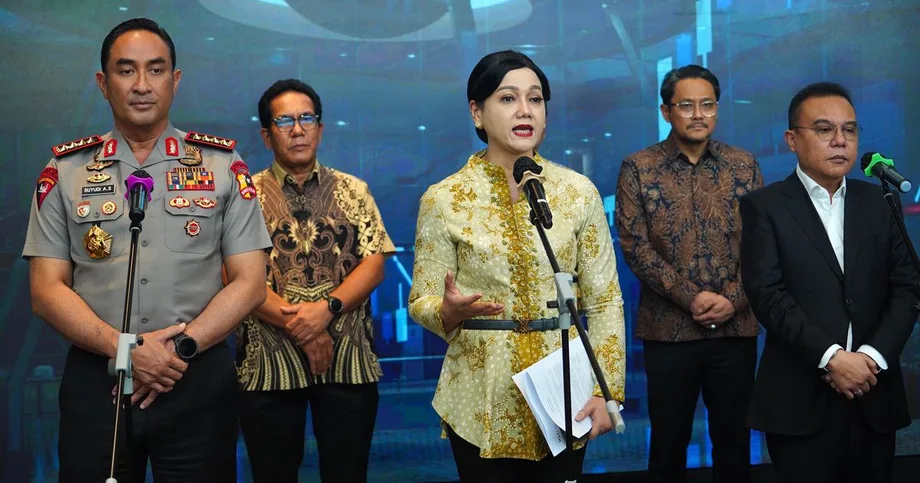
On Monday, November 23, 2026, Indonesian Energy and Mineral Resources Minister Bahlil Lahadalia told reporters in Jakarta that the government is weighing two main routes to capture at least 70 percent of mining returns for the state. Officials are deciding whether the government should control 70 percent of the shares in mining companies or take 70 percent of the revenue those operations generate.
Contents
- Jakarta Weighs Equity Against Revenue
- What President Prabowo Said in Palu
- Why Budget Pressures Drive the Policy
- A Timeline of Shifts and Retreats
- What Mining Companies Already Pay
- Markets React as Mining Stocks Fall
- The $411 Billion Investment Dilemma
- Domestic Miners and Chinese Investors Respond
- Four Meanings and Unanswered Questions
- Key Points
Bahlil spoke at the Energy and Mineral Resources Ministry following his inaugural meeting as Coordinating Minister for Downstreaming and Energy Transition, emphasizing that internal discussions are still underway and no final decision has been reached. Investment and Downstreaming Minister Rosan Roeslani, Industry Minister Agus Gumiwang, and Dony Oskaria, head of Indonesia's state enterprise regulatory agency BP BUMN, joined that first policy session.
Bahlil explained why the government is pressing for higher returns from coal, nickel, tin, and copper, commodities in which Indonesia ranks among the top global suppliers. Introducing the spending priorities behind the push, the minister explained what additional state income is meant to finance:
We need funding to build schools, develop infrastructure and strengthen regional economies. All of this requires acceleration, and we need to optimize state revenue by harnessing the potential of our natural resources.
Bahlil promised that existing mining contracts will be honored, and any shift toward 70 percent state shareholdings would apply only to future deals. At the same time, officials will look for ways to increase state revenue within current agreements, tying the policy review to Presidential Regulation No. 99 on accelerating downstreaming and energy security and to Article 33 of Indonesia's 1945 Constitution, which requires natural resources to be managed for public welfare.
What President Prabowo Said in Palu
Nine days before Bahlil's press conference, on Saturday, November 14, 2026, President Prabowo Subianto set off alarms across the mining industry during a speech in Palu, Central Sulawesi. Addressing the opening of the Tanwir and 114th anniversary gathering of Muhammadiyah, one of Indonesia's largest Islamic organizations, Prabowo delivered a direct instruction to his energy minister regarding Indonesian mining business permits, known as IUPs:
All mining permits, all mining business permits, from now on, at least 70% must be enjoyed by the state. If necessary, the shares of the companies should also be controlled.
Prabowo paired that demand with an assurance that Indonesia remains open to private investors, arguing that companies can still supply capital and recover their initial outlays before sharing the bulk of later earnings. Explaining how he wants that balance to work, the president told the gathering:
Because we may need capital, they can provide it. Your investment can be returned, but afterward, the majority of the profits must belong to the Indonesian people. We have already started implementing this, and I am confident that within a few months we will feel the benefits.
The Presidential Palace quickly moved to narrow the scope of Prabowo's remarks after investors sought answers. Palace officials clarified that the 70 percent target refers to proceeds from managing mining permits rather than a blanket requirement for the state to hold 70 percent equity in every mining company, yet no implementing regulation, calculation formula, or rule on existing permits has been published.
Why Budget Pressures Drive the Policy
Prabowo's November directive extended a broader economic overhaul he outlined earlier in the year in a Cabinet Secretariat summary of his May 20, 2026 budget address before Parliament in Jakarta. Presenting fiscal principles for the 2027 State Budget Bill at the Nusantara Building, the president warned that Indonesia's state revenue relative to gross domestic product trails G20 peers as well as regional neighbors, urging lawmakers to confront that gap directly:
We need to take a hard look at ourselves, face reality, and have the courage to ask why we cannot manage our economy so our state revenue can be on par with countries like the Philippines, Mexico.
Resource exports bring vast sums through Indonesian ports, yet Prabowo argued that too little stays in public coffers. According to figures he presented in May, Indonesia generated US$23 billion (Rp 391 trillion) from palm oil exports and US$30 billion (Rp 510 trillion) from coal exports in 2025, totaling US$53 billion across those two commodities alone. Even after seven years of steady national growth, Prabowo told lawmakers that Indonesia faces a shrinking middle class and rising poverty, blaming decades of wealth draining abroad through false invoicing, transfer pricing, smuggling, and illegal fishing by foreign vessels.
Jakarta's revenue squeeze has grown sharper as the government accelerates public spending. To support economic activity while aiming to keep the 2026 budget deficit near 2.85 percent of gross domestic product, the Finance Ministry rolled out a final quarter spending push of about Rp 1,300 trillion. Alongside higher taxes and royalties, Prabowo has urged sovereignty over global prices for oil palm, nickel, and gold, launched a new state firm to monitor exports of palm oil, coal, and ferroalloys, announced a new commodity bourse, and instructed officials to channel resource exports through a single oversight path so declared volumes match actual shipments.
A Timeline of Shifts and Retreats
November's 70 percent pledge is not the first time Jakarta has floated a sweeping revenue split and then stepped back to consult industry. Officials tested and abandoned a much more rigid version of the idea earlier in 2026 while also deferring planned tax and duty increases:
- May 11, 2026: Jakarta delays higher mineral royalties while searching for a formula acceptable to both the state and mining firms.
- May 20, 2026: President Prabowo tells Parliament that Indonesia must stop wealth outflows and secure price sovereignty over oil palm, nickel, and gold.
- June 5, 2026: Deputy Energy Minister Yuliot Tanjung says officials are studying a 70 to 30 gross split model for minerals and coal, while Director General of Minerals and Coal Tri Winarno describes it as one option modeled partly on upstream oil and gas.
- June 8 to 10, 2026: Energy Minister Bahlil Lahadalia scraps the gross split proposal for minerals and coal after consulting Prabowo, confirming that existing regulations and contracts remain intact.
- October 6, 2026: A proposed coal export duty of 1 percent to 5 percent remains deferred.
- November 14, 2026: Prabowo tells a Muhammadiyah gathering in Palu that at least 70 percent of every mining permit must benefit the state.
- November 23, 2026: Bahlil announces in Jakarta that ministries are weighing 70 percent equity against 70 percent revenue while promising to respect existing contracts.
Deputy Energy Minister Yuliot Tanjung's June proposal would have handed the government 70 percent of total output or gross revenue before a mining company deducted any operating costs, leaving 30 percent for the operator. In mining, unlike some oil and gas fields, ore grades, haulage distances, and extraction expenses vary sharply from site to site, meaning a single upfront split can quickly make lower grade mines unprofitable, which is why officials retreated within days.
What Mining Companies Already Pay
Indonesia's current tax and royalty rules already capture a substantial share of mining earnings. Companies holding standard mining permits pay a 22 percent corporate income tax on profits, value added taxes, land and building taxes, and nontax state payments known as PNBP, which cover fixed land charges called dead rent and progressive royalties tied to commodity prices.
Coal miners holding ordinary IUP permits pay royalties starting at 5 percent when coal sells below US$70 per metric ton, rising to 6 percent between US$70 and US$90 per metric ton, and reaching 13.5 percent at higher prices. Nickel ore miners pay royalties between 14 percent and 19 percent depending on benchmark prices, after a proposed revision applying the 19 percent top rate from US$26,000 per metric ton was not implemented. Operators holding special mining permits called IUPKs, which replaced older contracts, face steeper terms of roughly 14 percent to 28 percent in royalties alongside an extra 10 percent share of net profit.
State ownership already reaches deep into major mines through mandatory foreign divestment schedules, which require foreign owners to sell down stakes after 15 years for open pit mines or 25 years for integrated underground operations. At Freeport Indonesia, the state holding company MIND ID, overseen by the sovereign investment vehicle Danantara, holds 51.23 percent, and a proposed transfer of an additional 12 percent stake at no cost is tied to extending Freeport's special permit through 2041, lifting state control near 63 percent.
Markets React as Mining Stocks Fall
Financial markets reacted swiftly to Prabowo's November 14 speech before the Palace offered its clarification. On the next trading day, shares in major Indonesian producers dropped across the board, with Amman Mineral falling 3.5 percent, Merdeka Copper Gold sliding 4.8 percent, and coal producer Bayan Resources dipping 1.7 percent.
Selling pressure persisted through the rest of that week. By Friday, November 20, Indonesia's energy stock index and basic material stock index had each logged five consecutive daily declines, putting the energy index on pace for weekly losses exceeding 9 percent and the basic material index down roughly 12 percent.
CreditSights, a research unit of Fitch Solutions, warned in a client note on November 20 that the 70 percent proposal compounds a new export verification service fee that state firm Danantara Sumberdaya Indonesia plans to levy on certain miners starting January 1. Together, CreditSights said, the developments heighten worries over cost pressures, debt strain, and shifting policies, justifying a continued risk premium for Indonesian mining assets until concrete rules emerge.
The $411 Billion Investment Dilemma
Indonesia's economy grew 5.47 percent from a year earlier in the third quarter of 2026, accelerating from 5.29 percent in the second quarter, while Parliament's 2027 budget targets 6 percent growth and Prabowo has set an ambitious goal of 8 percent annual growth by 2029. Delivering that acceleration depends heavily on private capital that the state budget cannot supply on its own.
Bappenas, the national planning agency, estimates Indonesia's development bill from 2025 through 2029 at Rp 47 quadrillion, or roughly US$2.57 trillion, averaging about US$514 billion a year. According to a Bappenas undersecretary speaking on November 18, the state budget can finance only 7 percent to 8 percent of that total, leaving private investors to fund 80 percent, or around US$411 billion every year, equal to 29 percent of Indonesia's US$1.4 trillion economy.
American business leaders watching Jakarta flagged that financing gap five days after Prabowo's Palu speech. One delegation leader who had just guided 33 American companies around Jakarta warned that businesses can price in ordinary commercial risks, yet find it far harder to commit capital over many years if existing agreements and regulatory consistency appear uncertain.
Domestic Miners and Chinese Investors Respond
Indonesian mining groups pushed back by arguing that the industry already delivers far more than taxes and dividends. Sari Esayanti, executive director of the Indonesian Mining Association, said on November 18 that more than 80 percent of total spending by mining companies stays inside Indonesia through domestic procurement of goods and services, worker wages, local taxes, royalties, and community development. Because mines require heavy upfront spending from exploration through production while facing geological and price swings, Sari urged the government to measure all economic contributions across full investment cycles rather than a single year.
Apindo, the Indonesian Employers Association, echoed that point through Hendra Sinadia, head of its mineral and coal mining committee, who noted that income taxes, value added taxes, property taxes, royalties, dead rent, export earnings, and regional development already leave the state with a large slice of sector value. The Indonesian Mining Professionals Association went further, stating that government fiscal collections from miners already exceed the profits of mining companies, while Arif Perdana Kusumah, chairperson of the Indonesian Nickel Industry Forum, said operators were waiting to see what formula would replace the scrapped June gross split.
Foreign operators with billions invested in Indonesian processing hubs are watching just as closely, especially Chinese groups led by Tsingshan, majority owner of Weda Bay Nickel, which sits at the center of the nickel boom at Weda Bay that helped make Indonesia the world's top nickel supplier. Global nickel benchmark prices held steady immediately after Prabowo's speech, and Shanghai nonferrous metals analyst Zhang Hang noted that officials have not specified whether 70 percent applies to revenue, gross margin, or fixed fees, or whether it touches existing contracts. Chongqing analyst Wang Yanqing added at China Futures that taking 70 percent of revenue is hard to achieve without realistic rules, while Shanghai analyst Li Ting of Tongguan Jinyuan Futures pointed out in a November 9 note that Jakarta already steers global supply through its annual RKAB production quotas, which trimmed 2026 nickel ore output to roughly 290 million tons from around 320 million tons the year before.
Four Meanings and Unanswered Questions
Mining companies face four distinct scenarios depending on how officials write the 70 percent rule into law. Under a combined fiscal and equity model, adding corporate taxes, royalties, and existing state stakes such as MIND ID's holdings could bring the state close to 70 percent without major disruption to profitable mines. Under a post recovery profit model matching Prabowo's Palu comments, investors would recoup initial capital first before the state claims the dominant share of later profits.
Two steeper interpretations would hit mine economics much harder. If the state claims 70 percent of controlling equity across future mining firms, private partners would lose majority governance and dividends on new projects. Worse still for operators, a 70 percent share of gross production or sales before deducting expenses would wipe out profits at mines with high stripping ratios, deep deposits, or costly power infrastructure.
Bahlil's coordinating team has set no deadline for releasing a draft regulation, has not published a calculation formula, and has not clarified how maximizing returns from current contracts aligns with the promise to leave existing agreements untouched. Until a written rule emerges from the Energy and Mineral Resources Ministry, mining firms and lenders face months of technical negotiation over what 70 percent will actually mean on paper.
Key Points
- On November 23, 2026, Energy Minister Bahlil Lahadalia said Indonesia is deciding whether to pursue a 70 percent state stake in mining equity or 70 percent of mining revenue.
- President Prabowo Subianto first issued the 70 percent directive on November 14, 2026, in Palu, though the Presidential Palace later narrowed the claim to permit proceeds rather than an automatic equity takeover.
- Bahlil promised that existing mining contracts will be honored and that any change to share ownership rules would apply to future deals, with no final formula or regulation issued yet.
- Mining stocks slid after the announcement, with Indonesia's energy index falling over 9 percent and the basic material index losing 12 percent across five straight daily declines.
- Existing fiscal terms already include a 22 percent corporate tax, coal royalties of 5 percent to 13.5 percent, nickel royalties of 14 percent to 19 percent, and majority state ownership at major assets like Freeport Indonesia.
- Industry groups and credit analysts warned that unclear terms and a January 1 Danantara export verification fee risk raising borrowing costs as Indonesia seeks US$411 billion a year in private investment to reach its 2029 growth target.