A Decade-Long Journey Reaches a Milestone in Brussels
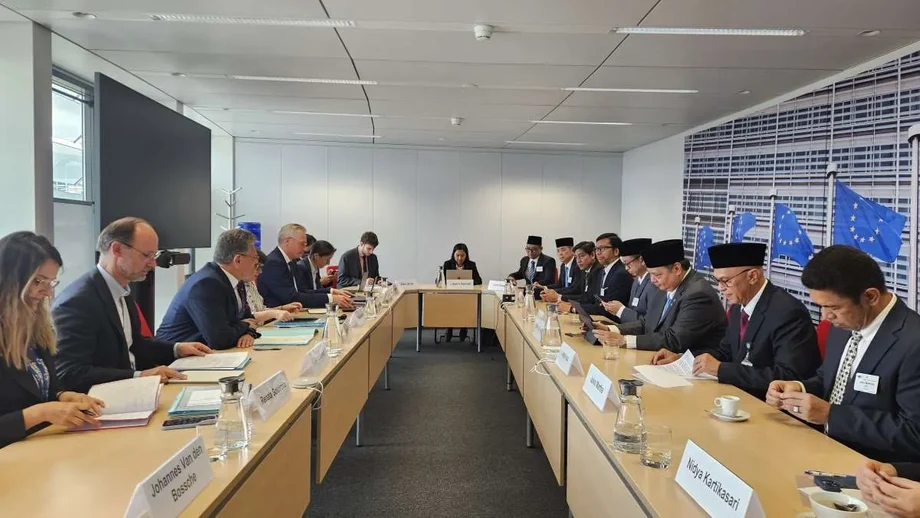
Indonesia and the European Union signed a comprehensive trade agreement and an investment protection agreement on Saturday, November 21, 2026, in Brussels, Belgium. The signing ceremony followed nearly 10 years of formal negotiations that began on July 18, 2016, and concluded in September 2025. European Commission President Ursula von der Leyen and Indonesian Coordinating Minister for Economic Affairs Airlangga Hartarto witnessed the signing, which was conducted by Indonesian Minister of Trade Budi Santoso and European Commissioner for Trade and Economic Security Maroš Šefčovič.
Contents
- A Decade-Long Journey Reaches a Milestone in Brussels
- Tariff Elimination and Savings for Exporters
- Strategic Motivations and Global Trade Pressures
- Boosting Labor-Intensive Industries and Closing the Regional Gap
- Geographical Protections and Raw Material Supplies
- Ratification Timeline and Next Steps
- The Essentials
The landmark trade pact is officially known as the Indonesia-European Union Comprehensive Economic Partnership Agreement, or CEPA. Alongside it, both sides signed an Investment Protection Agreement to safeguard capital flows and establish clear legal guarantees for investors. The agreements are designed to reshape commercial ties between the world's fourth most populous country and the European bloc, creating an economic bridge across regions representing a market of over 700 million people. Trade between the EU and Indonesia reached 28.9 billion euros in 2025, with EU exports valued at 10.2 billion euros and Indonesian exports at 18.7 billion euros.
Tariff Elimination and Savings for Exporters
Under the terms of the new agreement, import duties will be removed on more than 90 percent of products traded between the two economies. According to official data from the European Council, up to 98.5 percent of product categories will eventually be liberalized once the agreement is fully implemented. The European Union estimates that European businesses will save approximately 600 million euros annually in customs duties, while Indonesian officials calculate total trade cost savings between 15 trillion and 17 trillion rupiah.
For Indonesian exporters, 90.4 percent of tariff lines will immediately drop to zero percent upon implementation. An additional 7.92 to 8.37 percent of tariff lines will see duties phased out gradually over periods ranging from three to 15 years. Conversely, Indonesia will gradually eliminate import duties on 50 percent of tariff lines for European automotive exports over a five-year period, removing duties that currently reach up to 50 percent. Sensitive agricultural commodities such as rice, sugar, and ethanol remain excluded from tariff liberalization.
Strategic Motivations and Global Trade Pressures
The swift finalization of the agreement follows shifts in global trade dynamics, including sweeping tariffs introduced by the United States under President Donald Trump. Indonesia was initially hit with a 32 percent tariff during early trade actions, which was later adjusted to 19 percent following a reciprocal trade agreement signed in February 2026. That agreement gave American imports zero percent access to Indonesia while maintaining duties on key Indonesian goods, raising earlier concerns about how other major partners would respond as Jakarta neared a deal with Washington.
Faced with a shifting geopolitical landscape, European leaders pursued the agreement as part of a broader strategy to diversify trade relations, secure critical supply chains, and build reliable partnerships. European Commission President Ursula von der Leyen highlighted this objective during the signing ceremony.
At a time of closing doors, we keep ours open.
Boosting Labor-Intensive Industries and Closing the Regional Gap
Indonesian manufacturers expect the agreement to help narrow a significant competitive gap with neighboring countries such as Vietnam, which has benefited from its own free trade agreement with the European Union since August 2020. In 2025, the EU imported 63.9 billion euros worth of goods from Vietnam, compared with 18.7 billion euros from Indonesia. The disparity was particularly wide in labor-intensive sectors, where Vietnamese footwear and apparel exports heavily outpaced Indonesian shipments.
Previously subject to EU import tariffs ranging from 7 to 12 percent, Indonesian textiles, footwear, apparel, food products, and crude palm oil will enter the European market duty-free once the agreement takes effect. In addition, micro, small, and medium enterprises in Indonesia will be permitted to issue their own declarations of origin, streamlining export documentation procedures. The pact also secures duty-free quotas for 1.9 million tons of crude palm oil and 140,000 tons of palm oil, which will scale up over the first nine years of implementation.
Geographical Protections and Raw Material Supplies
The trade agreement extends legal protections in the European Union to 72 Indonesian geographical indications, which are specialized regional products whose qualities are tied to their origin. This protection covers 32 coffee varieties, including Gayo and Toraja coffee, as well as 12 spice products and items such as Java Sindoro-Sumbing Arabica coffee and Kulonprogo Jogja coconut sugar. Unauthorized producers marketing goods in Europe under these regional names will face legal enforcement.
From the European perspective, the agreement secures reliable access to critical raw materials essential for advanced manufacturing and clean energy technologies. Indonesia is a leading global producer of nickel and cobalt, which are vital components for electric vehicle battery manufacturing. The pact includes provisions against export monopolies for raw materials and rules designed to prevent discriminatory pricing, supporting supply chain stability for European industries.
Ratification Timeline and Next Steps
Both governments are working to complete domestic legal procedures to allow the agreement to enter into force by January 1, 2027. This target date coincides with the expiration of Indonesia's preferential tariff access under the European Union's Generalized Scheme of Preferences on December 31, 2026, ensuring a seamless transition without tariff gaps.
Before the agreement can take full legal effect, it requires formal approval from the European Parliament. In Indonesia, the government has consulted with the House of Representatives to prepare for ratification through a Presidential Regulation. Both the European Union and Indonesia have agreed to pursue provisional application of the trade and investment agreements as soon as internal notification procedures are finalized.
The Essentials
- The European Union and Indonesia signed the Comprehensive Economic Partnership Agreement and Investment Protection Agreement on November 21, 2026, in Brussels.
- The trade deal eliminates import duties on over 90 percent of traded goods, saving businesses an estimated 600 million euros annually in customs duties.
- Indonesian labor-intensive exports such as footwear, textiles, and crude palm oil will enter the EU market with zero tariffs.
- European automotive exports to Indonesia, previously taxed at up to 50 percent, will see duties phased out over five years.
- The agreement protects 72 Indonesian geographical indications in Europe, including specialty coffees and spices.
- Both sides are targeting provisional implementation for early 2027, pending approval by the European Parliament and completion of domestic ratification procedures.