Jakarta Nears a Deal With Unequal Tariff Terms
Indonesia is preparing to give American imports access to its market at a zero percent tariff while accepting a 19% tariff on most Indonesian goods entering the United States. The agreement, expected to be signed later in January 2026, has prompted warnings that China and the European Union could demand similar concessions or retaliate against treatment they consider discriminatory.
Contents
- Jakarta Nears a Deal With Unequal Tariff Terms
- Why the Speed of the Agreement Matters
- China's Trade and Investment Weight
- Europe Faces a Different Calculation
- Textiles and Footwear Still Face a Tax
- The Purchases Behind Washington's Deal
- Trump's Tariff Strategy Reaches Indonesia
- Critical Minerals Bring Foreign Policy Into Trade
- The Decisions Ahead of the Signing
- Key Points
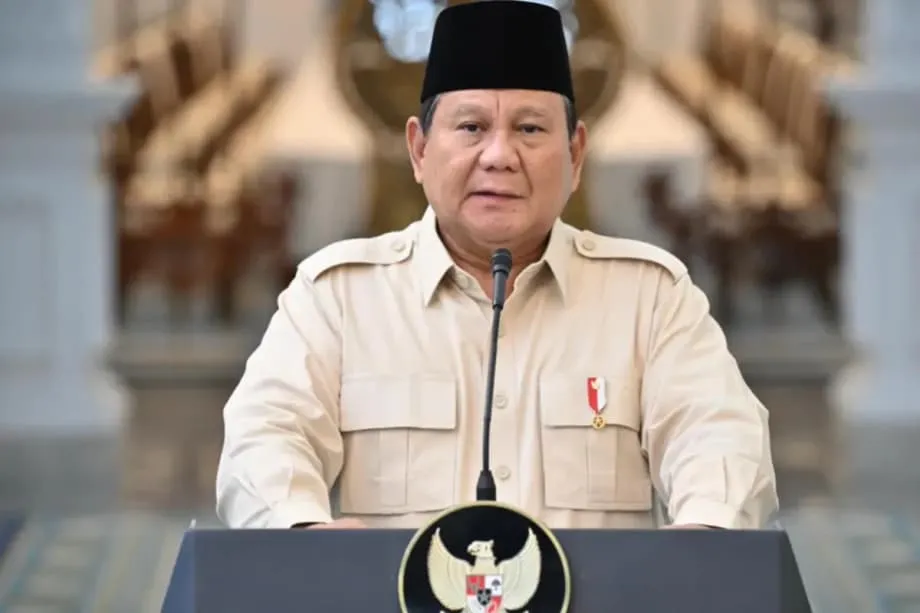
As of January 16, President Prabowo Subianto is expected to travel to the White House to finalize the reciprocal trade agreement. Jakarta has also committed to purchasing $15 billion worth of US energy products and 50 Boeing jets, while offering American businesses access to critical minerals. No exact signing date has been given.
The exceptions to the US tariff are commodities not naturally available in the United States, such as palm oil and cocoa. Indonesian manufactured exports, including footwear and textiles, would still face the 19% import tax. That leaves a central imbalance: American goods would enter Indonesia without a tariff, while many Indonesian goods would remain taxed on arrival in the US.
A tariff is a tax charged when a product crosses a border. It can make an imported product more expensive and affect its ability to compete with other goods. A reciprocal agreement suggests an exchange of concessions, but the proposed tariff rates show that the two countries would receive different treatment.
Jakarta's decision also reaches beyond its relationship with Washington. China is Indonesia's largest trading partner and a major investor, while the EU is an important market where Indonesia sells more goods than it buys. The question facing the government is how to secure access to the American market while preserving relationships central to the country's economy.
Why the Speed of the Agreement Matters
The United States secured its proposed concessions in about six months. Indonesia's negotiations for a free trade agreement with the EU took almost 10 years. That contrast has become a focus of criticism because Washington appears to have obtained better terms much faster.
Yose Rizal Damuri, executive director of the think tank CSIS, warned that other partners could use the American agreement to seek equivalent treatment. He pointed to both the unequal concessions and the difference in negotiating time:
"[Indonesia] will face pressure from other countries that wish to have the same thing that the US gets. ... China might use this as a basis to demand the same treatment, or maybe the EU. ... Remember it took us almost 10 years to have a free trade agreement with the EU, but the US managed to secure better terms in just 6 months," Yose said.
Yose's concern is that preferential access for American businesses could change what Indonesia's other partners expect. A country negotiating over tariffs, investment or access to resources may ask why it should accept less favorable conditions than Washington received.
The dispute could extend beyond requests for equal treatment. Yose warned that retaliation could severely disrupt Indonesia's trade stability if partners believe the concessions leave their businesses at a competitive disadvantage. Jakarta therefore faces a choice with consequences lasting beyond the immediate agreement: the benefits of reaching a quick deal with Washington must be weighed against pressure on relationships developed over many years.
China's Trade and Investment Weight
China's position makes any response from Beijing especially consequential. Indonesia had a deficit of $19.28 billion in trade excluding oil and gas with China as of November 2025. A deficit means Indonesia bought more of those goods from China than it sold there.
Indonesia and China also trade within the Regional Comprehensive Economic Partnership, known as RCEP. Their bilateral export activities currently benefit from zero tariffs under that framework, supporting extensive trade between the two countries.
Beijing's importance extends to investment in Indonesia, Southeast Asia's largest economy. Chinese trade and investment are closely connected with Indonesian supply chains, the networks of businesses that provide materials, manufacture products and move them to customers.
Yose warned that China could use the US agreement as a basis to demand identical treatment. If Jakarta declined, Beijing could apply pressure through trade barriers or redirect investment. Those possibilities would affect more than sales to China: changes in investment and access to supplies could reach businesses operating inside Indonesia.
Indonesia's challenge is to preserve that relationship while opening strategic sectors to the United States. Favoring Washington too heavily could unsettle the balance Jakarta has maintained between major powers and strain ties with a partner deeply involved in its economic growth.
Europe Faces a Different Calculation
The European Union is another potential source of friction. Indonesia recorded a surplus of $6.55 billion in trade excluding oil with the EU as of November 2025. A surplus means Indonesia sold more of those goods to Europe than it bought from Europe, underlining the value of the market to Indonesian exporters.
Indonesia and the EU are preparing to implement a comprehensive free trade agreement that would remove virtually all tariffs on each other's goods. Implementation could begin in 2027, following negotiations that lasted almost a decade.
The rapid concessions to Washington could complicate that process. European officials may regard the 19% US tariff on Indonesian goods as relatively low compared with rates President Donald Trump has threatened elsewhere. The more difficult issue is the access American products would receive in Indonesia without tariffs, a privilege the EU is still working to achieve fully.
Brussels could seek redress or reconsider the timing of its own trade liberalization with Jakarta. European preparations for trade measures add to the sensitivity surrounding the agreement, although the concern about retaliation remains a warning about possible responses.
The figures for China and Europe show why Indonesia cannot treat either relationship as secondary. The $19.28 billion deficit with China reflects substantial purchases from that market, while the $6.55 billion surplus with the EU reflects the importance of European demand. Both relationships matter, but they support different parts of Indonesia's trading economy.
Textiles and Footwear Still Face a Tax
Indonesia's business community has given the proposed agreement a mixed reception. Some sectors may benefit from increased US investment and energy arrangements. Manufacturers selling to American customers remain concerned that the deal leaves a substantial barrier in place.
Apindo, Indonesia's business lobby group, hopes that manufactured goods such as textiles and footwear might eventually enter the United States without tariffs. Under the proposed terms, however, these products would still face the 19% tax.
Textile and footwear production are vital sources of employment in Indonesia. A continued import tax could limit their growth in the lucrative American market by making Indonesian products more expensive for buyers there.
Palm oil and cocoa would receive different treatment because they fall within the exceptions for commodities not naturally available in the United States. Manufacturers therefore see an agreement that grants relief to some exports while leaving products made by industries employing large numbers of workers subject to tax.
The domestic criticism centers on that uneven exchange. Jakarta is opening energy and critical minerals opportunities to American businesses, but manufacturing sectors that employ many workers have not received equivalent access. For those industries, describing the agreement as reciprocal does little to resolve the practical concern about the cost of selling to the US.
The Purchases Behind Washington's Deal
Trump has presented Indonesia's commitments to buy $15 billion in US energy products and 50 Boeing jets as gains for American economic interests. Those purchases accompany the tariff concessions and access to critical minerals, making the agreement broader than a change in border taxes.
The US president framed the arrangement as opening Indonesia's entire market to the United States for the first time in history. His presentation places the American benefits at the center of the deal: purchases of US products, improved access for businesses and opportunities in strategic sectors.
Indonesia's potential gains are less evenly distributed. Investment and energy arrangements could benefit some businesses, while exporters of textiles and footwear would continue to contend with a 19% tariff. The government's task is therefore to assess the agreement across different industries, rather than through a single tariff figure.
The purchase commitments also help explain why the deal has drawn criticism as being far from reciprocal. Washington would receive market access and orders for American products while maintaining a tax on many Indonesian exports. Jakarta must weigh those commitments against the value of reaching an agreement under US tariff pressure.
Trump's Tariff Strategy Reaches Indonesia
Trump's agreement with Indonesia forms part of a wider trade policy built around tariff threats. Since taking office, he has invoked emergency powers to impose tariffs described as reciprocal, seeking to address what he considers unfair trade practices and reduce the US trade deficit.
The strategy uses threatened tariffs, sometimes as high as 50%, to push trading partners into negotiations. Against that backdrop, Indonesia's proposed 19% rate offers a lower charge than some of the rates Washington has threatened, even though it remains a barrier for Indonesian exporters.
Trump announced the Indonesia deal alongside similar frameworks with Vietnam and other countries, presenting them as victories for the United States. The approach encourages partners to move quickly when they face the prospect of more expensive access to the American market.
Economic concerns about these agreements include their rushed preparation and the diplomatic difficulties they can create for US partners. A concession made to settle a dispute with Washington can become a new point of contention with another trading partner.
The use of tariff threats has also created uncertainty in global markets. Businesses and governments face difficulty planning when they are unsure whether an agreement reached today will continue to govern trade tomorrow. Indonesia's negotiations sit within that wider uncertainty, alongside the immediate concerns about the agreement's unequal terms.
Critical Minerals Bring Foreign Policy Into Trade
Indonesia has traditionally pursued a policy of remaining outside competing power blocs, balancing relationships with the United States, China and Russia. The proposed trade deal puts that approach under pressure because access to critical minerals and energy cooperation also carries strategic importance.
The Trump administration has reportedly sought terms that could restrain Indonesia's relationship with China, particularly in those sectors. That would bring decisions about economic cooperation into Jakarta's broader effort to maintain an independent foreign policy.
Resisting such demands could help Indonesia preserve its independence and avoid conflict with China, but could also jeopardize the US agreement. Accepting them could deepen concerns that commercial concessions are narrowing Jakarta's freedom to work with other powers.
Dino Patti Djalal, a former deputy foreign minister, criticized Jakarta's approach. He warned that partnering with the United States must not turn Indonesia into what he described as a:
submissive country that sacrifices principles.
Dino's criticism reflects concern that Indonesia could surrender too much independence for a trade pact whose lasting benefits remain uncertain. The debate is therefore about both economic returns and the principles guiding Indonesia's relationships abroad.
The Decisions Ahead of the Signing
January's expected signing brings together several negotiations and trading relationships moving at different speeds. Indonesia is trying to conclude an agreement with Washington quickly while preparing for a European agreement developed over years and maintaining extensive trade and investment ties with China.
The key dates and periods show how those pressures have converged:
- As of November 2025, Indonesia had a $19.28 billion trade deficit excluding oil and gas with China and a $6.55 billion trade surplus excluding oil with the EU.
- By January 16, 2026, the US agreement had taken about six months to negotiate, compared with almost 10 years for the EU agreement.
- Later in January 2026, Prabowo is expected to travel to the White House to finalize the US accord.
- In 2027, Indonesia and the EU could begin implementing their agreement to remove virtually all tariffs on each other's goods.
Indonesia's negotiations illustrate a shift from lengthy agreements built through consensus toward more transactional deals between two countries, with tariff threats driving the timetable. Such an approach can leave smaller economies under pressure to accept unfavorable conditions or choose between powerful partners.
Jakarta's immediate challenge is to secure the American agreement without isolating traditional partners. Yose's warning, Apindo's concerns and Dino's criticism address different parts of the same decision: whether the proposed benefits justify the commercial and diplomatic costs. The signing will be an important step, but managing relationships with Beijing and Brussels will remain part of the government's work.
Key Points
- Indonesia expects to finalize its US trade agreement later in January 2026, with Prabowo traveling to the White House.
- American imports would enter Indonesia at a zero percent tariff, while most Indonesian exports to the US would face a 19% tariff.
- Palm oil and cocoa would receive exceptions, while textiles and footwear would remain taxed.
- Indonesia has committed to buying $15 billion in US energy products and 50 Boeing jets, alongside access to critical minerals.
- CSIS executive director Yose Rizal Damuri warns that China and the EU could seek equal treatment or retaliate.
- China is Indonesia's largest trading partner and a major investor; the EU is an important export market preparing its own agreement with Jakarta.
- Apindo wants tariff relief for manufactured exports, while former deputy foreign minister Dino Patti Djalal warns against sacrificing Indonesia's principles.