Higher bank reserves put a brake on the yuan
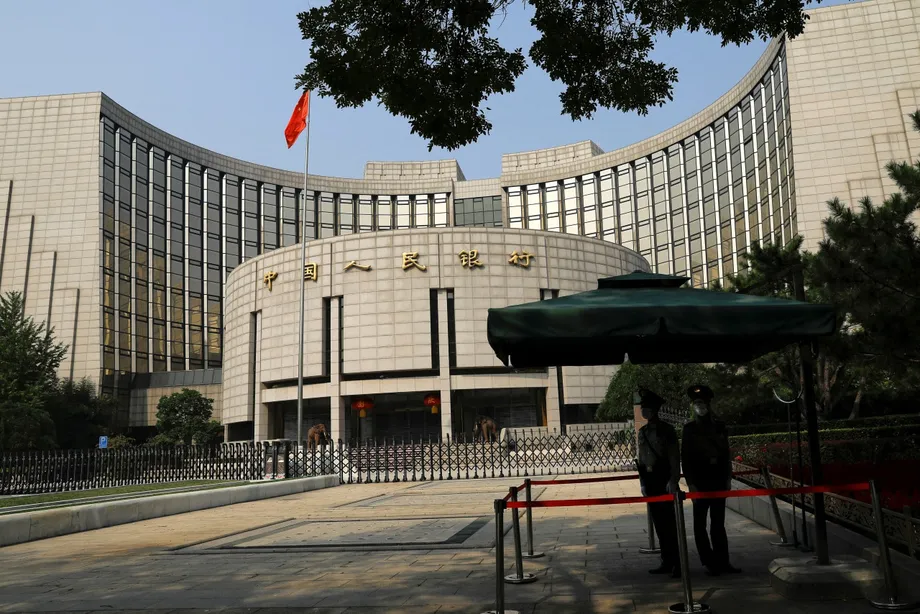
China's central bank announced on November 3 that financial institutions must hold 6% of their foreign currency deposits in reserve from November 15, 2026, up from 4%. Based on the $1.2 trillion in foreign currency deposits recorded at the end of September, the increase would set aside about $24 billion more at the central bank.
Contents
- Higher bank reserves put a brake on the yuan
- What the increase means for banks
- A rapid rally before the announcement
- Why exporters have been pushing the yuan higher
- The rise extends beyond the dollar
- The daily reference rate sends another signal
- How the policy reached this point
- A managed currency with room to move
- Why $24 billion may have limited reach
- Key Points
The People's Bank of China (PBOC) said the change was intended to strengthen the management of foreign exchange liquidity. It comes after the yuan climbed to its strongest levels against the dollar since 2022, supported by strong exports and companies exchanging foreign currency earnings for yuan.
The market reacted before the new requirement took effect. The onshore yuan weakened as much as 0.37% to 6.6728 per dollar after the announcement, its weakest level since October 23. The offshore yuan also fell, interrupting a rise that had lasted nearly three weeks.
November's increase is the first since December 2021. It reverses part of a series of reductions made during 2022 and 2023, when policymakers were trying to ease pressure on a weakening currency. This time, the immediate concern is the speed of the yuan's rise.
What the increase means for banks
The foreign exchange deposit reserve ratio determines how much of the foreign currency deposited with financial institutions must be kept at the PBOC. A higher ratio leaves banks with less foreign currency available for lending, investment or sale in the domestic market.
For every $100 in deposits covered by the rule, a bank will now have to keep $6 in reserve instead of $4. The change is two percentage points, equivalent to a 50% increase in the share that must be set aside.
Applying those percentages to September's $1.2 trillion deposit balance gives required reserves of about $48 billion at 4% and $72 billion at 6%. The difference is $24 billion, within estimates of $20 billion to $25 billion for the liquidity withdrawn. The final amount will depend on the deposit balance to which the new requirement applies.
Wang Jingwen, a macroeconomic analyst at the Minsheng Bank Research Institute, explained that a higher requirement can withdraw foreign currency liquidity and restrain the expansion of foreign currency lending. Zhao Qingming, chief economist at Beijing Longhe Investment, said setting aside more funds would help balance foreign exchange supply and demand.
Much of that foreign currency is held in dollars. Reducing the dollars available in the domestic banking system can make them relatively more expensive against the yuan, easing pressure for further yuan appreciation.
A rapid rally before the announcement
The onshore yuan had strengthened for 14 consecutive trading sessions beginning on October 14. On November 2, it closed at 6.6458 per dollar, while the offshore yuan reached 6.6425 during trading. Both had moved through the closely watched level of 6.65.
A lower number in this quotation means a stronger yuan: fewer yuan are needed to buy one dollar. A move from around 6.64 to 6.67 therefore represents a weakening of the Chinese currency.
One calculation put the onshore yuan's gain for the year at 4.91%, while another placed it above 5%; the offshore gain was reported at more than 4.5%. At the end of October, onshore and offshore rates stood at 6.6557 and 6.6525 respectively, following four consecutive months of gains.
After the reserve announcement, offshore trading reached roughly 6.6664 per dollar, a decline of about 0.3%. Onshore trading subsequently reached 6.6728. Onshore rates reflect trading in mainland China, while offshore rates reflect trading outside it, where conditions and investor demand can differ.
Why exporters have been pushing the yuan higher
Strong exports and large trade surpluses have supplied the market with foreign currency. When a Chinese exporter receives dollars and exchanges them for yuan to meet domestic expenses, it adds dollars to the market and increases demand for yuan.
Wang Jinbin, an economist at Renmin University of China, attributed the currency's strength mainly to robust exports and sustained foreign exchange settlement exceeding foreign exchange purchases. In everyday terms, companies have been converting more foreign currency into yuan than they have been buying in the other direction.
Expectations can strengthen that movement. A company expecting the yuan to keep rising may exchange dollars sooner, fearing that the same dollars will buy fewer yuan later. If many companies act together, their demand can accelerate the currency's rise.
Marco Sun, chief financial market analyst at MUFG (China), described the central bank's response and its intended effect:
The PBOC is responding to strong market-driven yuan appreciation."
"By absorbing part of the available US dollar liquidity in the banking system, it is attempting to reduce the momentum behind yuan appreciation and prevent the market from developing excessive one-way expectations.
The rise extends beyond the dollar
China Foreign Exchange Trade System figures for the week ending October 30 showed the yuan strengthening against broader groups of currencies. The CFETS yuan index reached 103.77, up 0.36 points for the week and at its highest level since July 2022.
The yuan index using the Bank for International Settlements currency basket reached 111.57, up 0.55 points and at a record high. The index using the International Monetary Fund's Special Drawing Rights basket reached 98.85, up 0.29 points.
These indices compare the yuan with groups of currencies rather than the dollar alone. Their simultaneous rise shows that the recent gains extended across several currency comparisons, an important detail for businesses trading with customers in different countries.
Against the dollar, the yuan gained about 0.77% during October 26 to 30. Its daily central parity rate also strengthened during October, moving from 6.7351 at the end of September to 6.7138 on October 30.
The daily reference rate sends another signal
The PBOC set the yuan's central parity rate at 6.7150 per dollar on November 3, slightly weaker than the previous day's reference rate. This daily midpoint is the official reference used in managing onshore currency trading.
The fixing was also weaker for the yuan than market models had anticipated, by 661 pips. A pip here is 0.0001 yuan per dollar, so the gap was 0.0661 yuan. It was the largest such deviation toward a weaker yuan since September 10.
During the year, the central bank had gradually strengthened its official guidance while setting it at levels weaker than market expectations. Alongside the reserve increase, that pattern points to an effort to slow the pace of appreciation.
Zhou Hao, chief economist at Guotai Junan Hong Kong, described the reserve change as a targeted response to the rapid rise. Future daily fixings will offer a regular indication of how the central bank is managing the currency as November 15 approaches.
How the policy reached this point
The PBOC has used the reserve tool in both directions. Raising it withdraws foreign currency from the banking system; reducing it releases funds. The latest decision follows several changes since 2021 and a series of currency policy statements during October.
- December 15, 2021: The foreign exchange deposit reserve ratio rose from 7% to 9%, following an earlier increase that year.
- 2022 to 2023: Three reductions brought the ratio down from 9% to 4%.
- September 15, 2023: The most recent reduction lowered the ratio from 6% to 4%.
- October 8, 2026: The PBOC published its policy position on the yuan exchange rate, stating that it does not set a target exchange rate level.
- October 19, 2026: Governor Pan Gongsheng discussed the exchange rate framework at the Financial Street Forum annual conference.
- November 3, 2026: The PBOC announced the increase to 6%.
- November 15, 2026: The higher reserve requirement takes effect.
The new 6% requirement restores the level in place before September 2023. It remains three percentage points below the 9% reached in December 2021.
A managed currency with room to move
Governor Pan Gongsheng said on October 19 that China operates a managed floating exchange rate based on market supply and demand, with reference to a basket of currencies. Under that framework, the yuan can rise and fall, while the central bank retains tools to address abrupt movements.
Pan said the PBOC stopped routine foreign exchange market intervention after 2017. He also explained that it can use financial stability tools in particular circumstances, and direct intervention in extreme circumstances, to counter herd behaviour and expectations that reinforce themselves.
The PBOC's October 8 policy position stated that it does not set a target exchange rate or intervene in the currency's long term trend. Its stated concern includes sharp short term fluctuations and destructive overshooting, when trading pushes a currency too far too quickly.
Deputy Governor Zou Lan reiterated the role of market pricing at a financial forum in Hong Kong on November 3. His comments accompanied a measure aimed at changing the supply of foreign currency within banks rather than announcing a new target for the yuan.
Why $24 billion may have limited reach
Zhaopeng Xing, senior China strategist at ANZ, said the reserve increase was likely to carry greater symbolic significance. He argued that heavier corporate conversion of foreign currency into yuan had created excess foreign currency supply, and that the increase would be insufficient to remove that imbalance.
The market is much larger than the reserve adjustment. Pan put daily yuan foreign exchange trading above $800 billion, with about 80% taking place offshore. On those figures, $24 billion is less than 3% of one day's trading turnover. Required reserves and trading turnover measure different things: the first is money held aside, while the second counts transactions during a period.
Other forces may also affect the exchange rate. The gap between Chinese and US government bond yields at a maturity of 10 years was around 330 basis points, or 3.3 percentage points, after exceeding 360 basis points. Higher US yields can make dollar assets more attractive, even as export receipts support demand for yuan.
For exporters holding dollars, a stronger yuan means those earnings convert into fewer yuan. Importers paying dollar bills face the opposite effect. Banks, meanwhile, must prepare to hold a larger portion of their foreign currency deposits at the PBOC from November 15. The next concrete step is implementation; the announcement gave no schedule for another reserve change.
Key Points
- The PBOC will raise the foreign exchange deposit reserve ratio from 4% to 6% on November 15, 2026.
- The increase would set aside about $24 billion more, using September's $1.2 trillion deposit balance.
- The onshore yuan fell as much as 0.37% to 6.6728 per dollar after the announcement.
- The move follows a sustained yuan rally supported by exports and corporate conversion of foreign currency earnings.
- The higher ratio is the first increase since December 2021 and reverses the reduction made in September 2023.
- The central bank says it does not set a target exchange rate, while retaining tools to address abrupt currency movements.