Seven justices hear a challenge to restrictions on five million accounts
Australia's High Court began hearing a challenge to the country's social media age restrictions on Tuesday, 3 November 2026, with Reddit and the Digital Freedom Project arguing that preventing children under 16 from holding accounts cuts them out of political debate. All seven justices are hearing the case, scheduled to run over two days.
Contents
- Seven justices hear a challenge to restrictions on five million accounts
- What the law requires from platforms
- Why political communication is the legal test
- Reddit challenges both the policy and its own inclusion
- A teenager asks to participate, not just watch
- The government says platform design creates the danger
- Account removals and continued use tell different parts of the story
- Enforcement is moving toward a separate court fight
- How the case reached the High Court
- Key Points
More than five million accounts have been blocked, suspended or deactivated across 10 platforms since the restrictions began on 10 December 2025. The dispute now puts the government's central policy choice before the court: whether protecting children from harmful platform features justifies limiting their ability to post, comment and organise online.
The Commonwealth, backed by all states and territories, says the restrictions protect children from risks associated with services designed to keep users engaged. The challengers say a broad restriction on accounts goes too far and leaves young people able to watch public discussion while preventing them from taking part.
Reddit's barrister, Perry Herzfeld SC, told the court that excluding children from accounts restricts participation in a major channel of modern communication.
There is a very substantial restriction on what young people can now do.
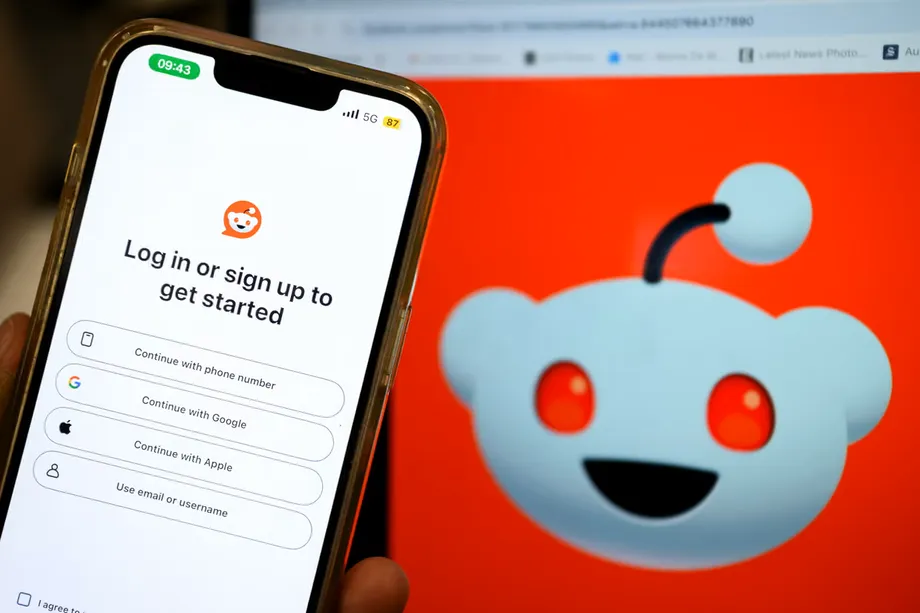
The hearing brings together separate challenges by Reddit and the Digital Freedom Project, a group led by New South Wales Libertarian parliamentarian John Ruddick. Reddit is also seeking a declaration that its service falls outside the legislation's definition of an age restricted social media platform.
What the law requires from platforms
The eSafety Commissioner's social media age guidance says platforms must take reasonable steps to prevent Australians under 16 from creating or keeping accounts. The obligation rests on the companies. Children, parents and carers face no penalties.
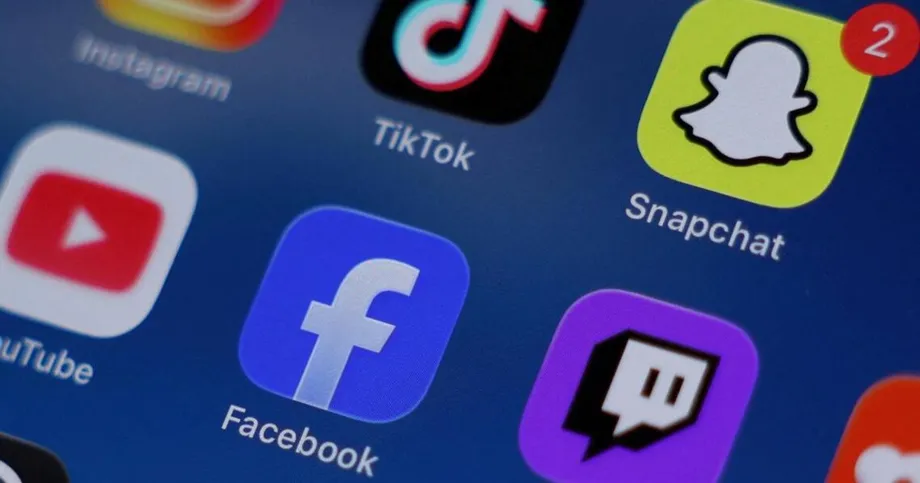
Facebook, Instagram, Threads, Snapchat, TikTok, YouTube, X, Reddit, Kick and Twitch are the 10 services publicly identified by eSafety. The regulator describes the policy as a delay in access to accounts until age 16, rather than a prohibition on using the internet.
Accounts are central to the dispute because they let people participate. A teenager may still be able to read publicly accessible Reddit discussions without signing in, for example, while being unable to publish a post, comment on someone else's argument or upvote a contribution.
Online gaming and standalone messaging services are among the excluded categories. WhatsApp, Discord and Roblox are outside the restrictions, as are educational services such as YouTube Kids and Google Classroom. Messaging features accessed through a restricted social media account can still be covered.
Why political communication is the legal test
Reddit and the Digital Freedom Project rely on Australia's implied freedom of political communication. This is a constitutional limit on government power, drawn from the system of representative government established by the Constitution. It protects the exchange of political information and ideas needed for that system to work.
The court must consider the burden imposed by the law and whether it is justified by the purpose of protecting children. In simple terms, the dispute asks whether the government has chosen a reasonable way to reduce harm, or whether it could achieve its goal while leaving more room for political discussion.
The Commonwealth argues that the constitutional protection concerns communication relevant to electors, meaning people eligible to vote, and describes the burden as indirect, modest and justified. Reddit argues that excluding children who cannot yet vote makes access to public discussion especially valuable.
Reddit's submissions point to its Ask Me Anything sessions, which allow users to put questions directly to political figures. The company says private messages, family discussions and reading news cannot replace the audience and participation available through social media.
Justice Jacqueline Gleeson questioned the weight placed on examples of prominent teenagers engaged in politics. During Tuesday's arguments, she observed that the "vast majority of teens the vast majority of time" do not engage in politics when under 16. Herzfeld argued that other channels offered a much smaller audience.
Reddit challenges both the policy and its own inclusion
Reddit's case has two connected aims: challenging the constitutional validity of the restrictions and disputing the decision to include its service. Its lawyers describe Reddit as focused on text and subject matter rather than the identity of the person posting, and argue that its design differs from other covered platforms.
Herzfeld also criticised the legislative process. He told the court that the bill passed within a week in 2024, with only 24 hours allowed for submissions. He pointed to a parliamentary inquiry in 2021 that had not recommended a ban and to the eSafety Commissioner's description at that time of age exclusion as a "blunt force approach".
The communications minister amended the platform rules on 25 March 2026. The current criteria include social interaction, connections between users, the ability to post material, and a recommendation feature or a feature available while logged in. Recommendations select material for users; features such as endless scrolling can encourage them to keep browsing.
eSafety reassessed the platforms it had already identified after the March changes and said its assessment remained unchanged. Reddit argues that legislation should address harmful features directly rather than exclude children from accounts across an entire service.
The company says it will follow the law while challenging it. Adam Collins, Reddit's chief communications officer, set out that position:
As we challenge this law in court, we'll continue to comply with it and advocate for more effective youth safety measures.
A teenager asks to participate, not just watch
Noah Jones, now 16, attended the court proceedings after helping launch the Digital Freedom Project's challenge before the restrictions began. Jones and Macy Neyland were originally named as teenage plaintiffs but were removed because of concerns that they could become personally liable for legal costs if the case failed.
Jones said outside the court that young people risk becoming "spectators in their own world" when they can see discussions but cannot join them.
They shouldn't be shut out.
His mother, Renee Jones, said she feared the dangers young people face online but believed the law missed the mark. She wanted her son to learn how to recognise risks and interact safely.
I want my son to grow up into a young Australian man who is resilient, who is responsible online, who can identify the dangers, and who is able to vet some of these things.
John Ruddick has taken a broader political position, calling for an explicit constitutional guarantee of free speech. The court case concerns the existing constitutional protection for political communication and the validity of the current legislation.
The government says platform design creates the danger
The Commonwealth's defence centres on risks associated with social media features and the commercial incentives behind them. Its lawyers argue that platforms funded by advertising have reasons to maximise engagement and retain users, exposing children to pressures and content that can harm their wellbeing.
The government cites risks involving mental health, sleep and eating disorders. It says the rules are targeted, developed through consultation and capable of changing as services change.
Communications Minister Anika Wells said on Tuesday that the government was defending children's protection from harm against what she described as a sustained ideological attack. South Australia has formally intervened to support the Commonwealth and present its own arguments.
South Australian Premier Peter Malinauskas, who helped drive the policy, argues that algorithms decide what children see and when they see it. South Australia commissioned former High Court chief justice Robert French AC to prepare model legislation before the national approach took shape.
Malinauskas described the state's reason for defending the restrictions:
This is about putting the wellbeing of children ahead of the commercial interests of some of the world's biggest tech companies.
Denmark, France, the United Kingdom, Germany and Greece have announced or considered related measures. The Australian case will show those governments how a national age restriction is tested against constitutional limits, although their own legal systems differ.
Account removals and continued use tell different parts of the story
eSafety reported that platforms had removed access to 4.7 million accounts belonging to children under 16 by the middle of December 2025. Later figures put removals and deactivations above five million. Meta, which owns Facebook, Instagram and Threads, said it closed about half a million accounts in the first days.
These totals count accounts, while the regulator's research also tracks children's use. One child can have accounts on several services, so the account total covers repeated action across platforms as well as individual users.
An eSafety evaluation published in July found that about four in 10 children aged 10 to 15 remained active on social media three months after the restrictions began, compared with 52% previously. Taking four in 10 as approximately 40%, that is a fall of about 12 percentage points, or roughly 23% relative to the earlier level.
The challengers argue that children can bypass age checks and that harmful material remains accessible without accounts. Some children have described getting around checks involving identification documents, credit card details or selfies.
Age assurance means checking or estimating whether someone meets an age requirement. eSafety's account of the government's technology trial says such methods can be private, robust and effective when deployed appropriately, often in combination. The practical dispute concerns how companies use those methods and how well they work.
Enforcement is moving toward a separate court fight
The constitutional hearing comes as the government prepares action over alleged failures by Facebook, Instagram, Snapchat, TikTok and YouTube to prevent children under 16 from holding accounts. Those investigations concern company compliance, while the High Court case concerns the validity and reach of the law itself.
Wells said on 19 October that she expected proceedings against all five platforms, following months of investigation. The preparations followed planned platform enforcement action using expanded powers to obtain company documents and require people to answer questions.
eSafety's current guidance gives the maximum corporate civil penalty as 300,000 penalty units, equivalent to A$109.2 million. Coverage of the hearing cited A$99 million; the regulator's published figure is the current amount. A penalty unit is a standard monetary amount used to calculate statutory fines.
Parliament passed stronger enforcement powers on 10 September 2026, extending information gathering to relevant third parties, including age assurance providers and app store operators. The amendments also introduced powers to require individuals to attend examinations and answer compliance questions.
The March compliance update drew on compulsory information requests to the 10 identified platforms. At the start of the High Court hearing, no company had been fined under the restrictions, and no filing date had been announced for the planned enforcement proceedings.
How the case reached the High Court
The dispute follows almost two years of legislation, implementation and enforcement work. The key dates show how the legal challenge developed alongside changes to the regulatory system:
- November and December 2024: Parliament passed the minimum age legislation, which then received royal assent.
- Late 2025: The Digital Freedom Project filed its constitutional challenge before the restrictions began. Reddit launched its own challenge in December.
- 10 December 2025: Platforms became responsible for taking reasonable steps to prevent Australians under 16 from creating or keeping accounts.
- 25 March 2026: The communications minister amended the rules defining covered platforms.
- 10 September 2026: Parliament passed amendments strengthening enforcement powers and increasing penalties.
- 3 and 4 November 2026: The High Court scheduled two days to hear the joined challenges.
The Free Speech Union, technology industry group NetChoice and the Electronic Frontier Foundation sought permission to participate as friends of the court. That role allows an outside organisation to offer arguments that may assist the judges.
Monash University constitutional law professor Luke Beck said the Commonwealth had a strong case and that the hearing would help clarify the extent of government power to regulate online spaces. He also said a government loss could lead to legislative adjustments rather than the abandonment of age restrictions.
The government is pursuing a digital duty of care bill that would require platforms to take proactive responsibility for safer systems. Reddit's lawyers point to that approach as an alternative focused on platform design. Separately, the minimum age law requires the minister to initiate an independent review within two years of 10 December 2025, placing that deadline in December 2027.
Key Points
- All seven High Court justices are hearing challenges by Reddit and the Digital Freedom Project over two days.
- The challengers argue that restricting accounts for children under 16 unjustifiably burdens political communication.
- The Commonwealth, supported by every state and territory, says the restrictions protect children from harmful platform features.
- More than five million accounts have been blocked, suspended or deactivated across 10 platforms.
- eSafety research found continued social media use among about 40% of children aged 10 to 15, down from 52%.
- Companies face potential penalties of up to A$109.2 million under current official guidance. Children and their families face no penalties.
- The government is preparing separate enforcement proceedings against five platforms while defending the law in the High Court.