A manufacturing gap puts India's solar plans under pressure
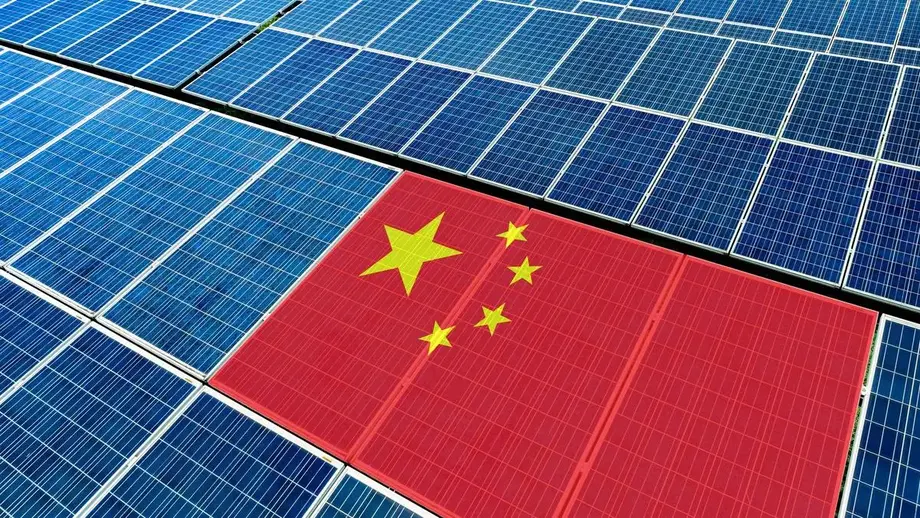
India's solar industry faces a technology bottleneck just as it tries to build more of its own supply chain. China proposed export controls on 12 solar manufacturing technologies on October 16, 2026, potentially complicating Indian investments in cells, silicon wafers and the factories needed to produce them.
Contents
- A manufacturing gap puts India's solar plans under pressure
- What China proposes to control
- Why making panels is only one part of the job
- China's strongest position is further upstream
- India's sourcing rules face a test of timing
- Why new factories face greater financial risk
- Operating factories may feel less immediate pressure
- Industry wants more time and alternative technology partners
- Greater supply security could come at a cost
- Key Points
The gap between India's manufacturing stages is large. Solex Energy chairman and managing director Chetan Shah puts India's module capacity at about 262 gigawatts as of June 2026, compared with 37 GW for cells and just 2 GW for ingots and wafers. Commercial polysilicon production, the starting material for most solar cells, is absent.
Those figures mean module capacity is roughly seven times cell capacity. India can assemble far more panels than its domestic cell factories can supply, leaving manufacturers dependent on imported inputs even as finished panel production grows.
India Ratings and Research warns that the proposed controls could delay new factories and complicate the Approved List of Models and Manufacturers List II, commonly called ALMM-II. That framework requires covered solar projects to use cells made in India by approved manufacturers.
China's Ministry of Commerce and Ministry of Science and Technology have opened the proposal for consultation until November 15, 2026. The draft separates technologies that would be prohibited from export from those requiring permission. Finished solar panels would continue to be traded under the proposal, while access to selected manufacturing processes and associated equipment would face tighter controls.
For India, the immediate concern is whether new production lines can obtain machinery, technical knowledge and commissioning support in time to meet domestic sourcing requirements. Existing factories with equipment already delivered face a different situation from companies still arranging their first orders.
What China proposes to control
The 12 solar items form part of a wider revision covering 40 technologies across solar energy, artificial intelligence and biomedicine. Beijing cites national security concerns, including applications in aerospace and defence.
The proposed prohibitions cover specified processes for silicon wafers no thicker than 70 micrometres, certain fluidised-bed polysilicon production technologies, and selected perovskite and tandem solar technologies. A micrometre is one thousandth of a millimetre, making these wafers extremely thin slices of silicon.
Perovskite cells use a material that can absorb sunlight efficiently. Tandem cells combine layers, such as perovskite and silicon, to capture different parts of sunlight and turn more of it into electricity. Fluidised-bed production is an alternative method for making purified silicon that can use less energy than conventional production.
Selected TOPCon, heterojunction and back-contact cell processes would face licensing requirements. These are designs intended to produce more electricity from the same panel area. Advanced crystal pulling, wafer cutting and some polysilicon plant engineering would also fall within the proposed controls.
The practical effect would depend on the precise process and equipment involved. Some transfers could be prohibited; others could proceed with authorisation. Deloitte India partner Anujesh Dwivedi expects licensing to remain a possible route for imports, although equipment delivery times could lengthen.
Why making panels is only one part of the job
Solar manufacturing begins with polysilicon, a highly purified form of silicon. Producers turn it into solid blocks called ingots, cut those blocks into wafers, process the wafers into electricity producing cells, and connect the cells inside protective modules, or panels.
Indian manufacturers moving from panel assembly into cells, wafers or polysilicon are pursuing backward integration. In plain terms, they are making the ingredients they previously bought from someone else.
The Energy and Resources Institute estimated India's capacity in 2025 at about 120 GW for modules, 30 GW for cells and 2 GW for ingots and wafers, with no commercial polysilicon production. It also estimated that India imported 70% to 100% of equipment used in wafer and cell manufacturing and module assembly.
Capacity figures vary with what is counted. Shah's broader estimate of 262 GW of modules and 37 GW of cells compares with about 213 GW of module capacity on ALMM List I on September 17, 2026, and roughly 32 GW of cells recorded under List II. Approved capacity and broader factory capacity cover different sets of facilities. Shah also says some lines are idle and much installed capacity uses older MONO PERC technology.
A NITI Aayog and CRISIL Intelligence report published in August 2026 estimated import dependence at nearly 100% for solar grade polysilicon, above 90% for wafers and above 60% for cells. Building more panel assembly lines leaves those earlier production stages dependent on overseas supplies.
China's strongest position is further upstream
China's global share becomes larger at the earlier stages of solar manufacturing. NITI Aayog estimated its 2024 shares at 93% to 98% of polysilicon production, 95% of wafer capacity, 91% of cell capacity and 82% of module capacity.
China also accounted for nearly 59% of India's solar cell and module imports in 2024. Vietnam, Thailand and Malaysia together supplied 14% of India's solar photovoltaic imports in the 2025 financial year, showing that alternative trading partners already have a role.
Equipment and process knowledge create another layer of dependence. A factory needs more than machinery: engineers must install it, adjust production settings and keep the share of defective products low. Delayed technical support can postpone useful output even after a building and its machines are ready.
SWELECT Energy Systems chief executive and managing director Arulkumar Shanmugasundram identifies ingots as a particular concern because China holds a near monopoly in both production and the necessary equipment. He says some international equipment suppliers also manufacture in China, so changing suppliers may require changes in where machines are made.
India's sourcing rules face a test of timing
ALMM List II became mandatory for government backed projects on June 1, 2026. The Ministry of New and Renewable Energy subsequently allowed specified projects additional time until December 31, 2026, through a decision dated October 3.
Domestic content requirement, or DCR, cells are cells made in India for projects subject to local sourcing rules. If new cell factories open late while developers must buy domestic cells, a tighter supply could affect prices, construction schedules and manufacturers' profits.
The main dates show how closely manufacturing investment and regulation now overlap:
- June 1, 2026: ALMM List II became mandatory for government backed solar projects.
- October 3, 2026: MNRE allowed specified projects an extension until December 31, 2026.
- October 16, 2026: China issued its proposed solar technology export controls.
- November 15, 2026: China's public consultation closes.
- June 2028: MNRE secretary Santosh Kumar Sarangi says India aims for solar supply chain self reliance and inclusion of ingots and wafers under ALMM.
Sarangi says India already has sufficient manufacturing capacity for cells and modules. Shah, meanwhile, warns that delays in bringing usable cell capacity into production could cause module shortages, project delays and pressure on electricity tariffs. The practical issue for developers is access to operating factories with cells available for their orders.
The upstream deadline needs clarification. Sarangi gives June 2028 for bringing ingots and wafers under ALMM, while an industry account cites February 2028 for domestic manufacturing requirements. China's final restrictions, licensing procedures and implementation date also remain undecided; a temporary registration requirement for covered technology transfers is already operating during the consultation period.
Why new factories face greater financial risk
Bhanu Patni, a director at India Ratings and Research, says companies that have already secured supplies are less exposed than businesses just beginning major investment. He describes the risk to expansion into earlier manufacturing stages:
The proposal, if implemented, could slow down capacity addition for backward integration. Companies with already secured supplies are less likely to be impacted than those planning to enter the capex cycle now. Backward integration in ingots and wafers might also face delays and/or cost escalations.
Capital expenditure, often shortened to capex, is money spent on buildings, machinery and other lasting assets. When equipment arrives late or production takes longer to reach its target, a manufacturer has money tied up without the expected sales income.
Patni says continued policy support matters because these investments require substantial spending and sufficient profit margins to repay debt. Licensing delays could therefore affect both a construction schedule and the cash available to service factory loans.
Fujiyama Power Systems offers a concrete example of the protection that delivered equipment can provide. The company says machinery for its planned 1.2 GW DCR cell facility at Ratlam, Madhya Pradesh, has arrived, and it expects commissioning in the first quarter of the 2027-28 financial year, meaning April through June 2027.
Fujiyama expects no material change to the project's cost or schedule and says its operations do not depend on ongoing foreign technology transfers. Its 2 GW module plant at Ratlam began operating in May. The company has also invested 5.01 crore rupees in associate Zayo Energy to develop panel components including ribbon wire, busbars and solder products.
Operating factories may feel less immediate pressure
Premier Energies chief business officer Vinay Rustagi expects limited immediate disruption because existing cell lines can continue operating with imported wafers. He also expects no near term effect on cell and module prices, placing the greater risk several years away as manufacturers adopt newer processes and expand upstream.
Rustagi explained his view of existing operations:
"We do not expect any restriction on the existing businesses and can operate cell and production lines by importing wafers. There is no kind of short-term impact on the sector even going forward two to three years," he said.
In another assessment, Rustagi places the effect of further integration and newer technologies over a horizon of three to five years. His comments focus on the ability to keep current factories running while preparing alternatives for future investment.
India Ratings focuses more directly on the execution risk for new capacity. Both assessments can apply at once: an operating factory may keep selling panels while a proposed wafer plant faces slower approvals, higher costs or a later opening.
JM Financial sees a possible longer term benefit if the controls push India to build a more integrated industry. It expects disruption during that transition rather than an immediate earnings gain for manufacturers such as Waaree Energies, Premier Energies and Emmvee Photovoltaic.
Industry wants more time and alternative technology partners
Shah has called for an ALMM-II extension of at least 12 months and for the framework to cover all types of solar projects. He argues that additional time would help manufacturers establish cell production while fulfilling existing orders. His request is an industry proposal, rather than an announced government change.
Volks Energie chief executive Piyush Goyal wants a government mission for domestic equipment, production linked incentives tied to technology ownership, and a larger pool of engineers skilled in running cell production lines.
Shah also proposes dedicated production linked incentives or capital subsidies for equipment, spare parts and consumables. He identifies Indian capital goods companies, Council of Scientific and Industrial Research laboratories and Indian Institutes of Technology as potential partners.
Indian Solar Manufacturers Association secretary general Amit Manohar points to Germany, Japan, Taiwan, South Korea and the United States as sources of equipment, materials and advanced cell expertise. Shah additionally calls for diplomatic engagement with China to protect orders already contracted and under execution.
Sunkind India managing director Hanish Gupta says the effect will depend on final regulations, licensing provisions and access to alternative technology partners. He calls the proposal a "wake-up call" for diversifying supply chains and developing domestic technology.
Greater supply security could come at a cost
Alternative suppliers may offer India more reliable access to technology, but their smaller production scale can make equipment and manufacturing more expensive. Rustagi expects costs to rise as sourcing shifts, while maintaining that solar electricity remains competitive with conventional power, including when paired with batteries.
Existing international price comparisons show the cost differences manufacturers must navigate. During 2026, Indian TOPCon modules for large power projects carried a premium of at least $0.14 per watt over Chinese equivalents at the export port. A supplier comparison also put Turkish modules at roughly twice the price of comparable Chinese supply.
Those are prices for finished modules. Replacing controlled manufacturing processes would involve its own negotiations over machinery, licences, engineering support and production performance. Indian companies will need to compare the total cost of bringing a factory into reliable operation, alongside the purchase price of equipment.
Three practical outcomes now depend on China's final rules. Selective controls with workable licensing could allow permitted projects to proceed. Slow approvals could postpone production and increase spending. Restricted access to advanced processes could leave Indian factories paying more while competing with finished Chinese products.
India's June 2028 ambition therefore rests on more than announced factory capacity. Delivered equipment, trained engineers, functioning production lines and dependable access to technology will determine how much of the solar supply chain the country can operate for itself.
Key Points
- China has proposed controls on 12 solar manufacturing technologies, with consultation closing November 15, 2026.
- Selected technologies would be prohibited from export; others would require licences.
- India's module capacity greatly exceeds its cell capacity, while ingot, wafer and polysilicon production remain limited.
- India Ratings warns of delays and higher costs for manufacturers building new capacity.
- Premier Energies expects limited immediate disruption to existing production and no near term cell or module price effect.
- Fujiyama says delivered equipment keeps its planned 1.2 GW Ratlam cell factory on schedule.
- Industry proposals include more time for ALMM-II, domestic equipment support and partnerships beyond China.
- MNRE secretary Santosh Kumar Sarangi identifies June 2028 as India's target for solar supply chain self reliance.