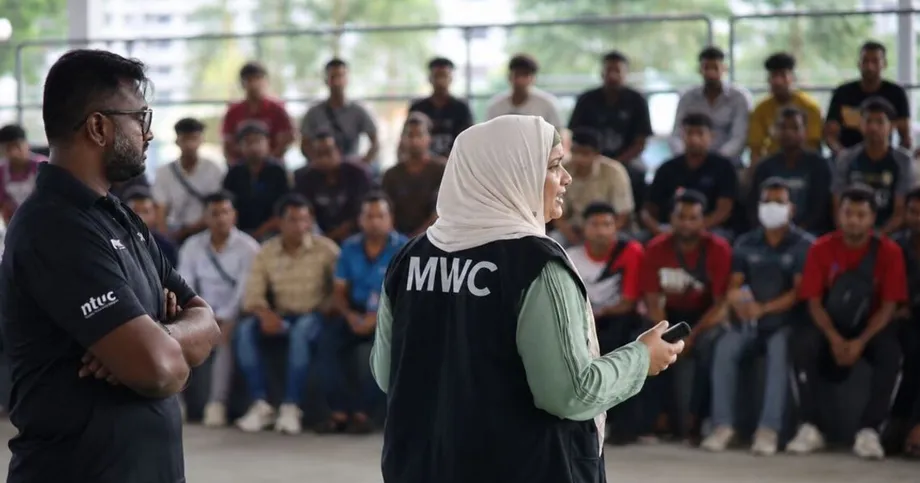
Earlier age increase comes with six measures to support longer careers
Singapore will raise its retirement age from 64 to 65 and its re-employment age from 69 to 70 on January 1, 2029, bringing forward a target originally set for 2030. The government has accepted all six recommendations from the Tripartite Workgroup on Senior Employment, combining longer employment protection with support for flexible jobs, tax relief and higher incomes for seniors.
Contents
- Earlier age increase comes with six measures to support longer careers
- What retirement age 65 means for employees
- Why support starts before workers reach retirement
- Flexible workloads offer a different choice from flexible hours
- Career planning will connect workers with redesigned jobs
- What happens when re-employment is unavailable
- Higher tax relief will target work beyond the statutory ages
- Employer credits and Workfare address different costs
- Older workers and new graduates can fill complementary roles
- Key Points
The recommendations, released on October 26, 2026, reach beyond employees approaching retirement. A new Flexi-Load Programme will cover workers aged 50 and above, compared with the threshold of 60 under the grant it replaces. Funding will depend on employers creating additional roles with flexible workloads, rather than changing human resources policies alone.
The National Trades Union Congress (NTUC), in its senior employment statement, says the package follows consultation with more than 1,000 stakeholders. The workgroup brings together the Ministry of Manpower (MOM), NTUC and the Singapore National Employers Federation (SNEF).
Minister of State for Manpower Dinesh Vasu Dash said the aim was to give older people meaningful options across a longer career, including different roles and a different pace of work.
"Our goal is therefore to build age-friendly jobs and multigenerational workplaces, where experience is valued and people can continue contributing in ways that work for them and, in turn, benefit businesses," he said.
Further implementation details, including grant terms and the amounts of financial support, are due in the first half of 2027. The Budget and Committee of Supply debates, when ministries present and discuss their spending plans, will provide the next important checkpoint for workers and employers.
What retirement age 65 means for employees
The statutory retirement age protects employees against being retired because of their age before reaching that threshold. From January 1, 2029, that protection will extend to age 65. Employees retain the choice to stop working earlier.
The re-employment age governs the next stage. Employers must offer re-employment to eligible employees who want to continue working, up to the applicable limit. That limit will rise to 70. Eligibility conditions still apply, including requirements concerning performance and medical fitness.
Workers therefore gain an additional year under each part of the framework. The workgroup says more than nine in 10 eligible employees who wish to continue working already receive re-employment offers, and cites positive employment outcomes from earlier increases as a reason to move faster.
The changes follow a sequence of decisions stretching back to 2019:
- 2019: Singapore set the target of retirement at 65 and re-employment up to 70 by 2030.
- July 2025: The Tripartite Workgroup on Senior Employment was established.
- July 1, 2026: The retirement and re-employment ages rose to 64 and 69.
- October 26, 2026: The government accepted the workgroup's six recommendations.
- First half of 2027: Implementation and funding details are scheduled for release.
- 2028: A new Re-Employment Credit is planned to replace the Senior Employment Credit.
- January 1, 2029: Retirement and re-employment ages will rise to 65 and 70.
Why support starts before workers reach retirement
Workers aged 50 and above accounted for about 40% of Singapore's labour force in 2025, compared with about 34% in 2015. That is an increase of six percentage points in a decade, meaning older workers now make up roughly two in every five people in the labour force.
Singapore's population will continue ageing. The workgroup expects one in four Singaporeans to be aged 65 or above by 2030. Keeping experienced people employed is therefore an issue for businesses facing slower workforce growth, as well as for households planning their income.
MOM surveys show participation in the labour force falling more sharply among residents in their late 50s and beyond. Caregiving is the leading reason people in their 50s give for neither working nor looking for work, while flexible arrangements are the initiative most likely to help them stay employed.
NTUC also highlights difficulty returning after a job loss. Deputy secretary-general Desmond Tan said workers aged 50 to 59 had the highest retrenchment rate, with about four in 10 returning to work within six months. Together, these figures explain why the package addresses careers from age 50, rather than waiting until retirement approaches.
Flexible workloads offer a different choice from flexible hours
MOM's figures for 2024 show that 85.5% of resident employees aged 50 to 64 working full time were offered flexible working hours. Another 78.7% were offered flexibility over where they worked, while 74.5% were offered flexible workloads.
The gap between flexible hours and flexible workloads was 11 percentage points. Changing a starting time or working from home can help someone manage family commitments, but a person caring for a relative may also need fewer duties or fewer working hours.
Flexi-load arrangements adjust the amount of work, with corresponding changes to pay. They can include part time work, sharing a job with another employee, or taking on a defined portion of a professional role. An experienced employee might continue contributing through selected tasks instead of carrying the responsibilities of an entire position.
The new Flexi-Load Programme will help employers pay the transition costs of creating these arrangements. Those costs can include redesigning jobs, changing staffing systems and revising policies built around employees working full time.
The existing Part-Time Re-employment Grant provides S$2,500 per eligible senior, capped at S$125,000 per company. Since 2020, it has supported about 68,500 seniors and 7,800 employers. It expires at the end of 2027, after which the new programme will replace it with wider age coverage and funding tied to additional flexible roles.
Career planning will connect workers with redesigned jobs
A new programme office for career longevity, led by the Skills and Workforce Development Agency with NTUC and SNEF, will help employees plan changes in their careers and skills. It will also help employers introduce practices that accommodate people of different ages and connect both sides with suitable jobs and support.
The workgroup drew lessons from Japan's Hello Work public employment offices. Their lifelong active worker support desks help older job seekers find re-employment opportunities, including jobs with flexible workloads. The Singapore proposals similarly connect career guidance with the practical task of finding suitable work.
Local trials provide examples of how jobs can change. Through the Alliance for Action on Empowering Multi-Stage Careers for Mature Workers, 30 organisations across six sectors tested approaches to training, career guidance, job matching and alternative work arrangements. The initiatives benefited more than 1,600 senior workers.
Kampong Kapor Community Services worked with human resources firm Marsh People and Investments, formerly known as Mercer, on roles organised around individual sessions or cases. Such arrangements aim to retain experienced people whose circumstances no longer suit conventional employment requiring a full working week.
What happens when re-employment is unavailable
Eligible employees whose employers cannot offer suitable re-employment receive an Employment Assistance Payment. The payment provides temporary financial help while they look for another job. The workgroup recommends increasing its minimum and maximum amounts to reflect wage growth since the last review in 2022.
NTUC describes the payment as 3.5 months of salary, subject to a minimum and maximum; commonly cited current limits are S$6,250 and S$14,750. An age based breakdown gives three months of salary within those limits for re-employment ending from age 64 to below 66.5, and two months within limits of S$4,000 and S$8,500 from age 66.5 to 69. Workers should confirm the terms applicable to their circumstances with MOM.
Career support will accompany the financial measures. NTUC identifies e2i's Senior PMET Career Support, training through NTUC LearningHub and Company Training Committees as routes to coaching, updated skills and redesigned jobs. The SkillsFuture Jobseeker Support scheme will also be reviewed for seniors navigating job changes.
Financial accountant Tan Ai Kim, 53, illustrates the kind of transition the support is intended to address. After her contract ended, an e2i coach helped with job referrals and interview preparation and recommended a workshop on industry trends and skills. According to NTUC, she has received a job offer and is waiting for confirmation of her starting date.
Higher tax relief will target work beyond the statutory ages
The government will increase Earned Income Relief for seniors working beyond the statutory retirement and re-employment ages. Tax relief reduces the amount of income used to calculate a person's tax bill, allowing a worker who owes tax to retain more of their earnings.
Current maximum relief is S$1,000 for workers below 55, S$6,000 for those aged 55 to 59, and S$8,000 for those aged 60 and above. Singapore also applies a zero tax rate to the first S$20,000 of a tax resident's chargeable income, which is income after relevant deductions and reliefs.
The practical benefit will depend on a worker's earnings and tax position. Someone already paying no income tax would receive no tax saving from a larger deduction. For seniors with taxable income above the zero rate band, additional relief can reduce their bill. Workfare provides a different channel of support for people on lower incomes.
Employer credits and Workfare address different costs
A new Re-Employment Credit will begin in 2028, replacing the Senior Employment Credit when it expires at the end of 2027. The current scheme provides employers with wage offsets of up to 7% for eligible Singaporean employees aged 60 and above earning below S$4,000 a month.
The replacement is intended to help businesses retain workers beyond the retirement and re-employment ages. The workgroup has recommended a higher wage ceiling to account for wage growth. Employers will need to plan for the transition between the two schemes alongside the changes to flexible work support.
Lower income seniors will receive support through an improved Workfare Income Supplement. Workfare adds to eligible workers' incomes through cash and Central Provident Fund contributions, supporting both present spending needs and retirement savings. Older workers already receive higher Workfare payouts.
The Progressive Wage Credit Scheme will also be updated. It shares the cost of wage increases for lower income workers, including qualifying increases under the Progressive Wage Model and local qualifying salary requirements, as well as voluntary increases.
The package therefore works through several channels. Tax relief reduces tax bills for qualifying workers, Workfare supports incomes and savings, employment credits offset some employers' wage costs, and the Progressive Wage Credit Scheme helps fund pay rises.
Older workers and new graduates can fill complementary roles
SNEF vice-president Tan Hwee Bin said investment in older workers was becoming a business necessity amid a tight labour market and slower workforce growth. She urged employers to reconsider how different working arrangements fit together.
"We need a mindset shift in how we build our workforce, recognising that full-time and part-time employees can play complementary roles," she said.
Dinesh addressed concerns about balancing opportunities for seniors and fresh graduates during a panel discussion. He said the groups should not be viewed as competing for the same jobs and pointed to experienced workers helping junior employees develop through mentoring. MOM is examining ways to strengthen such arrangements.
Desmond Tan, NTUC's deputy secretary-general and a workgroup co-chair, described the central aim as giving seniors a choice about both participation and the form their work takes.
Senior workers should have genuine options in how they continue contributing – whether through full-time work, flexible arrangements or adjusted responsibilities.
For workers, the concrete changes will be a longer period of employment protection, access to more flexible roles and additional support during transitions. For employers, the task will include redesigning jobs and preparing for the funding changes in 2028 before the statutory ages rise in 2029.
Key Points
- Singapore's retirement age will rise to 65 and re-employment age to 70 on January 1, 2029, one year ahead of schedule.
- The government accepted all six recommendations of the Tripartite Workgroup on Senior Employment.
- The new Flexi-Load Programme will cover workers aged 50 and above and fund the creation of additional flexible roles.
- A Re-Employment Credit will replace the Senior Employment Credit from 2028.
- Employment Assistance Payments, Earned Income Relief and support for lower income seniors will be improved.
- Further implementation and funding details are due in the first half of 2027.