Two missed paydays leave workers needing immediate help
The Migrant Workers' Centre (MWC) has met 230 migrant workers from Process Maintenance Solutions Pte. Ltd. and Jurong Technical & Construction Pte. Ltd. over unpaid salaries, as Singapore's labour movement and Ministry of Manpower arrange meals, accommodation and help finding new jobs.
Contents
- Two missed paydays leave workers needing immediate help
- What happened between July and October?
- Salary claims include overtime pay
- Daily meals and housing address the most urgent needs
- Costs of up to S$12,000 add to the pressure
- New jobs could help workers stay in Singapore
- Emergency funds provide another layer of support
- Workers can seek help in 10 languages
- Key Points
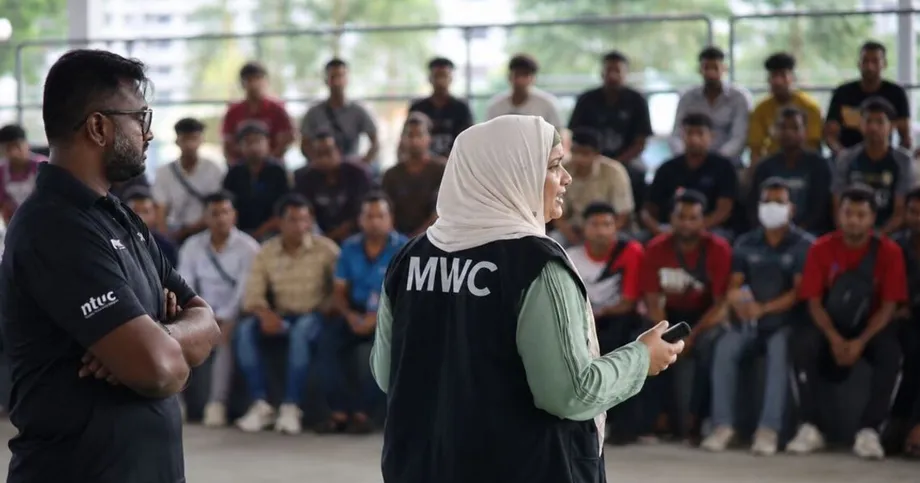
Some workers are owed up to two months of pay, including overtime. National Trades Union Congress (NTUC) deputy secretary-general Desmond Choo said on October 23, 2026, that close to 240 workers in the process sector were affected. MWC and the ministry's Assurance, Care and Engagement (ACE) Group met 230 workers on October 19 and 20 to assess their needs.
In his October 23 Facebook post, Choo said NTUC was working with MOM to arrange centralised accommodation, job-matching assistance and help with salary claims, including overtime pay. He said financial assistance was also being provided where needed.
Close to 90 workers are receiving daily meals. Housing arrangements are also being prepared because some workers could lose their accommodation in the coming weeks. Almost all the affected workers are their families' sole breadwinners, meaning their wages are the main income supporting relatives back home.
Choo described the repeated missed payments and their effect on workers in a social media post:
Payday came and went, but no salary. Then another payday passed.
MWC is helping workers pursue their outstanding wages while addressing immediate needs such as food and shelter. For those who paid substantial sums to take up employment in Singapore, finding another job is also an urgent financial concern.
What happened between July and October?
Some workers from Bangladesh said they arrived in Singapore on July 17, 2026. By October, they were seeking help over wages that had not been paid. MWC held its meetings with workers at its recreation centres in Soon Lee and Kaki Bukit.
The sequence shows how recently some workers had arrived before needing assistance:
- July 17, 2026: A group of Bangladeshi workers said they arrived in Singapore.
- October 19 and 20: MWC and MOM's ACE Group met 230 workers to discuss salary claims, food, housing and employment.
- October 23: Choo described the support being coordinated, while MWC set out its work on salary recovery and welfare assistance.
The meetings allowed staff to identify workers needing immediate help, alongside those requiring support with claims and a change of employment.
Salary claims include overtime pay
MWC is assisting workers in filing claims with the Tripartite Alliance for Dispute Management (TADM). The claims cover unpaid salaries, including overtime pay, which is payment for additional hours worked.
In a media statement on October 23, Michael Lim, NTUC's director of the migrant workers segment, said MWC was aware of unpaid salary claims affecting workers from Process Maintenance Solutions and Jurong Technical & Construction. He said MWC was helping the workers file unpaid salary claims with TADM.
The amount owed to each worker is still being determined. No date has been announced for salary repayment or completion of the employment transfers. The immediate timetable concerns welfare support, including preparations for workers who may need new accommodation in the coming weeks.
MWC Assistant Director for Operations Xavier Joseph said the possibility that employers could not pay the outstanding salaries was a concern. That makes the effort to recover wages a different task from providing food, shelter and emergency cash: workers need help surviving now while their claims are pursued.
Joseph said workers who had lost their employment were particularly worried about whether they would receive the money they had earned:
Having lost their employment, the immediate concern is whether they will get cash on hand for their salaries owed,
For a worker supporting a household overseas, recovering wages affects more than personal spending in Singapore. The same money may also be needed for the everyday expenses of family members who depend on it.
Daily meals and housing address the most urgent needs
MWC is providing meals at dormitories for close to 90 workers who lack meal support. Using the 230 workers engaged as a reference, that is roughly 39 per cent, or about two in every five workers.
The workers currently have somewhere to stay, but MWC expects some may lose their shelter in the coming weeks. It is working with MOM to move those needing accommodation into centralised housing.
Food and housing are being addressed alongside salary claims because the workers' needs cannot wait for the claims process to finish. A worker waiting for overdue pay still needs meals each day and a secure place to sleep.
Joseph explained that MWC's meetings were intended to identify the different difficulties workers were facing:
We have met with a majority of the workers to understand what other issues they may have, so that we can provide timely intervention and support.
The response therefore extends beyond helping workers submit paperwork. Staff are assessing who lacks meals, who may need accommodation and who requires help moving into another job.
Costs of up to S$12,000 add to the pressure
NTUC senior executive Jeremiah Khoo said some workers from Bangladesh had paid as much as S$12,000 to come to Singapore. Some workers said returning home was not an option for them after spending so much to secure the opportunity to work.
Those initial costs make the loss of income especially difficult. Workers who arrived in July had been in Singapore for only about three months when the October assistance meetings took place. Some were already facing one to two months of unpaid wages.
Almost all the affected workers are sole breadwinners. Their unpaid salaries therefore create pressure in two places at once: on the workers trying to meet their needs in Singapore and on families awaiting income abroad.
Michael Lim, NTUC's director of the migrant workers segment, described that hardship in an October 23 statement:
We recognise that unpaid salaries can cause significant hardship for migrant workers, affecting their daily essentials and the families who depend on their income,
The combination of large arrival costs and missed wages explains why securing another job matters so much to these workers. Continued employment would give them a way to earn again while they seek the pay already owed.
New jobs could help workers stay in Singapore
MWC and MOM are speeding up the change of employment process. MWC is also working with employment agency partners to identify suitable jobs and guide workers through the transition.
Changing employment involves more than identifying a vacancy. The workers also need help completing the steps required to move from their previous employment into a new job. MWC's support covers both the search for work and that transition.
Khoo said workers unable to find new jobs in Singapore may have to return home. That possibility is particularly difficult for those who have paid substantial amounts to come to the country and whose families depend on their earnings.
Finding another employer would address future income. The salary claims address money earned earlier. Both parts of the response matter: new work can restart earnings, while wage recovery seeks payment for work already performed.
Emergency funds provide another layer of support
The Migrant Workers' Assistance Fund (MWAF), MWC's humanitarian charity, is supporting the response. Its emergency assistance includes shelter, daily essentials and help related to salary arrears, meaning wages that should already have been paid.
Meals are being provided through the fund, and financial assistance is being arranged where needed. Khoo said workers whose employers cannot pay may receive a token sum through MWAF. Joseph also said the fund would step in to support workers facing the possibility of employers being unable to settle outstanding salaries.
The response has three connected purposes: meeting immediate living needs, helping workers claim unpaid wages and finding employment that can restore their income. Each addresses a different part of the financial strain created by the missed payments.
Workers can seek help in 10 languages
MWC urged employers to meet their obligations by paying salaries on time. It also encouraged migrant workers facing unpaid wages or other workplace problems to seek assistance early.
The centre's helpline, 6536 2692, operates 24 hours a day and offers assistance in 10 languages. Workers can call directly, and people who know someone facing salary or workplace difficulties can encourage them to contact the centre.
Choo and Lim both urged anyone who knows of migrant workers facing workplace or salary issues to call the helpline. Lim encouraged workers to come forward early for guidance and assistance.
Joseph urged workers to come forward promptly so staff could assess their needs:
The sooner they come forward, the sooner we can provide support and provide the assurance,
Choo also said the labour movement would continue supporting the affected workers:
These workers deserve to be paid for their hard work, and we will do what we can to support them.
He added:
No worker should face this alone.
Key Points
- MWC and MOM's ACE Group met 230 workers on October 19 and 20, 2026, over unpaid salaries and welfare needs.
- The claims involve Process Maintenance Solutions and Jurong Technical & Construction, with some workers owed up to two months of pay.
- Close to 90 workers are receiving daily meals, and centralised housing is being arranged for those who may need it.
- MWC is helping workers file salary and overtime claims with TADM while supporting their search for new employment.
- Some workers paid up to S$12,000 to come to Singapore, and almost all are their families' sole breadwinners.
- MWC's helpline, 6536 2692, is available around the clock in 10 languages.